
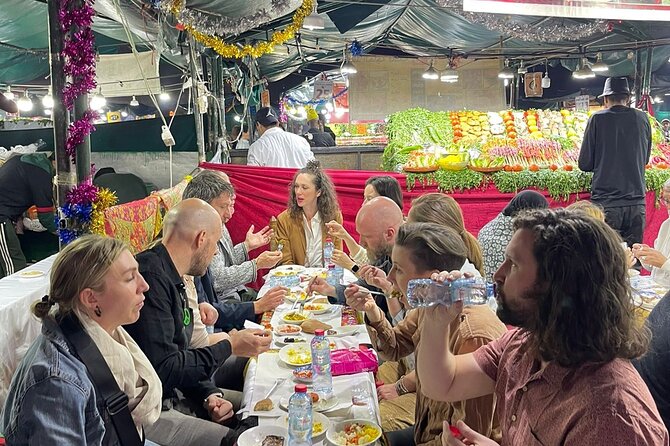
REVIEW · MARRAKECH
Marrakech: Jewish Quarter, Bahia Palace, Handicraft, Jemaa fna
Start with Marrakech’s past, not a sales pitch. This 3 to 4-hour walk links the Koutoubia Mosque, the old Jewish Quarter, Bahia Palace, craft workshops, souks, and Jemaa el-Fnaa. I like the small maximum of 16 people and the chance to get practical help with prices, food, directions, and local manners. I also like that coffee, tea, water, and an olive tasting are included.
The main drawback is that the $15 price does not cover the Bahia Palace admission, which costs 100 dirhams, listed as about 10 euros. You also need to reach the Medina meeting point yourself, and the souks can be crowded, noisy, and full of persistent sellers. Still, with Redwan, also presented as Redone or Redouan, guiding the walk, this looks like a useful first taste of central Marrakech.
Key points at a glance
- Koutoubia sets the scene: Begin beside Marrakech’s famous 70-meter minaret and learn how the city’s old center is organized.
- The Mellah adds a different chapter: Walk through the former Jewish Quarter, created in the 16th century under Sultan Ahmad al-Mansur.
- Bahia Palace is the visual prize: Expect tiled walls, carved cedar ceilings, courtyards, fountains, gardens, and a large marble courtyard.
- Craft stops are more useful than a shop parade: Redwan can point out artisan work and help you avoid inflated prices in the main bazaar.
- Jemaa el-Fnaa ends the walk with theater: Storytellers, musicians, snake charmers, acrobats, and jugglers gather around the square.
- The price is low, but extras matter: At $15, the tour offers good value, though the palace ticket and personal shopping costs are separate.
A low-cost way to get your bearings in Marrakech
Marrakech can feel confusing during your first hours. The Medina is a web of lanes, the souks shift from one trade to another, and the main square looks different by the hour. A walking tour gives you a basic map in your head before you try it alone.
I like the shape of this route because it is not just a procession of famous buildings. It moves from a major religious landmark to the Mellah, then into a palace, craft areas, shopping lanes, and the city’s best-known public square. That mix gives you architecture, religion, neighborhood life, commerce, and street performance in one outing.
The guide is a major part of the value. Redwan grew up in the Medina and offers help with Arabic, directions, food choices, photographs, cultural etiquette, and shopping. That kind of assistance can save you from wasting time or agreeing to a poor price just because you are unsure how the local system works.
The experience is described as relaxed and safe, with routes chosen to reduce stress. I would still expect a fair amount of walking on uneven Medina surfaces. Wear shoes that can handle old paving, and keep your belongings close in crowded areas.
The group limit is 16 people. That is not a private walk, but it is small enough for questions and basic interaction with the guide. If every place is filled, the narrow lanes may make the group feel larger than it does in an open street.
More Bahia Palace and Marrakech Tours in Marrakech:
- Marrakech: Bahia Palace, Saadian Tombs, Souk and Medina Tour
★ 4.7 · 4,974 reviews - Marrakech: Bahia Palace, Saadian Tombs, & Koutoubia Mosque
★ 4.5 · 2,529 reviews - Marrakech: Bahia Palace, Madrasa Ben Youssef and Medina Tour
★ 4.7 · 1,347 reviews
Koutoubia Mosque and the 70-meter landmark

The walk begins at Koutoubia Mosque, the largest and oldest mosque in Marrakech according to the tour description. Its 70-meter minaret is one of the clearest ways to orient yourself in the city.
You spend about 20 minutes here. The mosque itself is an active place of worship, so the experience focuses on the exterior and the surrounding setting rather than entry inside. That is worth knowing if you expect a monument visit with interior rooms.
Koutoubia works well as a starting point because it gives you an immediate sense of Marrakech’s scale. The minaret helps you understand where the Medina lies and why the mosque has long served as a visual marker. I would use this pause to ask the guide about local customs, prayer times, and how the old center connects to the newer parts of town.
The stop is brief, so do not expect a full architectural lecture. Its purpose is to orient you and establish the city’s religious and historical setting before you enter the narrower lanes.
The Mellah, Marrakech’s former Jewish Quarter
The Mellah brings a different side of Marrakech into the walk. It was established in the 16th century during the rule of Sultan Ahmad al-Mansur as a district for the city’s growing Jewish community.
Jewish residents had lived in Morocco for centuries. In the Mellah, many worked in trade, craftsmanship, and medicine. Over time, the neighborhood developed synagogues, schools, and businesses, making it a center of Jewish life in Marrakech.
The community declined sharply during the 20th century, especially after Moroccan independence in 1956, when many Jewish families emigrated. Today, the Mellah preserves reminders of that earlier chapter, including historic synagogues, the Jewish cemetery, and traces of former community life.
The stop lasts about 20 minutes. That is enough for a clear introduction, though not enough for a detailed study of every building or religious site. I would pay attention to the guide’s explanation of how the neighborhood functioned, not just to the photo opportunities.
This is one of the more worthwhile parts of the walk because it keeps Marrakech from being reduced to palaces and shopping. You see how different communities shaped the city, and you get a more complete picture of daily life in the old center.
Bahia Palace’s courtyards, tilework, and cedar ceilings
Bahia Palace is the tour’s main monument stop and receives about 40 minutes. Entrance is not included, so you pay the separate admission fee of 100 dirhams, listed as approximately 10 euros for an adult.
The palace was built for Grand Vizier Sultan Moulay El Hassan I. Inside, the route takes you through gardens, fountains, living quarters, shady courtyards, and rooms linked to the vizier’s household. The palace is prized for its decoration rather than for a single giant hall.
You can expect zellige tilework, carved cedar ceilings, marble, painted surfaces, and carefully arranged courtyards. The apartment associated with the vizier’s favorite concubine and the council chamber are included in the description of the visit. A large marble courtyard with fountains and zelliges provides one of the most striking views.
The palace has a practical drawback: 40 minutes can feel short when the rooms are crowded or when you want to stop for photographs. The tour schedule also means you may not linger as long as you would on an independent visit. On the other hand, a guide helps you see details that are easy to miss when you walk through on your own.
I would ask Redwan to explain how the rooms were used, who occupied them, and why the courtyards matter in Moroccan palace design. Without that context, Bahia Palace can become a pleasant sequence of tiles and ceilings. With it, the building becomes easier to understand as a working household and political residence.
The ticket cost changes the value calculation slightly. At $15, the walking tour is inexpensive, but you should budget for the palace admission before booking. If you want to see Bahia Palace anyway, the added cost is reasonable. If you are trying to keep the morning completely free, you may prefer to admire the area from outside.
A few more palace visits around Marrakech worth a look
- Marrakech: Bahia Palace Guided Tour with Skip-the-Line Entry
★ 4.7 · 811 reviews - Marrakech: Palace, Museum, Madrasa & Medina Highlights Tour
★ 4.7 · 706 reviews - Marrakech: Saadian Tombs, Bahia Palace, Medina and Souk Tour
★ 4.7 · 673 reviews - Marrakech: Bahia Palace, Ben Youssef Medersa, & Souks Tour
★ 4.3 · 554 reviews
Artisan workshops and the practical side of shopping
The route includes visits to local artisan spots, referred to as Moartisans, followed by time around the souks. This part of the tour appears designed to show how handmade goods are produced and sold, rather than simply moving you from one shop counter to the next.
That distinction matters. Marrakech shopping can be fun, but it can also become tiring when you do not know how prices are set or how much pressure to expect. Redwan offers advice on shopping and helps you avoid tourist traps, with the aim of making the experience less stressful.
The nearby Souq Semmarine is a major shopping lane close to Jemaa el-Fnaa. It is lined with artisan shops and draws many people, but prices there are considerably higher than in less central areas according to the tour information. You reach the larger bazaar from the square through smaller lanes on either the right or left.
I would treat this section as an introduction, not as a guarantee of the lowest possible price. A guide can explain what you are looking at and help you judge an offer, but you still need to decide what you want to buy. Do not feel obliged to purchase something simply because the walk includes a shop or workshop.
The included olive tasting is a nice small touch. You can sample different flavors of olives, and coffee or tea plus bottled water are also provided. These extras will not make or break the tour, but they offer a pause during a walk that could otherwise become a long stretch of streets and sales pitches.
If you are interested in crafts, ask questions about how an item is made and where it is produced. If shopping is not your goal, tell the guide early. The route is described as flexible enough to respond to your interests, and the guide has also adjusted walks for people who wanted more history, souk time, or specific sights.
Jemaa el-Fnaa and the city’s public stage
Jemaa el-Fnaa is the final named stop and receives about 20 minutes. This is Marrakech’s great public square, where locals and performers gather throughout the day.
The description includes storytellers, musicians, snake charmers, acrobats, jugglers, and other performers. The mood changes with the time of day, so the square may feel different depending on when your walk takes place. Twenty minutes gives you a useful introduction, but you may want to return later if you want to watch the activity develop.
The square is also a place where you should use common sense. Keep your phone and wallet secure, ask before taking close-up photographs, and be careful around animals or performances that invite a fee. The guide can explain local etiquette and help you understand what is expected.
I like ending here because the square pulls together the themes of the walk. It is a place of commerce, food, performance, conversation, and public life. After seeing the quieter palace rooms and the historic Mellah, you finish in a setting that feels immediate and social.
The tour ends back at the meeting point in the Medina. The information is slightly mixed on pickup: pickup is listed as an available feature, but hotel pickup and drop-off are not included. I would assume you need to reach the Medina starting point yourself unless the operator confirms another arrangement before the tour.
What the $15 price really covers
At $15 per person, this is a strong value if you want an introduction to several central sights with a guide. The price covers the licensed professional guide, water, coffee or tea, and the olive tasting. It also gives you local help with directions, etiquette, food, photographs, and shopping.
The Bahia Palace ticket is extra, at 100 dirhams or about 10 euros. Tips are not included either, and you should allow money for any food, souvenirs, or purchases in the souks.
The low price does mean you should not expect a private guide or a highly customized full-day program. The maximum group is 16, and the duration is only 3 to 4 hours. That is enough for orientation and key sights, but not enough to cover every major attraction in Marrakech.
The tour is booked about seven days ahead on average. I would not read too much into that figure, but it suggests you do not need to reserve months ahead under normal conditions. Still, book earlier if your schedule is tight, since the group size is limited.
Free cancellation is available until 24 hours before the start time. Canceling within 24 hours brings no refund, and changes within that period are not accepted. The cutoff follows local Marrakech time.
Who will get the most from this walk?
I would recommend it most strongly to first-time visitors who want a clear introduction before exploring alone. You get the city’s main visual marker, a palace, a historic neighborhood, craft areas, the souks, and the central square without spending a full day on one subject.
It also suits anyone who feels uneasy about entering the Medina alone. Redwan’s help with Arabic, directions, prices, and local etiquette could make the first shopping and food experiences easier.
History-minded visitors should appreciate the Mellah and Bahia Palace, though anyone seeking a specialist architectural tour may want more time at each stop. The schedule favors variety over detail.
The experience is less suited to anyone who dislikes walking, bargaining, crowds, or frequent movement between sights. It may also disappoint you if you expect hotel pickup, a private vehicle, or admission to every monument to be included in the advertised price.
The guide names connected with the experience include Redwan, Redone, and Redouan. One account also identifies Khalidi as the guide and describes a friendly, relaxed approach that adapted to personal interests. That suggests the operator may use more than one guide, so confirm who will lead your departure if the guide’s identity matters to you.
Should you book it?
Book this walk if you want affordable orientation, practical local advice, and a broad look at Marrakech’s old center. The strongest features are the guide’s help with daily customs and shopping, the Mellah’s less familiar story, and the easy mix of major sights and ordinary Medina life.
Go in knowing that Bahia Palace costs extra, hotel transfer is not included, and the souks will not be calm or quiet. If you accept those limits, the $15 price is hard to fault. I would choose it early in a Marrakech stay, then return to the places that caught your attention at your own pace.
FAQ
How long does the Marrakech walking tour last?
The tour lasts approximately 3 to 4 hours.
What sights are included in the route?
The route includes Koutoubia Mosque, the Mellah Jewish Quarter, Bahia Palace, artisan areas, the souks, and Jemaa el-Fnaa.
Is Bahia Palace admission included?
No. Bahia Palace admission is separate and is listed as 100 dirhams, or about 10 euros for an adult.
Where does the tour start and finish?
It starts in the Medina in Marrakech and ends back at the meeting point.
Is hotel pickup included?
Hotel pickup and drop-off are not included. Pickup is also listed as an available feature, so you should confirm the exact arrangement with the provider before booking.
What is included in the tour price?
The price includes a licensed professional guide, coffee or tea, bottled water, and a tasting of different olive flavors. Tips, monument admission, shopping, and hotel transfers are separate.
Just added around Marrakech
- Marrakech : Saadian Tombs & Bahia Palace, Souk and Medina Tour★ 4.5 · 9 reviews
- Marrakech : Bahia Palace & Madrasa Ben Youssef And Medina Tour★ 5.0 · 39 reviews
- Explore Marrakech Medina: Private Tour Including Bahia Palace Visit★ 4.5 · 59 reviews
- Half-Day Marrakech Highlights: Medina, Palaces, and More★ 4.5 · 6 reviews
- Marrakech: Palace, Museum, Madrasa & Medina Highlights Tour★ 5.0 · 26 reviews
- Marrakech City Tour, Bahia Palace, Badii Palace, Majorelle Garden★ 4.5 · 144 reviews
- Marrakech Jewish Quarter & Bahia Palace: Private Half-day Guided Tour★ 4.5 · 20 reviews
- Marrakech Highlights : Majorelle , Bahía Palace , Mellah & Souks :Private Tour★ 5.0 · 81 reviews
Bahia Palace and Marrakech Tours, compared.
Bahia Palace, Saadian Tombs, Souk and Medina Tour
Read our review →
Bahia Palace, Saadian Tombs, & Koutoubia Mosque
Read our review →
Bahia Palace, Madrasa Ben Youssef and Medina Tour
Read our review →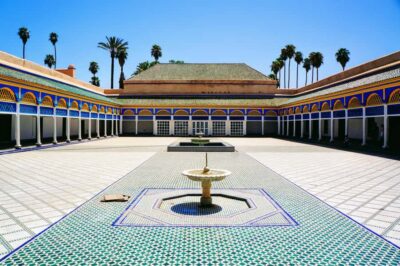
Bahia Palace Guided Tour with Skip-the-Line Entry
Read our review →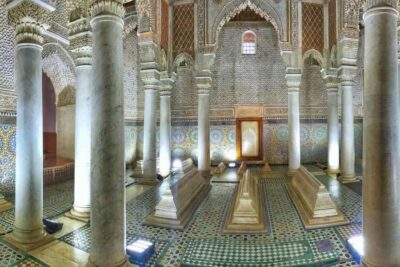
Saadian Tombs, Bahia Palace, Medina and Souk Tour
Read our review →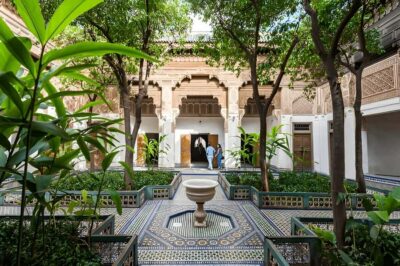
Bahia Palace, Ben Youssef Medersa, & Souks Tour
Read our review →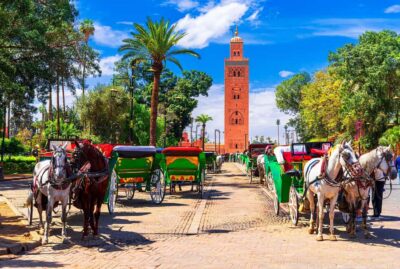
Bahia Palace, Madrasa Ben Youssef & Secret Garden
Read our review →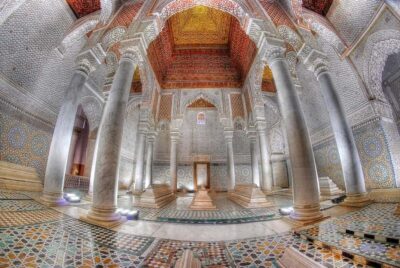
Bahia Palace, Saadian Tombs & Medina Guided Tour
Read our review →Browse the lists this tour appears in