
REVIEW · MOROCCO
Marrakech: Bahia Palace, Saadian Tombs, Souk and Medina Tour
Marrakech reveals itself one alley at a time. This four-hour walk brings together the Bahia Palace, Saadian Tombs, Mellah, Kasbah, souks, and Jemaa el-Fna, making it a useful first look at the old city. I like the strong mix of major sights and ordinary Medina streets, and I like that guides such as Yassine, Mo, Ayoub, and Mouhssine are praised for clear explanations and a good sense of humor. The main catch is cost: the $20 tour price does not include the 200 MAD total entry fee for the Bahia Palace and Saadian Tombs.
You will walk a lot, often through crowded lanes and busy streets, so comfortable shoes and water matter. The tour is best early in your Marrakech stay, when a local guide can help you get your bearings, explain local customs, and point out places to return to later. Just keep some cash ready, listen carefully at the meeting point, and remember that a shop visit may be included along the way.
Key points at a glance
- Four hours on foot: The route covers the Koutoubia Mosque exterior, Bab Agnaou, Kasbah, Saadian Tombs, Mellah, Bahia Palace, souks, Medina, and ends near Café de France.
- A strong first-day choice: The tour helps you understand Marrakech before exploring the old city on your own.
- Two extra monument fees: Bahia Palace costs 100 MAD and the Saadian Tombs cost 100 MAD per adult, paid in cash.
- Guides are the big strength: Yassine, Mo, Ayoub, Mouhssine, Mustapha, and others receive praise for history, humor, patience, and practical advice.
- Queues can change the route: The Saadian Tombs can develop a long interior line, and construction may affect access.
- Expect a shop stop: An argan oil, soap, spice, or herbal-products visit may be part of the experience, so you can politely decline purchases.
Why this four-hour walk works as a Marrakech introduction
Marrakech can be confusing at first. The Medina is a web of narrow lanes, the names of monuments do not always mean much until you see them, and Jemaa el-Fna can feel like several places at once depending on the hour.
This tour gives you a useful map in your head. You begin in the central square area, move south toward the royal quarter, visit major monuments, then work back through the souks and Medina. The route connects the city’s buildings with its past instead of treating each sight as a separate photo stop.
I especially like the balance between formal monuments and daily life. You get decorated palace rooms and dynastic tombs, but you also walk through the former Jewish quarter, pass working artisan spaces, and see how people use the old city now.
The shared option costs about $20 per person, which is fair for four hours with a licensed local guide. You still pay the monument fees, but the guide adds value by explaining details you would probably miss on your own. A private option makes more sense for families, small groups, or anyone who wants to set the pace.
The tour does not include transportation. That is not a serious problem if you are staying in the Medina, since the meeting point is in front of Café de France in Jemaa el-Fna. With the private option, pickup from your riad reception is available if your riad is within the Medina.
More Bahia Palace and Marrakech Tours in Marrakesh:
- Marrakech: Bahia Palace, Saadian Tombs, & Koutoubia Mosque
★ 4.5 · 2,529 reviews - Marrakech: Bahia Palace, Madrasa Ben Youssef and Medina Tour
★ 4.7 · 1,347 reviews - Marrakech: Bahia Palace Guided Tour with Skip-the-Line Entry
★ 4.7 · 811 reviews
Starting at Koutoubia Mosque and Bab Agnaou
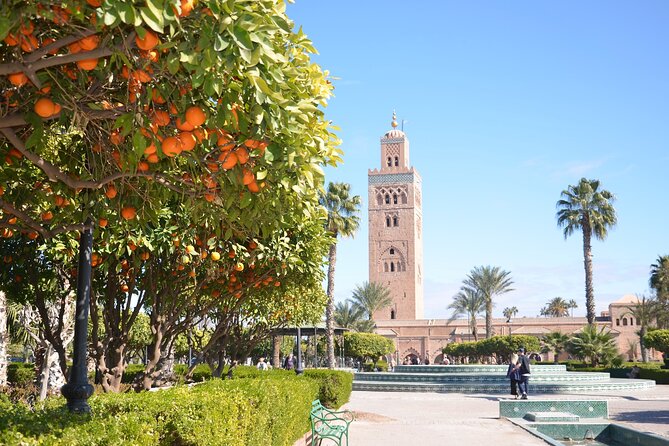
The first stop is the Koutoubia Mosque, Marrakech’s best-known landmark. You see it from outside for about ten minutes, with time for photographs and an introduction to its Almohad design and tall minaret.
Non-Muslim visitors cannot enter the mosque, particularly during prayer times, so this is an exterior stop rather than a full interior visit. That limitation is worth knowing before you book. Still, the mosque’s position and scale make it a useful opening point, and the guide can explain its place in the city’s history and skyline.
From there, the group continues toward Bab Agnaou, a 12th-century gate leading into the Kasbah area. The stop lasts about 15 minutes and focuses on the carved stonework and the gate’s former royal role.
Bab Agnaou is not a long visit. You will look, listen, and take photographs before moving on. That is appropriate here because the real value is the connection between the gate, the fortified district, and the monuments that follow.
The Kasbah itself gets another short walking segment. You will see narrow streets and local activity rather than a single grand building. This is one of the places where a guide helps you notice how the old royal quarter differs from the commercial souks.
The Saadian Tombs and the problem of timing
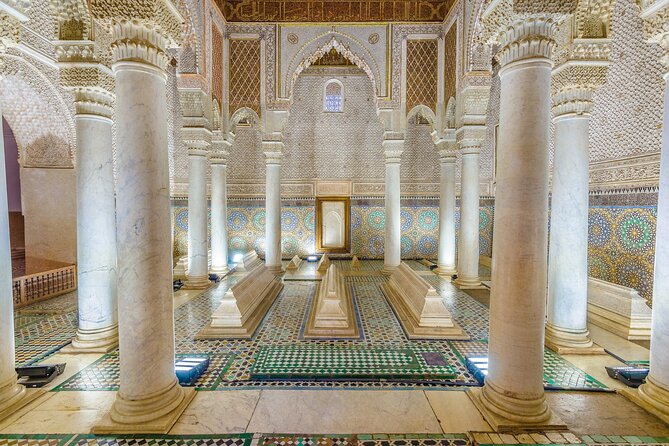
The Saadian Tombs are scheduled for about 40 minutes, making them one of the tour’s key stops. This burial site belonged to the Saadian dynasty and was rediscovered in 1917 after being forgotten for centuries.
Inside, look for zellij tilework, marble columns, and decorated ceilings. The spaces are compact, detailed, and easy to rush through if you do not know what deserves your attention. Your guide goes inside with you, explains the site, and leaves time for photographs and independent looking.
The drawback is the queue. The guide may help you avoid the first ticket line, but an interior line can still form, especially at busy times. One private group was advised to start earlier because arriving just ten minutes later could have meant an hour of waiting. That is useful advice: an early departure is worth considering if the tombs matter most to you.
Access can also be affected by building work. A recent tour group did not enter the tombs because of construction, so keep your expectations flexible. You still pay the entry fee only if access is available and the stop goes ahead, but you should confirm the current situation when you receive the day-before message.
The Mellah and the story of a former Jewish quarter
The walk continues through the Mellah, the former Jewish quarter of Marrakech. This is a 15-minute visit, but its importance is greater than the time suggests.
Here, the street plan and building style help explain the city’s mix of communities. Your guide can put the neighborhood into a wider cultural setting, showing how Jewish residents shaped Marrakech’s trade, crafts, and urban life.
This stop is less about one spectacular view and more about context. If you simply walked through the Mellah alone, you might see an interesting district without understanding why it looks different. With a guide, the streets become part of the city’s social story.
Keep your group close here. The route passes through working streets, not a closed museum, and the Medina can split a group quickly when people stop for photographs.
A few more palace visits around Marrakesh worth a look
- Marrakech: Palace, Museum, Madrasa & Medina Highlights Tour
★ 4.7 · 706 reviews - Marrakech: Saadian Tombs, Bahia Palace, Medina and Souk Tour
★ 4.7 · 673 reviews - Marrakech: Bahia Palace, Ben Youssef Medersa, & Souks Tour
★ 4.3 · 554 reviews - Marrakech: Bahia Palace, Madrasa Ben Youssef & Secret Garden
★ 4.7 · 225 reviews
Bahia Palace: the visual highlight
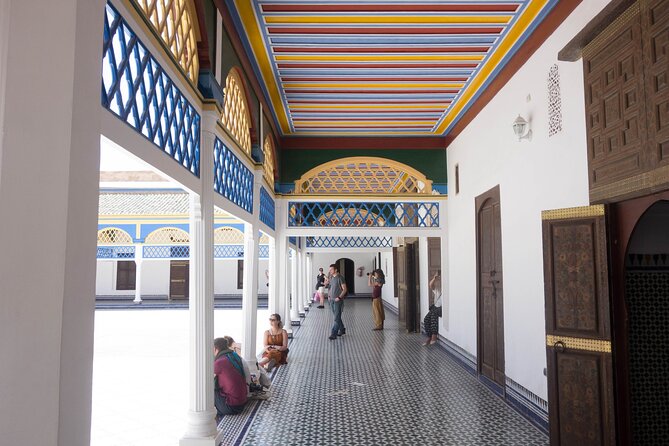
The Bahia Palace receives about 45 minutes, the longest single monument visit on the route. For many people, this will be the day’s most beautiful stop.
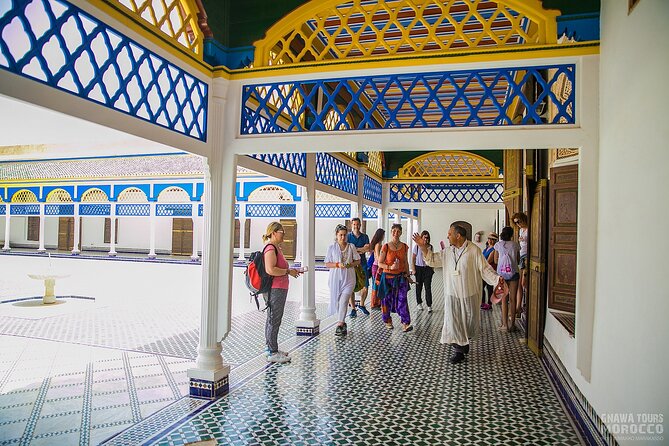
The palace was built in the 19th century to display Moroccan craftsmanship and the status of its former residents. You move through courtyards and rooms decorated with colorful tiles, carved cedar ceilings, painted details, and quiet garden spaces.
The palace is not one giant hall. Its appeal comes from the sequence of spaces: one courtyard opens into another, details appear at eye level and overhead, and the design rewards slow looking. Ask your guide about the tiles, woodwork, room layout, and the people who used the palace.
Some sections may be under renovation. That can limit what you see, but the main visit remains worthwhile. The palace can also become crowded, so your free time for photographs may be better near the beginning or end of the visit, when the group has spread out.
Entry costs 100 MAD per adult and is not covered by the tour fee. Bring Moroccan cash. This is one of the most important practical details, since the tour price can look lower than the actual cost once both monument tickets are added.
Into the souks and the Medina
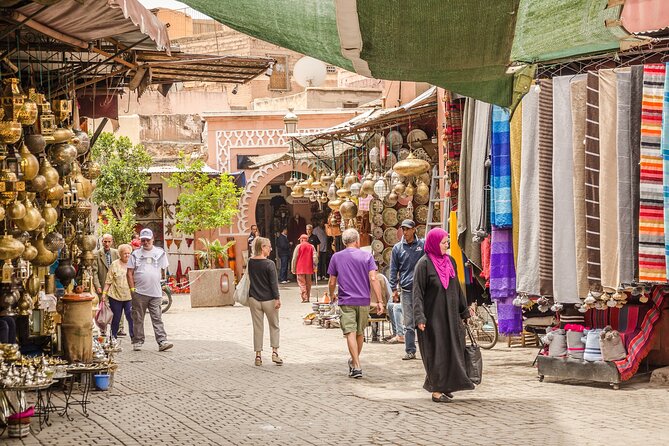
After the palace, the tour heads into the souks and winding Medina lanes. The planned walking time here is about 40 minutes, though the exact pace depends on the group, street conditions, and stops.
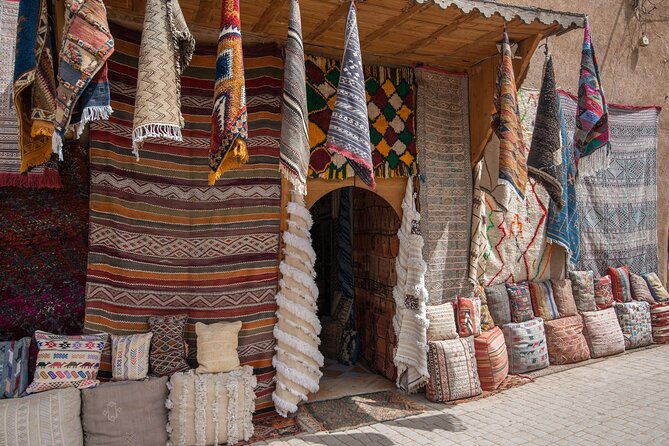
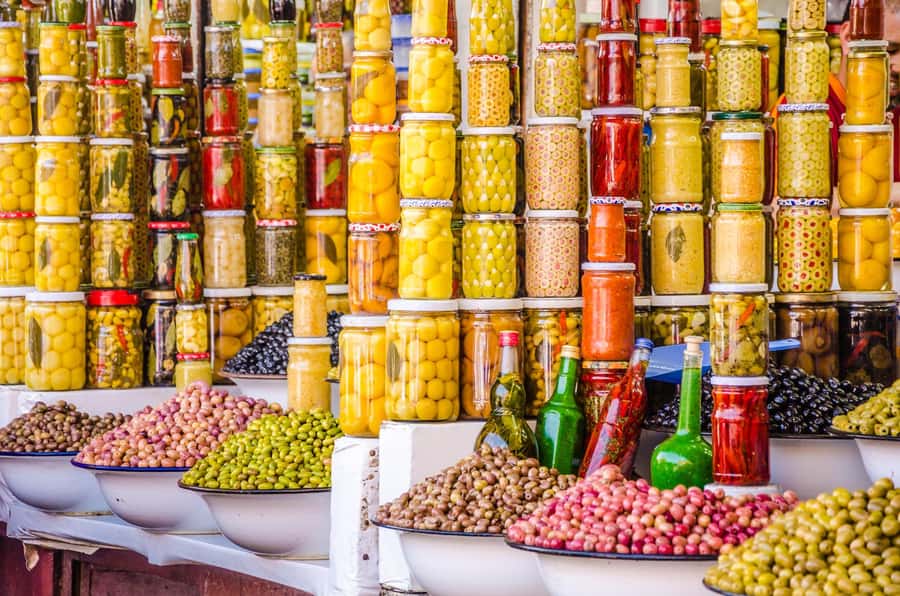
This is where the tour becomes most useful for a first visit. You will encounter spices, textiles, leather goods, pottery, woodwork, and metalwork, along with the sounds and smells of a working market. The guide can explain what you are seeing and help you move through the lanes without losing the route.
The tour may include visits to artisan workshops. These can offer a closer look at traditional techniques, but they can also lead into a sales presentation. An argan oil, soap, spice, or herbal-products stop has been part of some tours.
You do not need to buy anything. One useful warning is that prices at a shop can be much higher than those in local markets. Treat the demonstration as an optional look at Moroccan products, ask the price before showing serious interest, and feel free to say no. If you have allergies, state that clearly before trying any product.
The Medina section is not designed to give you hours for shopping. Instead, it gives you orientation. You will learn where the main lanes lead, how the souks connect to Jemaa el-Fna, and which areas you may want to revisit independently.
Finishing near Jemaa el-Fna
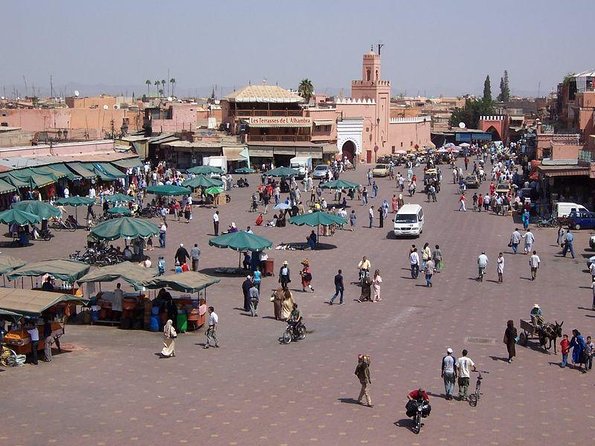
The official finish is at Café de France in Jemaa el-Fna. That is a practical end point because it leaves you close to food, cafés, taxi connections, and the evening activity of the square.
You may also receive lunch suggestions or other local advice from your guide. Ayoub, Mo, Ismail, and several other guides are praised for recommending places to eat and for pointing out areas affected by construction.
The tour does not include a meal or transportation afterward, so plan your next step before the walk ends. If you have a fixed dinner reservation, tell the guide at the start. One group on an afternoon tour needed to leave early for a 5:30 dinner, and the tour had to be adjusted.
The guides make the difference
The most consistently praised part of this experience is the guiding. Guests describe Mo as warm and full of useful facts, Yassine as funny and engaging, Ayoub as patient and flexible, and Mouhssine as friendly and energetic. Other guides named in feedback include Mustapha, Hassan, Abdul, Ismail, Najim, Ahmad, Amid, and Yashim.
That range matters because the tour is not just a route between buildings. A good guide keeps a mixed group together, answers questions, gives cultural context, and adjusts the pace when possible.
Private tours offer more control. A guide can spend longer at the palace, move quickly through a stop that interests you less, or adapt the route for a family group. Shared tours offer a lower price and can be sociable, but you will need to stay with the group.
Crowded streets create one practical problem: hearing. In noisy parts of the Medina, it can be difficult to catch every explanation, especially if the group spreads out. Stay near the guide and ask for a repeat when needed. The provider sends the guide’s name, meeting point, and tips by WhatsApp before the tour, which helps, but the actual meeting area at Café de France can still be confusing because many guides gather there. Contact the provider if you cannot identify your guide.
Cost, pace, and who should book
At $20 per person, the shared tour is good value for a four-hour guided walk, even after adding the 200 MAD in monument fees. The guide is the reason to pay rather than simply follow a map. You are buying explanations, orientation, queue assistance, and help interpreting a city that can be difficult to read at first.
The private option is the better value for a family, a group of friends, or anyone with strong interests in architecture and history. It gives you more freedom, though the monument fees still apply.
The pace is active. You will walk through uneven Medina streets, crowded lanes, and areas with steps. The tour is not recommended for people with mobility impairments, although wheelchair accessibility is listed as available. If mobility is a concern, ask the provider to explain the exact route and current conditions before booking.
The tour is available in English, French, Spanish, and Italian. Ramadan changes the schedule: during the stated Ramadan period of February 18 to March 20, morning tours begin at 9:30 instead of 10:00, and afternoon tours begin at 13:00 instead of 14:00 because monuments close earlier.
Bring comfortable shoes, water, sunglasses, a sun hat, and cash. You should also bring patience. Marrakech is not a quiet museum city, and the best parts of this walk happen amid traffic, sellers, conversations, and sudden changes in pace.
Should you book this Marrakech tour?
Book it if you are visiting Marrakech for the first time, have only a few days, or want help understanding the Medina before exploring alone. The combination of Bahia Palace, Saadian Tombs, Mellah, Kasbah, souks, and Jemaa el-Fna gives you a lot in four hours.
Choose the private option if you want flexibility or are traveling with children. Choose the shared option if price matters and you are happy to follow a group. Keep cash for the two monument tickets, expect crowds, and treat any shop stop as optional.
I would not choose this tour if you want a slow, private visit inside every monument or dislike walking in busy markets. For most first-time visitors, though, it is a practical and well-priced way to get your bearings, learn the city’s story, and identify the places worth returning to on your own.
FAQ
How long does the Marrakech tour last?
The tour lasts four hours.
Where does the tour meet?
The meeting point is in front of Café de France in Jemaa el-Fna Square. If you choose the private option and stay in a riad within the Medina, pickup from the riad reception may be available.
Are the Bahia Palace and Saadian Tombs tickets included?
No. Bahia Palace costs 100 MAD per adult, and the Saadian Tombs cost 100 MAD per adult. These fees are paid in cash on site.
Can non-Muslims enter the Koutoubia Mosque?
The Koutoubia Mosque is viewed from outside only. Entry is restricted to Muslims during prayer times.
Is transportation included?
No. Transportation is not included in the tour price.
What languages are available?
The tour is offered in English, French, Spanish, and Italian.
Can I book a private tour?
Yes. A private group option is available, as well as a shared small-group option.
Just added around Marrakesh
- Marrakesh: Bahia Palace, Ben Youssef Medersa & Secret Garden★ 4.8 · 55 reviews
- Marrakech: Bahia Palace, Madrassa & Souks Guided Tour★ 4.8 · 47 reviews
- Marrakech Palaces and Monuments Half-Day Tour★ 4.1 · 13 reviews
- Marrakech Palaces and Monuments Half-Day Tour★ 5.0 · 11 reviews
- Marrakech: Bahia Palace, Saadian Tombs & Medina Walking Tour★ 4.6 · 63 reviews
- Marrakech: Medina Tour, Bahia Palace and Medrasa Ben Youssef★ 5.0 · 2 reviews
- Marrakech City Tour: Souks, Palaces & Hidden Gems★ 4.7 · 35 reviews
- Marrakech: Medina, Souks, Artisans Guided Tour with Mint Tea★ 4.8 · 19 reviews
Bahia Palace and Marrakech Tours, compared.
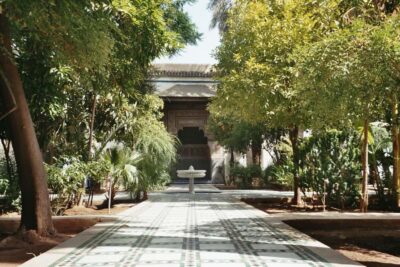
Bahia Palace, Saadian Tombs, & Koutoubia Mosque
Read our review →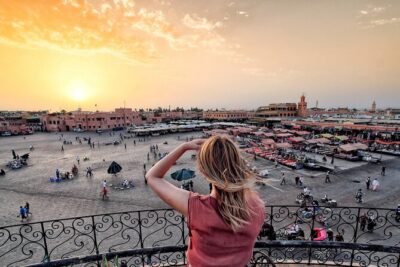
Bahia Palace, Madrasa Ben Youssef and Medina Tour
Read our review →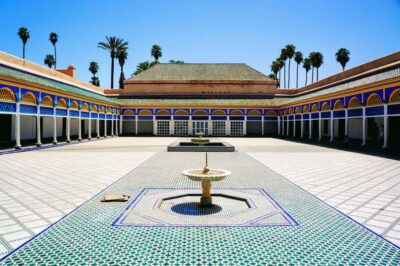
Bahia Palace Guided Tour with Skip-the-Line Entry
Read our review →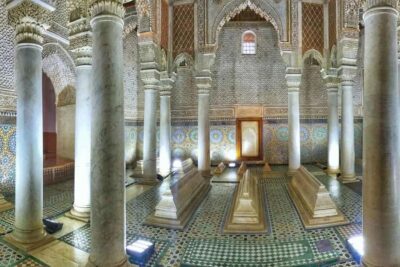
Saadian Tombs, Bahia Palace, Medina and Souk Tour
Read our review →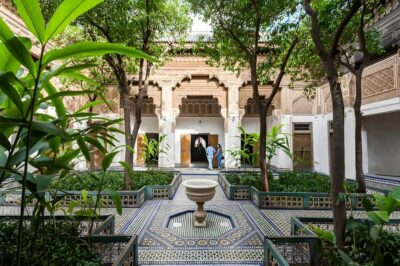
Bahia Palace, Ben Youssef Medersa, & Souks Tour
Read our review →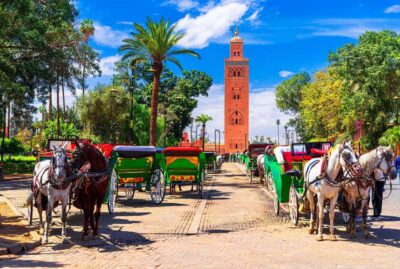
Bahia Palace, Madrasa Ben Youssef & Secret Garden
Read our review →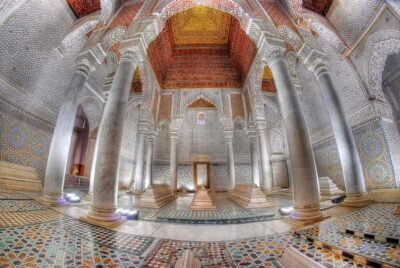
Bahia Palace, Saadian Tombs & Medina Guided Tour
Read our review →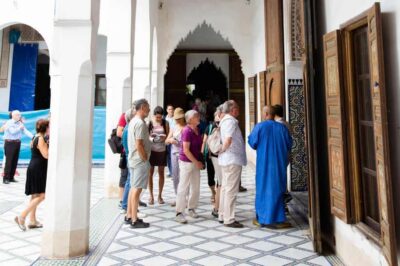
Bahia Palace Guided Tour – Skip-the-Line Access
Read our review →Browse the lists this tour appears in