
REVIEW · COPENHAGEN
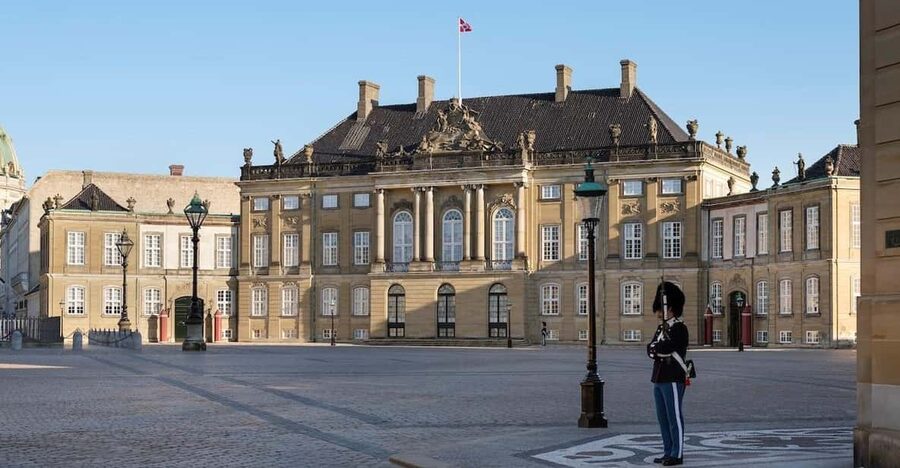
Copenhagen: Amalienborg Palace Museum Entry Ticket
Royal rooms reveal private lives. Copenhagen’s Amalienborg Museum gives you a close look at the Danish monarchy through preserved apartments, personal belongings, and grand ceremonial rooms. I like the family-focused storytelling and the way the palace connects royal objects to real people. I also like that a visit fits easily into a day in central Copenhagen.
The main drawback is scale. At $19 per person, the museum may feel brief if you expect a full palace tour. Plan on roughly 45 minutes to an hour inside, though you can spend longer around Amalienborg Square. You must also exchange and scan your online ticket downstairs before going upstairs, so arrive on time.
Key points to know before visiting
- A 150-year royal story: The museum follows the Danish monarchy through rooms used by several generations of the royal family.
- Five memorable interiors: Look for the Fabergé Chamber, Christian X’s study, Queen Louise’s salon, the royal dining room, and the impressive Gala Hall.
- A real palace setting: The museum occupies Christian VIII’s Palace, one of Amalienborg’s four buildings, within the square where the Royal Family resides.
- Good for families: Children have access to audio content in the exhibition areas, making the visit easier for younger minds to follow.
- Allow 45 to 60 minutes: The route is well arranged, but the museum is not huge.
- Watch the entrance details: Enter Amalienborg Square from Frederiksgade or the Marble Church, then use the first building on your left.
Why Amalienborg Museum is worth your time
Amalienborg is not just a display of crowns and formal portraits. Its strongest feature is the sense of daily life. You walk through rooms preserved as their royal occupants left them, with desks, dining furniture, photographs, paintings, and personal objects doing much of the explaining.
I like this approach because it puts faces and habits behind an institution that can otherwise feel remote. The museum covers about 150 years of royal life, so you get a useful view of changing tastes, family connections, and the way Danish royalty lived from the late 19th century into the modern era.
The setting also matters. Amalienborg is one of Denmark’s main palaces and remains connected to the Royal Family. You are not touring an isolated historic house that has been emptied and rearranged. You are visiting part of a working royal complex, though the museum itself is in Christian VIII’s Palace.
The experience earns a rating of 4.3 from 291 reviews, which fits the overall picture: most people find it enjoyable and well presented, but some consider the admission price high for the amount of space open to the public. That is a fair concern. I would see it as a focused museum visit rather than a full-day attraction.
More Palace Entry Tickets in the world:
- Venice: Doge’s Palace Reserved Entry Ticket
★ 4.6 · 42,716 reviews - Sintra: Pena Palace and Park Entrance Ticket
★ 4.2 · 17,410 reviews - Granada: Alhambra and Nasrid Palaces Entry Ticket
★ 4.6 · 15,130 reviews
Finding the museum in Amalienborg Square
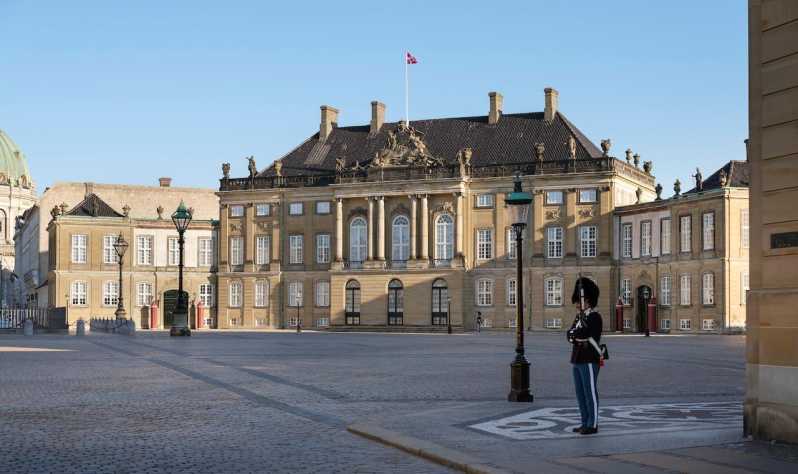
The Amalienborg complex has four palace buildings arranged around a large central square. The museum entrance is in the first building on your left if you enter from Frederiksgade, near the Marble Church.
That instruction is worth taking seriously. Amalienborg’s open square can make the four similar palace buildings feel confusing at first, especially if you arrive expecting a large modern museum entrance. Give yourself a few extra minutes to identify the correct building.
Your online ticket is not the final step at the door. Before going upstairs, you need to go downstairs to the cashier, where staff scan the ticket. This is a small logistical wrinkle, but it can catch you off guard if you expect to walk straight into the exhibition.
Arrive on time. If you are more than 20 minutes late, the ticket is no longer valid. That rule makes it wise to avoid scheduling the museum too tightly between other Copenhagen activities.
The ticket is valid for one day, with entry times based on availability. It includes the museum and all exhibitions, but not a guided tour. Wheelchair access is available. Oversize luggage, large purses, backpacks, bags, food, drinks, pets, and baby strollers are not allowed inside. Assistance dogs are permitted.
Christian VIII’s Palace and the royal route
The museum is housed in Christian VIII’s Palace, one of the four buildings at Amalienborg. Inside, the route moves through royal rooms and exhibition spaces rather than a single grand sequence of state apartments.
The appeal is variety. One room may feel formal and ceremonial, while the next offers a much more personal look at a king or queen. That shift helps you understand the difference between monarchy as public performance and monarchy as family life.
The route is also easy to follow. A well-planned layout guides you from one area to the next, and historical information is placed alongside the rooms and objects. You do not need to arrive with a detailed knowledge of Danish royal names to make sense of the visit.
I would still allow time to read. The museum is not a quick photo stop if you want to understand the family connections and dates. On the other hand, you can move through in about 45 minutes if you focus on the main interiors and displays.
An audio guide is available, including child-friendly audio material in the museum sections. That makes a real difference for families. A seven-year-old is unlikely to be thrilled by a long sequence of formal rooms without help, but short audio explanations aimed at children can give the visit a clear purpose.
The Fabergé Chamber and royal links with Russia
The Fabergé Chamber is one of the museum’s most distinctive stops. It presents hand-crafted Russian jewelry made between 1860 and 1917, with attention to the close family ties between the Danish and Russian monarchies.
The most notable object named here is the Fabergé coronation brooch, made for the coronation of Tsar Nicholas II. Even if jewelry is not your main reason for visiting, this room gives useful context. Royal marriages and family connections linked European courts in ways that shaped politics, ceremony, and personal life.
The chamber also adds a different mood to the palace. Instead of large rooms and heavy furniture, you are looking closely at small, highly worked objects. Take your time here. The value is in the craftsmanship and the family connections, not in the number of pieces on display.
This room may be especially interesting if you enjoy decorative arts or Russian imperial history. If your main interest is architecture, it will be a shorter stop than the Gala Hall or the preserved apartments.
More Museum Visits in the world:
- Venice’s Best: Basilica, Doge’s Palace, Gondola & History Gallery
★ 4.5 · 2,478 reviews - Royal Palace & Prado Museum Skip the Line Guided Tour
★ 4.5 · 1,347 reviews - Venice: City Pass with Museums including Doge’s Palace
★ 4.1 · 1,020 reviews - The Hague: Escher in The Palace Museum Ticket
★ 4.6 · 896 reviews
Christian X and Queen Alexandrine’s dining room
The dining room used by Christian X and Queen Alexandrine is presented almost as it appeared during their time at Amalienborg. They lived in the palace from 1899 until their deaths in 1947 and 1952.
This is one of the strongest rooms for understanding the museum’s method. Rather than showing an empty historic interior, it presents a room connected to two people and several decades of family life. Furniture and table settings help you picture the room in use.
The dates also place the room in a period of major change. Christian X’s reign covered the early 20th century, the First World War, and the Second World War. The dining room itself cannot explain every part of that story, but it gives you a physical setting for the monarchy’s private life during a difficult era.
For me, rooms like this are more useful than a long line of disconnected objects. You can see how a royal family occupied the palace, not just what it collected.
Christian X’s study, preserved in place
Christian X’s study has a more private and personal feel. It has been preserved as it appeared during his years in the palace, from 1899 until his death in 1947.
The room uses dark walls and heavy furniture, a style associated with a gentleman’s study around 1900. The setting also reflects Christian X’s background as an officer. Compared with the bright polish of a ceremonial hall, this room feels serious, workmanlike, and distinctly individual.
You might find this one of the most memorable interiors because it avoids the usual palace spectacle. A desk or private office can say more about a person than a formal portrait. Here, the surroundings suggest routine, discipline, and a public figure’s private working space.
The study is also a good reminder that palace interiors are not all grand receptions. Royal households needed offices, dining rooms, salons, and personal rooms just as any large family household did, although with considerably more ceremony attached.
Queen Louise’s private salon from around 1895
Queen Louise’s private salon offers another change in tone. Dating from around 1895, its interior reflects the more modern decoration of that period.
Paintings and framed family photographs placed on the tables point to Queen Louise’s wide family network across Europe. This is where the museum’s family theme becomes especially clear. The monarchy was not only a Danish institution. It was part of a web of royal marriages and close relationships spanning the continent.
I like the salon because it combines design and biography. You can study the room as an example of late 19th-century taste, then look at the photographs and paintings to see the family connections behind it.
It is also a useful stop for anyone who finds political history too abstract. The room brings the story down to relatives, marriages, children, and household life. You do not need to remember every royal name to understand the basic point: these people lived within a large European family network.
The Gala Hall, eight meters of ceremony
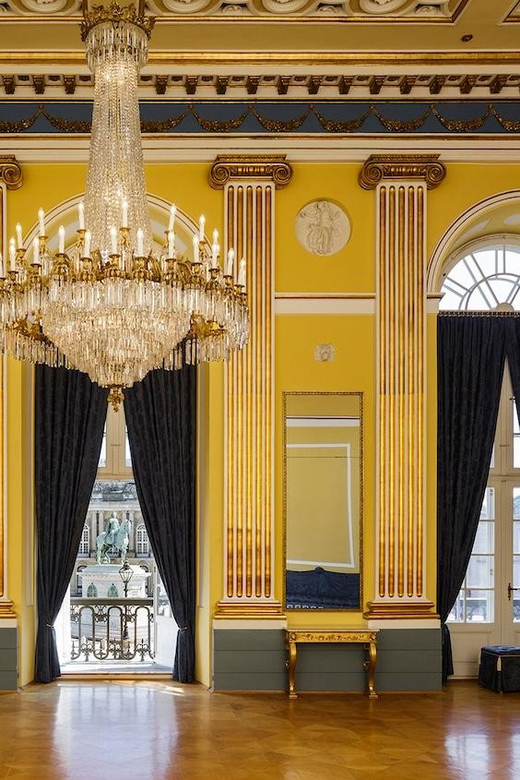
The Gala Hall is the museum’s grandest interior. Its ceiling rises eight meters, with lavish gilding and a view toward the palace square.
In 1794, the Royal Family commissioned Nicolai Abildgaard to design the interior. Sculptor Bertel Thorvaldsen created the sculptures. Those names matter because they connect the room to two major figures in Danish art, not just to royal ceremony.
This is the room where the palace makes its biggest visual impact. After the more intimate studies and salons, the height, gold decoration, sculpture, and outward view create a strong contrast. It was designed to impress, and it still does.
The Gala Hall may be the highlight for first-time visitors who want a classic palace interior. It is also a good place to pause and look carefully at the relationship between architecture, sculpture, and royal power.
Still, do not judge the whole museum by this one room. The smaller apartments provide the personal story, while the Gala Hall explains how monarchy presented itself in public.
The Frederik X exhibition and changing displays
The special exhibition Frederik X: King of Tomorrow ran from March 22 through September 8, 2024. It marked the succession of the Danish throne on January 14 and used photographs, objects, video clips, paintings, and sound to present a portrait of the new king.
If you are reading this after September 8, 2024, do not assume this exhibition remains open. The museum’s permanent rooms are the dependable reason to visit, while special exhibitions can change.
The exhibition format is useful because it adds modern media to the historic rooms. Photographs and objects can show a public figure in ways that a formal palace interior cannot. Video and sound also make the museum feel more accessible to visitors who prefer a guided narrative.
When available, a temporary exhibition can extend your visit beyond the 45 to 60 minutes needed for the main route. It may also make a return visit worthwhile if you have already seen the permanent displays.
Is $19 good value?
At $19 per person, the museum is not a bargain if you measure value by the number of rooms alone. Some people will feel that there is not enough to see for the price, particularly if they move quickly and finish in 45 minutes.
I think the value depends on your interest. You are paying for access to preserved royal interiors, the Fabergé display, the Gala Hall, and the wider story of the Danish monarchy. For anyone interested in royal families, decorative arts, interiors, or Danish history, that is a reasonable use of an hour in Copenhagen.
The price is harder to justify if you want a large palace complex with many open wings and a long guided visit. This is a compact museum, not an all-day attraction. I would pair it with time in Amalienborg Square and nearby central Copenhagen rather than treating it as the sole event of your day.
The audio material improves the value for families, especially because child-focused content is available. The lack of a guided tour is less important if you are happy to use the audio guide and read the displays at your own pace.
Free cancellation up to 24 hours before the visit and the option to reserve now and pay later add flexibility. They do not change the museum’s size, but they can help if your Copenhagen schedule is still shifting.
Who will enjoy Amalienborg Museum most?
I would recommend this experience to you if you enjoy:
- Royal families and European court connections
- Historic interiors and furniture
- Small objects with a clear personal story
- Museums that can be visited in under an hour
- Family attractions with child-friendly audio material
- Central Copenhagen sights that fit easily into a walking day
Families should note the stroller rule. Baby strollers are not allowed inside, and large bags must stay out as well. The museum is wheelchair accessible, but you should still plan around the building’s ticket-check process downstairs.
If your main goal is a guided architectural tour, this may feel limited because a guided tour is not included. If you prefer to move at your own pace, the self-guided format is a plus.
Should you book this palace museum?
Book it if you want a focused, well-organized look at how Denmark’s Royal Family lived, not just a quick glimpse of palace decoration. The preserved dining room, Christian X’s study, Queen Louise’s salon, Fabergé jewelry, and Gala Hall give you several different ways into the story.
I would skip it only if $19 feels too high for a visit lasting about an hour, or if you are looking for a much larger palace tour. For most visitors with an interest in Danish royalty, art, or interiors, it is a worthwhile central Copenhagen stop. Arrive on time, use the correct building entrance, allow for the downstairs ticket scan, and treat the museum as one part of a broader visit to Amalienborg.
FAQ
Where is the Amalienborg Palace Museum?
The museum is in Christian VIII’s Palace, one of the four palaces that make up Amalienborg in Copenhagen, Region Zealand, Denmark.
Which building contains the museum entrance?
If you enter Amalienborg Square from Frederiksgade or the Marble Church, the entrance is in the first building on your left.
How long is the ticket valid?
The ticket is valid for one day. Available starting times depend on the date and booking availability.
What happens if I arrive late?
If you arrive more than 20 minutes late, your ticket is no longer valid.
Do I need to exchange my online ticket?
Yes. Before going upstairs to the exhibition, you need to go downstairs to the cashier to present and scan your online ticket.
Is a guided tour included?
No. The admission ticket includes entry to the museum and all exhibitions, but not a guided tour.
Is the museum wheelchair accessible?
Yes, the museum is wheelchair accessible.
Are bags, food, or strollers allowed inside?
No. Large bags, backpacks, large purses, oversize luggage, baby strollers, food, and drinks are not allowed inside. Pets are also not allowed, although assistance dogs are permitted.
Can I cancel my booking?
Yes. You can cancel up to 24 hours in advance for a full refund. The reserve-now-and-pay-later option is also available.
Just added around the world
- Pena Palace, Moorish Castle,Quinta ad Regaleira:Walking tour★ 5.0 · 3 reviews
- Porto Bishop’s Palace Guided Tour★ 4.5 · 8 reviews
- Paris: Versailles Palace and Queen Hamlet E-Bike Tour★ 5.0 · 126 reviews
- Phnom Penh: Full-Day City Tour with Royal Palace & Killing …★ 4.7 · 2 reviews
- Petchaburi Temples & Royal Palace – small Join Group Tour★ 4.6 · 46 reviews
- Paris: Versailles Golf Cart & Bike Tour with Palace Entry★ 4.8 · 58 reviews
- Petit Palais Paris Museum of Fine Arts Tour with Tickets★ 4.2 · 3 reviews
- Paris: Palace of Versailles Private Tour with Transportation★ 5.0 · 2 reviews
Palace Entry Tickets, compared.





Buckingham Palace: The State Rooms Entrance Ticket
Read our review →

Prague Castle and Lobkowicz Palace Entry Tickets
Read our review →Browse the lists this tour appears in