
REVIEW · MADRID
VIP PRIVATE: EL Escorial Monastery & Palace complete experience
Royal tombs, painted halls, and a library with forbidden books make El Escorial far more than a day trip. This private tour gives you a focused visit to Spain’s grand Renaissance monastery, with an English-speaking guide, private transport, and time to ask questions. I especially like the one-group format and the chance to explore both the famous rooms and quieter corners, including the monks’ gardens and Trade Houses.
I also like the guide-led approach. Nacho, a historian and artist, has earned especially warm praise for putting the building, paintings, and royal history into clear context. The main drawback is the pace: a full visit in three to four hours can feel demanding, especially if you want to linger over every painting or have limited mobility.
Key points to know before booking
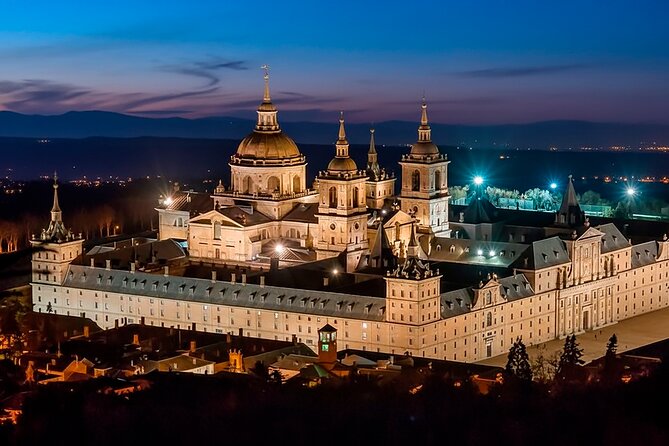
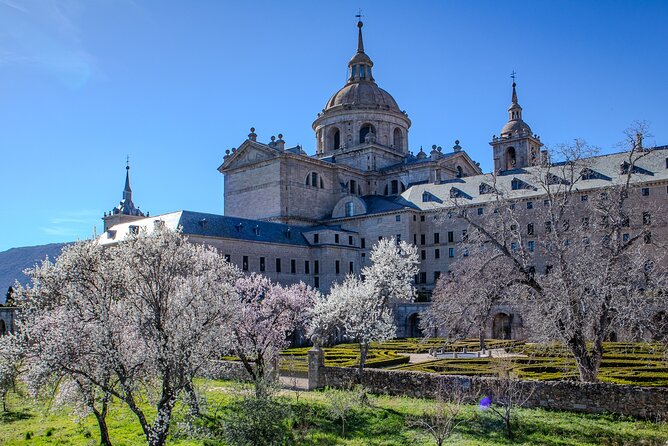
- See the full royal complex: The visit covers the basilica, monastery, royal pantheon, Golden Library, Trade Houses, and monks’ gardens.
- A genuinely private experience: Only your group takes part, so you can ask questions and move at a pace that suits you.
- Nacho is a major strength: His background as both a historian and artist adds useful context to the paintings and architecture.
- Skip-the-line access saves time: The experience includes priority entry, which matters during busy periods.
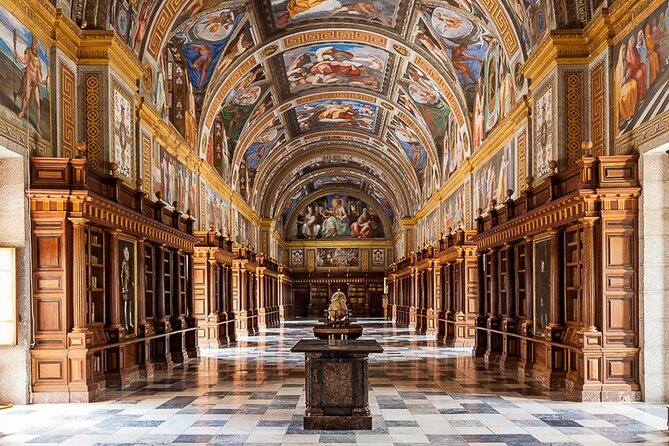
- The Golden Library is the highlight: Frescoes, medieval codices, forbidden books, and royal collections give this room unusual character.
- Plan for moderate walking: The complex is large, and the full visit includes several indoor and outdoor areas.
Why El Escorial deserves a half-day from Madrid
Madrid has enough museums and palaces to fill several days, but El Escorial offers something different. It is a royal monastery, basilica, palace, burial place, library, and religious center joined in one enormous complex.
Philip II ordered the building in the 16th century. The result is serious rather than showy, with strong lines, vast courtyards, religious rooms, royal apartments, and carefully arranged works of art. You are not simply visiting a church or palace. You are seeing how Spanish monarchy, Catholic faith, royal power, and Renaissance learning were brought together under one roof.
That scale is the reason a guide helps. Without context, the building can feel like a long sequence of grand rooms. With a good guide, each part has a purpose. You can understand why the basilica mattered, why the royal crypt was placed below it, and how the library reflected Philip II’s ambitions as a ruler and collector.
The tour lasts about three to four hours. That is enough time for a broad visit, but not so much that El Escorial takes over your entire day in Madrid. You meet at Avenida de Juan de Borbón y Battenberg, 2, in San Lorenzo de El Escorial, and return to the same meeting point at the end.
More Private Palace Tours in Madrid
- Madrid Royal Palace and Prado Museum Private Tour with Transfers
★ 5.0 · 185 reviews - Madrid: Royal Palace tour – semi private or private
★ 4.9 · 182 reviews - Royal Palace of Madrid Guided Tour Small Group or Private
★ 4.7 · 130 reviews
A private ride and a more personal visit
This is designed for one group only. That changes the feel of the experience. You do not need to wait while a large crowd gathers, and you can ask for clarification when a painting, royal figure, or religious custom is unfamiliar.
A comfortable van is used for the outing, which makes the journey easier than arranging separate transport yourself. The supplied information does not give a travel time from central Madrid, so you should confirm the exact pickup and transport arrangements before booking if you are staying in the city center.
The private format is especially useful if your group has mixed interests. One person may want to focus on architecture, another on Spanish royalty, and another on art. A guide can respond to those priorities more easily than a standard group tour.
Skip-the-line access is another practical advantage. El Escorial has a great deal to see, and standing outside waiting to enter would cut into an already tight schedule. Priority entry does not make the complex smaller, but it gives you more useful time inside.
The Basilica of San Lawrence
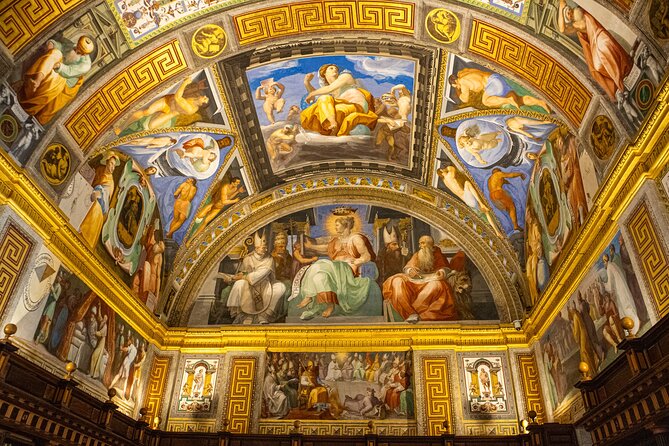
The basilica is the architectural heart of El Escorial. It is described as one of the most important and imposing Spanish Renaissance basilicas of the 16th century, and the interior is meant to make a strong first impression.
Expect a grand, formal space with an emphasis on proportion, order, and religious ceremony. The basilica is not treated as a quick photo stop. It is one of the central parts of the full visit, and your guide can help explain how it fits into Philip II’s wider plan for the complex.
I like this part of the tour because it gives you the essential visual lesson of El Escorial: power here is expressed through scale and discipline. The building does not depend only on decoration. Its size, layout, and connection to the monastery and royal burial areas all matter.
If you are mainly interested in art, the basilica still deserves attention. The interior helps you understand the setting in which the paintings, sculptures, and religious ceremonies were meant to be seen.
The monastery, monks’ quarters, and royal paintings
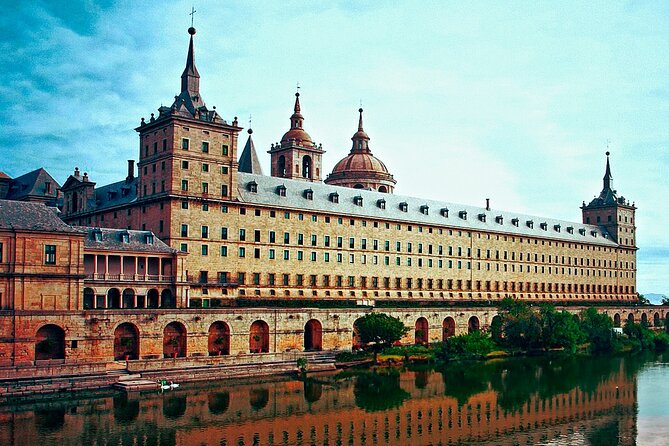
After the basilica, the tour continues through the monastery itself. You see the monks’ quarters and refectory, along with paintings associated with major European artists such as Velázquez, Tintoretto, and Titian.
This is where the guide’s art background can make a real difference. A list of famous names is not enough. You want help seeing what makes a painting important, how it relates to the room, and why certain works were selected for this royal and religious setting.
The refectory gives the visit a more everyday side. It reminds you that El Escorial was not only a symbolic palace. Monks lived and worked here, and the complex functioned as a working religious institution. That contrast between royal ceremony and monastic routine is one of the most interesting parts of the visit.
The amount of art may also be tiring. You will encounter important paintings in a setting packed with architecture, religious objects, and royal associations. I recommend listening for the guide’s main points instead of trying to remember every name and date.
More Private Palace Tours in Spain
- Skip the Line Royal Palace Madrid Tour Semi-Private 8ppl max
★ 5.0 · 51 reviews - Private tour of the royal palace, private guide, fast entrance and pick up at the hotel.
★ 5.0 · 42 reviews - Private VIP tour Royal Palace and city tour. All of Madrid in one day
★ 5.0 · 42 reviews - Madrid Royal Palace Tour – Semi private
★ 5.0 · 31 reviews
The Pantheon of the Spanish Kings
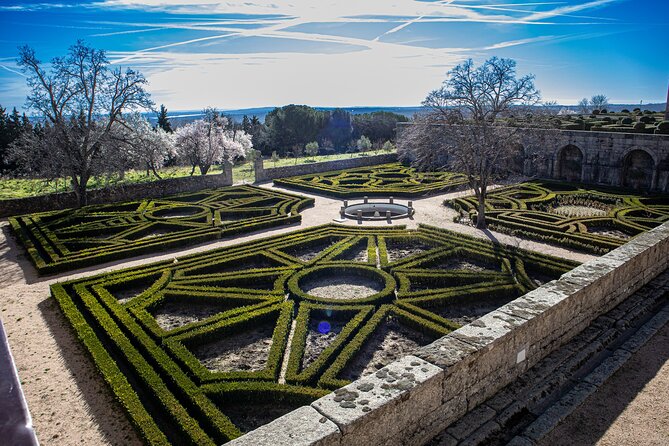
Below the main complex is the Pantheon, where Spanish kings and royal family members have been buried since the 1500s. This is one of the most powerful stops because it brings the political story of Spain into a confined, ceremonial space.
The royal crypt is not light or casual. Its purpose is solemn, and the setting encourages you to slow down. You see how the monarchy presented continuity across generations, with royal burial serving as both a family matter and a statement of political order.
A guide is particularly useful here because the names and succession lines can become confusing. Nacho’s ability to answer questions and place events in context is valuable in a room where a simple list of monarchs would not tell you much.
The crypt may be less comfortable for anyone who dislikes enclosed spaces or solemn interiors. It is also one of the places where a moderate level of physical fitness matters, since the full route involves walking through a large complex and reaching different sections.
The Golden Library and its forbidden books
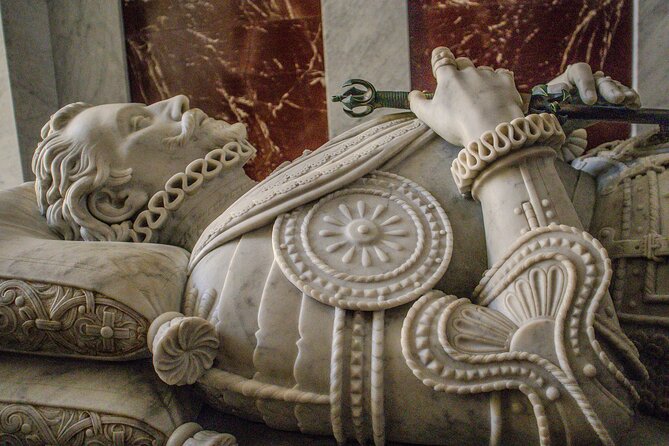
For many people, the Golden Library is the tour’s strongest feature. It was created under Philip II and is known for its Renaissance design, painted ceiling, medieval codices, and books that were forbidden by the Inquisition.
The room offers a rare look at how power and learning worked together in royal Spain. A library like this was not simply a quiet place to read. It reflected what the crown wanted to collect, protect, study, and control.
Look up as well as down. The ceiling frescoes are a major part of the room, and it is easy to focus on the shelves while missing the painted decoration overhead. You might also find that the objects on display help make the library feel like a working intellectual collection rather than a decorative room.
The library is described as a world reference among Renaissance libraries, with some of Spain’s most valuable specimens. That does not mean you should expect to inspect every book closely. Much of the value comes from seeing the collection as a whole and understanding its place in Spanish culture.
This is a good point to ask questions. If you are curious about censorship, medieval manuscripts, Philip II, or the role of books in the Spanish monarchy, the private format gives you room to explore those subjects instead of moving on with a large group.
Trade Houses and views toward Mount Abantos
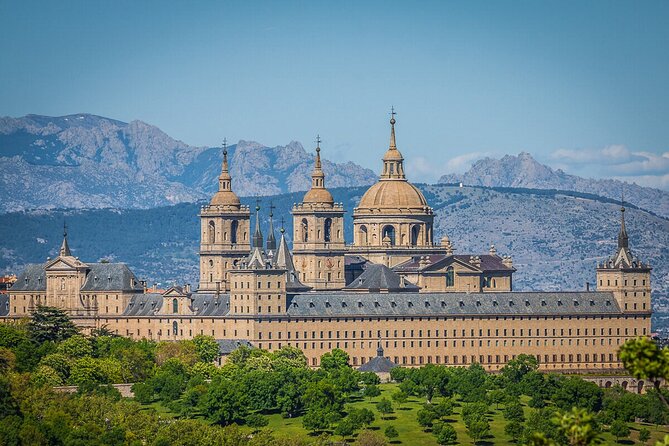
The Trade Houses, or Lonja, add an architectural and outdoor element to the visit. These buildings were linked to the Austrias’ monastery and palace complex, and they provide views toward the Guadarrama National Park and Mount Abantos.
This stop helps break up the indoor route. After the basilica, monastery, crypt, and library, stepping outside gives you a chance to reset and see how El Escorial relates to its surroundings.
The views are part of the experience, not just a background for photographs. The setting helps explain why this location suited Philip II’s enormous project. From the Trade Houses, the complex feels connected to the mountain area rather than isolated from it.
Because the tour is private, you can ask your guide to point out the relationship between the building and the surrounding area. The supplied information does not promise an extended photo stop, so do not expect a long outdoor break. Still, the views make this section worthwhile.
The monks’ gardens and a quieter final stop
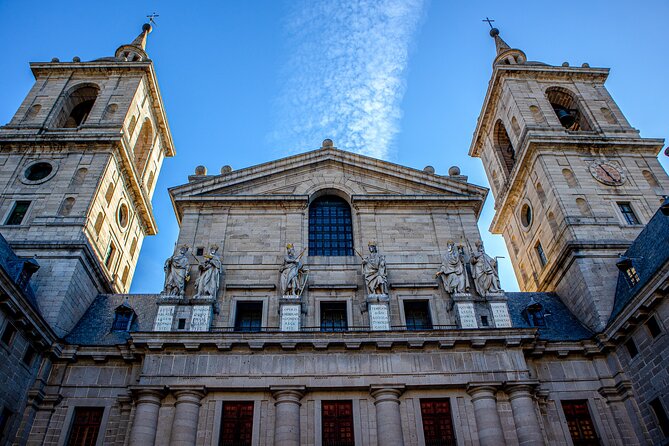
The monks’ gardens, known as the Frailes, offer a softer ending to the formal interiors. They were designed in Renaissance style under Philip II and are described as carefully maintained gardens.
I like having this stop at the end because it changes the mood. The basilica and royal crypt are solemn. The library is concentrated and visually busy. The gardens let you finish with open air, clear lines, and views of the surrounding area.
Do not expect a sprawling park visit. These are part of the monastery complex, and the tour remains focused on El Escorial rather than becoming a separate garden excursion. Their appeal lies in the contrast they provide and in the way they show the planned life of the monastery.
If you need a quieter moment during the tour, this may be the place. You can take in the proportions of the building, notice the gardens’ design, and think back over the royal and religious spaces you have just seen.
Is $131.65 per person good value?
At $131.65 per person, this is not the cheapest way to see El Escorial. You are paying for a private English-language guide, private group access, transport in a comfortable van, and a full visit rather than a quick entrance.
The price makes the most sense for couples, families, or small groups that value personal attention. If you split the cost across several people, the private arrangement becomes easier to justify, especially when group discounts are available.
The strongest value comes from the guide. A building this large can easily become a blur of rooms and royal names. A historian and artist such as Nacho can turn the visit into a connected story, answer your questions, and point out details you might otherwise pass without noticing.
The tour is less compelling if you prefer to explore independently, already know El Escorial well, or want to spend an entire day moving at a very slow pace. Three to four hours gives you the major sections, but the schedule may feel brisk if you want long periods for photography or close study.
Who will enjoy this El Escorial tour most?
I would recommend it to you if you want the major parts of El Escorial explained in one well-organized visit. It suits people interested in Spanish monarchy, Renaissance architecture, religious art, old books, and the history of royal institutions.
It is also a strong choice for families or friends who want to stay together. The private setting means you can ask simple questions without worrying about holding up a large group.
Art lovers should pay attention to the guide’s ability to discuss Velázquez, Tintoretto, and Titian. Readers and history enthusiasts will get the most from the Golden Library and its medieval codices. Anyone interested in royal ceremony will likely find the Pantheon especially memorable.
The main caution is physical. You should have a moderate fitness level, since the complete visit covers a substantial complex and includes several sections. If you tire easily, ask the provider about the exact route and the amount of walking before you commit.
Booking, timing, and cancellation advice
The experience is offered in English and is usually booked about 20 days ahead. That suggests you should reserve early if your Madrid dates are fixed, especially if you want a particular guide or departure time.
You meet at Avenida de Juan de Borbón y Battenberg, 2, in San Lorenzo de El Escorial. The tour ends back at that same meeting point. Confirmation is provided when you book.
Free cancellation is available if you cancel at least 24 hours before the local start time. Changes or cancellations made less than 24 hours before the start are not accepted for a refund.
Should you book it?
Book this tour if you want a private, guided look at the entire El Escorial complex, not just a quick visit to the basilica. The Golden Library, royal crypt, major paintings, gardens, and views toward Mount Abantos give you a broad and memorable half-day.
The price is easiest to defend when you are sharing it with family or friends and care about having a guide who can explain the art and royal story. Nacho’s reported strength as both historian and artist is a real reason to consider this option.
Skip it if you want complete freedom to linger, need a slower pace, or are looking only for the lowest-cost entrance. For everyone else, this is a focused way to understand one of Spain’s most important Renaissance monuments without losing time in lines or wandering through its many rooms without context.
FAQ
Where does the El Escorial tour start?
It starts at Avenida de Juan de Borbón y Battenberg, 2, 28200 San Lorenzo de El Escorial, Madrid, Spain.
Where does the tour end?
The activity ends back at the meeting point in San Lorenzo de El Escorial.
How long does the experience last?
The tour lasts approximately three to four hours.
Is the tour private?
Yes. Only your group participates in the activity.
Is the tour offered in English?
Yes. English is the offered tour language.
What parts of El Escorial are included?
The full visit includes the Basilica of San Lawrence, monastery, monks’ quarters, refectory, Pantheon and royal crypts, Golden Library, Trade Houses, and monks’ gardens.
Does the tour include the Golden Library?
Yes. The Golden Library is part of the full visit, including its frescoes, books, medieval codices, and displayed works and objects.
Are skip-the-line tickets included?
Skip-the-line access is included in the experience.
How much does the tour cost?
The listed price is $131.65 per person. Group discounts are available.
Can I cancel for a full refund?
Yes, if you cancel at least 24 hours before the experience’s local start time. Cancellations made less than 24 hours before the start are not refundable.
Just added around Madrid
- Royal Palace of Madrid Skip the Line Guided Tour★ 5.0 · 6 reviews
- Private VIP visit El Escorial Palace, Monastery, Villa & Garden★ 5.0 · 25 reviews
- Private tour of the royal palace, private guide, fast entrance and pick up at the hotel.★ 5.0 · 42 reviews
- Private tour of Toledo & Madrid Royal Palace included from Madrid with pick up★ 5.0 · 2 reviews
- Guided Tour in Madrid’s Royal Palace★ 3.5 · 3 reviews
- Madrid Highlights Private Tour with Prado Museum & Royal Palace★ 4.5 · 6 reviews
- Private tour of the Royal Palace of Madrid★ 5.0 · 9 reviews
- Premium Tour Royal Palace of Madrid : expert guide + no normal queue★ 5.0 · 17 reviews
Private Palace Tours, compared.
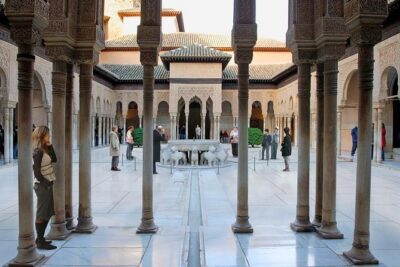
Alhambra Private/Small Group Tour & Nasrid Palaces Skip the Line
Read our review →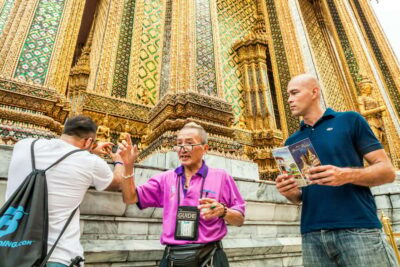
Grand Palace, Wat Pho, and Wat Arun Private Tour
Read our review →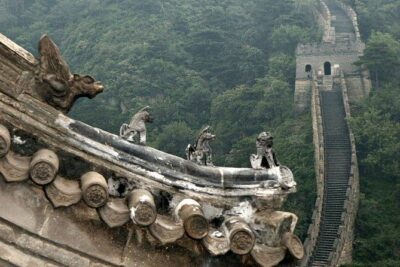
Mutianyu Great Wall&Summer Palace Excursion:Group/Private Options
Read our review →
Private Tour of Sintra, Cabo da Roca and Cascais with 2 Palaces
Read our review →
Private 4hrs Venice Tour: Doge’s Palace, Grand Canal & St Mark’s
Read our review →
Knossos Palace Skip-the-Line Ticket & Private Guided Tour
Read our review →
Private Tour Sintra from Lisbon Palaces of Pena and Regaleira
Read our review →Browse the lists this tour appears in