
REVIEW · GRANADA
Alhambra and Nasrid Palaces Private Sensory Tour
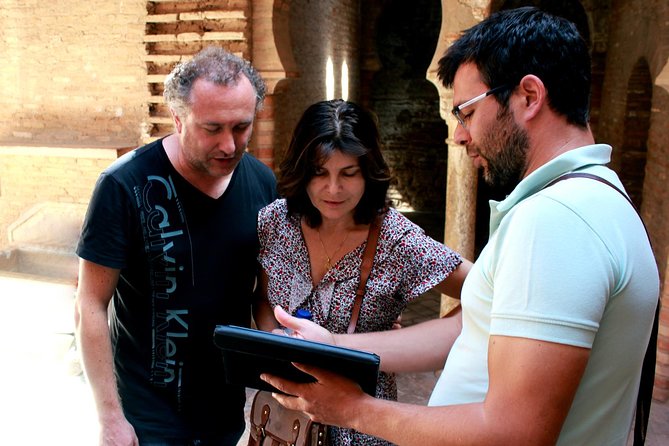
The Alhambra rewards a slow, curious visit. I like the private local guide and the sensory touches, especially the chance to handle items linked to Nasrid daily life and taste Arabic pastry. I also like the planned access to the Alhambra, which helps you make the most of a short stay in Granada. The main caution is the timing: the advertised tour lasts about three and a half hours, yet the listed stop times add up to considerably longer, so you should confirm the exact schedule before booking.
This is a strong choice if you want the palace explained rather than simply photographed. The guide uses single-use headsets, useful in courtyards and large halls, and the visit covers the Nasrid Palaces, Generalife, and Alcazaba. It costs $253.43 per person, so its value depends heavily on how many people are in your private group.
Key points to know before you book

- A private guide keeps the visit personal: Only your group takes part, making it easier to ask questions and control the pace within the site’s rules.
- The sensory format adds more than visual detail: You may handle objects connected with Nasrid daily life and sample Arabic pastry.
- The three main Alhambra areas are included: The route covers the palaces, gardens, and military fortress.
- The Nasrid Palaces require careful timing: Entry is tied to an assigned time slot, and the Alhambra may alter the order of the visit.
- The price favors small groups: At $253.43 each, the private format is easier to justify for families or friends sharing the experience.
- The walking is not trivial: You need a moderate level of physical fitness, with time spent moving between courtyards, halls, gardens, and fortress paths.
Why a private Alhambra visit can be worth the cost
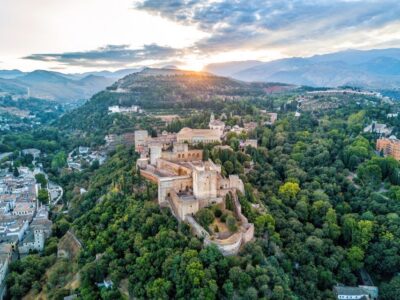
The Alhambra is not one building. It is a hilltop complex of palaces, gardens, military works, courtyards, towers, and remains of a once-living city. Without some structure, you can admire the tilework and carved stucco while missing how the parts fit together.
That is where this tour earns its keep. A private guide can connect the site’s military beginnings with its later role as the royal residence of Granada’s Nasrid rulers. You are not just looking at a pretty courtyard. You are seeing a citadel that included barracks, government rooms, royal residences, gardens, and homes for people who served the court.
The private setup also matters if your group has mixed interests. You can ask for more detail about architecture, daily life, military design, or the fall of the Nasrid kingdom. A large group tour often has to keep moving. Here, your questions have a better chance of shaping the visit.
The price is still a serious consideration. At $253.43 per person, this is not a budget admission with a quick explanation. It makes the most sense for a family, couple, or group of friends that places a high value on personal guiding and can share the benefits of a private booking. If you mainly want entry and a quick look, the cost may feel steep.
The strong satisfaction score, 4.8 from 79 ratings, supports the idea that the guiding is the heart of the experience. One family praised Antonio in particular, describing his explanations as excellent. Another Spanish-language comment highlighted a guide who made several hours pass quickly through humor and clear storytelling. That gives you a useful clue: this tour works best when your guide brings energy to the history, not just facts.
More Private Palace Tours in Granada
- Alhambra Private/Small Group Tour & Nasrid Palaces Skip the Line
★ 4.5 · 921 reviews - Alhambra with Nazaries Palaces Private Tour
★ 5.0 · 605 reviews - Private Alhambra Highlights Tour Including the Nasrid Palaces
★ 5.0 · 423 reviews
Entering the Alhambra from the rocky hill
The meeting point is at P.º de la Sabica, 15, in Granada, near public transportation. From there, you enter a site built on a difficult-to-reach rocky hill above the River Darro. Its reddish defensive walls were designed to keep the outside world from seeing the palaces and gardens within.
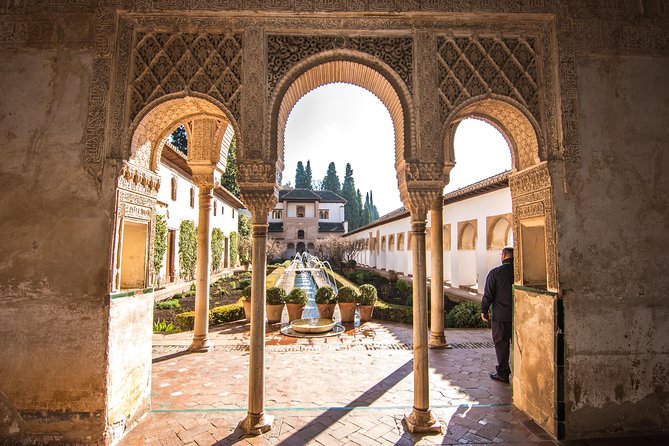
That contrast is one of the Alhambra’s great pleasures. From the approach, the fortress can look stern and defensive. Inside, the mood changes to delicate columns, water channels, patterned tiles, carved surfaces, and carefully framed views.
The guide’s job is to help you read that change. The site began as a military area, then became the residence of Granada’s royal court after the Nasrid kingdom was established in the 13th century. The first major palace was built by Mohammed ibn Yusuf ben Nasr, known as Alhamar.
You will also see signs of the larger court city that once occupied the hill. The Alhambra was not only a palace for kings. Its medina included homes for noblemen and ordinary residents, along with the practical buildings needed to support court life.
The route involves walking across a large historic complex. The supplied guidance calls for moderate physical fitness, so this is not an ideal outing if you need a completely level, low-effort visit. You should also expect the Alhambra Trust to control access and occasionally change the order of the route.
The Nasrid Palaces and their carefully framed rooms
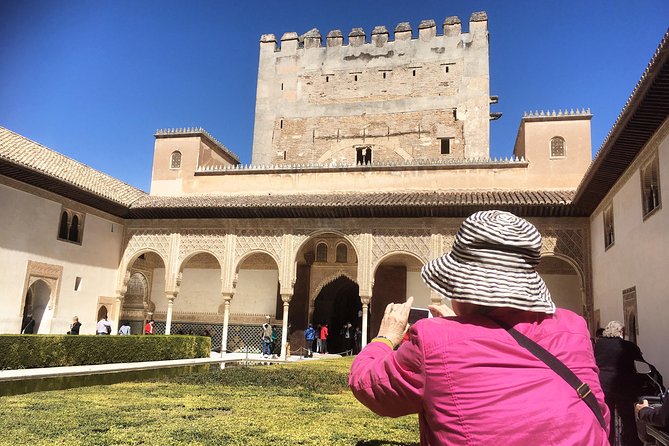
The Nasrid Palaces are the main reason many people come to the Alhambra, and this tour gives them a central place. They were the regular residence of Granada’s kings, with construction beginning in the early 14th century.
The palace complex is usually understood through three main sections: the Mexuar, the Palace of Comares, and the Palace of the Lions. Each served a different purpose, and the sequence helps you see how public business gradually gave way to royal privacy.
The Mexuar is the oldest of the three areas. It was used for meetings between the king’s ministers and as a courtroom. This is where the practical work of government took place. It is a useful reminder that the Alhambra was a working seat of power, not merely a private retreat.
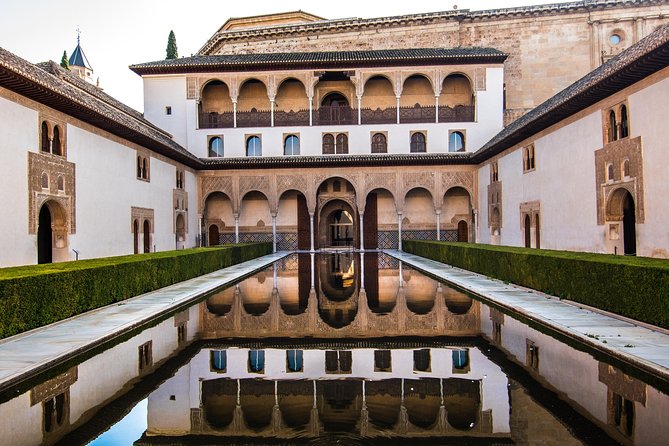
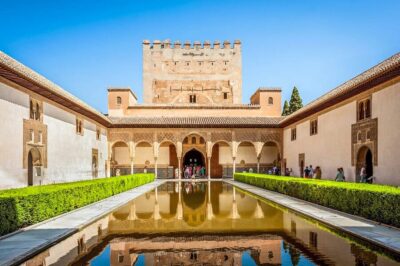
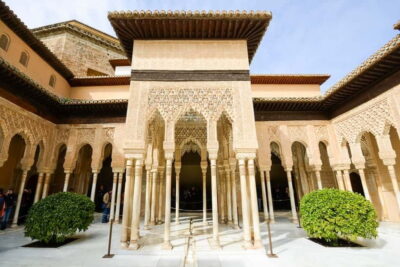
The Palace of Comares dates from the time of Yusuf I. Its rooms are arranged around the Courtyard of the Myrtles, a long, elegant space where water and architecture work together. The side exits lead toward the Hall of the Ambassadors and the Hall of the Boat.
The Hall of the Ambassadors sits inside the Tower of Comares. This is one of the places where scale and decoration make a political point. The room was designed for royal presence and formal audiences, and your guide can help you understand how the surrounding architecture supported that role.
The Palace of the Lions belongs to the reign of Muhammed V. It centers on the Courtyard of the Lions, with halls arranged around it. The named rooms include the Hall of the Mocarabes, Hall of the Kings, Hall of the Two Sisters, Hall of the Ajimeces, the Daraxa viewpoint, and the Hall of the Abencerrajes, along with the Harem.
This part of the visit is especially good for anyone who enjoys architectural detail. The Alhambra’s appeal lies in the relationship between water, light, surface decoration, and proportion. You will see Arabic architectural design and celebrated tilework, but the value of a guide is in explaining how those details shape the rooms rather than simply pointing them out.
The stated duration for the Nasrid Palaces is 40 minutes. That is enough for a focused introduction, but it may feel brief if you want to linger in every room. The Alhambra also assigns entry times for the palaces, so the group must follow the schedule rather than wander freely.
A sensory layer: objects, pastry, and clear explanations
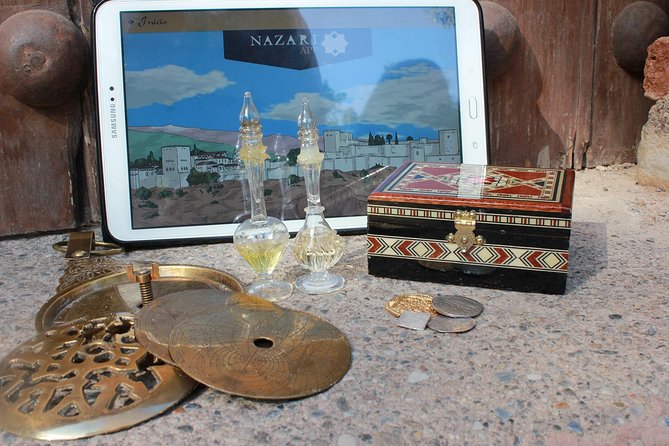
The sensory element gives this tour a different feel from a standard palace walk. You are meant to engage with more than walls and decoration. The experience includes items connected with everyday life during the Nasrid period, allowing you to think about the people who lived and worked behind the formal rooms.
That detail is valuable because royal architecture can otherwise become a parade of names and dates. A household object or daily-use item can make the past easier to picture. It shifts your attention from the palace as a monument to the palace as a place where people ate, worked, prayed, governed, and slept.
You also receive a tasting of Arabic pastry. It is a small feature, but it fits the purpose of the tour. Food can offer a simple point of contact with the culture that shaped Granada. Do not book this expecting a full meal. It is a snack tasting added to the guided visit.
Single-use headsets are included so you can hear the guide clearly. That is useful in open courtyards, where voices can scatter, and in busy rooms where several groups may be moving nearby. There is a small inconsistency in the supplied details: one section says single-use headsets are included, while another says headphones are not included. I would clarify this with the operator before arrival, especially if hearing the guide clearly is important to you.
More Private Palace Tours in Spain
- Alhambra Skip-the-line Private Tour including Nasrid Palaces
★ 5.0 · 371 reviews - Granada : Private Alhambra Tour + Nazaries Palaces (VIP)
★ 4.5 · 279 reviews - Granada: Alhambra and Nasrid Palaces Private Tour
★ 4.9 · 242 reviews - Private Tour to The Alhambra with Nasrid Palaces in Granada
★ 5.0 · 192 reviews
Generalife gardens, with a quieter pace
The Generalife is the garden area of the Alhambra complex. Its design uses a limited amount of building and gives the gardens the leading role. The description promises surprises around each corner, and that is a fair way to understand the appeal: the pleasure comes from moving through a sequence of planted spaces, water features, and views rather than entering one grand hall.
The planned time here is 20 minutes. That is enough to get a taste of the gardens, but not enough for a slow botanical visit. If you enjoy quiet courtyards and garden design, you may wish the schedule allowed more time.
Still, the Generalife provides a needed change after the enclosed palace rooms. You move from carved ceilings and tile patterns into open air, where the setting around the Alhambra becomes part of the experience. The garden stop also helps explain how royal life included outdoor spaces designed for rest and pleasure.
The Alcazaba reveals the Alhambra’s military purpose
The Alcazaba is the oldest and most plainly military part of the complex. Its job was defense, not ceremony. The entrance was positioned at the foot of the Tower of Homage, and a simple L-shaped approach kept the main gate hidden from outside view.
That small design detail says a lot. The Alhambra was built to protect power as well as display it. Towers, walls, controlled approaches, and high ground made the fortress difficult to attack and helped its occupants monitor the surrounding area.
The planned time at the Alcazaba is 30 minutes. You should expect a more exposed, fortress-like section of the visit, with less decorative polish than the Nasrid Palaces. The reward is a clearer sense of how the complex functioned before you reach the royal rooms.
If your main interest is tilework and palace decoration, this stop may feel less immediately exciting. I would still keep it in the plan. Without the Alcazaba, it is easy to reduce the Alhambra to a beautiful residence and forget that it began as a defensive stronghold.
Timing, tickets, and the important schedule question

The experience is advertised at approximately three hours and 30 minutes. Yet the listed stop times show four hours for the Alhambra, 40 minutes for the Nasrid Palaces, 20 minutes for the Generalife, and 30 minutes for the Alcazaba. Those individual times total more than five hours.
That is the biggest practical issue here. The wording may reflect overlapping timing, a broad site description, or an administrative error. Either way, do not build a tight same-day plan around the three-and-a-half-hour figure until the operator confirms the actual meeting and finishing time.
The tour includes admission tickets and promises quick access through a skip-the-line arrangement. That can save meaningful time at one of Spain’s busiest sights. It does not mean you can ignore the assigned palace entry time. If your chosen slot is unavailable, the supplier may place you in a new time slot because demand is high.
The Alhambra also requires the full name, date of birth, and passport details for every person in the group when booking. If those details are missing, access may be denied. Enter them carefully, because palace entry is tied to personal identification.
The Alhambra Trust can restrict access to certain areas or change the order of the visit. If that happens, the tour is adapted without reducing the planned visiting time. This is useful to know if you have your heart set on seeing the route in a specific order.
Cancellation is strict. The experience is non-refundable and cannot be changed for any reason. I would only book once your names, dates, and schedule are settled.
Who will get the most from this private tour?
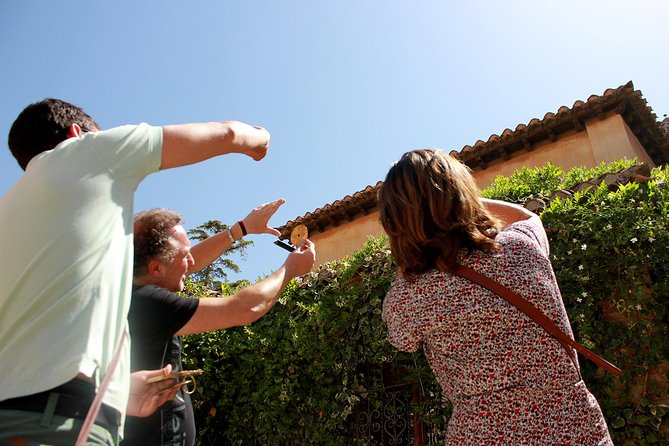
I would choose this experience if you want a guided interpretation of the Alhambra and prefer not to share your guide with a large group. Families may find the objects, pastry tasting, and personal explanations more engaging than a standard lecture. The private format also lets you ask questions without worrying about holding up strangers.
It suits first-time visitors who want the main parts of the complex in one organized outing. It is also a good fit for anyone interested in how military design, court life, gardens, and decorative art connect.
You may want another option if you dislike fixed schedules, want several hours to photograph every room, or are mainly looking for the lowest possible admission cost. The price is high, and the route covers a lot of ground. The moderate fitness requirement should be taken seriously.
The guide can make or break the experience. Antonio received especially warm praise for clear explanations, while another guide was appreciated for humor and an easy style. Since guide assignments can vary, think of the private structure as the main advantage, with the individual guide’s personality as an important bonus.
Should you book the Alhambra sensory tour?
Book it if you value personal guiding, want the Nasrid Palaces explained in context, and like the idea of adding objects and food to a visual visit. The combination of the royal palaces, Generalife, Alcazaba, Arabic pastry, and private attention gives you a fuller picture of the Alhambra than a quick self-guided walk.
I would be cautious if your plans depend on a strict three-and-a-half-hour window. Confirm the real duration and headset arrangements before paying. Also make sure every participant’s identification details are ready, since the ticket rules are firm.
For a family or small group splitting the cost, this is a polished and informative way to see Granada’s most important monument. For a solo visitor focused mainly on price, it is harder to justify. The deciding question is simple: do you want access alone, or do you want the Alhambra’s rooms, gardens, defenses, and daily life brought together by one private guide?
FAQ
Where does the tour begin?
It begins at P.º de la Sabica, 15, Centro, 18009 Granada, Spain.
Where does the tour end?
The activity ends back at the meeting point.
How long does the tour last?
The advertised duration is approximately three hours and 30 minutes. The listed stop times add up to longer, so confirm the exact schedule with the provider before booking.
Is this a private tour?
Yes. Only your group participates in the activity.
Is admission to the Alhambra included?
Yes. Admission tickets for the Alhambra, Nasrid Palaces, Generalife, and Alcazaba are included.
What places are visited?
The tour visits the Alhambra complex, the Nasrid Palaces, the Generalife gardens, and the Alcazaba fortress.
Are headsets provided?
The tour includes single-use headsets so you can hear the guide clearly. Another detail says headphones are not included, so you should clarify this apparent difference with the provider.
What information is required for booking?
The Alhambra requires the full name, date of birth, and passport details for every participant.
Can the visit order change?
Yes. The Alhambra Trust may alter the order of the visit or restrict access to certain areas. The tour will be adapted without reducing the visiting time.
More Alhambra and Nasrid Palace Tours in Granada
- Granada: Alhambra & Nasrid Palaces Tour with Tickets
★ 4.7 · 19,801 reviews - Granada: Alhambra & Gardens Tour w/Nasrid Palaces Option
★ 4.2 · 7,022 reviews - Fast-Track Alhambra & Nasrid Palaces Guided Tour
★ 4.6 · 5,014 reviews - Granada: Alhambra Ticket and Guided Tour with Nasrid Palaces
★ 4.7 · 3,496 reviews
Just added around Granada
- Walking tour in Alhambra, Nasrid Palaces and Generalife★ 3.0 · 135 reviews
- Tickets : Alhambra and Nasrid Palaces Granada Last-Minute★ 3.5 · 149 reviews
- Alhambra Guided Tour with Generalife Gardens★ 3.5 · 216 reviews
- Alhambra Private Tour: Nasrid Palaces and Generalife★ 5.0 · 81 reviews
- Alhambra Ticket and Guided Tour with Nasrid Palaces★ 4.5 · 81 reviews
- Grenada: Flamenco Palace, the best show in the center★ 5.0 · 96 reviews
- Exclusive Private Alhambra Tour with a Historian★ 5.0 · 53 reviews
- Alhambra Tour and Nazaries Palaces with Hammam Massage Experience★ 4.0 · 106 reviews
Alhambra and Nasrid Palace Tours, compared.
Alhambra & Gardens Tour w/Nasrid Palaces Option
Read our review →
Fast-Track Alhambra & Nasrid Palaces Guided Tour
Read our review →
Alhambra Ticket and Guided Tour with Nasrid Palaces
Read our review →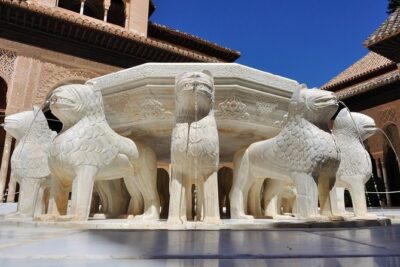
Alhambra & Generalife Skip the line Small Group including Nasrid Palaces
Read our review →
Alhambra Guided Tour with Nasrid Palaces & Gardens
Read our review →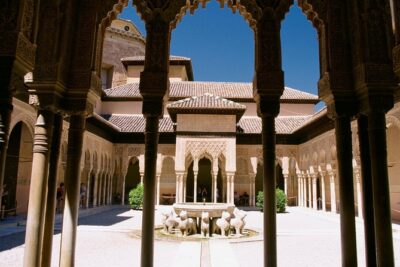
Alhambra &Charles Palace Guided Tour with Optional Nasrid Palaces
Read our review →Browse the lists this tour appears in