
REVIEW · ROME
Rome: Barberini Palace Guided Tour
Art can feel easier when someone gives it a voice.
The Barberini Palace guided tour packs a lot into two hours: Raphael’s La Fornarina, Caravaggio’s fierce Judith, and Pietro da Cortona’s huge Baroque ceiling. I like the clear focus on the Barberini family and the way the tour links paintings to politics, religion, and architecture. The main drawback is that several important rooms and artworks have temporary closures, so the exact experience depends on your visit date.
I also like that the tour uses a live guide rather than leaving you alone with an app. Previous visitors praised guides Zenda and Federica for making the art and architecture easy to follow, with Federica described as attentive and lively. The group can reach 20 people, which is manageable but not intimate, and anyone with mobility limitations should think carefully before booking.
Key points to know before booking
- Raphael’s La Fornarina is one of the main artistic reasons to visit, especially if Renaissance portraiture interests you.
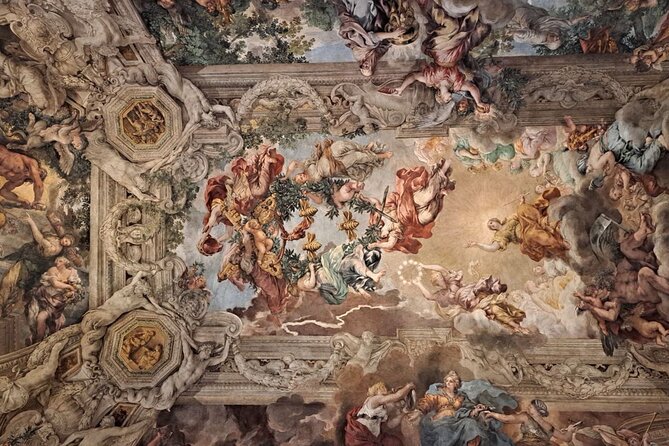
- Pietro da Cortona’s Divina Provvidenza ceiling gives you a grand lesson in Roman Baroque style without leaving the palace.
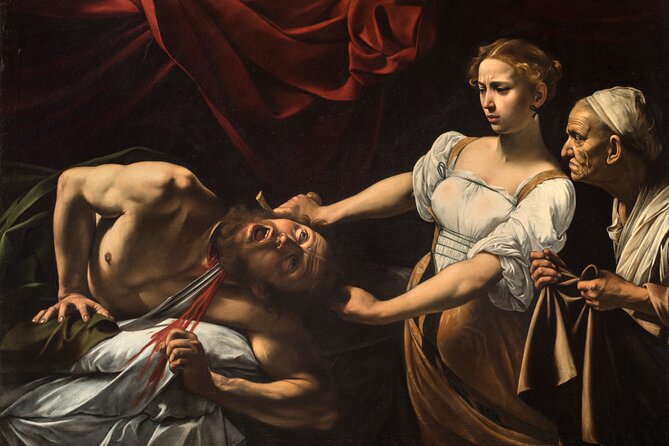
- Caravaggio’s Judith Slaying Holofernes is scheduled to be away from September 4, 2025, until January 31, 2026. The supplied tour information also gives a slightly different late-August date, so confirm before booking.
- Bernini and Borromini are part of the palace story, making this more than a painting tour.
- The meeting point is inside the palace garden, by the fountain and the blue Doooing Experience flag.
- The tour lasts two hours, is offered in English, Italian, and Spanish, and does not suit wheelchair users or people with mobility impairments.
Why the Barberini Palace deserves two hours
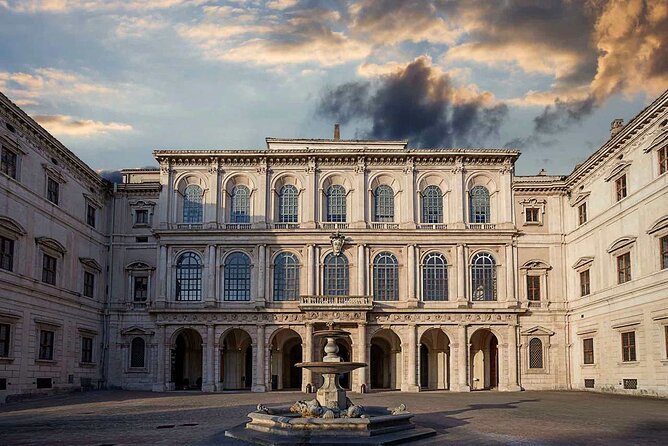
Palazzo Barberini is not simply a container for famous paintings. The building itself helps explain how art worked in seventeenth-century Rome, when powerful families used architecture, decoration, and patronage to shape public life.
The Barberini family rose to great influence through Maffeo Barberini, who became Pope Urban VIII. Under the Barberini name, Rome saw major artistic commissions, grand building projects, and a close link between papal power and visual culture. A guide can make those connections clear in a way that a quick, independent visit may not.
I like this setting because the works are not presented as isolated textbook images. You get to consider why a painting was commissioned, how religious ideas affected its design, and how a wealthy family used art to announce its importance.
The two-hour length is sensible. It gives you enough time for the principal works and architecture without turning the visit into an endurance test. Still, this is a focused introduction rather than a complete study of every room. If you want to read every label or stop at every painting, plan extra time before or after the guided portion.
A few more palace visits around Rome worth a look
- Rome: Opera Concert at Palazzo Poli – Fontana di Trevi
★ 4.7 · 1,026 reviews - Rome: Colonna Palace Entry Ticket
★ 4.8 · 609 reviews - The Great Opera Arias Concert at Palazzo Poli – Trevi Fountain
★ 5.0 · 533 reviews
Meeting the guide at the garden fountain
The meeting point is inside the garden of Palazzo Barberini at Via delle Quattro Fontane, 13. Look for the fountain and staff carrying a blue flag marked Doooing Experience.
That detail matters in Rome, where a grand palace entrance can have several nearby approaches and busy streets can make a short search feel longer than expected. I would arrive early enough to locate the garden, fountain, and flag without rushing.
The official coordinates are 41.903358459472656, 12.489826202392578. If you use a map app, the supplied meeting point link is the safest way to avoid heading to the wrong side of the building.
The group size is capped at 20. That is not a private tour, but it is still far easier to manage than a large crowd. Ask where to stand if you want the best view of a painting during the guide’s explanation. A group of 20 can gather comfortably in a gallery, but popular works may still require patience.
Guides speak English, Italian, and Spanish. The individual guide makes a real difference here because the palace brings together painting, sculpture, architecture, and political history. Zenda received particular praise for connecting art and architecture with the periods that produced them. Federica was praised for her competence, energy, and careful attention to the group.
Raphael’s La Fornarina and the pull of Renaissance portraiture
Raphael’s La Fornarina is one of the tour’s central attractions. The painting shows a woman identified by tradition as Raphael’s lover, though the subject’s identity and the painting’s meaning have long encouraged discussion.
You do not need to arrive with a theory about the portrait. The useful part of a guided visit is learning how to look at the sitter, the pose, the symbols, and the polished Renaissance technique. Raphael’s work rewards a slow look because its calm surface hides many questions about identity, beauty, and ownership.
For many people, this will be the strongest reason to choose the Barberini Palace over a general Rome sightseeing walk. You see a major Renaissance painting in the setting of a former aristocratic residence, then move into the very different mood of the Baroque rooms.
The guide’s role is especially valuable here. Without context, La Fornarina can appear to be simply another beautiful portrait. With a good explanation, it becomes part of a larger story about artists, patrons, reputation, and the way famous works gather legends around themselves.
Caravaggio’s Judith, with an important temporary absence
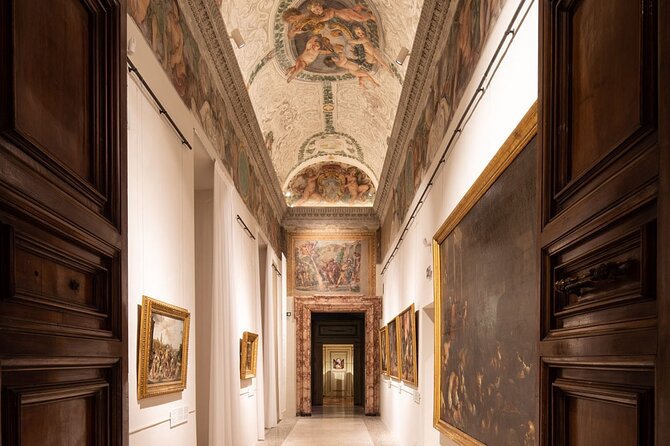
Caravaggio’s Judith Slaying Holofernes is another major draw. Its subject is violent, but Caravaggio gives the scene a sharp psychological force. Judith is not shown as a distant biblical figure. The action feels immediate, tense, and deeply human.
This is one of the paintings I would want to verify before paying for the tour. The supplied information says the painting will be away on loan to the KAM Art Museum in Fort Worth, Texas, from September 4, 2025, through January 31, 2026. The general description gives an earlier end-of-August date, so the dates are not perfectly consistent.
If you are visiting during that period, do not assume the Caravaggio will be on the wall. The tour remains worthwhile because the palace contains works by Raphael, Pietro da Cortona, Holbein, Tintoretto, Bernini, Borromini, and others. But if Judith is your main target, confirm its display status before booking.
This is also a useful reminder that major museum visits can change. Loans, conservation work, and room closures are normal, but they matter when your schedule is built around one masterpiece.
Same place, a different set of state rooms:
- Colosseum Underground, Roman Forum & Cesar Palace Special Access
★ 4.5 · 421 reviews - Rome: Palazzo Barberini Galleria Corsini Ticket & Audioguide
★ 3.9 · 322 reviews - Rome: Vittoriano with Rooftop & Palazzo Venezia Hosted Entry
★ 4.2 · 306 reviews - Colosseum Special Access on Arena Floor, Roman Forum and Palaces
★ 4.5 · 260 reviews
Looking up at Pietro da Cortona’s Baroque ceiling
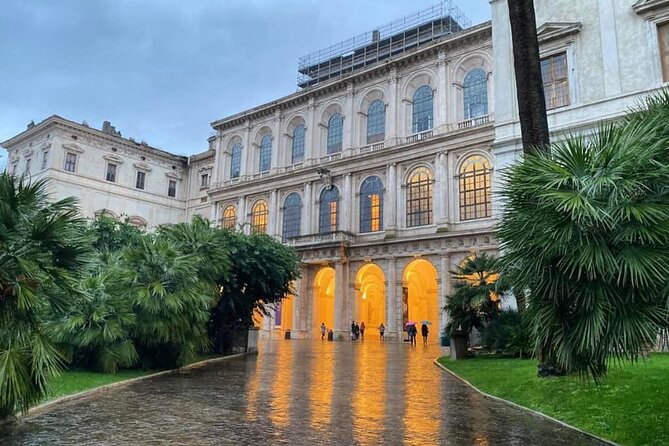
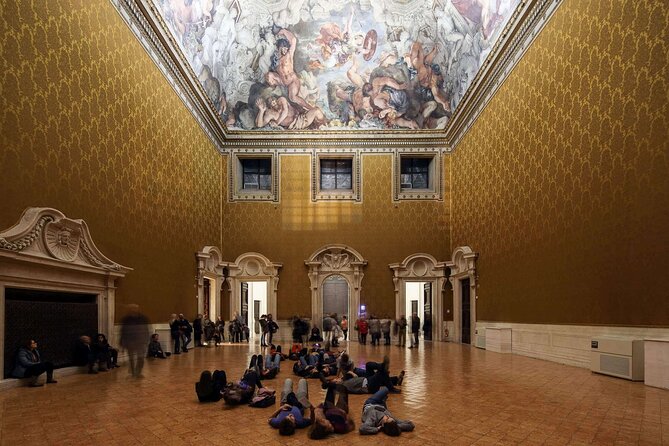
The ceiling fresco by Pietro da Cortona, known as Divina Provvidenza, is one of the palace’s most memorable features. It is not a small painting to inspect from a few feet away. It is an ambitious work designed to surround the viewer with movement, figures, symbols, and heavenly drama.
A guide helps you make sense of the busy composition. Baroque ceiling painting can seem crowded when you first look up, with bodies, clouds, light, and allegorical figures competing for attention. The point is not quiet balance. It is spectacle, persuasion, and the display of power.
The ceiling also shows why the building itself matters. You are not only looking at a picture by Cortona. You are seeing how a wealthy Roman family used an entire room to make a statement about authority and divine favor.
Give your neck a break now and then. Two hours of looking upward is a small price for the experience, but the fresco rewards several shorter looks rather than one long stare. The guide can point out the parts that matter most, helping you avoid the common mistake of seeing only a grand blur of color.
Bernini and Borromini inside a family palace
The Barberini Palace is also a good place to compare two of Rome’s most important Baroque architects: Gian Lorenzo Bernini and Francesco Borromini.
Their names are often taught together because both shaped the look of Baroque Rome, yet their approaches were different. Bernini is commonly associated with theatrical movement and a strong sense of sculptural drama. Borromini is known for restless geometry, inventive forms, and architectural spaces that seem to shift as you move through them.
The palace gives the guide a chance to discuss both men in relation to the Barberini family. This makes the architectural part more useful than simply pointing out a decorative detail. You begin to see how a building can express ambition just as strongly as a painted portrait or ceiling fresco.
I would pay close attention during these explanations even if you came mainly for the paintings. The architecture is one of the best reasons to choose a guided visit. It gives the palace a personality and helps tie together the building, its patrons, and its collection.
Holbein, Tintoretto, and the wider collection
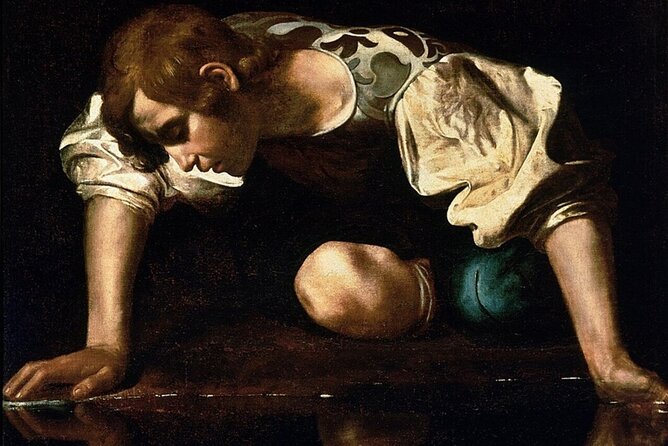
The tour includes works by Holbein and Tintoretto, along with many other artists. That range adds welcome variety.
Holbein represents a different tradition from both Raphael and Caravaggio, with an emphasis on precise observation and controlled portrait detail. Tintoretto brings the energy and movement associated with Venetian painting. Seeing these artists in the same palace gives you a quick lesson in how varied Italian and European art can be across periods and regions.
Do not expect every artist to receive equal time. In two hours, the guide must select the works that best explain the palace and its collection. The main emphasis is likely to fall on the major named highlights, while other paintings help fill out the story.
That is a fair trade for a first visit. You get a coherent route rather than a long list of names. If you already know the Barberini collection well, you may prefer independent entry so you can set your own pace. If you want a clear introduction, the guided structure is the better choice.
The special exhibition of Conversion on the Way to Damascus
A painting called Conversion on the Way to Damascus, or Conversione di Saulo, is scheduled for exceptional display in the palace through September 30, 2025. It belongs to a private collection, so this is a limited opportunity rather than a permanent part of the collection.
That makes the date important. If your visit falls before the end of September 2025, check whether the work is included in the current gallery display. If you are visiting later, do not plan your trip around it.
Temporary loans can add real value to a museum visit, but they also create uncertainty. The Barberini Palace experience changes over time, so I would check the current exhibition details close to your visit.
Room closures that can change the experience
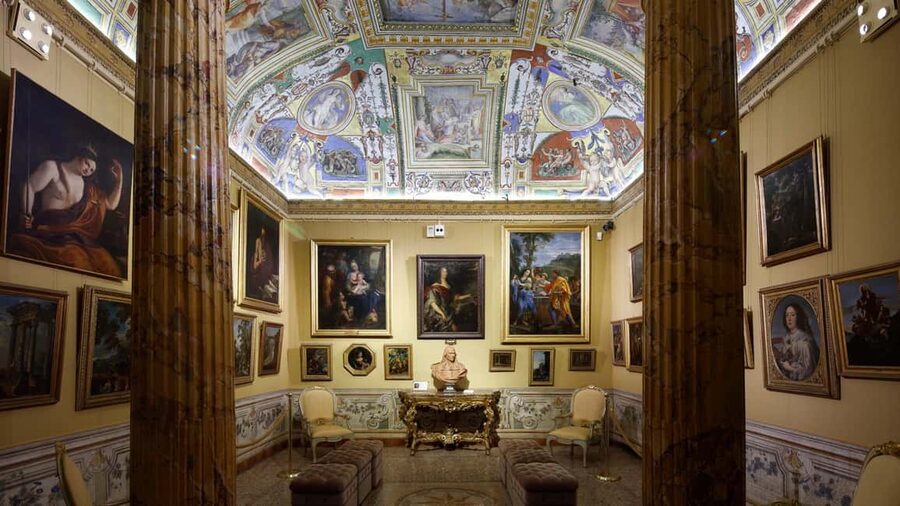
The eighteenth-century rooms of Palazzo Barberini are scheduled to close temporarily from August 26, 2025, and reopen on October 21, 2025. This is a significant practical detail because the palace experience may feel less complete during that period.
The main works and architectural features can still make the visit worthwhile, but you should not assume every room shown in promotional material will be open. If the eighteenth-century interiors are important to you, choose dates outside the closure if possible.
The same advice applies to Caravaggio’s Judith. Check both room access and individual artwork availability before you commit. The tour provider should be able to confirm the current display, and this small check can prevent a major disappointment.
Is the guided format worth the cost?
No price is supplied here, so I cannot judge the exact euro value. I can judge what you are paying for: a two-hour live explanation, priority access through the ticket line, and a route through a palace where the building and collection are closely linked.
The value is strongest if you want context. A self-guided visit may cost less, but it asks you to supply the connections between the Barberini family, papal power, Baroque art, and the rival styles of Bernini and Borromini.
The value is weaker if you prefer to move slowly and study every work alone. A group of up to 20 and a fixed two-hour schedule limit your freedom. You also need to accept that the guide will choose the emphasis.
I would compare the tour price with the cost of ordinary entry and any available audio guide. If the difference is modest, the live guide is likely worth it for a first visit, especially because the reviews of Zenda and Federica point to strong explanations rather than simple room-to-room escorting.
Who should book this Rome art tour?
I would recommend it to you if:
- You want a focused introduction to Renaissance and Baroque art.
- You are especially interested in Raphael, Caravaggio, Bernini, Borromini, or Pietro da Cortona.
- You prefer explanations in English, Italian, or Spanish.
- You want the palace architecture explained along with the paintings.
- You have about two hours and prefer a clear route over independent wandering.
- You are visiting before September 30, 2025, and hope to see Conversione di Saulo.
I would be more cautious if you are visiting during the temporary room closure or while Caravaggio’s Judith is away. I would also avoid this tour if you use a wheelchair or have a mobility impairment, since it is specifically not considered suitable.
Large luggage and oversized bags are not allowed. Pack light, and do not arrive expecting to store a suitcase at the meeting point.
Should you book the Barberini Palace guided tour?
Yes, if you want Rome’s art to make sense rather than simply collect famous names. The strongest parts are the combination of Raphael, the Cortona ceiling, and the discussion of Barberini power, with Bernini and Borromini adding an architectural edge.
Book with care around the closure dates and the Caravaggio loan. If the painting you most want to see is unavailable, decide if the palace’s other works and the guide’s interpretation still justify the visit.
For a first look at this important Roman palace, I think the guided format is the sensible choice. It turns two hours into a compact lesson in how art, architecture, religion, and family ambition shaped Rome.
FAQ
How long does the Barberini Palace guided tour last?
The tour lasts two hours.
What languages are available?
The live tour is available in English, Italian, and Spanish.
Where is the meeting point?
Meet inside the garden of Palazzo Barberini, near the fountain at Via delle Quattro Fontane, 13, Rome. Staff will carry a blue Doooing Experience flag.
Is Caravaggio’s Judith Slaying Holofernes always on display?
No. The supplied information says it is scheduled to be away on loan to the KAM Art Museum in Fort Worth, Texas, from September 4, 2025, until January 31, 2026. Another notice gives a slightly earlier late-August departure, so confirm the date before booking.
Are the eighteenth-century rooms open throughout the year?
No. They are scheduled to close from August 26, 2025, and reopen on October 21, 2025.
Can wheelchair users join the tour?
No. The tour is not considered suitable for wheelchair users or people with mobility impairments. Large bags and luggage are also not allowed.
Just added around Rome
- Prince for a day, Colonna Palace complete tour, package price★ 5.0 · 5 reviews
- Skip-the-Lines Barberini Palace Museum and Gallery Private Tour★ 5.0 · 4 reviews
- The Colonna Palace Walking Tour★ 5.0 · 6 reviews
- Roman Domus of Palazzo Valentini Ticket★ 4.0 · 42 reviews
- Paint & Sip in a 17th-Century Palazzo with Wine & Pizza★ 4.5 · 18 reviews
- Rome, Vittoriano Rooftop View and Palazzo Venezia Official Entry★ 4.0 · 12 reviews
- Rome Barberini Palace Guided Tour★ 3.5 · 5 reviews
- Private Chauffeured Tour to Caserta Royal Palace from Rome and Designer Outlet★ 5.0 · 2 reviews
Rome Palace Tours, compared.

Opera Concert at Palazzo Poli – Fontana di Trevi
Read our review →

The Great Opera Arias Concert at Palazzo Poli – Trevi Fountain
Read our review →
Colosseum Underground, Roman Forum & Cesar Palace Special Access
Read our review →
Palazzo Barberini Galleria Corsini Ticket & Audioguide
Read our review →
Vittoriano with Rooftop & Palazzo Venezia Hosted Entry
Read our review →
Colosseum Special Access on Arena Floor, Roman Forum and Palaces
Read our review →
Browse the lists this tour appears in