
REVIEW · MALTA, MALTA
Palazzo Falson Historic House Museum entrance ticket
Mdina keeps its best surprises behind old doors. Palazzo Falson gives you a close look at one of Malta’s oldest homes, with 17 rooms filled with art, furniture, silver, books, and personal treasures gathered over a lifetime. I like the house’s intimate scale, and I especially like how the collection lets you see both a medieval palace and the habits of its last owner. The main drawback is that the experience is self-guided, so you need to pay attention to the audio guide and printed material to get the full story.
The $15 price feels fair if you enjoy historic interiors, paintings, or collecting. You can move at your own pace, return to objects that catch your eye, and finish with a coffee at the upper-floor terrace cafeteria, where Mdina spreads out below you. Children under six are not suited to this experience, and younger children may find the quiet rooms and large collection less engaging than Mdina’s streets.
Key points at a glance
- A medieval palace in Mdina: Palazzo Falson is the second-oldest building still standing inside Malta’s former capital.
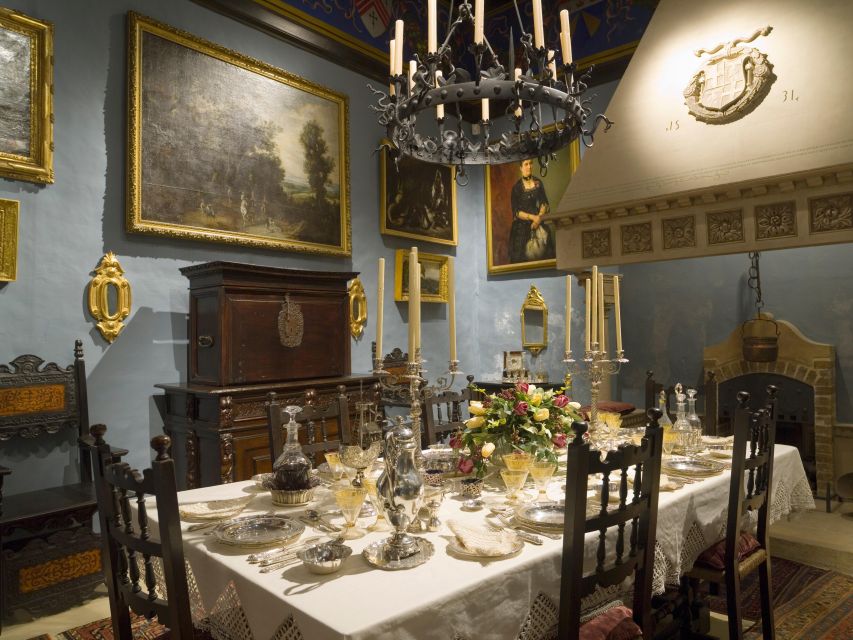
- Forty-five collections in 17 rooms: You will see more than 3,500 objects, from jewellery and armour to Oriental rugs and manuscripts.
- A home shaped by Olof Gollcher: The last resident was a Swedish-Maltese artist, researcher, philanthropist, and collector.
- Important old-master paintings: Works attributed to Mattia Preti, Jusepe de Ribera, Jakob-Ferdinand Voet, Charles Beale, and Juriaen van Streeck are part of the display.
- Audio and printed guides included: Audio is available in English, French, German, Italian, Maltese, and Spanish, with printed information in many additional languages.
- A useful rooftop finish: The terrace cafeteria offers views across Mdina and beyond, making it a natural place to pause after the rooms.
Entering Mdina’s second-oldest surviving building
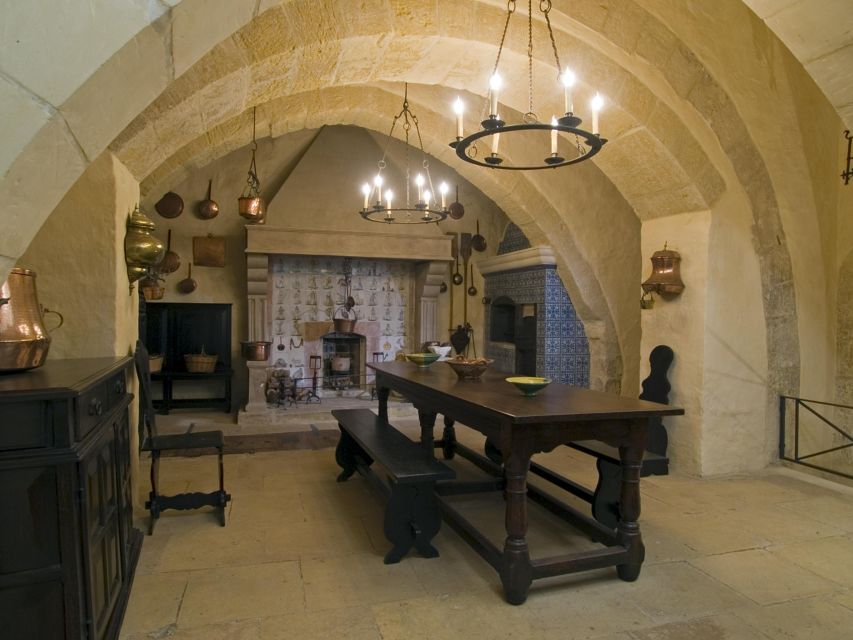
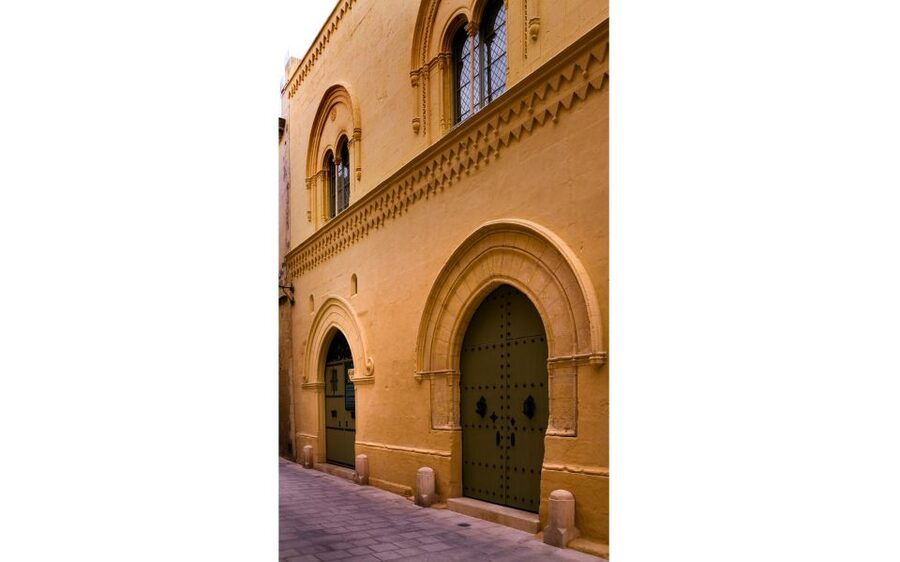
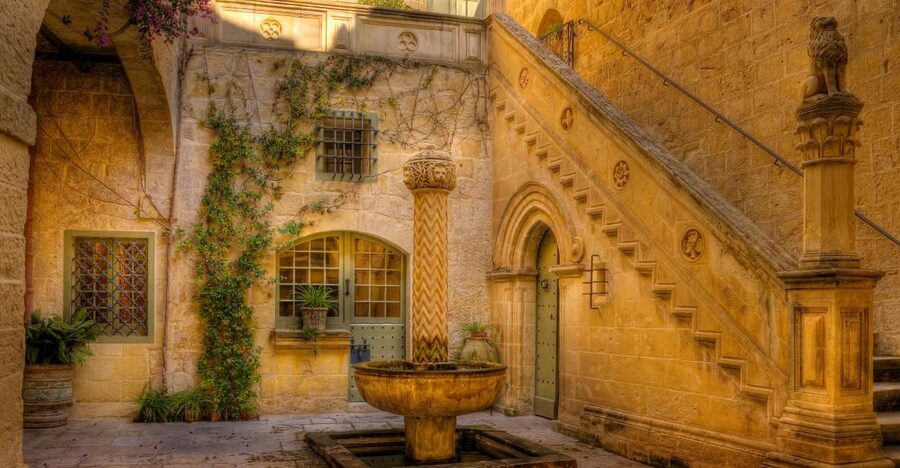
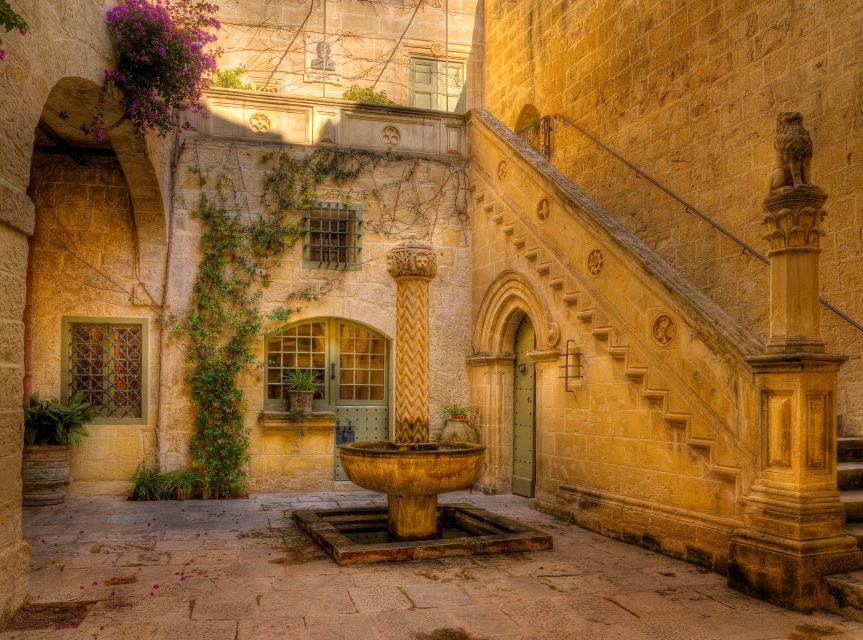
Palazzo Falson is not a grand palace in the wide-open, ceremonial sense. It is a compact medieval home built around an internal courtyard, with rooms arranged in a way that feels practical and private. That layout matters. You are not simply walking through empty halls. You are seeing a residence shaped for family life, storage, display, and entertaining.
The building’s origins reach back to the early 13th century. It was fashioned on Sicilian examples of the period and built for Maltese nobility. The oldest rooms are at the back of the courtyard, giving the house a layered feel as you move through it. Some sections speak to the medieval building, while other rooms reflect later residents and changing tastes.
I find this kind of house more revealing than a formal palace stripped of its daily purpose. You can think about how people moved from the courtyard to the living quarters, how valuable objects were displayed, and how a home changed as generations passed through it.
The palace has carried several names, including Palazzo Cumbo-Navarra, Casa dei Castelletti, and the Norman House. Its long use explains why no single room tells the entire story. The building is a record of different owners, periods, and purposes.
More Palace Entry Tickets in the world:
- Venice: Doge’s Palace Reserved Entry Ticket
★ 4.6 · 42,716 reviews - Sintra: Pena Palace and Park Entrance Ticket
★ 4.2 · 17,410 reviews - Granada: Alhambra and Nasrid Palaces Entry Ticket
★ 4.6 · 15,130 reviews
From noble residence to a place of Maltese history
In the early 16th century, the property passed to Michele Falson, who served as vice admiral and headed Mdina’s town council. That connection gives the building a useful link to the city’s civic life, not just its domestic past.
Palazzo Falson also played a role in one of Malta’s major political moments. After Emperor Charles V gave Malta to the Knights of the Order of St. John, Grand Master Philippe Villiers de L’Isle Adam was hosted by Maltese nobles at the palace after taking possession of Mdina on November 13, 1530.
You will not experience that event as a staged show, and no theatrical reconstruction is promised. Instead, the value comes from standing inside the same old structure and understanding that this was a working noble residence at a turning point in the island’s story.
The building reopened to the public in May 2007 after a major restoration by Fondazzjoni Patrimonju Malti, the Maltese Heritage Foundation. Restoration is especially important in a house museum because the architecture must support the objects without becoming a distraction. Here, the rooms and the collection belong together.
The 17-room route through Olof Gollcher’s collection
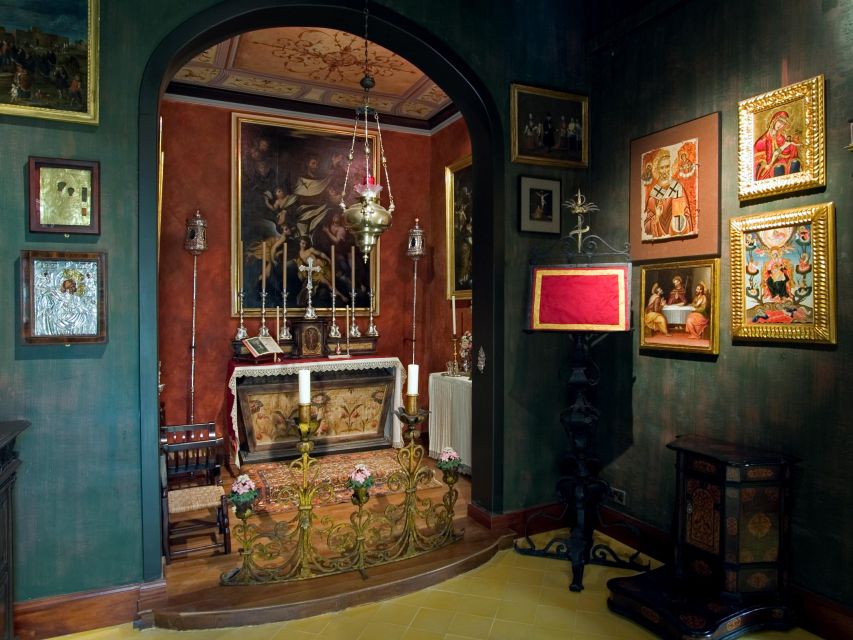
The house’s most unusual feature is the sheer range of material gathered under one roof. Across 17 rooms, you encounter 45 specific collections containing more than 3,500 objects.
That number sounds large, but the house keeps the experience from feeling like a warehouse. You move through rooms where paintings, furniture, silver, rugs, armour, books, and jewellery help explain different sides of collecting. One room may reward a close look at craftsmanship, while another asks you to compare objects from different traditions and periods.
The most useful approach is to resist rushing. You do not need to remember every object. Instead, choose a few categories that interest you and follow them through the house. If you like decorative arts, focus on silver, furniture, jewellery, and rugs. If you prefer intellectual history, give more time to the library and manuscripts. If paintings are your priority, pause in the rooms featuring the older works.
The collection belonged to Captain Olof Frederick Gollcher, who lived from 1889 to 1962. He was of Swedish descent and received a number of honours. He was also an artist, researcher, philanthropist, and dedicated collector of art and historical objects.
That combination helps explain the house’s character. This is not a display assembled around only one subject. It reflects one person’s curiosity. You see a collector who cared about paintings, books, military objects, furnishings, and small works of art alike.
I like that personal angle because it gives the museum a human center. You are not just studying objects from a distant period. You are seeing the interests of a particular resident and the home he filled with them.
Paintings by major seventeenth-century artists
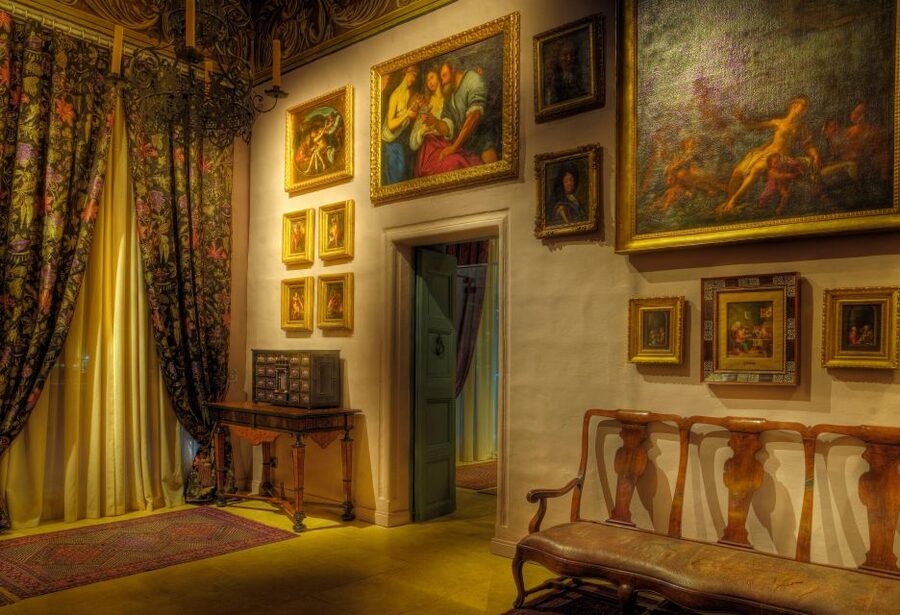
The paintings collection gives the visit extra weight. Several significant 17th-century works are attributed to artists including Mattia Preti, Jusepe de Ribera, Jakob-Ferdinand Voet, Charles Beale, and Juriaen van Streeck.
Attributions are worth noting carefully. The wording means the works are connected to these artists, not that every painting is presented as an unquestioned original by each famous name. That is normal in historic collections, where scholars study style, provenance, and technique over time.
For you, the practical lesson is simple: take the paintings seriously, even if you came mainly for the building. The small-house setting can make them easier to consider than paintings hung in a huge gallery. You can stand close enough to examine details, then step back and think about how each work fits the room.
The painting collection also adds a European dimension to Mdina. Palazzo Falson is firmly rooted in Malta, yet its art reflects links with wider European culture. That mix is one of the pleasures of the house. You get local architecture and an international collection in the same short visit.
More Museum Visits in the world:
- Venice’s Best: Basilica, Doge’s Palace, Gondola & History Gallery
★ 4.5 · 2,478 reviews - Royal Palace & Prado Museum Skip the Line Guided Tour
★ 4.5 · 1,347 reviews - Venice: City Pass with Museums including Doge’s Palace
★ 4.1 · 1,020 reviews - The Hague: Escher in The Palace Museum Ticket
★ 4.6 · 896 reviews
Silver, armour, rugs, and the pleasure of small objects
The decorative collections reward close attention. Silver may look impressive at first glance, but its real interest is in workmanship and use. Furniture shows how rooms were arranged and how comfort, status, and function overlapped. Jewellery brings a more personal scale, while Oriental rugs help you notice color, pattern, and the importance of textiles in historic interiors.
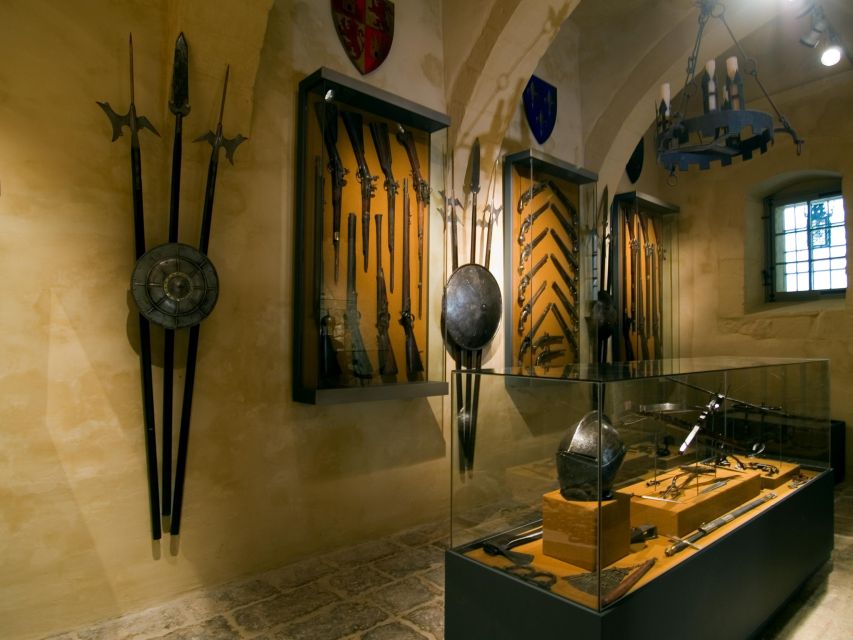
The armoury changes the mood. Military objects remind you that Malta’s past was shaped by fortified cities, naval power, and the Knights of St. John. You do not need to be an armour expert to enjoy this section. Look for the contrast between protective equipment and the more delicate objects displayed elsewhere in the house.
I would give yourself time with the books and manuscripts, too. The library contains more than 4,500 books, along with valuable manuscripts. You will not read through a library of that size, but the collection shows that Gollcher’s interests were not limited to things that could decorate a room.
This is where the audio guide helps. The included guide gives you a way to place individual objects in context without depending on a scheduled tour. It is available in English, French, German, Italian, Maltese, and Spanish. Printed information is offered in Arabic, Chinese, Czech, Dutch, English, French, German, Greek, Hungarian, Italian, Japanese, Maltese, Polish, Portuguese, Russian, Slovak, Spanish, and Swedish.
How to pace a one-day ticket
The ticket is valid for one day, but that does not mean you need an entire day inside the palace. The listed duration gives you flexibility to visit as part of a wider Mdina outing rather than committing to a fixed tour length.
I would plan the museum as a focused stop inside your day in the walled city. Give yourself enough time to use the audio guide, inspect the rooms, and pause at the collection areas that interest you. Then use the terrace cafeteria as a break rather than treating it as an afterthought.
The visit has no listed transport section, group itinerary, or scheduled route beyond the museum itself. That is useful if you want control over your day. You can fit it around other Mdina sights, return to a room if a particular object catches your attention, and avoid the pressure of keeping up with a group.
The tradeoff is that you need to supply your own rhythm. If you prefer a guide who tells one continuous story and answers questions as you go, this may feel less satisfying. The English-speaking host or greeter can help with the basic arrival, while the audio guide carries most of the interpretation.
The terrace cafeteria and Mdina views
The upper-floor terrace cafeteria is one of the best practical features of the visit. After a series of quiet rooms and dense displays, it gives you space to sit, drink something, and look beyond the palace.
The views extend across Mdina and beyond. That perspective helps you connect the house to the city around it. Inside, you are focused on objects and architectural details. Outside, the terrace reminds you that Palazzo Falson is part of a fortified historic city, not an isolated museum building.
A coffee is not listed as part of the ticket, so plan to pay separately for anything you order. Still, the terrace adds value to the $15 admission because it gives the visit a natural ending point. You can tour the rooms, then sit above the city rather than walking straight back into Mdina’s lanes.
One practical tip: do not save the terrace for a rushed final minute. The museum’s collection can absorb your attention, and the view deserves more than a quick glance while you search for your next stop.
Is $15 good value?
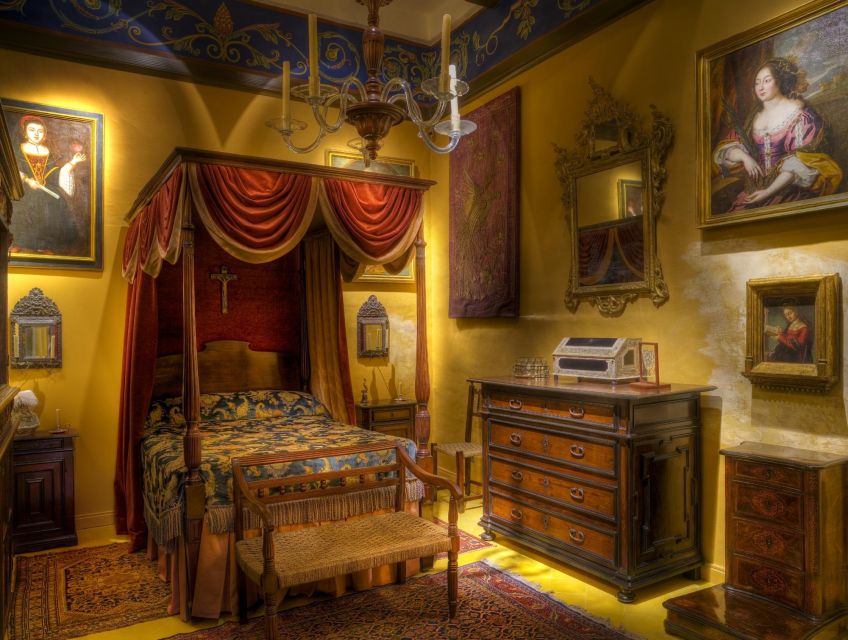
At $15 per person, Palazzo Falson is a sensible choice if you enjoy museums with a strong personal story. You are paying for the building, the restored rooms, the 45 collections, the audio guide, and access to more than 3,500 objects, including paintings, silver, furniture, jewellery, rugs, armour, books, and manuscripts.
The price is less compelling if you only want a quick look at medieval architecture. The house’s appeal comes from the combination of architecture and collection. If you skip the audio guide or move too quickly through the rooms, you may leave with only a general impression of an old building.
The rooftop cafeteria improves the overall value, though refreshments are not included. The flexible one-day validity also helps, since you can plan the museum around the rest of your time in Mdina.
Free cancellation up to 24 hours before the visit and the option to reserve now while paying later make the ticket easy to fit into a changing schedule. These policies matter most if your Malta plans depend on weather or shifting sightseeing days.
Who should visit Palazzo Falson?
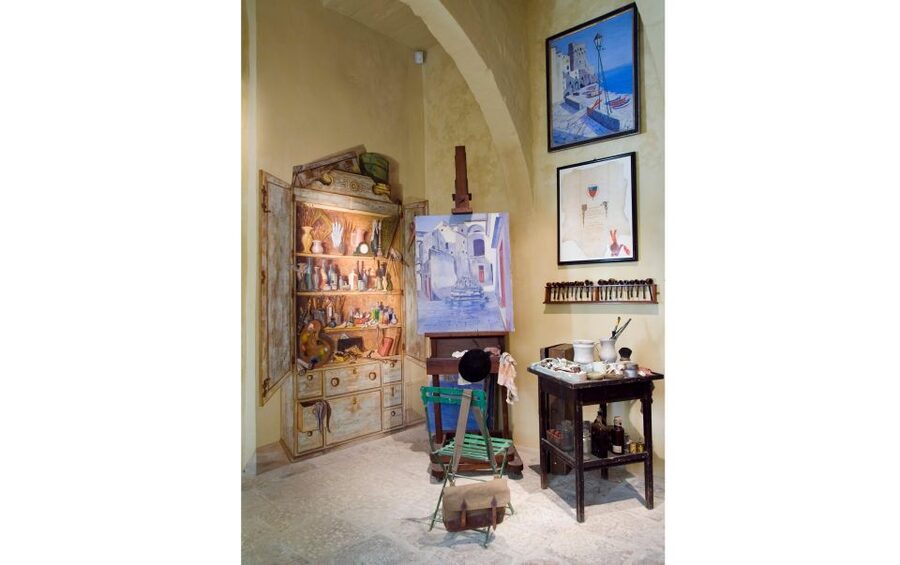
I would recommend this house museum to you if you enjoy:
- Historic homes rather than only large national museums
- Paintings and European decorative arts
- Collecting stories and unusual household objects
- Medieval architecture with later layers of use
- Books, manuscripts, silver, jewellery, rugs, or armour
- Quiet sightseeing at your own pace
- A rooftop pause with views across Mdina
It may be less suitable for children under six, who are specifically excluded from the experience. Older children may enjoy the armour and unusual objects, but the museum’s main appeal is careful looking rather than hands-on entertainment.
You should also consider your interest in self-guided visits. The audio guide is included and available in six languages, but the experience is not described as a live guided tour with a named guide. If you want detailed conversation throughout, you may prefer a different format.
Should you book Palazzo Falson?
I would book Palazzo Falson if you want to see how a Maltese noble residence became the home of an unusually broad private collection. The building gives you medieval Mdina, while Gollcher’s objects add paintings, books, furniture, silver, armour, and personal character.
Book it especially if you are already planning time in Mdina and want a museum that can fit into a flexible day. Allow enough time to listen to the audio guide, look beyond the most famous paintings, and finish with a coffee and the city view upstairs.
Skip it if you have little interest in house museums or collected objects. But if the idea of stepping into an old home filled with thousands of carefully kept things appeals to you, $15 buys a thoughtful and distinctive stop in Malta’s former capital.
FAQ
Where is Palazzo Falson Historic House Museum?
It is in Mdina, Malta, the island’s former capital city.
How much does admission cost?
The entrance ticket costs $15 per person.
How long is the ticket valid?
The ticket is valid for one day.
How many rooms are open as part of the collection?
The collections are spread across 17 rooms.
How many objects are in Palazzo Falson’s collection?
The house museum contains more than 3,500 objects across 45 specific collections.
Is an audio guide included?
Yes. An audio guide is included in English, French, German, Italian, Maltese, and Spanish.
Are printed materials available in other languages?
Yes. Printed information is available in Arabic, Chinese, Czech, Dutch, English, French, German, Greek, Hungarian, Italian, Japanese, Maltese, Polish, Portuguese, Russian, Slovak, Spanish, and Swedish.
Are young children allowed to visit?
Children under six are not suitable for this activity.
Can you cancel the booking for a refund?
Yes. You can cancel up to 24 hours in advance for a full refund.
More Heritage Trips in the world
- Madrid Essential: Historic Center, Plaza Mayor & Royal Palace
★ 5.0 · 6,416 reviews - Tokyo: Imperial Palace and Shogun Historical Walking Tour
★ 5.0 · 2,251 reviews - Dubai: Abu Dhabi Grand Mosque, Palace, and Heritage Village
★ 4.8 · 1,265 reviews - Tokyo: Imperial Palace Japanese History Walking Tour
★ 4.9 · 987 reviews
Just added around the world
- Pena Palace, Moorish Castle,Quinta ad Regaleira:Walking tour★ 5.0 · 3 reviews
- Porto Bishop’s Palace Guided Tour★ 4.5 · 8 reviews
- Paris: Versailles Palace and Queen Hamlet E-Bike Tour★ 5.0 · 126 reviews
- Phnom Penh: Full-Day City Tour with Royal Palace & Killing …★ 4.7 · 2 reviews
- Petchaburi Temples & Royal Palace – small Join Group Tour★ 4.6 · 46 reviews
- Paris: Versailles Golf Cart & Bike Tour with Palace Entry★ 4.8 · 58 reviews
- Petit Palais Paris Museum of Fine Arts Tour with Tickets★ 4.2 · 3 reviews
- Paris: Palace of Versailles Private Tour with Transportation★ 5.0 · 2 reviews
Palace Entry Tickets, compared.





Buckingham Palace: The State Rooms Entrance Ticket
Read our review →

Prague Castle and Lobkowicz Palace Entry Tickets
Read our review →Browse the lists this tour appears in