
REVIEW · SPAIN
Palacio San Dionisio – Sherry Wine Museum
Sherry has a house in the heart of Jerez. Palacio San Dionisio brings together a 19th-century palace, a cultural center, and the city’s dedicated sherry and brandy exhibits in a compact 90-minute visit. I like the setting and the clear focus on how Jerez wine is made, aged, and presented. I also like that four sherries are served at the end, rather than leaving the tasting to guesswork.
The main consideration is the short running time. Three floors, digital displays, a brandy museum, a sherry museum, a cooperage area, and a guided tasting make for a full visit. If you prefer to read every panel slowly, you may feel pressed for time.
Key points at a glance
- A palace at Plaza de la Asunción: The tour begins and ends at Pl. de la Asunción, 2, placing the experience in central Jerez.
- Three floors of exhibits: You move through an exhibition hall, a Brandy Museum, and a top-floor Jerez Wine Museum.
- Four sherries at the finish: The scheduled tasting gives the visit a clear and enjoyable ending.
- Sherry made visible: Displays cover vineyards, aging systems, antique bottles, paintings, real field tools, and cooperage.
- Small groups of up to 10: The limited group size should make it easier to follow the guide and ask questions.
- A mix of old and new: Palace rooms and historic objects are paired with touchscreens, digital panels, audiovisual material, and a scent experience.
Why Palacio San Dionisio works for a Jerez visit
Jerez is closely tied to sherry, yet the subject can seem mysterious if you only see bottles on a bar shelf. This visit gives you a place to connect the drink with its wider story: the vineyard, the cellar, the wooden cask, the bottle, and finally the glass in your hand.
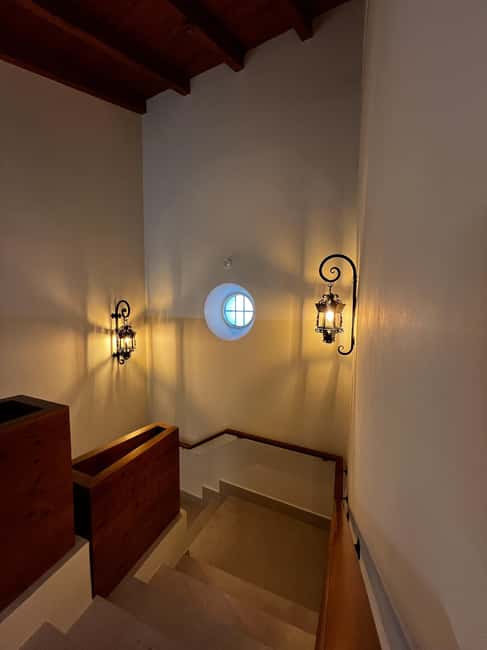
The setting helps. Palacio San Dionisio is an 1837 palace house, now used as a cultural center. You are not entering a modern tasting room with a few decorative barrels. The building itself gives the visit a sense of place before the first exhibit begins.
I especially like the balance between atmosphere and explanation. The palace supplies the old-world frame, while the digital panels and touchscreen displays make the subject easier to follow. That combination should suit you if you want more than a tasting but do not want a full-day winery program.
The experience is also well sized for a first introduction. At 1.5 hours, it fits neatly into a day spent exploring central Jerez. You get a guided visit, time to move through the gallery at your own pace, and four sherries at the end. That is a sensible format for you if you want useful context without giving up half a day.
More Wine Tours in Spain:
- Medoc or Saint Emilion Wine Tasting and Chateau from Bordeaux
★ 5.0 · 1,415 reviews - St-Emilion & Médoc Wine Day Tour: Chateaus, Tastings and Lunch
★ 5.0 · 430 reviews - Beaune: Wine Tasting at Château de Pommard
★ 4.6 · 353 reviews
Entering the 1837 palace at Plaza de la Asunción
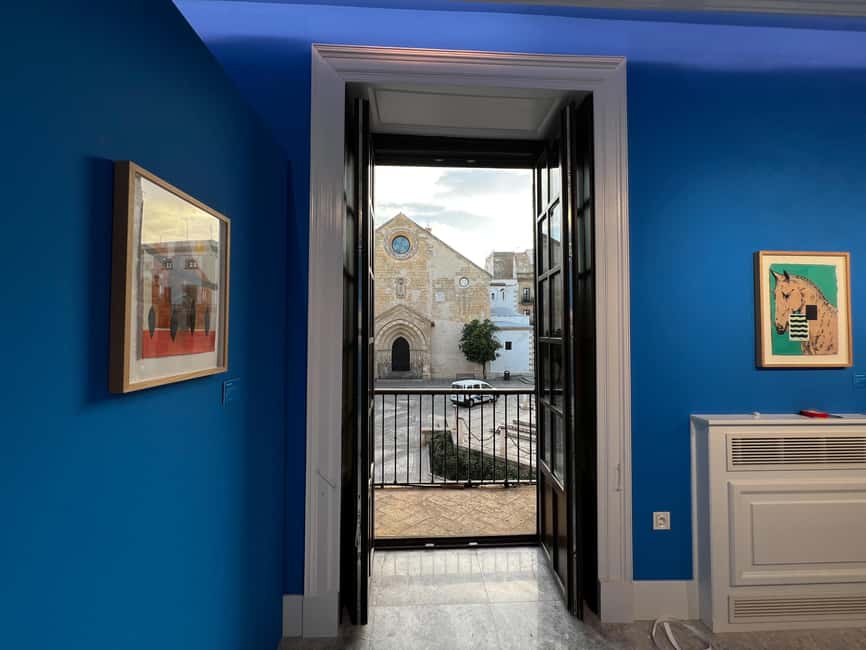
Look for the sign at the palace entrance at Pl. de la Asunción, 2. The location is the practical advantage here. You do not need to arrange transport to a distant vineyard or industrial edge of town, and the experience starts in a historic part of Jerez.
The first section includes a reception area and an audiovisual room. Videos set up the subject before you move farther into the exhibits. This is useful because sherry production has its own vocabulary and methods. A short visual introduction can give you a basic framework before the objects and panels become more detailed.
The audiovisual material is part of the guided tour, and some content is shown in its original language. The available tour languages are English and Spanish. If you are not comfortable with both, pay attention to the digital displays and visual material, which may help reinforce what the guide explains.
The palace is not simply a backdrop. A visit to a former house gives you a sense of how the cultural center has adapted historic rooms for public use. The tradeoff is that historic buildings can divide attention. You may spend as much time looking at the rooms and architectural details as you do following the museum content.
Three floors, from exhibition hall to brandy
The route continues through three floors. Each has a different emphasis, so the visit does not rely on one long room filled with bottles and labels.
The exhibition hall provides the broadest introduction. Here, you can expect cultural displays supported by videos and digital panels. The material gives the visit structure and helps place sherry within the wider identity of Jerez.
The Brandy Museum follows with a more focused look at brandy. This is a useful inclusion because sherry and brandy are connected in the local drinks tradition, but they are not the same thing. If you already know a fair amount about sherry, this section gives you a second angle rather than repeating the same information.
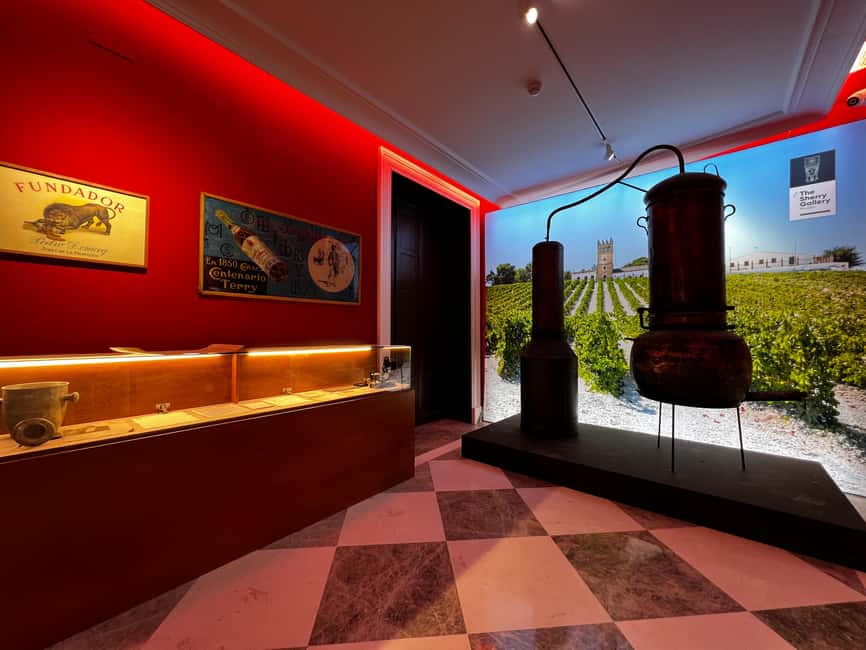
The top floor houses the Jerez Wine Museum. This is the most directly relevant area for the tasting that comes later. The displays include a vineyard, antique bottles, paintings, real field tools, and material about the process of aging wine.
I like the use of real objects here. A diagram can explain production, but field tools and old bottles make the subject less abstract. You can see how the museum connects working agriculture, storage, presentation, and local culture.
You should also expect touchscreens and other high-technology displays. These are helpful when you want to explore at your own pace or revisit a point from the guide’s explanation. The digital approach will appeal to you if you prefer interactive exhibits. If you mainly want old cellars and traditional objects, the screens may feel less atmospheric than the palace rooms.
The vineyard, bottles, and cooperage story
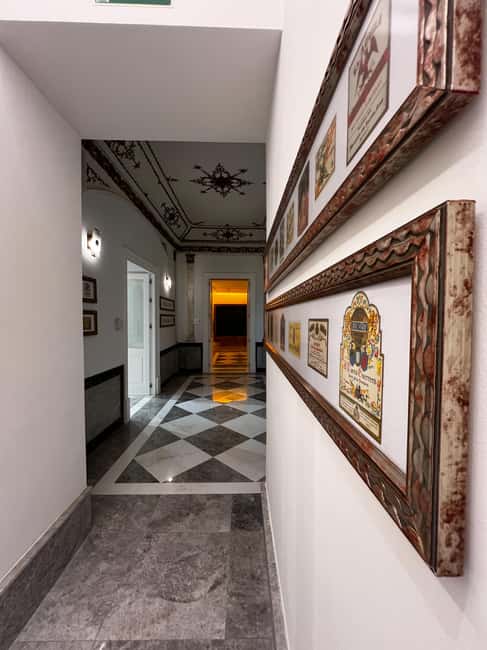
A key strength of the museum is that it does not treat sherry as a finished product only. The exhibits point back to the field, including a vineyard display and real tools used in agricultural work.
That matters because the character of a wine begins long before the tasting. The museum helps you see the connection between the local growing area and the wine that eventually rests in a cask or bottle. You will not get a full vineyard visit from this experience, but the display offers a compact way to bring that part of the process into the city center.
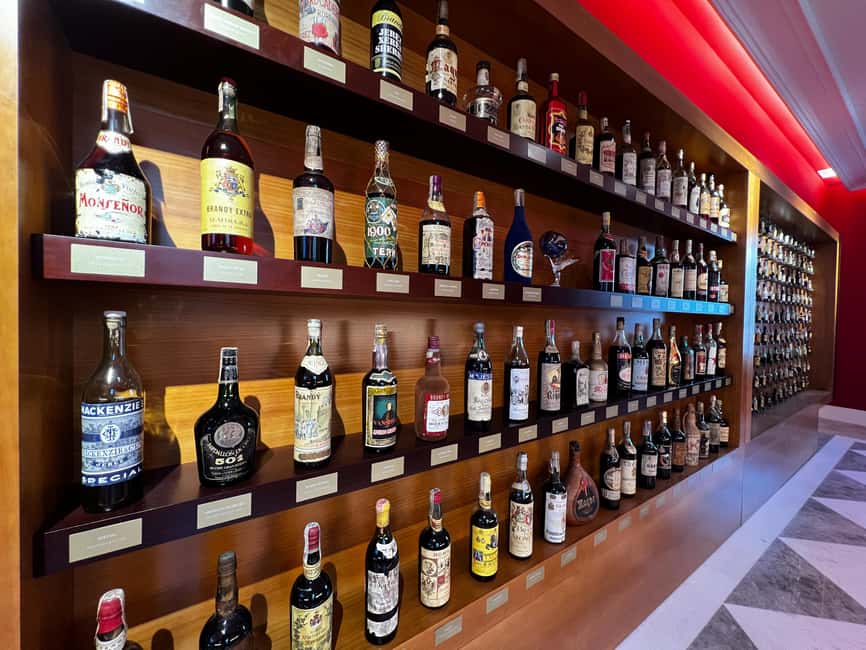
Antique bottles and paintings add a visual record of how sherry has been stored and presented. They also give you something concrete to study while the guide explains the industry. These details should interest you if you enjoy the history of packaging, trade, and food culture as much as the drink itself.
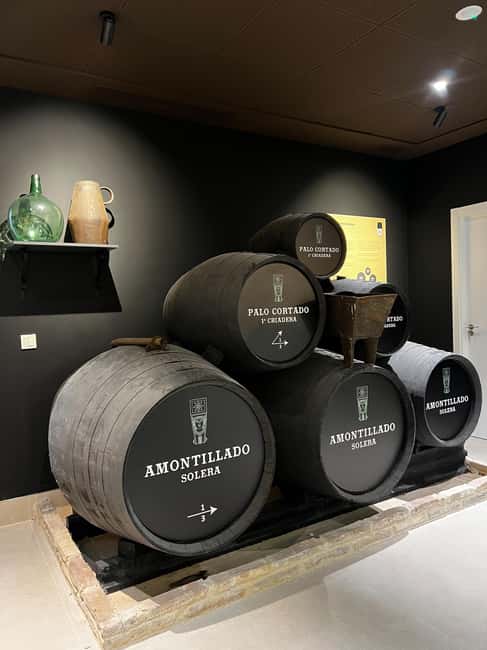
The cooperage area explains the role of the wooden cask. This is one of the most useful sections for someone new to sherry because the barrel is not merely a container sitting in the background. The tour also explains the wine aging system, helping you understand why the process matters to the final style.
The exact level of technical detail may depend on the guide and the questions asked by your group. With no more than 10 participants, you have a better chance of asking for clarification than you would in a large museum group. If the subject catches your attention, use the guide time to ask about the aging process before the tasting begins.
More Museum Visits in Spain:
- Royal Palace & Prado Museum Skip the Line Guided Tour
★ 4.5 · 1,347 reviews - Madrid: Prado Museum and the Royal Palace Guided Tour
★ 4.6 · 688 reviews - Madrid in a Day Tour:Royal Palace, Historic Center & Prado Museum
★ 5.0 · 628 reviews - Madrid Royal Palace and Prado Museum Private Tour with Transfers
★ 5.0 · 185 reviews
A sensory visit, not just a display of bottles
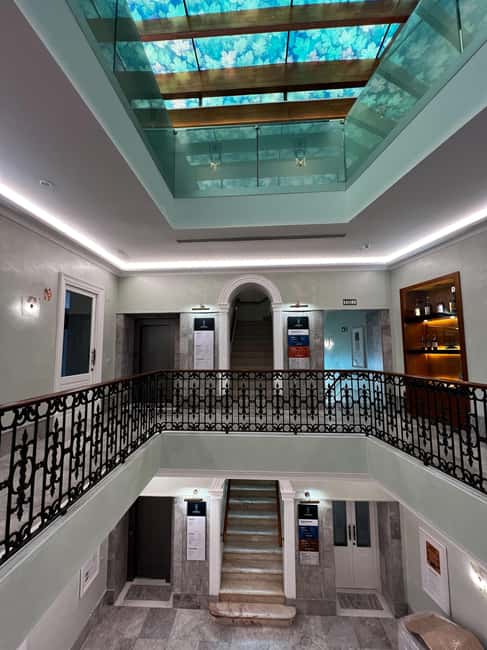
The experience includes a scent activity as well as visual exhibits. That is a smart choice for wine education because aroma plays a major role in how you understand what is in the glass.
The scent element gives you a way to think about wine before tasting it. You can pay attention to how the museum presents smell as part of the experience, then compare that idea with the aromas in the sherries served later.
Digital panels and touchscreens support the sensory material. Together, they make the museum accessible to different learning styles. You can listen to explanations, look at objects, use interactive displays, and test your senses.
Still, this is not a hands-on winery work session. The experience explains production and aging rather than having you make wine or work in the vineyard. That distinction matters if you are looking for a practical agricultural activity. For a city museum visit, the range of formats is more than adequate.
Four sherries to finish the visit
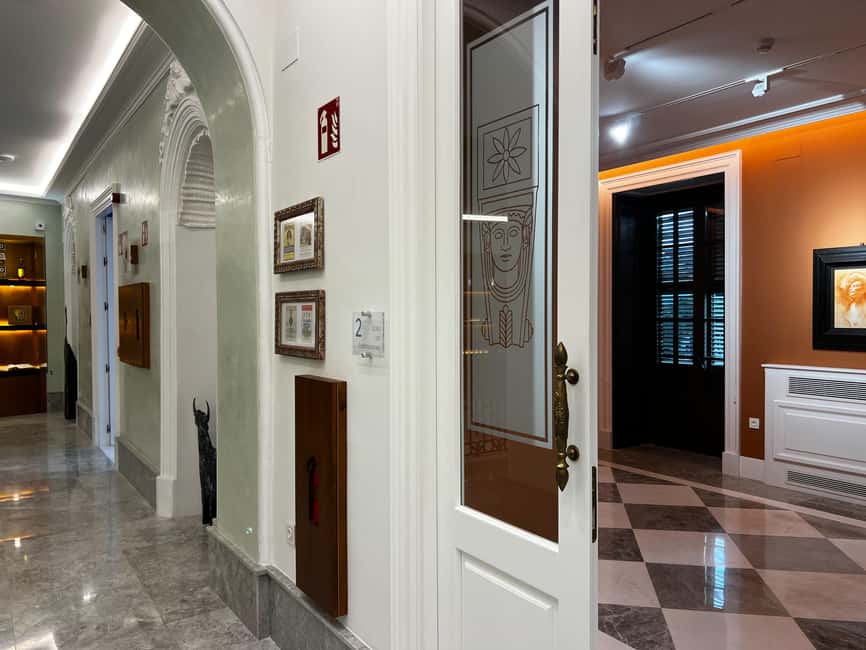
The tasting is scheduled at the end, after you have seen the museum. This order makes sense. You first learn about the vineyard, aging system, bottles, and cooperage, then you taste four sherries with that context in mind.
Four pours offer enough variety to notice differences without turning the final part into a rushed bar stop. I like that the tasting is built into the visit rather than treated as an optional extra. It gives the tour a proper ending and adds direct value to the $23 price.
Try to remember the exhibit details as you taste. Think about what the guide has explained about aging and storage, then pay attention to how each wine looks, smells, and tastes. Even if you are new to sherry, you can make the tasting more useful by comparing the four samples rather than judging each one in isolation.
The tasting may be the part you remember most, but it works best because it follows the museum. Without the exhibits, four samples would be pleasant but limited. With the background, the tasting becomes a chance to connect the information to something in front of you.
The only caution is timing. The tour lasts 90 minutes, and the tasting comes after several floors of exhibits. You may want to keep your pace steady earlier in the visit so you have time to enjoy the final samples rather than feeling hurried.
How the itinerary fits together
The route is simple: meet at the palace entrance, explore the cultural center and museum, take a brief photo stop in Jerez, then return to Pl. de la Asunción, 2.
The three-minute photo stop is short, so do not treat it as a separate sightseeing session. The value is in the palace and museum visit, not in a long guided walk around the city. If you want to see more of Jerez’s streets, squares, or historic buildings, plan that separately before or after the tour.
Because the start and finish are at the same central address, the experience is easy to combine with other time in Jerez. The fixed 1.5-hour length also makes planning simpler. Check the available start times when booking, since the activity does not have one universal departure time listed.
The group is limited to 10 people. That is a meaningful advantage in a museum with guided explanations and interactive displays. You should have a better chance of hearing the guide clearly and following the route without being swallowed by a large crowd.
The tour is wheelchair accessible. English and Spanish tours are available, though some material appears in its original language. Free cancellation is available up to 24 hours before the activity, and you can reserve now and pay later, which is useful if your Jerez plans may shift.
Is $23 a fair price?
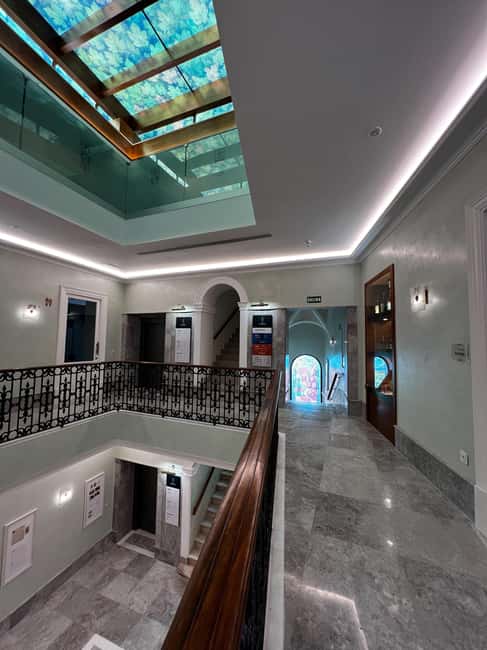
At $23 per person, the experience offers more than a simple wine tasting. Your admission includes a guided palace visit, audiovisual material, cultural galleries, the Brandy Museum, the Jerez Wine Museum, digital displays, a scent activity, explanations of cooperage and aging, and four sherries.
The price makes the most sense if you value context. If you only want a drink in a historic room, you can likely find a simpler option. If you want to understand how Jerez connects wine, brandy, wood, vineyards, and local culture, the museum format gives you more for the money.
The 90-minute length also helps the value. You are not committing to a long excursion, yet the program covers three floors and includes a tasting. It is a good fit for a short stay or a busy day in Jerez.
The experience is less compelling for you if your main goal is to visit working vineyards or spend hours in a traditional cellar. The supplied details describe an urban museum and cultural center, not a countryside winery tour. That is not a weakness, but it is important to know what you are buying.
Who should book Palacio San Dionisio?
I would recommend this visit to you if you are curious about sherry but do not yet know how it is made. The combination of palace rooms, field tools, antique bottles, digital displays, scent work, and tasting gives beginners several ways into the subject.
It also suits anyone with limited time in Jerez. The central address, small group, and 1.5-hour schedule keep the commitment manageable. The visit can introduce the local wine tradition before you explore more bars, restaurants, or historic sights on your own.
Brandy fans will appreciate the separate Brandy Museum, while architecture lovers will enjoy seeing an 1837 palace used for a modern cultural purpose. The four-wine tasting adds appeal for anyone who wants a direct introduction rather than a museum visit without a drink.
I would be more cautious about booking if you already know sherry well and want a specialist cellar tour. The digital and museum elements may feel introductory, and the short schedule leaves limited time for highly technical discussion.
Should you book it?
Book Palacio San Dionisio if you want a compact, central introduction to Jerez wine with a historic setting and four sherries included. The strongest reasons are the palace, the small group, the clear explanation of aging and cooperage, and the way the tasting follows the exhibits.
Skip it if you are seeking a full vineyard day or a long cellar experience outside the city. For most first-time visitors who want useful context without giving up an afternoon, $23 is a reasonable price for a well-rounded introduction.
FAQ
Where does the Palacio San Dionisio tour begin?
The tour begins at the sign at the palace entrance at Pl. de la Asunción, 2, in Jerez de la Frontera.
How long does the experience last?
The experience lasts 1.5 hours. Check availability for the specific starting times.
How many sherries are included in the tasting?
The scheduled tasting includes four sherries.
Which languages are available?
The live tour is available in English and Spanish. Some content is shown in its original language.
Is the tour wheelchair accessible?
Yes, the activity is wheelchair accessible.
How large is the group?
It is a small-group experience limited to 10 participants.
Just added around Spain
- Malaga: Granada Day Trip with Alhambra, Palaces and Gardens★ 4.5 · 197 reviews
- Royal Palace of Madrid Skip-the-Line and Retiro Park Tour★ 4.5 · 78 reviews
- Madrid: VIP Private visit to Royal Palace and Prado Museum★ 5.0 · 14 reviews
- Madrid: Royal Palace Private Tour with Entry Ticket★ 5.0 · 4 reviews
- Madrid: The Royal Palace Skip-the-line Guided Tour★ 4.7 · 21 reviews
- Madrid: Royal Palace Private Tour with Tickets★ 4.7 · 13 reviews
- Madrid: Royal Palace Tour, Flamenco Show, & Tapas with Drink★ 3.9 · 39 reviews
- Madrid: 4-Hour Bus Tour with Royal Palace Admission★ 3.9 · 52 reviews
Museums, compared.
Venice’s Best: Basilica, Doge’s Palace, Gondola & History Gallery
Read our review →
Royal Palace & Prado Museum Skip the Line Guided Tour
Read our review →
City Pass with Museums including Doge’s Palace
Read our review →
Knossos Palace and Museum E-Tickets with Audio Guides
Read our review →
Venice Museum Pass & Doge’s Palace Entrance Ticket
Read our review →
Palace, Museum, Madrasa & Medina Highlights Tour
Read our review →
Browse the lists this tour appears in