
REVIEW · ISTANBUL
Topkapi Palace&Harem-Guided Tour-Skip lines- All tickets inc
Four courtyards, centuries of power. This 3.5-hour walking tour brings you through Topkapi Palace, its Harem, and the Hagia Irene Museum with a licensed English-speaking guide. You see the palace as more than a collection of tiled rooms: it was the Ottoman center of government, education, ceremony, and private life for about 400 years.
I especially like the included Harem entry, since this section requires more than simply wandering through the palace grounds. I also like the guide-led storytelling, which puts faces and personal drama behind the architecture, from palace students and sultans to the women who lived in the Harem. The main consideration is the walking: you cross all four courtyards, and the visit can run close to four hours, so comfortable shoes, water, and a snack are sensible.
The $118 price is not a bargain-basement museum visit, but it includes the palace, Harem, Hagia Irene, a live guide, and skip-the-ticket-line access. For a first visit to Istanbul, that package can make good sense, especially if you want the objects and buildings explained rather than simply photographed.
Key points to know before booking
- The Harem is included: You do not have to arrange a separate visit to the palace’s private female quarters.
- Four courtyards shape the visit: The route moves from working palace spaces to government rooms, education areas, treasures, and Bosporus-facing pavilions.
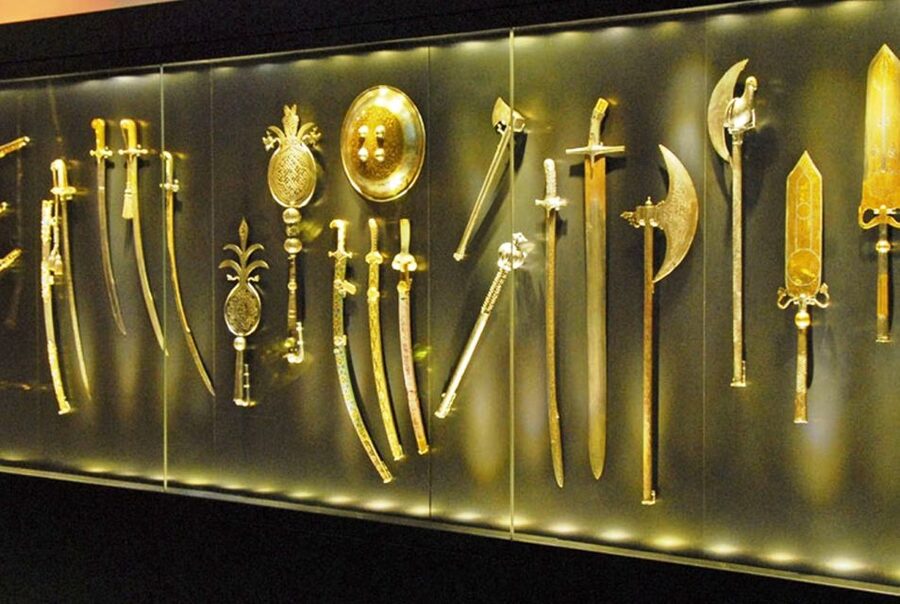
- The treasury has major showpieces: Look for the 86-carat diamond and the gold-and-emerald dagger made for the Iranian Shah.
- The guide makes the difference: Guides including Omer, Önder, Berk, Baha, and Salih have been praised for clear English, patience, and strong Ottoman history.
- Expect plenty of walking: One small group described nearly four solid hours on foot, with little sense of being rushed.
- The meeting point is central: You meet just behind Hagia Sophia at the main entrance to Topkapi Palace.
Why a guide helps at Topkapi Palace
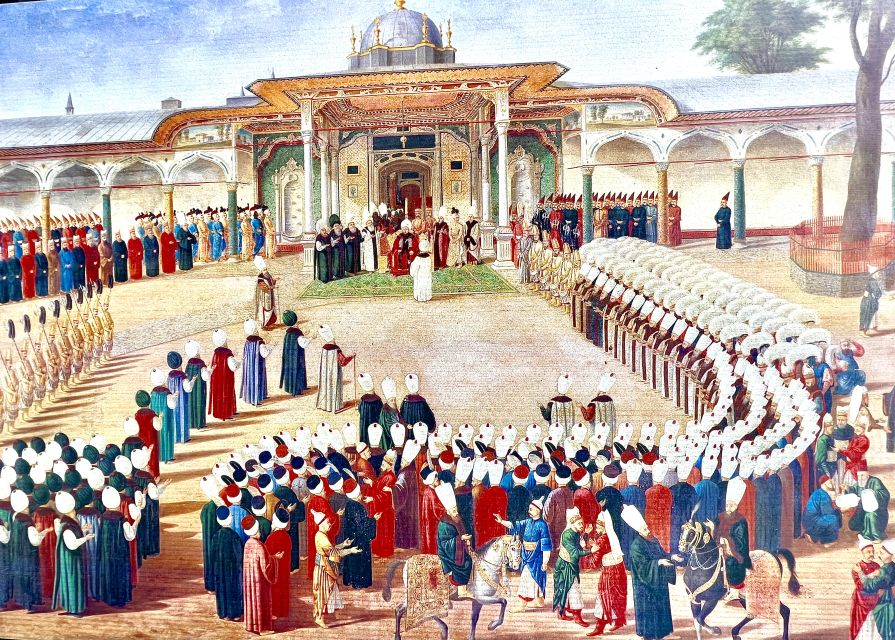
Topkapi is not one grand palace hall with a single dramatic staircase. It is a broad compound of courtyards, pavilions, kitchens, council rooms, religious relics, treasury rooms, and private quarters. Without context, you can easily admire the tiles and miss what each space was for.
A guide gives the palace a clear order. You learn how power moved through the courtyards, where government business took place, how selected students were trained, and how the sultans used the final courtyard for rest and celebration. That structure matters because Topkapi can otherwise feel like a long series of attractive but disconnected rooms.
The strongest part of this experience is the human detail. Guides have explained the lives of the sultans and concubines, the role of palace education, Ottoman court customs, and the political world behind the displays. One particularly praised guide, Önder, was noted for answering questions about Ottoman, European, and Asian culture, as well as subjects such as Ottoman archery and the difference between tea and coffee in Istanbul.
That sort of conversation is valuable if you like history with a little side road. It also means the tour is not just a memorized speech. Guides such as Omer have been praised for adjusting the pace and content to the group, while Berk was described as patient and calm over a visit lasting from 9 a.m. to 1 p.m.
More Topkapi and Dolmabahce Palace Tours in Istanbul:
- Topkapi Palace and Harem Skip-the-Line-Tickets & Audio Guide
★ 4.3 · 4,745 reviews - Basilica Cistern & Hagia Sophia with Optional Topkapi Palace
★ 4.6 · 3,547 reviews - Istanbul: Topkapi Palace and Harem Ticket with Audio Guide
★ 4.4 · 2,401 reviews
Starting at the first courtyard
After meeting at the main Topkapi entrance, you take a short walk into the 15th-century palace compound. The first courtyard gives you a useful introduction because it shows that Topkapi was a working institution, not only a royal residence.
Your guide points out the bakery, hospital, and executioner’s fountain. These details may sound ordinary beside royal treasures, but they help you picture a self-contained palace community. Food had to be produced, illness treated, and court justice carried out within this large complex.
The first courtyard also gives your guide room to explain how the palace changed from the 15th through the 18th centuries. Ottoman architecture was not frozen in one style. Buildings and decorations changed as rulers added rooms, pavilions, and new tastes over time.
This is a good place to settle into the tour’s pace. You are walking outdoors between buildings, then stopping for explanations before entering more crowded display areas. If you dislike long historical talks, tell yourself that the setting keeps changing. You are not planted in one room for an hour.
The second courtyard: council rooms, kitchens, and the Harem
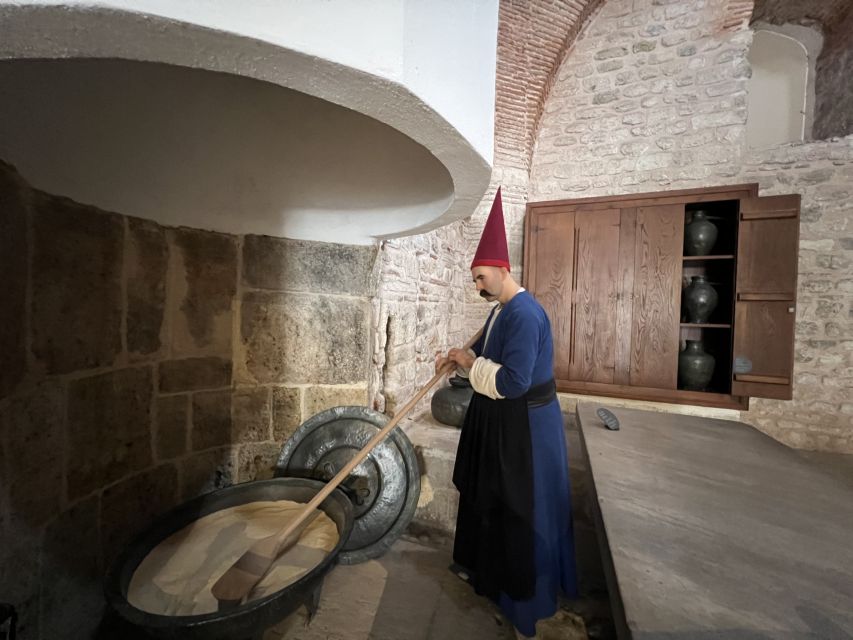
The second courtyard is where palace administration becomes easier to understand. Here you see the Imperial Council, the kitchens, and the entrance to the Harem. The guide explains how decisions affecting the empire were discussed and how the palace fed its court and staff.
The kitchens are particularly useful for showing the scale of palace life. They were not decorative side rooms. They supported a huge household, and the ceramics display adds another layer by showing objects from different parts of the world.
Then comes the Harem, one of the main reasons to choose this tour instead of a basic palace visit. Harem means the private section of the palace, and the tour uses its rooms to discuss the concubines who were brought from different countries and lived within the court system.
You should expect stories about power, family, status, and daily life, rather than a simple parade of pretty tiles. The Harem was tied to the sultan’s household and succession, so its story is also a story about how the Ottoman court worked.
The Harem can be confusing without help. Corridors and rooms may look similar, and the meaning of a space is not always obvious from its decoration. A guide points out what you are seeing and gives the rooms a social purpose. This is also the part of the tour where the guide’s tone matters. The subject deserves more than lurid gossip, and the best guides treat the women as part of the palace system rather than as background characters.
Iznik tiles and Ottoman design
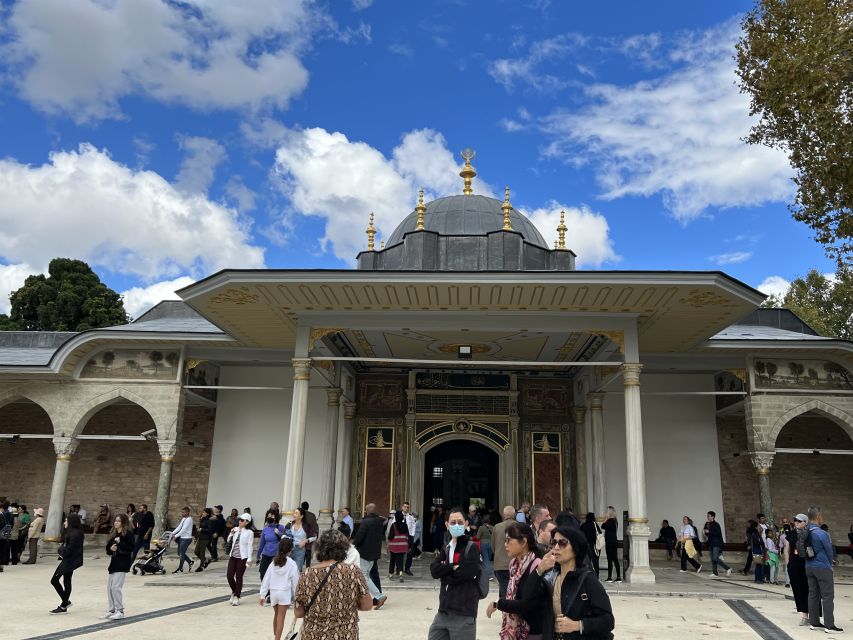
Topkapi’s handmade Iznik tiles are among the most memorable details on the route. Their patterns and colors can pull your attention away from the room itself, but your guide helps explain how decoration worked within Ottoman spaces.
The tour presents the palace as a record of changing design from the 15th to the 18th century. You see how different additions and periods altered the compound. This is useful if you are interested in architecture, since the palace does not tell its story in a neat, single style.
I would not rush through the tiled rooms. Let the guide explain the symbols, materials, and setting, then take a moment to look on your own. One advantage of this format is that several guides have been described as explaining a room first and then allowing time to see it at your own pace.
A few more palace visits around Istanbul worth a look
- Combo: Hagia Sophia+Basilica Cistern Optional Topkapi Palace
★ 4.3 · 1,880 reviews - Istanbul: Dolmabahce Palace and Harem Fast-Track & Audio
★ 4.7 · 1,772 reviews - Istanbul: Topkapi Palace and Harem Guided Tour with Ticket
★ 4.8 · 1,726 reviews - Basilica Cistern &Topkapi Palace &Hagia Sophia Combo Tickets
★ 4.6 · 1,306 reviews
The third courtyard and the Ottoman treasury
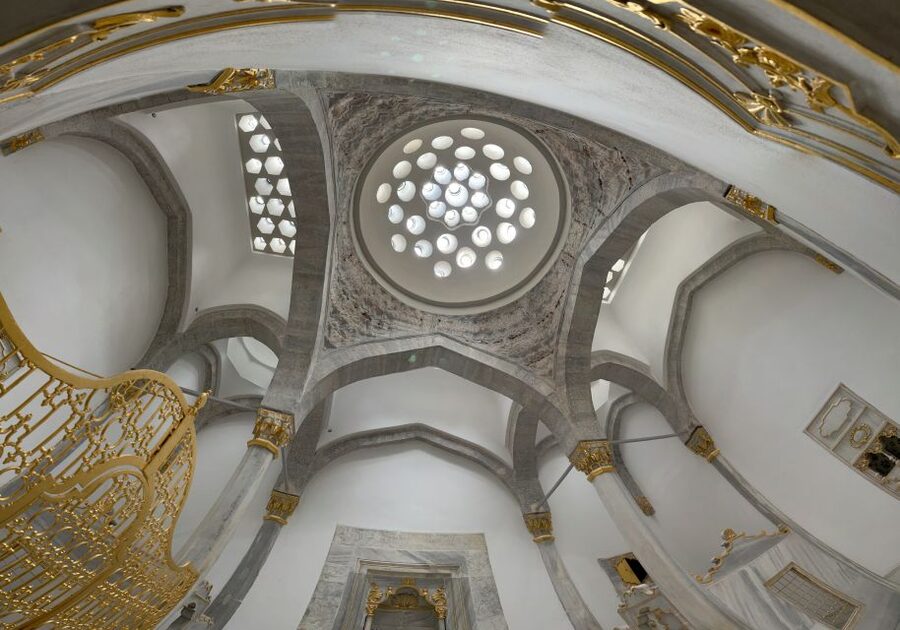
The third courtyard shifts from administration to education and royal privilege. This was the palace’s teaching area, where selected students were prepared for important roles, including leadership at the top of the empire.
That detail gives the courtyard a useful contrast with the Harem and council rooms. Topkapi was not only a family residence. It was also a place where people were trained, chosen, promoted, and brought into the machinery of government.
The treasury is the main visual reward here. You can see an 86-carat diamond, described as one of the largest in the world, along with a gold-and-emerald dagger made for the Iranian Shah. These are the sort of objects that can seem almost unreal in person, yet the guide supplies the political background that makes them more than expensive ornaments.
The palace also displays sacred relics, including Moses’ staff, David’s sword, and Abraham’s cooking pan. These objects carry religious importance and require a little patience. You may not find every item equally easy to interpret, but a guide can explain why they were kept and displayed in the Ottoman court.
The treasury rooms may be busy, and your view of an object can depend on the crowd around the cases. This is one reason skip-the-line access helps, but it does not mean you will have every gallery to yourself. The benefit is getting past the ticket queue, not receiving a private museum.
The last courtyard and the Bosporus view
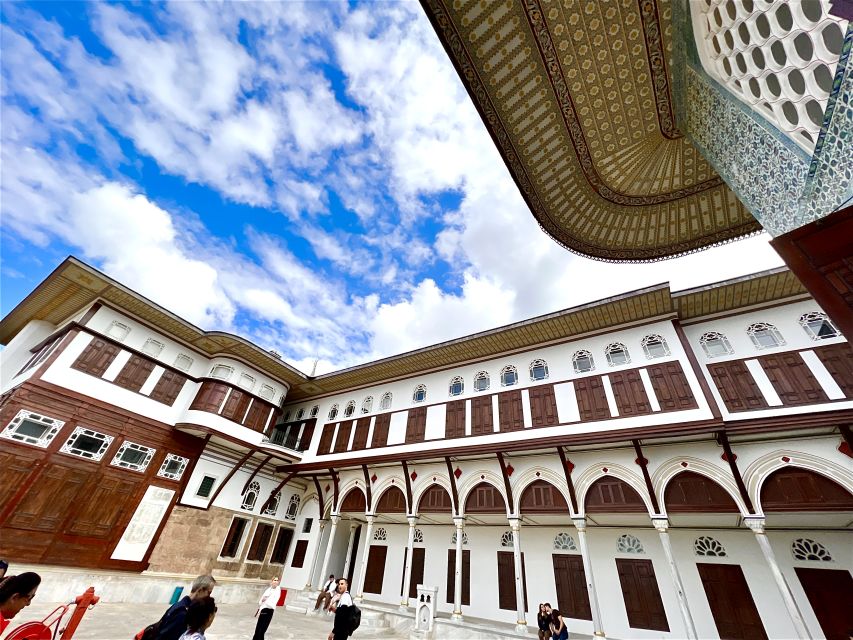
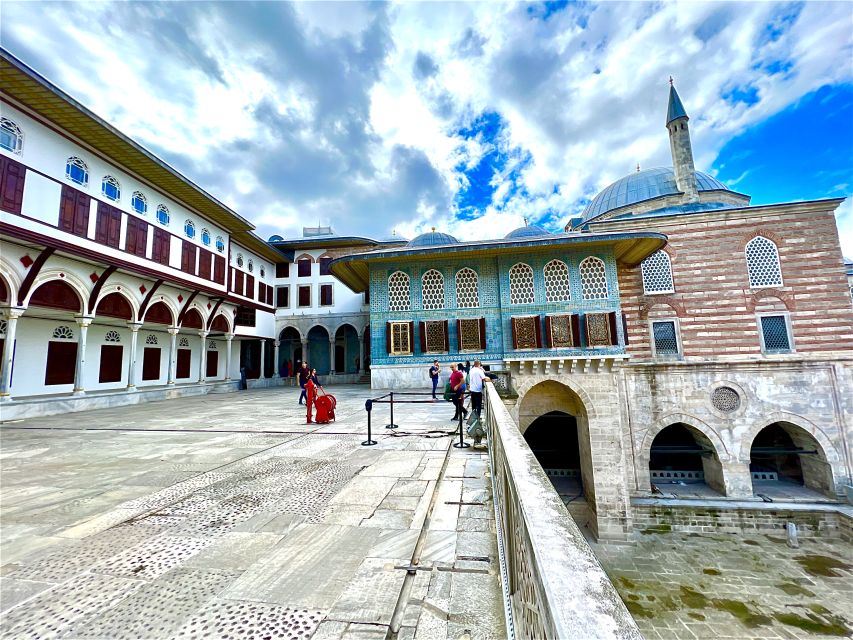
The final courtyard is the most open and restful section of the visit. Pavilions built for the sultans mark military victories, and the setting opens toward the Bosporus and Golden Horn.
This is the point where the palace’s location becomes clear. From the edge of the European side of Istanbul, you look out across the water and see why the site mattered. The view is not a minor bonus at the end. It explains the palace’s position as a seat of power between Europe and Asia.
Allow yourself a little time here. The guide may explain the pavilions and the victories associated with them, but this is also a good place to pause, take photographs, and let the geography sink in.
Weather affects this part of the tour more than the indoor sections. One group had rain, but their guide kept the visit moving with an upbeat attitude. On a clear day, the Bosporus view may be the visual highlight. On a wet day, it is still worth seeing, but you will want a coat and shoes with a firm grip.
Hagia Irene, the quiet final stop
The tour finishes at the Aya Irine Church Museum, also called Hagia Irene. Built in the fourth century A.D., it is described as one of the oldest churches in the world. For centuries, the Ottoman palace used it as an arsenal.
Its story adds a different layer to the day. You have just spent hours tracing Ottoman royal life, and now you enter a much older Christian structure that later served a practical palace function. Hagia Irene helps show how Istanbul’s important buildings changed use as empires and governments changed.
The stop is especially worthwhile if you enjoy buildings with several chapters. It is not simply an extra church added to the itinerary. Its age and later use connect the Byzantine and Ottoman periods in one place.
Because this is the final stop, you may be ready for a seat and a drink. The tour is not difficult in a technical sense, but it is a long walk with frequent standing. A group with a parent who had trouble walking found the guide patient and willing to adjust the pace, which is encouraging, though you should still plan realistically for the distance.
What $118 gets you
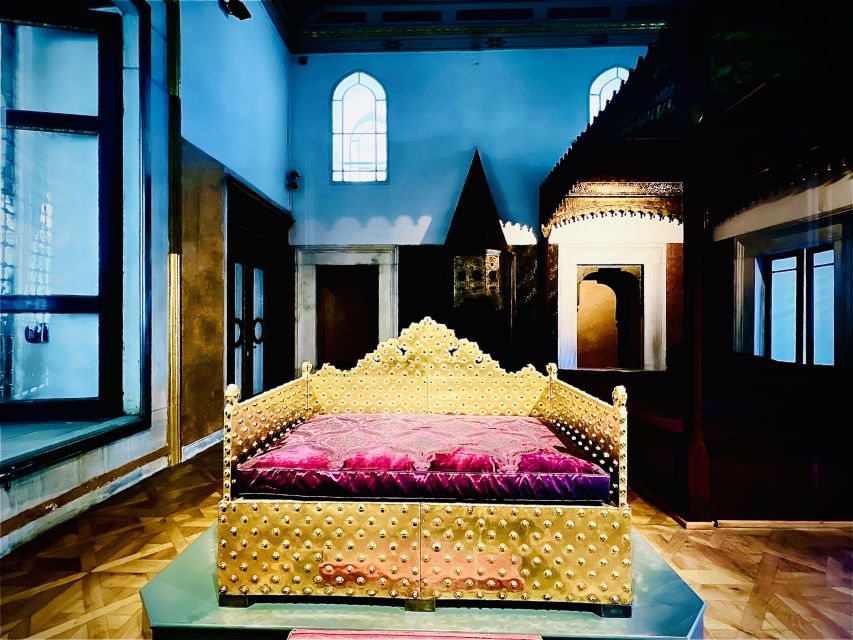
At $118 per person, the value rests on three things: the number of major areas included, the guide, and the time saved at the entrance. You receive the Topkapi Palace entry, Harem entry, Hagia Irene visit, a licensed English-speaking guide, and skip-the-ticket-line access.
A self-guided visit may cost less, but you would need to organize the palace route yourself and learn the meaning of the rooms as you go. Topkapi is large enough that a wrong turn or a missed section can matter. The Harem alone makes a guided option more attractive because it is one of the most important parts of the visit and not merely an outside courtyard.
The price does not include hotel pickup, food, or drinks. This is a walking tour, not a transport service. You meet near Hagia Sophia and make your own way there and back.
For value, I would compare this with the cost of separate admission and the time you would spend waiting or researching. If you are already comfortable reading museum labels and planning palace visits, $118 may feel high. If you have limited time in Istanbul and want the major rooms explained in one organized visit, the cost is easier to justify.
Group size, pace, and guide quality
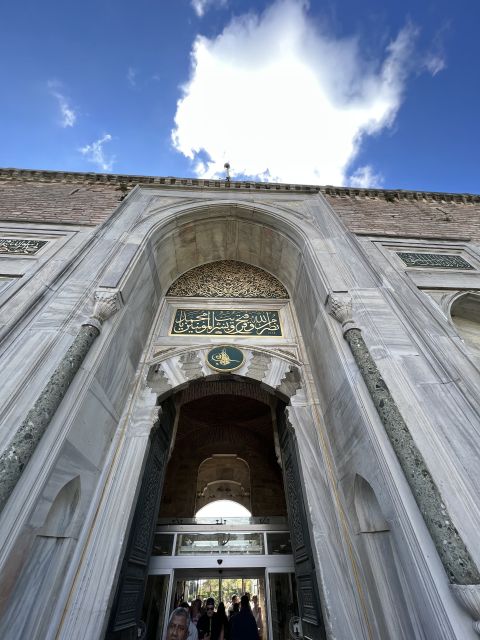
The group size can vary. One visit had 10 people, another had five, and the guides were able to speak directly without wireless audio in the smaller group. That is a pleasant advantage because you can ask questions without fighting through a headset or losing your guide in a crowd.
The strongest praise has gone to the guides’ teaching and patience. Omer is repeatedly described as friendly, professional, and easy to question. He also adjusted the tour to group interests and took care with a parent who walked slowly. Önder was praised for clear English and an ability to explain complex subjects without speaking too fast.
Other named guides include Berk, Baha, and Salih. Baha was described as funny and very well informed, while Salih was praised for explaining the palace and Ottoman sultans in detail. The exact guide is not guaranteed, but the repeated pattern is useful: guide quality is the main reason this experience earns its price.
The advertised duration is 3.5 hours. Plan for that, but keep part of your day open in case the route takes closer to four hours. One group covered nearly every part of the palace over four hours, with no feeling of being hurried.
Practical advice for a smoother visit
Wear comfortable shoes. You will cross courtyards, move through rooms, and stand during explanations. This is not the time for footwear chosen only for photographs.
Bring water and a small snack, especially if you are traveling with children. There are snack shops inside the palace, but the tour does not include food or drinks, and you may prefer not to stop when the group is moving.
Meet at the main entrance of Topkapi Palace, just behind Hagia Sophia. Build in enough time to find the meeting point, since the old city has busy pedestrian routes and several major sights close together.
The live language is English. If you need another language, this particular experience may not suit you.
Cancellation is flexible up to 24 hours before the start for a full refund, and you can reserve now and pay later. That is useful when your Istanbul schedule is still changing, but the central decision is simpler: do you want a guided, three-and-a-half-hour palace visit or a cheaper visit at your own pace?
Should you book this Topkapi tour?
Book it if Topkapi is a priority and you want the palace to make sense, not just look impressive. The included Harem, treasury, sacred relics, Iznik tiles, four courtyards, Hagia Irene, and Bosporus view create a full half-day of Ottoman and Byzantine history.
I would especially recommend it to first-time visitors, history fans, families who benefit from a steady route, and anyone with limited time in Istanbul. The guides’ patience also makes it a reasonable choice for mixed-ability groups, though everyone should be ready for a lot of walking.
Skip it if you prefer silent museum visits, want to linger alone at every display, or already know Topkapi well. At $118, the tour earns its keep through explanation and organization rather than luxury. For most first visits, that is exactly the help this sprawling palace needs.
FAQ
How long does the Topkapi Palace tour last?
The listed duration is 3.5 hours. Some visits have lasted close to four hours, so allow extra time if you have another fixed appointment afterward.
What sights are included?
The experience includes Topkapi Palace, the Topkapi Palace Harem, and the Hagia Irene Museum.
Are entry tickets included?
Yes. Topkapi Palace and Harem entry tickets are included, along with skip-the-ticket-line access. The experience description also includes the Hagia Irene visit.
Where is the meeting point?
You meet just behind Hagia Sophia at the main entrance of Topkapi Palace.
Is hotel pickup included?
No. Hotel pickup and drop-off are not included. You make your own way to the meeting point.
Is food included?
No. Food and drinks are not included. Snack shops are available inside the palace, and bringing water and a snack is recommended.
What language is the tour in?
The live guided tour is in English.
How much walking is involved?
There is a lot of walking across four courtyards and through many palace sections. One visit was described as nearly four hours on foot, so comfortable shoes are important.
Can I cancel the booking?
You can cancel up to 24 hours in advance for a full refund. The booking option also allows you to reserve now and pay later.
Just added around Istanbul
- Topkapi Palace with Harem Walking Tour with Guide★ 5.0 · 5 reviews
- Topkapi Palace and Harem Guided tour with Skip-the-Line Tickets★ 5.0 · 156 reviews
- Walls of Constantinople and Byzantine Palace Tour★ 4.5 · 7 reviews
- Topkapi Palace Museum Skip The Ticket Line Tickets + Audio Guide★ 3.0 · 2 reviews
- Guided Tour to Topkapi Palace with Skip-the-Line Entry Ticket★ 3.0 · 2 reviews
- Topkapi Palace Harem Ticket & Tour-Prepay & Balance at meeting★ 4.5 · 28 reviews
- Topkapi Palace Skip-The-Line Entry with Guided Tour★ 3.5 · 67 reviews
- Topkapi Palace and Harem Museum Ticket with Audio Guide★ 3.0 · 2 reviews
Topkapi and Dolmabahce Palace Tours, compared.
Topkapi Palace and Harem Skip-the-Line-Tickets & Audio Guide
Read our review →
Basilica Cistern & Hagia Sophia with Optional Topkapi Palace
Read our review →
Topkapi Palace and Harem Ticket with Audio Guide
Read our review →
Combo: Hagia Sophia+Basilica Cistern Optional Topkapi Palace
Read our review →
Dolmabahce Palace and Harem Fast-Track & Audio
Read our review →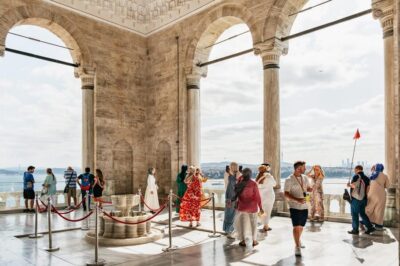
Topkapi Palace and Harem Guided Tour with Ticket
Read our review →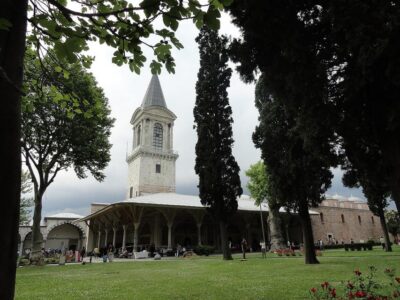
Basilica Cistern &Topkapi Palace &Hagia Sophia Combo Tickets
Read our review →
Dolmabahce Palace & Harem Skip-the-Line Entry & Audio Guide
Read our review →Browse the lists this tour appears in