
REVIEW · ITALY
Siena: Palazzo Pubblico Entry Ticket
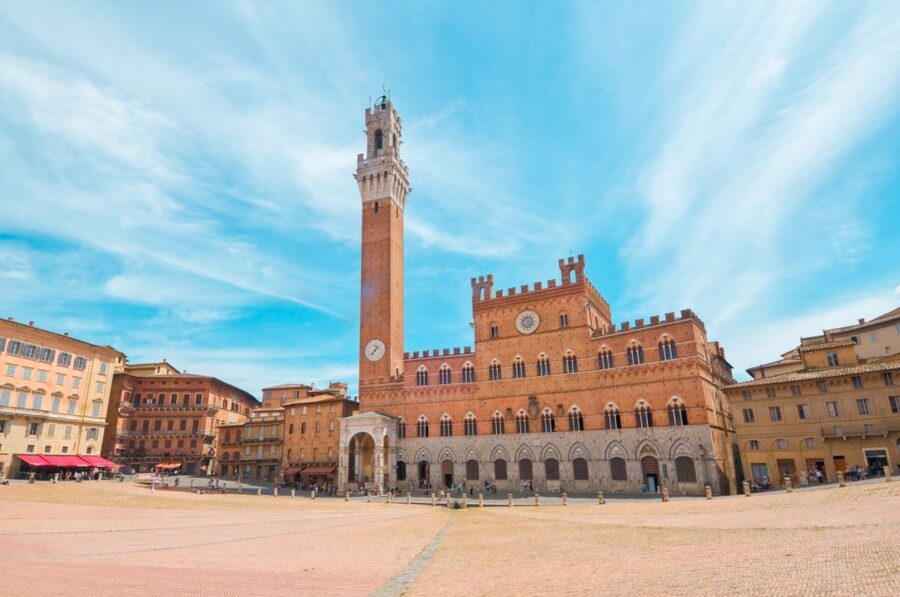
Siena’s painted town hall is a feast for the eyes. A $7 ticket gets you into the Civic Museum, where Simone Martini’s Maestà, Beccafumi’s decorated vault, and rooms covered in medieval art reward a close look. I especially like the museum’s compact one-hour visit and the open-air view from the Loggia dei Nove. The main catch is that the famous Allegory and Effects of Good and Bad Government frescoes may be closed for restoration.
You’ll also see rooms tied to Siena’s political story, from the Sala del Risorgimento to the grand Sala del Mappamondo. The ticket does not include the Torre del Mangia, and you must exchange your voucher at the courtyard ticket office before entering.
Key points to know before you go
- Simone Martini’s Maestà: The Gothic masterpiece in the Sala del Mappamondo is the museum’s essential sight.
- A compact visit: Plan on about one hour, though art lovers may want longer if all rooms are open.
- The Loggia dei Nove: This 14th-century gallery gives you a beautiful view across the Sienese countryside.
- Good value at $7: The ticket covers the Civic Museum but not the Torre del Mangia.
- Go to the inner courtyard: Enter the Cortile del Podestà to find the ticket office, not the outside entrance Google may show on Via di Salicotto.
- Check the restoration status: The Lorenzetti frescoes may be unavailable, so confirm what is open before setting your expectations.
Why Palazzo Pubblico is worth your time
Siena’s Palazzo Pubblico is not simply a container for paintings. The building itself tells you how the city saw government, religion, power, and civic duty. Its halls were built for public business, and the art was placed where rulers and officials would see it every day.
That makes the Civic Museum different from a standard art gallery. You move through working rooms, chapels, council chambers, and decorated halls. The frescoes are not isolated objects on white walls. They cover the architecture around you.
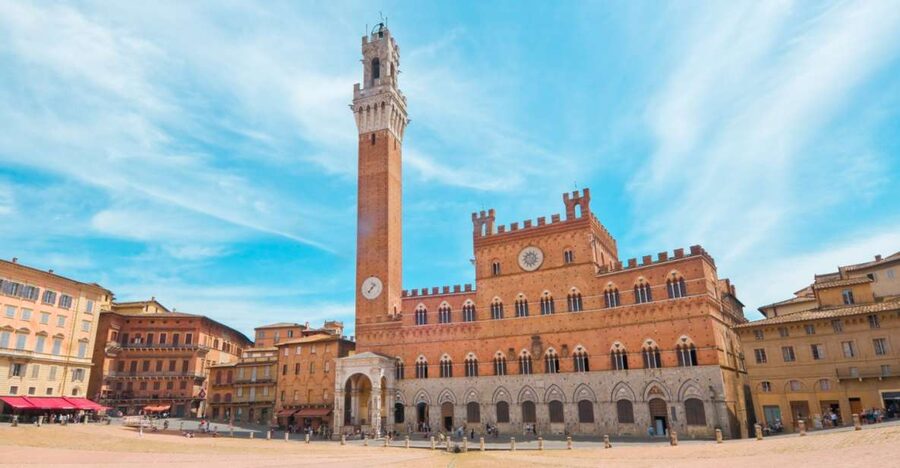
I like this kind of museum because you get a sense of Siena as a medieval city-state, not just Siena as a pretty Tuscan destination. The visit also fits neatly into a day in Piazza del Campo, since the Palazzo Pubblico faces the city’s famous shell-shaped square.
At $7 per person, the ticket is a strong buy if you already plan to visit Piazza del Campo. You get significant artwork, historic rooms, and a countryside view for less than the cost of many major European museums. The value drops slightly if the most important Lorenzetti frescoes are closed, but there is still plenty to see.
The museum has a rating of 4.2 from 708 reviews, which feels fair. The building and art earn high praise, while the limited number of open rooms, restoration work, and occasional confusion at the ticket office keep the visit from being perfect for everyone.
More Palace Entry Tickets in Italy
- Venice: Doge’s Palace Reserved Entry Ticket
★ 4.6 · 42,716 reviews - Florence: Palazzo Vecchio Entrance Ticket & Audioguide
★ 4.4 · 4,822 reviews - Florence: Entrance Ticket to Pitti Palace
★ 4.5 · 4,528 reviews
Start in the Cortile del Podestà
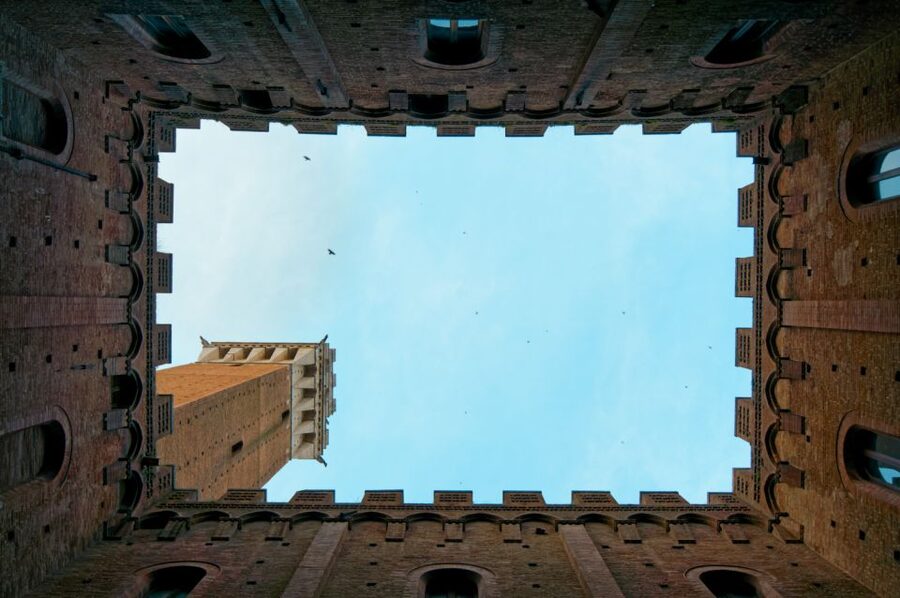
Your first practical task is finding the ticket office. Enter the Cortile del Podestà, the inner courtyard of the Palazzo Pubblico, and exchange your voucher for an entry ticket.
This detail matters. Map directions may lead you to the outside of the building along Via di Salicotto. That is not the place to stop. Continue into the courtyard, where you will find the office.
Arrive about 10 minutes before your booked time. The voucher exchange is usually simple, but an e-ticket shown directly at the door may not be enough. The stated procedure requires you to trade the voucher for an actual entry ticket.
Bring a passport or identity card. Large bags and luggage are not allowed, and flash photography is prohibited. Assistance dogs are allowed, but other pets are not.
The booking has a small-group limit of 10 people, though this is not a guided tour. You will explore independently, without a guide or audio guide included. That suits visitors who prefer to move at their own pace, but you should read a little about the main rooms in advance if you want more context.
Sala del Risorgimento and Siena’s national story
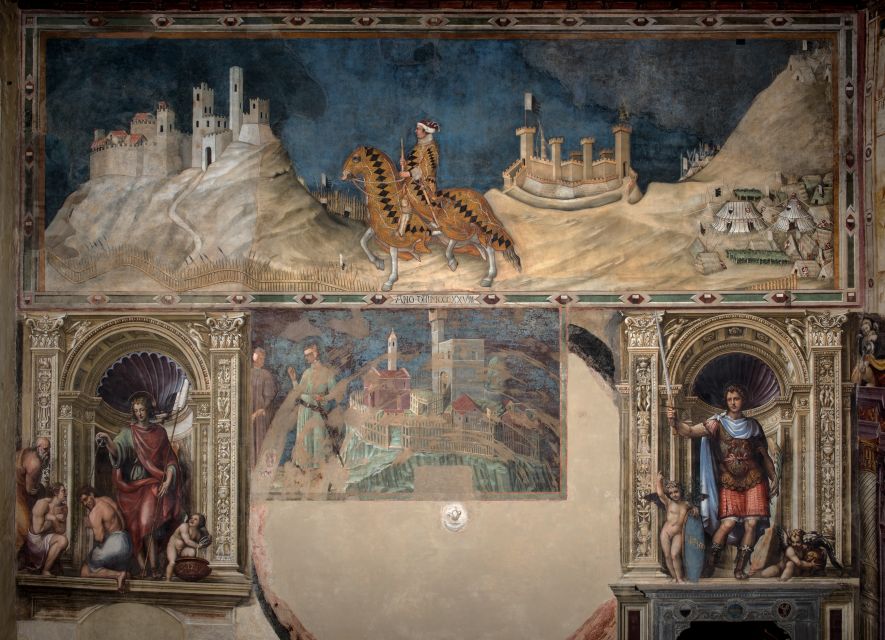
The visit begins in the Sala del Risorgimento. Its frescoes show the life of Vittorio Emanuele II, the first king of Italy.
This room shifts the focus from medieval Siena to the creation of modern Italy. It is a useful opening because the Palazzo Pubblico is often associated only with the Middle Ages. Instead, you begin with a later chapter in the country’s political story.
The room is not necessarily the museum’s artistic high point, but it gives you a clear sense of how public buildings can be used to tell official history. Look for the way the paintings turn political events into a visual story.
If you are visiting with children or someone who does not want a long art lecture, this first room is easy to understand. If you care most about medieval painting, you may move through it quickly and save your attention for the older halls.
Sala di Balìa and the power of wall painting
Next comes the Sala di Balìa, decorated with 15th-century paintings by Spinello Aretino and Martino di Bartolomeo.
This is where the museum’s wall-to-wall character becomes especially clear. You are not looking at one famous canvas and then moving on. You are surrounded by painted surfaces, decorative details, and scenes that were designed to work together.
Take a moment to look above eye level. The upper sections and architectural details are easy to miss when you focus only on the large figures. A slow turn around the room reveals how much labor went into covering a civic interior.
The museum’s smaller size helps here. You do not need to spend an entire day trying to absorb everything. A careful hour gives you enough time to see the main rooms without feeling rushed, although serious art lovers may want extra time.
Same place, a different set of state rooms:
- Doge’s Palace & St. Mark’s Basilica with Terrace Access Tour
★ 4.7 · 10,697 reviews - Venice: Doge’s Palace and St Mark’s Basilica Walking Tour
★ 4.4 · 6,291 reviews - Legendary Venice: Doge’s Palace, St Mark’s & VIP Terrace Access
★ 4.5 · 5,033 reviews - Venice: Doge’s Palace and St. Mark’s Basilica Tour
★ 4.5 · 3,734 reviews
Sala dei Cardinali and carved coffers
The Sala dei Cardinali brings a different texture to the visit. Its carved coffers hold reliquaries, adding three-dimensional objects to a museum otherwise dominated by fresco painting.
These pieces help break up the sequence of painted rooms. You can compare the craftsmanship of the woodwork with the painted decoration on the walls and ceiling. The room also reminds you that Siena’s public and religious life were closely connected.
I find this stop valuable because it adds physical objects to the museum’s story. Paintings show ideas and events, but carved coffers and reliquaries show how objects were stored, displayed, and valued.
Do not expect a large collection of stand-alone artifacts. The strength of the Civic Museum is the setting, and the objects make the rooms more complete rather than forming a separate treasure collection.
Beccafumi’s vault and Taddeo di Bartolo’s chapel
The Sala del Concistoro is known for its Beccafumi vault. Look upward here. The ceiling is one of the places where the building’s decoration gains real force, especially when you consider that the room was designed for civic use rather than modern museum display.
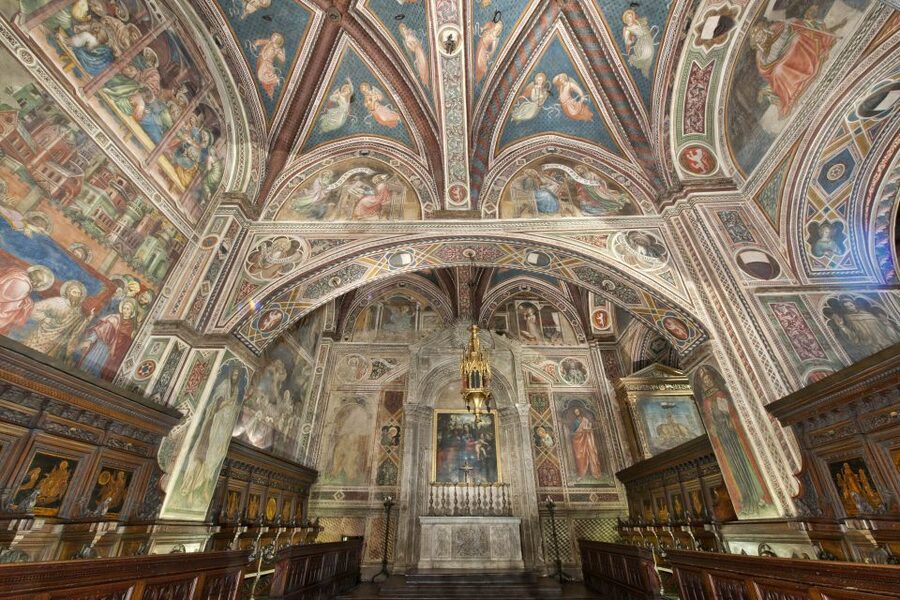
The visit continues to Taddeo di Bartolo’s 15th-century Cappella. The chapel gives you a more intimate religious space after the larger political rooms.
This change in scale is welcome. You move from public halls to a setting with a more focused devotional purpose. The chapel also helps show how religious imagery remained part of the visual language of civic Siena.
Because no guided tour or audio guide is included, you may not receive much explanation on site. I recommend taking a few minutes before your visit to learn the names of Beccafumi and Taddeo di Bartolo. Even a basic introduction makes it easier to appreciate what you are seeing.
Sala del Mappamondo and Simone Martini’s Maestà
The Sala del Mappamondo is the widest room in the Palazzo Pubblico. It once served as a meeting place for the General Council, so its scale makes practical sense.
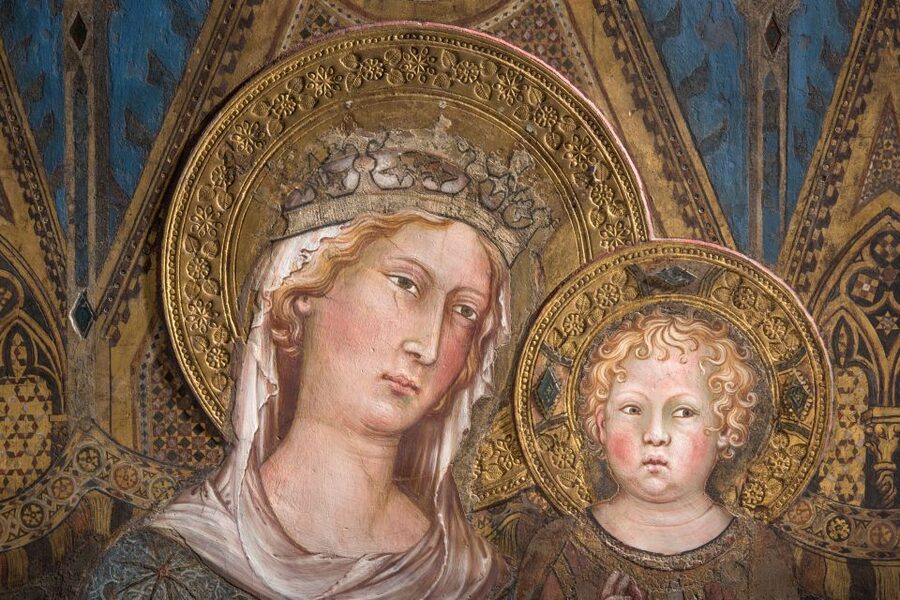
This is the room many people come to see. Here you will find Simone Martini’s Maestà, a Gothic masterpiece and one of the museum’s great highlights.
The painting rewards close attention. Look at the fine lines, the rich decorative work, and the careful arrangement of figures. The image is beautiful, but it also carries a civic message. Mary’s presence connects Siena’s political identity with religious devotion, a theme that appears throughout the building.
This is the point where I would slow down. Give yourself several minutes rather than taking a quick photograph and moving on. The Maestà is one of those works whose details become clearer when you stand quietly in front of it.
The Sala del Mappamondo also gives you a sense of how art worked in a government chamber. These were not private paintings hidden away for specialists. They surrounded political discussion and helped shape the room’s meaning.
The Lorenzetti question: check before you visit
The biggest possible disappointment is the Allegory and Effects of Good and Bad Government by Ambrogio Lorenzetti. It is one of Siena’s best-known works, and many visitors plan their visit around it.
Restoration work has affected access to the frescoes. At times, the series is not on display. This is worth checking before you book, especially if you have read about the paintings or planned your Siena visit around them.
If the Lorenzetti rooms are closed, do not assume the museum is empty. You still have Simone Martini’s Maestà, the decorated halls, Beccafumi’s vault, Taddeo di Bartolo’s chapel, carved coffers, and the building’s architecture.
Extra access may sometimes be arranged at the ticket desk, but it is not something you should count on. Ask directly when you exchange your voucher. The availability of rooms can change because of restoration or extraordinary events.
The lack of a clear warning about restoration has been a fair criticism. I would treat the Lorenzetti frescoes as a bonus, not a guarantee, unless the ticket office confirms they are open.
Loggia dei Nove and the view beyond Siena
The museum ticket includes access to the Loggia dei Nove, a 14th-century gallery with a view toward the countryside behind the Palazzo Pubblico.
This is an excellent way to finish. After several rooms of close-up frescoes, you step out toward open space and see the setting that helped make Siena so memorable.
The view is not a replacement for the Torre del Mangia. It is a different experience. The Loggia gives you a broad outlook from the Palazzo Pubblico, while the tower offers a much higher viewpoint and requires a separate ticket.
The terrace has been a favorite part of the visit for many people, and I understand why. It gives the museum a strong final moment, especially on a clear day. Plan your timing so you are not rushing through the loggia just before closing.
Palazzo Pubblico ticket versus Torre del Mangia
This $7 ticket covers the Civic Museum only. Access to the Torre del Mangia is not included.
That distinction is easy to miss when planning a visit to Piazza del Campo. If you want both the museum and tower, ask at the ticket office about buying the tower ticket directly. Some people have arrived expecting a combined experience and then had to sort out the difference at the venue.
The two attractions serve different interests. Choose the museum if you care about frescoes, civic history, and medieval art. Choose the tower if your main goal is a high view over Siena.
If you have time and the tower is open, doing both can create a satisfying visit to the Palazzo Pubblico. If you have only one hour, the museum is the simpler and less physically demanding choice.
Timing, access, and who should visit
The stated duration is one hour. That is enough for a focused visit through the main rooms, particularly if you move steadily and do not linger at every fresco.
Give yourself more time if you are an art enthusiast, if the Lorenzetti rooms are open, or if you want to study the decorative details. The visit ends back at the same meeting point.
The museum is wheelchair accessible. The elevator door is 69 centimeters wide and the elevator is 83 centimeters deep, so check those measurements against your equipment before going.
Opening hours can change, and access may be suspended during extraordinary events. The flexible booking option allows you to reserve without paying immediately, and cancellation is free up to 24 hours before the scheduled visit.
I would book this for:
- First-time visitors to Siena who want a clear introduction to the city
- Art lovers interested in Italian Gothic and Renaissance painting
- Visitors already spending time in Piazza del Campo
- People who prefer an independent visit rather than a guided tour
- Anyone looking for a low-cost indoor stop during a hot or rainy day
I would think twice if your only reason for going is the Lorenzetti fresco cycle. Confirm its status first. I would also avoid booking if you want a guide to explain every room, since the ticket includes neither a guide nor an audio guide.
Should you book the Civic Museum ticket?
Yes, for most visitors to Siena, this is an easy recommendation. At $7, the Civic Museum gives you access to some of the city’s finest art inside the very building where Siena’s civic life unfolded.
The strongest reasons to go are Simone Martini’s Maestà, the wall-to-wall frescoes, and the Loggia dei Nove view. The main cautions are simple: confirm restoration conditions, find the courtyard ticket office, and do not confuse this ticket with entry to the Torre del Mangia.
Book it if you want art and civic history in a compact visit. Skip it only if your schedule is extremely tight or if the Lorenzetti frescoes are the sole reason you are coming. Even with that important room unavailable, the Palazzo Pubblico remains one of Siena’s most rewarding stops.
FAQ
How much does entry to Siena’s Civic Museum cost?
The entry ticket costs $7 per person.
How long does the visit take?
The stated duration is one hour. You may want longer if you plan to study the frescoes carefully.
Where do I exchange my voucher?
Enter the Cortile del Podestà, the inner courtyard of the Palazzo Pubblico. The ticket office is there.
How early should I arrive?
Arrive at the ticket office 10 minutes before your booking time.
Is the Torre del Mangia included?
No. The ticket includes the Civic Museum and the Loggia dei Nove, but not the Torre del Mangia. Tower tickets can be purchased directly at the ticket office.
Is a guided tour or audio guide included?
No. The ticket provides entry only. A guided tour and audio guide are not included.
Is the museum wheelchair accessible?
Yes. The museum is wheelchair accessible. The elevator door is 69 centimeters wide, and the elevator is 83 centimeters deep.
Can I cancel the booking?
Yes. You can cancel up to 24 hours in advance for a full refund.
Just added around Italy
- Palermo: City & Palazzo dei Normanni Guided Walking Tour★ 4.7 · 28 reviews
- Palermo: Norman Palace Ticket & Audio App Downloadable★ 3.5 · 4 reviews
- Palermo: Palatine Chapel, Audio App & optional Norman Palace★ 3.8 · 70 reviews
- Palazzo Vecchio Secret Passages Tour & Lunch or “Gelato”★ 4.3 · 16 reviews
- Palazzo Vecchio Small Group Tour★ 4.9 · 10 reviews
- Palazzo Normanni and Palatine Chapel Tour – Ticket Included (Italian)★ 3.8 · 14 reviews
- Palazzo Vecchio 90-Minute Morning Guided Tour★ 4.7 · 104 reviews
- Palazzo Vecchio: Private Guided Museum Tour & Tower Tickets★ 4.7 · 18 reviews
Palace Entry Tickets, compared.
Buckingham Palace: The State Rooms Entrance Ticket
Read our review →
Prague Castle and Lobkowicz Palace Entry Tickets
Read our review →Browse the lists this tour appears in