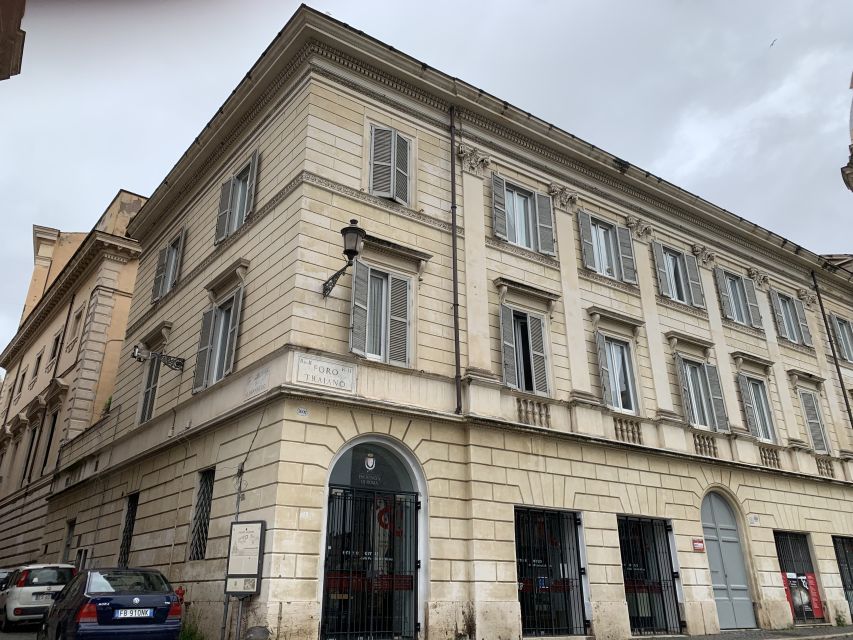
REVIEW · ITALY
Rome: Palazzo Valentini Roman Domus Multimedia Experience
Rome comes alive beneath the city streets. This two-hour visit pairs a 25-minute film about Rome’s major monuments with a headset-led tour through the Imperial Roman Domus beneath Palazzo Valentini. I like the way it connects ancient rooms, medieval layers, and modern Rome in one compact visit. I also like the close virtual look at Trajan’s Column and its scenes of the conquest of Dacia.
The main thing to consider is the format. This is not a traditional guided tour, and the headset does much of the storytelling. The underground spaces are also unsuitable for wheelchair users and people with claustrophobia. At $35 per person, the experience works best for you if you enjoy visual technology and want more help picturing ruins that are no longer complete.
Key points to know before booking
- The visit begins with a 25-minute film: You watch it at the Touristation Aracoeli office before heading to the Domus one hour later.
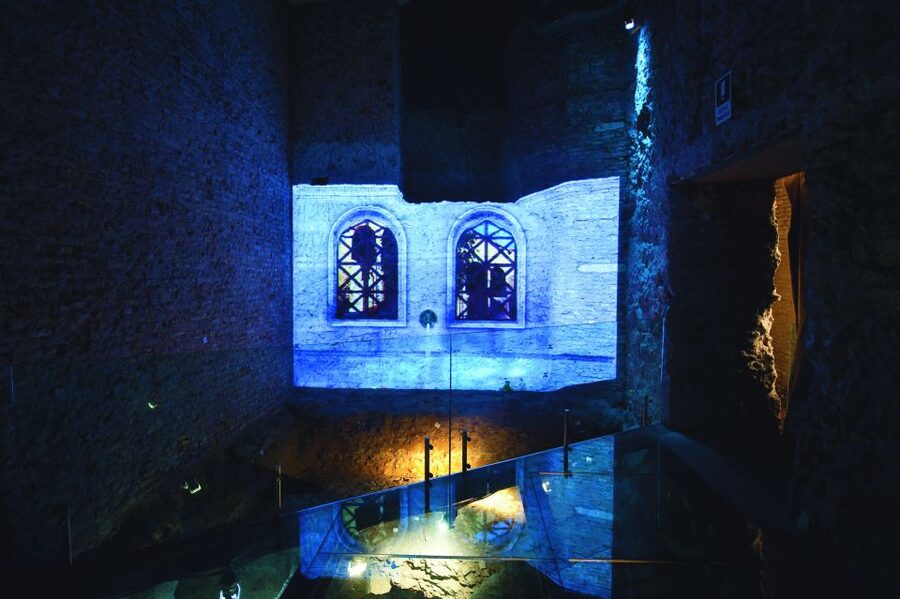
- The Roman rooms return through a headset: Virtual scenes show walls, mosaics, kitchens, baths, peristyles, furniture, and decoration.
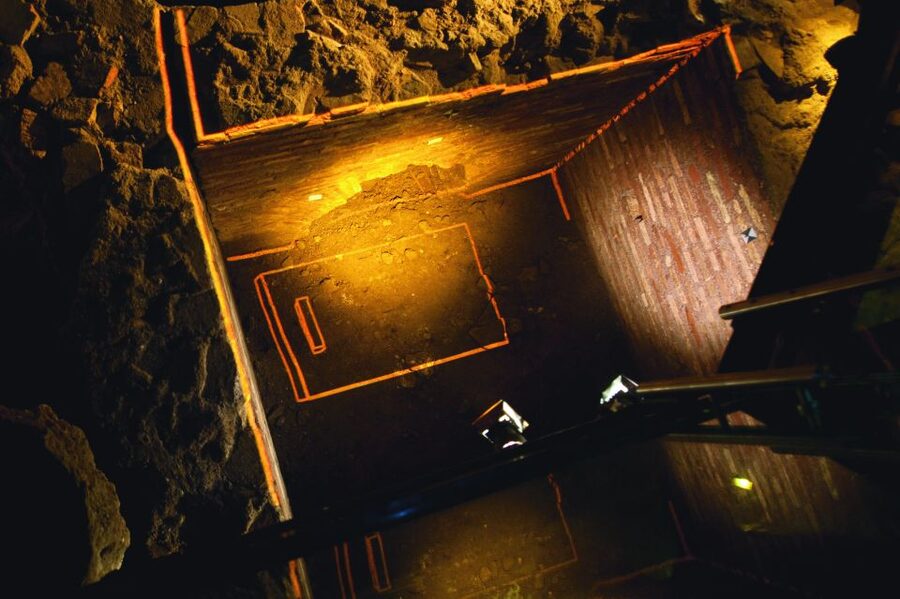
- The ancient site is below Palazzo Valentini: You see surviving archaeological remains alongside digital reconstructions of the rooms above and around them.
- Trajan’s Column gets special attention: The virtual reconstruction brings its carved military scenes closer to eye level.
- The $35 price includes several elements: Admission, the Roman Domus headset, the film, and a downloadable city audio guide are included.
- FOROF is an optional add-on: This combines archaeology, contemporary art, and an olfactory installation near Trajan’s Column.
Starting at Touristation Aracoeli
Your visit begins at TOURISTATION ARACOELI, at Piazza D’Ara Coeli 16. Look for the fountain and orange flags in front of the office entrance. This detail matters because Piazza Venezia and the area around the Capitoline Hill can feel confusing, especially when you are moving between major sights.
The first scheduled part is a 25-minute multimedia film. It covers important Roman landmarks, including the Colosseum, Roman Forum, St. Peter’s Basilica, Castel Sant’Angelo, Circus Maximus, and the Ara Pacis. The film gives you a quick visual orientation before the archaeological visit.
This opening film is useful if you are still getting your bearings in Rome. It places the Domus within the city’s wider story rather than treating it as an isolated basement site. You also see the major monuments in their present setting, then move toward the Roman remains beneath Palazzo Valentini.
There is an important timing detail. The Domus visit begins one hour after the film, so this is not a continuous 25-minute presentation followed immediately by the ruins. Check the starting time carefully and allow for the gap. You will want comfortable shoes, and you should avoid bringing luggage or large bags.
A few more palace visits around Italy worth a look
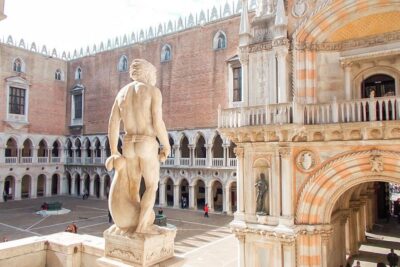
- Venice: Doge’s Palace Reserved Entry Ticket
★ 4.6 · 42,716 reviews - Doge’s Palace & St. Mark’s Basilica with Terrace Access Tour
★ 4.7 · 10,697 reviews - Venice: Doge’s Palace and St Mark’s Basilica Walking Tour
★ 4.4 · 6,291 reviews
Entering the Imperial Roman Domus
The archaeological portion takes place in the remains of a large Roman home, or Domus, from the Imperial Age. The surviving pieces include mosaics, decorated walls, and polychrome floors. These details help you see the quality of private Roman interiors, even when the original rooms are only partly intact.
Ancient ruins can be hard to read on their own. A broken floor tells you that something important once occupied the space, but it does not always show how the room functioned. The digital reconstruction fills in that gap by showing the rooms as connected living spaces rather than disconnected fragments.
You use an audio-guide headset as the virtual scenes unfold. The reconstruction includes peristyles, kitchens, baths, furnishings, and wall decoration. You are not simply looking at a digital image of a ruin. The point is to picture how the entire Domus may have worked as a home, with rooms arranged around courtyards and service areas.
I especially like this approach for first-time visitors to Rome. You do not need a strong background in Roman architecture to understand what you are seeing. The virtual scenes supply the missing walls and decoration, while the physical remains keep the presentation tied to a real archaeological site.
The experience also helps you connect different periods of Rome. The area has ancient, medieval, and modern layers, and the visit shows how one part of the city changed over time. That broader view gives the Domus more meaning than a quick look at a mosaic followed by the next sight.
What the headset adds to the ruins
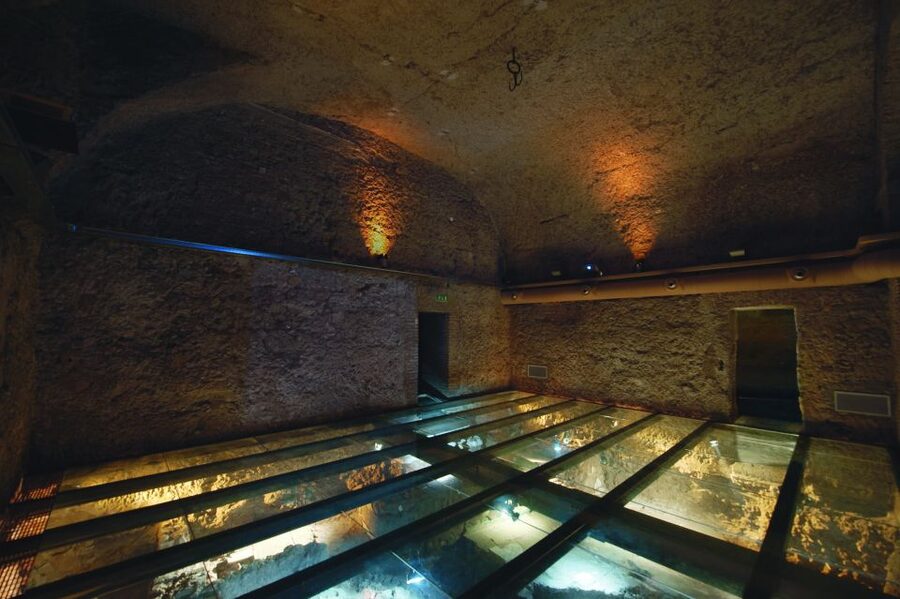
The headset is the main reason to choose this experience instead of visiting a site with only display panels and bare remains. It lets you see the reconstructed rooms, their surfaces, and their furnishings in a way that ordinary labels cannot easily provide.
You can picture a peristyle as an organized architectural space rather than a few surviving columns. You can also understand the difference between formal rooms, kitchens, baths, and decorated areas. The technology gives each part a role in the household.
The audio guide is available in English, French, German, Italian, Spanish, Russian, and Japanese. The Palazzo Valentini experience itself lists English, Italian, Spanish, French, and German as available languages, so check the exact language arrangement when booking if this matters to you.
The method will not suit everyone. If you prefer a human guide who can answer questions as you walk, this visit may feel limited because a guided tour at Palazzo Valentini is not included. The presentation is structured and visual, with the headset providing the explanation.
That does not make it a poor choice. It simply means you should book it for the reconstruction, not for conversation. The best audience is someone who wants help seeing the ancient rooms as they once appeared and is comfortable following a recorded presentation.
Seeing Trajan’s Column from a closer angle
One of the most useful sections focuses on the area around Trajan’s Column. The virtual reconstruction shows how the column and its surroundings looked in earlier times. It also gives you a close look at the bas-reliefs carved into the column.
The reliefs tell the story of Emperor Trajan’s military campaign and the conquest of Dacia, in present-day Romania. From ground level, the carvings are difficult to inspect. The virtual view helps you follow the images and understand that the column was not only a monument but also a visual account of a major Roman campaign.
This section adds welcome variety. The Domus focuses on private life and domestic space. Trajan’s Column shifts your attention to imperial power, public monuments, and military achievement. Together, the two subjects show different sides of Roman society.
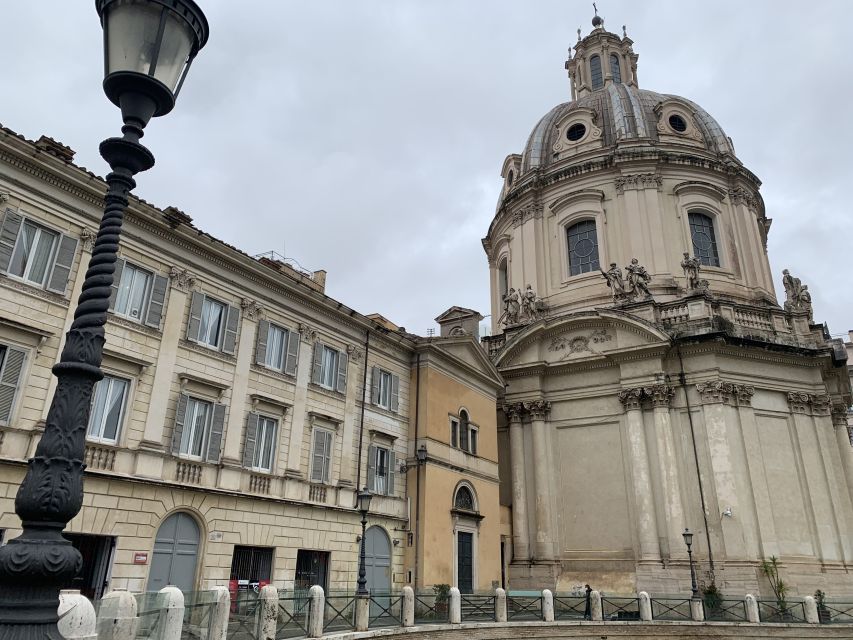
The location makes the connection especially practical. The optional FOROF experience is at Palazzo Roccagiovine, opposite Trajan’s Column at the Imperial Fora. If you choose that add-on, you can continue exploring the relationship between archaeology, art, and the monuments around the column.
Same place, a different set of state rooms:
- Legendary Venice: Doge’s Palace, St Mark’s & VIP Terrace Access
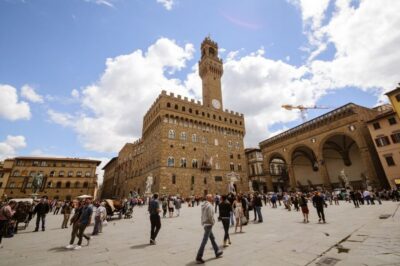
★ 4.5 · 5,033 reviews - Florence: Palazzo Vecchio Entrance Ticket & Audioguide
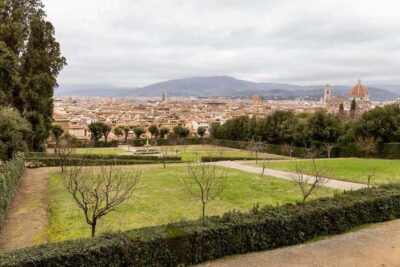
★ 4.4 · 4,822 reviews - Florence: Entrance Ticket to Pitti Palace
★ 4.5 · 4,528 reviews - Venice: Doge’s Palace and St. Mark’s Basilica Tour
★ 4.5 · 3,734 reviews
Adding the FOROF archaeology and art visit
FOROF is an optional extra, not a required part of the main Palazzo Valentini Domus visit. It combines archaeology with contemporary art in the underground spaces of Palazzo Roccagiovine.
The archaeological remains there include the colored marble pavement of the Basilica Ulpia and the remains of its eastern apse, dating to the second century A.D. The site is preserved in agreement with the Archaeological Superintendence of Rome. This gives the add-on a clear archaeological focus, rather than making it only an art exhibition.
The contemporary installation is called Nimbus Limbus Omnibus by Bartolomeo Pietromarchi. It was created in dialogue with the Basilica Ulpia site. The concept links modern artistic work with the ancient remains around it, so this option is best for you if you enjoy present-day art alongside Roman archaeology.
FOROF also includes an olfactory element called FOROF ESSENZA. It was developed by Laura Bosetti Tonatto, an internationally known professional in fragrance creation. The stated aim is to express the spirit of the place through scent and connect it with ideas of freedom and cultural exchange.
Guided tours at FOROF are offered in English and Italian. If you do not speak either language, check the arrangements carefully before selecting this add-on. The additional visit can make the package more varied, but it also changes the focus from Roman domestic life to contemporary interpretation and sensory art.
One practical point is worth keeping in mind: the main Domus experience is already enough for a focused visit to ancient Rome. The film, headset reconstruction, mosaics, decorated walls, and Trajan’s Column section provide plenty to see. FOROF is best treated as an optional extension for people with a particular interest in contemporary art or the Basilica Ulpia.
Is $35 a fair price?
At $35 per person, the cost is not bargain-level for a two-hour activity. Still, the value depends on what you want from Rome’s ruins. You are paying for admission to the Ancient Roman Domus museum, the 25-minute film, the headset experience, and a downloadable city audio guide.
The price makes more sense if you have trouble reading archaeological remains without visual help. The digital reconstruction does work that a standard audio guide cannot: it shows missing walls, furnishings, rooms, and decoration. For many people, that is the part that turns a pile of remains into an understandable home.
The included city app may be less important to you. It is a separate convenience rather than the central reason to book. If you already have a good Rome audio guide, its value may be limited. The film also covers familiar monuments, so travelers who have already spent time at the Colosseum, Forum, St. Peter’s Basilica, Castel Sant’Angelo, Circus Maximus, and Ara Pacis may find that portion less necessary.
The strongest value is in the Domus itself. One especially useful judgment is that the Palazzo Valentini visit can carry the package on its own. If you are deciding between the standard option and the FOROF add-on, choose the extra only if archaeology, contemporary art, or the sensory installation genuinely appeals to you.
Who will enjoy this Roman experience?
I would recommend it to you if you like history presented through pictures and technology. Families with older children may also find the virtual rooms easier to understand than a site made up only of foundations and fragments, though each child must have the required identification if applicable.
It is also a good choice for visitors who want a shorter archaeological activity near central Rome. The experience lasts two hours rather than taking up half a day, and the structure gives you a clear beginning, waiting period, and Domus visit.
You should think twice if you want an in-depth conversation with a specialist. There is no guided tour at Palazzo Valentini included, and the headset follows a set format. You should also avoid it if you have claustrophobia or use a wheelchair, since the experience is not suitable for wheelchair users and the underground setting may be uncomfortable.
The audio options make the visit accessible to a broad range of language speakers. Available audio-guide languages include English, French, German, Italian, Spanish, Russian, and Japanese. The FOROF guided experience has a narrower language choice, English and Italian.
Practical planning for your visit
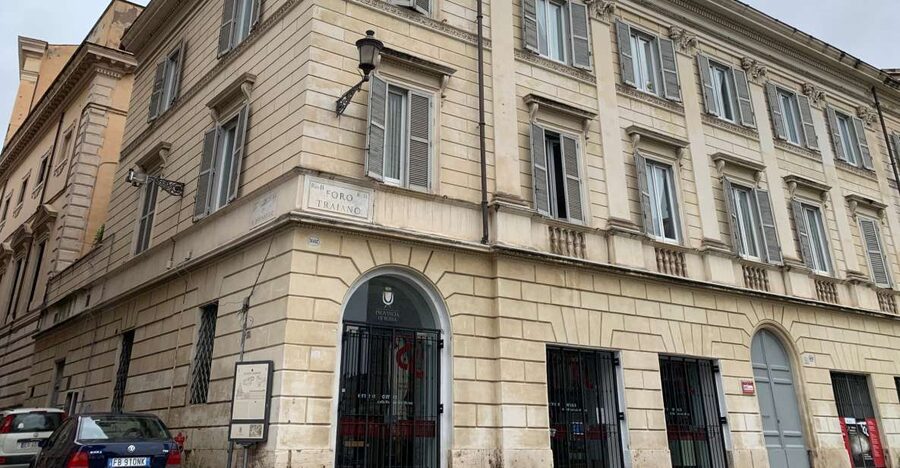
Report to the Touristation Aracoeli office at Piazza D’Ara Coeli 16. The fountain and orange flags help identify the entrance. Do not arrive with large bags or luggage, since these are not allowed.
Wear comfortable shoes. You will be visiting archaeological remains and moving through an underground setting, so practical footwear is a better choice than dress shoes.
Bring a passport or identification card for children. This is listed as a requirement, so keep it with you even if the child is young.
The activity is non-refundable, which makes checking the date, starting time, language, and optional FOROF choice important before you pay. The total duration is two hours, but remember that the Domus visit begins one hour after the opening film. Plan the rest of your day around that interval rather than assuming the entire activity runs without a break.
Should you book Palazzo Valentini?
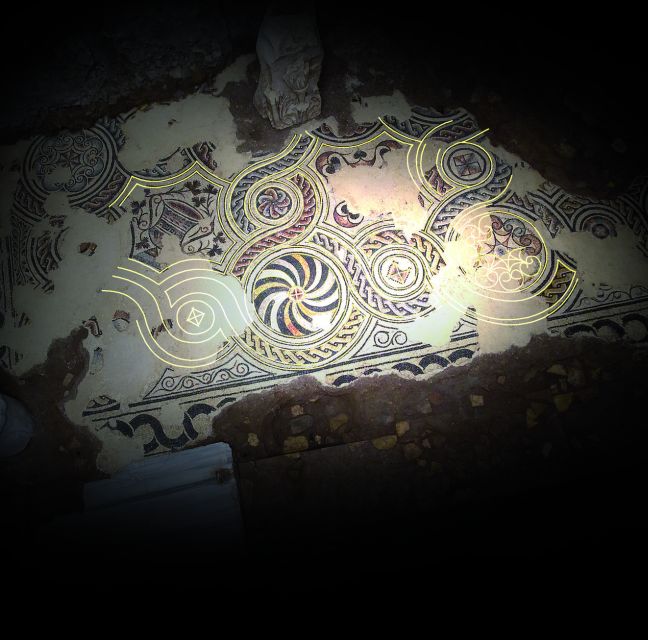
Book it if you want ancient Rome explained through reconstruction rather than only through surviving stone. The mosaics, polychrome floors, decorated walls, and headset scenes give you a clear sense of how a Roman home could function, while the Trajan’s Column section adds a strong public and military counterpoint.
Skip it if you want a traditional guide, dislike headsets, or have difficulty in underground spaces. At $35, the cost is easiest to justify when the visual reconstruction is exactly what you need.
For most suitable visitors, I would choose the standard Palazzo Valentini experience first. Add FOROF only if contemporary art, the Basilica Ulpia remains, and the fragrance installation sound like a real interest rather than an extra box to tick.
FAQ
How long does the Palazzo Valentini Roman Domus experience last?
The activity lasts two hours. The 25-minute multimedia film is shown before the Domus visit, which begins one hour later.
Where is the meeting point?
Meet at TOURISTATION ARACOELI, Piazza D’Ara Coeli 16. A fountain and orange flags are in front of the office entrance.
What does the 25-minute film show?
The film presents past and present views of major Roman monuments, including the Colosseum, Roman Forum, St. Peter’s Basilica, Castel Sant’Angelo, Circus Maximus, and the Ara Pacis.
Is a guided tour of Palazzo Valentini included?
No. A guided tour at Palazzo Valentini is not included. The Domus visit uses an audio-guide headset and multimedia reconstruction.
What languages are available for the audio guide?
The audio guide is available in English, French, German, Italian, Spanish, Russian, and Japanese.
What does the virtual reconstruction show?
It shows reconstructed Roman rooms, walls, mosaics, peristyles, kitchens, baths, furnishings, and decorations.
Is the FOROF experience included?
FOROF is included only if you select that option. It combines archaeology, contemporary art, and an olfactory installation at Palazzo Roccagiovine, opposite Trajan’s Column.
Is the experience suitable for wheelchair users?
No. The activity is listed as unsuitable for wheelchair users. It is also not suitable for people with claustrophobia.
What should I bring?
Wear comfortable shoes and bring a passport or identification card for children. Pets, luggage, and large bags are not allowed.
Just added around Italy
- Wine Tasting near Royal Palace of Turin★ 4.5 · 24 reviews
- Reggia di Venaria and Stupinigi Hunting Palace★ 5.0 · 5 reviews
- Stupinigi Hunting Palace & Sacra di San Michele★ 4.5 · 13 reviews
- Royal Palace and Sacra di San Michele★ 4.0 · 9 reviews
- Turin Royal Palace Private Guided Tour with Skip-the-Line Entry★ 5.0 · 5 reviews
- Private Turin Royal Palace Tour with Holy Shroud Chapel★ 4.5 · 73 reviews
- Turin: Royal Palace Guided Tour★ 5.0 · 4 reviews
- Skip-the-Line Ticket and Guided Royal Palace of Turin Group Tour★ 4.5 · 10 reviews
Italy Palace Tours, compared.

Doge’s Palace & St. Mark’s Basilica with Terrace Access Tour
Read our review →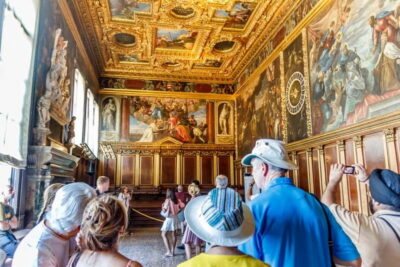
Doge’s Palace and St Mark’s Basilica Walking Tour
Read our review →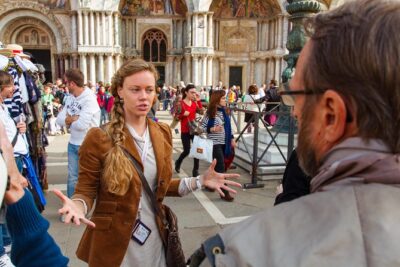
Legendary Venice: Doge’s Palace, St Mark’s & VIP Terrace Access
Read our review →