
REVIEW · BERLIN
Potsdam Tour from Berlin With Guided Sanssouci Palace Visit
History gets personal in Potsdam. This four-hour trip from Berlin combines Sanssouci Palace with key sights tied to Prussian kings, Russian émigrés, and the Cold War. I like the comfortable coach ride and the way the guide fills the journey with useful stories instead of leaving you to guess what you are seeing.
I also like the efficient palace visit: admission is included, and the group gets past the long lines. Guides such as Susan, Jasmin, Karin, and Stefanie have earned praise for clear English, energy, and strong knowledge of Berlin and Potsdam. The main drawback is time. Potsdam has enough to fill a full day, so this tour gives you a good first look rather than a leisurely visit.
Key points to know before booking
- Sanssouci receives the most time: About two hours are set aside for the palace and its grounds, with admission included.
- The Bridge of Spies adds Cold War drama: Glienicke Bridge is more than a photo stop, especially if Berlin-era politics interest you.
- A comfortable coach makes the half-day practical: The tour starts and ends at Kurfürstendamm 216 and carries no more than 30 people.
- The guiding is usually a major strength: Susan, Jasmin, Karin, Bridget, and Stefanie are praised for clear explanations and engaging delivery.
- Bring change for a restroom stop: One report noted a 50-cent toilet near the palace entrance, while the coach toilet was locked.
- The $77.23 price buys convenience: You pay for transport, a guide, palace entry, and saved time, but not food or drinks.
Why Potsdam makes a smart half-day from Berlin
Berlin can keep you busy for days, yet Potsdam feels like a useful change of pace. The city sits just outside Berlin and brings together royal buildings, planned neighborhoods, churches, parks, and Cold War sites. In a few hours, you move through several very different chapters of German history.
I like this tour for visitors who want context as they go. You are not simply dropped beside a palace and left with a map. The guide talks during the drive, pointing out places and explaining how Berlin and Potsdam developed. That matters because Potsdam can otherwise feel like a collection of attractive buildings without a clear thread.
The tour begins at 10 a.m. at Kurfürstendamm 216 in Berlin. You return to the same point at the end, which makes planning the rest of your day easier. The coach seats up to 30 people, a size that is large enough to keep the price reasonable but small enough for a guide to address the group.
The trip lasts about four hours. That is a useful length if you have limited time, though you should not mistake it for a complete Potsdam visit. Several sights are likely seen from the coach or during brief stops, while Sanssouci receives the main visit.
A few more palace visits around Germany worth a look
- Potsdam: Palace Tour by Boat
★ 4.5 · 2,369 reviews - Potsdam: Sanssouci Palace and Prussian Palaces Entry Ticket
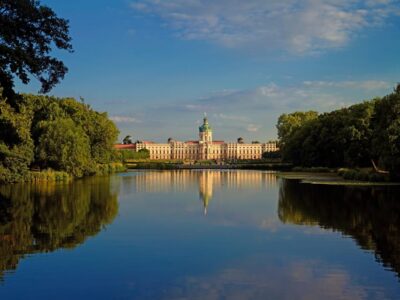
★ 4.5 · 2,101 reviews - Berlin: Charlottenburg Palace Entry Ticket
★ 4.4 · 2,076 reviews
Sanssouci Palace and Frederick the Great
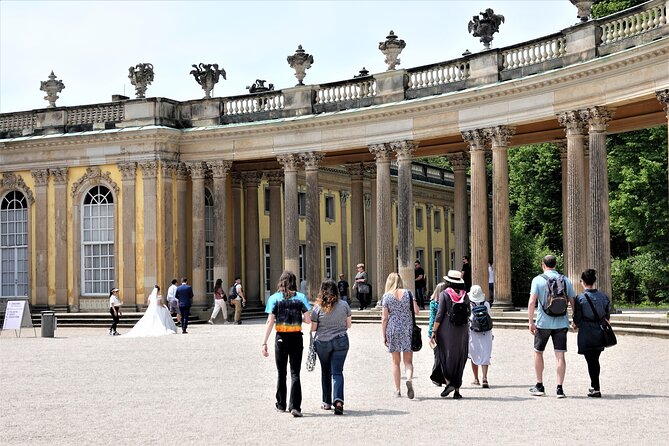
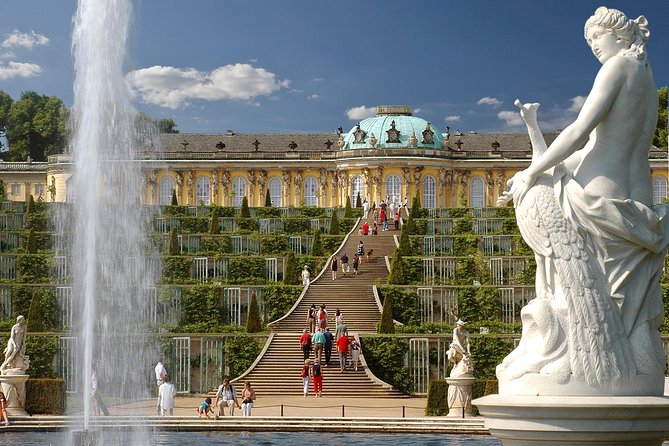
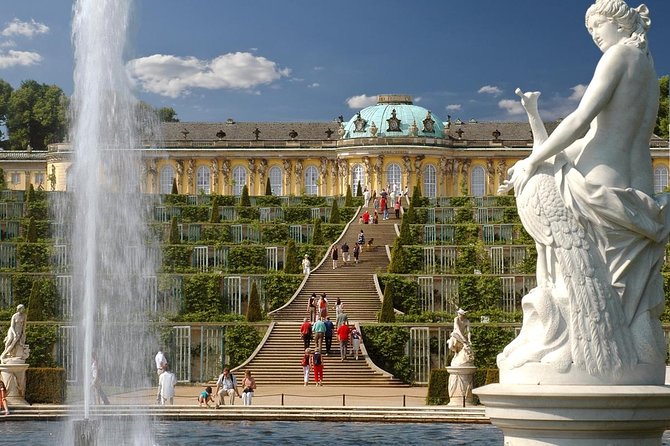
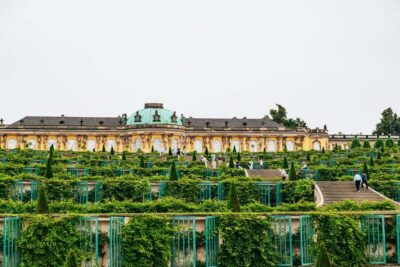
Sanssouci is the heart of the outing. Frederick the Great, King of Prussia, had the palace built between 1745 and 1747 as a private summer retreat away from the formal life of the Berlin court. The name means without worries, a fitting idea for a king seeking quiet, music, gardens, and personal space.
The building was designed by Georg Wenzeslaus von Knobelsdorff. It is not the biggest royal residence in Europe, and that is worth knowing before you arrive. One useful expectation from the experience is that Sanssouci feels more intimate than grand palaces such as Versailles or Schönbrunn.
That smaller scale is part of its charm. Frederick wanted a place for himself, not a giant stage for court ceremony. The palace and the surrounding park also contain temples and decorative follies, giving the grounds a more personal and playful character.
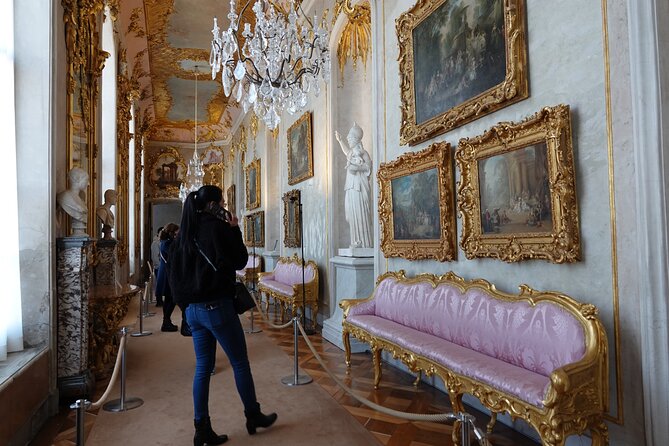
You spend about two hours at Sanssouci, with admission included. The skip-the-line arrangement is valuable here because palace entry can take time, and a four-hour tour has little room for wasted minutes. The palace visit includes a guided presentation, though some departures use a handheld recorded device inside the palace. The exact balance between live guiding and recorded commentary may vary.
I would use the palace time carefully. Listen for details about Frederick’s life and the purpose of the rooms, then leave enough attention for the grounds. The outdoor setting is not just decoration. It helps explain why Frederick chose Potsdam as a retreat from Berlin.
A practical point: use the restroom before entering. One report noted a 50-cent facility at the gate and no usable restroom at the palace itself. Carrying a few coins is sensible.
The Bridge of Spies and Potsdam’s divided past
Glienicke Bridge links Berlin’s Wannsee district with Potsdam across the Havel River. The current bridge was completed in 1907, although it needed major repairs after damage in the Second World War.
Its most famous chapter came during the Cold War. This section of the river formed the border between West Berlin and East Germany, and the bridge was used for exchanges of captured spies. That history earned it the popular name Bridge of Spies.
The bridge is a quick stop rather than a long museum visit, but it gives the tour a useful change of mood. Sanssouci reflects royal comfort and personal taste. Glienicke Bridge points to secrecy, suspicion, and the tense division of postwar Germany.
I like seeing both on the same outing. You get a sharper sense of how Potsdam moved from Prussian royal residence to a place shaped by twentieth-century conflict. If Cold War history interests you, pay close attention when the guide explains the border and the exchanges.
Dutch Quarter: Potsdam’s planned neighborhood
The Holländisches Viertel, or Dutch Quarter, was built between 1733 and 1740 under Frederick William I of Prussia. Jan Bouman designed the area, which contains 134 red Dutch-brick buildings.
The quarter was created to attract Dutch craftsmen to Potsdam. Its brick buildings give the city a look quite different from the formal royal sites. The neighborhood has been renovated, and its streets are among the most pleasant urban sights included in the tour.
You should not expect a long independent wander here on a four-hour schedule. The value is seeing how the city was planned beyond the palace grounds. Potsdam was not only a royal retreat. It was also a working city shaped by immigration, trade, and the needs of the Prussian court.
Same place, a different set of state rooms:
- Neuschwanstein & Linderhof Castle-Fairytale Day Tour from Munich
★ 4.5 · 7,275 reviews - Koblenz: Rhine Valley Castles and Palaces Boat Tour
★ 4.4 · 1,824 reviews - Neuschwanstein Castle and Linderhof Palace Day Trip from Munich
★ 4.5 · 1,756 reviews - From Berlin: Potsdam and Sanssouci Palace Tour with Entry
★ 4.7 · 1,219 reviews
Alexandrovka and Potsdam’s Russian connection
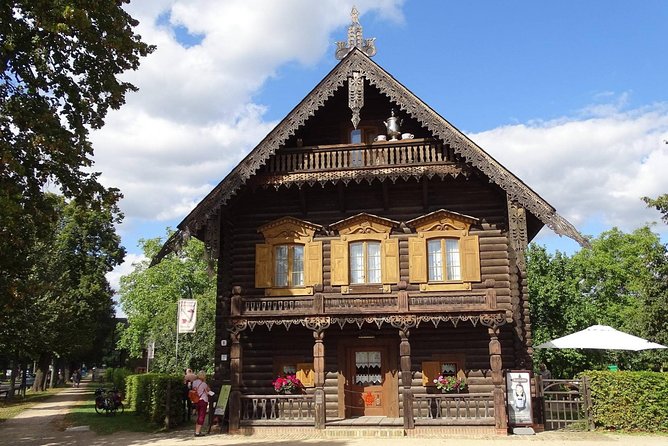
North of central Potsdam, the Russian colony Alexandrovka adds another layer to the city’s story. Frederick William III of Prussia had it built in 1826 and 1827 for the last twelve Russian singers from a former choir of 62 soldiers.
The colony was named as a memorial to Tsar Alexander I, who died in 1825. The connection reflects family and friendly ties between the Hohenzollern and Romanov ruling houses. Alexandrovka is part of Potsdam’s UNESCO cultural designation.
This stop is easy to overlook if you explore alone because it is not as famous as Sanssouci. With a guide, it becomes a clear example of how royal relationships shaped the city. It also breaks up the palace-heavy focus and shows you a neighborhood with a more unusual purpose.
Old Market Square and St. Nicholas Church
Potsdam’s Old Market Square forms the historic center of the city. The square is organized around St. Nicholas Church, a Lutheran church designed in the Classicist style by Karl Friedrich Schinkel between 1830 and 1837.
The church’s 77-metre tower rises above the city roofs. Ludwig Persius and, from 1845, Friedrich August Stüler worked on the tambour and later construction. Its size gives the square a strong focal point, but the building’s story is just as important as its appearance.
St. Nicholas Church suffered severe damage near the end of the Second World War. It was hit during a British air raid and later badly damaged by Soviet artillery fire. After years of rebuilding, it was reconsecrated in 1981. It now serves as a working church and also hosts concerts.
The square and church may be brief stops, but they help you read Potsdam as a rebuilt city. The elegant center you see today does not erase the destruction of war. It reflects years of repair and careful restoration.
The guide can make or break the day
The strongest part of this experience is often the guide. Susan receives especially warm praise for her command of Berlin and Potsdam’s past, her willingness to answer questions, and her ability to make the ride informative. Jasmin is also praised for energy, useful detail, and helpful organization.
Karin, Bridget, and Stefanie are singled out for friendly presentation and strong explanations. One especially useful feature is the commentary during the drive. You get more than a silent transfer from Berlin to Potsdam, and the passing sights become part of the lesson.
The tour is offered in English and German. This can work well for a mixed group, but the balance between languages may vary. One less positive experience described far more German commentary than English, so if you need continuous English explanation, it is sensible to confirm the language arrangement at booking.
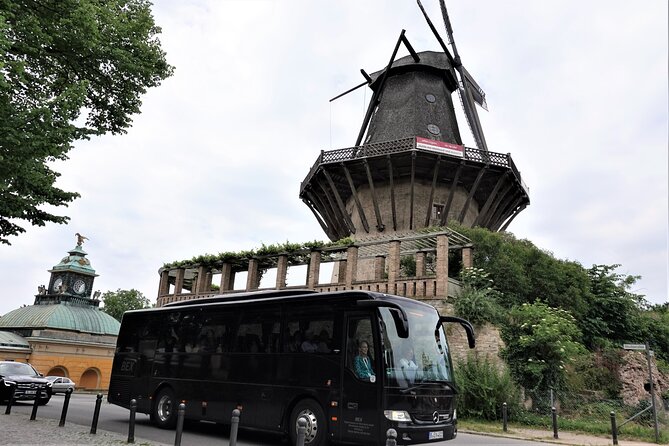
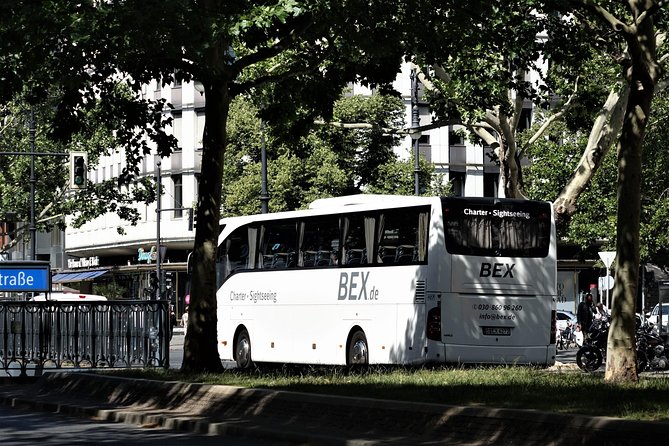
The driver matters too. Reports describe clean coaches, smooth driving, and punctual departures. One return journey included information about the AVUS racing circuit and its grandstand, an unexpected bonus for anyone interested in Berlin’s transport and motor-racing past.
What the $77.23 price really covers
At $77.23 per person, this is not the cheapest way to see Potsdam. You can visit parts of the city independently by public transport, but you would then need to arrange your route, manage palace entry, and supply the historical explanation yourself.
Here, the price includes the coach, driver, English and German guide, Sanssouci admission, and a skip-the-line arrangement. The value is strongest if your Berlin visit is short or you prefer a well-organized outing. Saving time at the palace is important on a four-hour schedule.
The price does not include food or drinks. There is no promise of snacks or refreshments, so eat before departure or carry something with you if needed. The tour’s short duration means you probably will not want a full meal during the outing, but hunger can make a history lesson less enjoyable.
I see this as a convenience purchase rather than a bargain excursion. You pay for access, transport, and interpretation. If you already know Potsdam well or want hours to explore at your own pace, an independent visit may suit you better.
Pace, comfort, and physical demands
The coach makes the tour easier on your feet, but this is not a fully seated sightseeing trip. You will need to get on and off the coach and walk around palace grounds and city sights. A moderate level of physical fitness is advised.
The group limit is 30 people. That is not an intimate private tour, but it is manageable for a coach outing. The main risk is pace. You will see several places, but you may not have much free time at each one.
I would wear comfortable shoes and plan for changing weather. The tour includes outdoor areas around Sanssouci and city stops, while the palace visit brings its own walking and standing. Exact arrangements can vary, so listen carefully to the guide’s meeting instructions at each stop.
The tour starts and ends at Kurfürstendamm 216. That fixed point is convenient if you are staying in western Berlin or can reach the area easily. It is less convenient if your plans are based far east, so allow enough time to reach the departure point for the 10 a.m. start.
Who should book this Potsdam tour
I would recommend it to a first-time Berlin visitor who wants to understand Potsdam without giving up a full day. It also suits anyone who prefers a coach, clear timing, and a guide who can connect royal, religious, Russian, and Cold War history.
It is a particularly good fit if Sanssouci is your main goal. The included entry and saved queue time remove two common headaches. You also get a broader view of Potsdam than a palace-only visit.
I would hesitate if you want long, quiet time in the gardens, a relaxed lunch, or detailed access to every neighborhood. Potsdam has more to offer than this half-day format can cover. The tour gives you a well-planned introduction, not the freedom of a full independent day.
The activity has a 4.5 rating from 364 published ratings, which matches the overall pattern: strong praise for guides, transport, timing, and historical content, with occasional concerns about the price, limited time, restroom arrangements, and uneven English commentary.
Free cancellation is available up to 24 hours before the 10 a.m. start. Changes made inside that window are not accepted, and the trip requires a minimum number of participants.
Should you book it?
Book this tour if you want a practical first look at Potsdam and value a guide more than free time. Sanssouci is the clear centerpiece, while the Bridge of Spies, Dutch Quarter, Alexandrovka, Old Market Square, and St. Nicholas Church give the half-day real range.
Skip it if you have a full day available and want to explore slowly. For most short Berlin visits, though, the combination of comfortable transport, palace entry, and strong guiding makes $77.23 a fair price for a tightly packed introduction.
FAQ
Where does the Potsdam tour begin and end?
The tour begins at Kurfürstendamm 216, 10719 Berlin, at 10 a.m. It ends back at the same meeting point.
How long does the tour last?
The experience lasts approximately four hours.
Is Sanssouci Palace admission included?
Yes. Admission to Sanssouci Palace is included, along with a skip-the-line arrangement.
What language is the tour offered in?
The tour is offered in English and German. The listed guide service includes a local guide in both languages.
Is food or drink included?
No. Food and drinks are not included in the price.
How many people can join the tour?
The tour has a maximum of 30 participants.
Just added around Germany
- Munich: Neuschwanstein Castle and Linderhof Palace Day Trip★ 4.8 · 5 reviews
- Munich: Nymphenburg Palace with official Guide★ 5.0 · 12 reviews
- Munich: Nymphenburg Palace OR Residenz Guided Tour★ 4.4 · 31 reviews
- Festive Concert at Schleißheim with Residence-Soloists★ 4.7 · 25 reviews
- From Munich: Herrenchiemsee Palace and Boat Trip Day-Tour★ 4.8 · 129 reviews
- Hamburg: Reeperbahn tour with Daniel Schmidt from the Elbschlosskeller★ 4.7 · 52 reviews
- Goslar: Führung durch die Kaiserpfalz★ 4.5 · 50 reviews
- From Berlin: Gardens & Palaces of Potsdam Bike Tour★ 5.0 · 61 reviews
Berlin Palace Tours, compared.
Small group Potsdam: A Journey Through History and Palaces
Read our review →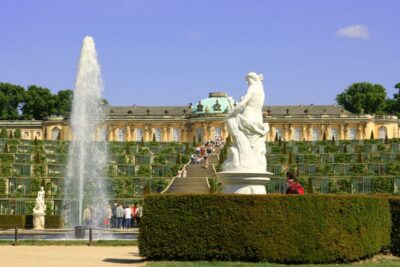
Charlottenburg Palace with an excursion to Potsdam
Read our review →
Browse the lists this tour appears in