
REVIEW · FLORENCE
Pitti Palace, Palatina Gallery and the Medici: Arts and Power in Florence.
Florence keeps a royal secret across the river. The Pitti Palace and Palatine Gallery offer a close look at Medici wealth, grand rooms, and paintings by Raphael, Rubens, Caravaggio, Titian, and other major artists. I especially like the small group, capped at 14 people, and the way a skilled guide can bring order to hundreds of paintings covering the palace walls.
I also like that the tour uses timed entry, saving you from handling the main ticket process on your own. The main drawback is the title’s promise of Medici history. You do hear about the family and the palace, but the tour focuses much more on the art than on the daily lives of the Medici or their original furnishings. The Boboli Gardens also require a separate ticket.
- An art-first look at Medici power: See the paintings the ruling family collected, displayed inside their former apartments.
- Small groups make a difference: The maximum group size is 14, and some departures may be much smaller.
- A guide gives the gallery shape: The Palatine Gallery is arranged for visual effect, not in an easy historical order.
- Major names are everywhere: Raphael, Caravaggio, Rubens, Titian, Pietro da Cortona, Botticelli, Tintoretto, and others appear in the collection.
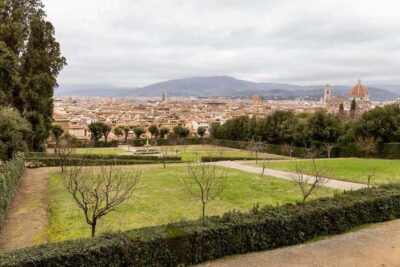
- Views add a Florence bonus: Look toward Santo Spirito Basilica and the Boboli Gardens from the palace windows.
- Plan carefully for the gardens: This experience covers the palace and Palatine Gallery, not admission to Boboli Gardens.
Why the Pitti Palace Is Worth Crossing the Arno
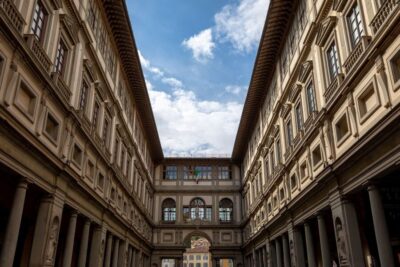
Most first-time visitors rush toward the Uffizi. That is understandable, but it means the Pitti Palace can receive less attention than it deserves. Across the Arno, in Piazza de’ Pitti, this huge palace gives you a different view of Florence: less about civic power and more about private wealth, dynastic ambition, and the taste of ruling families.
The palace became a Medici residence in the 16th century. The family remained tied to it until its fall from power in the 18th century. Their influence is visible in the scale of the building and in the sheer number of paintings gathered inside.
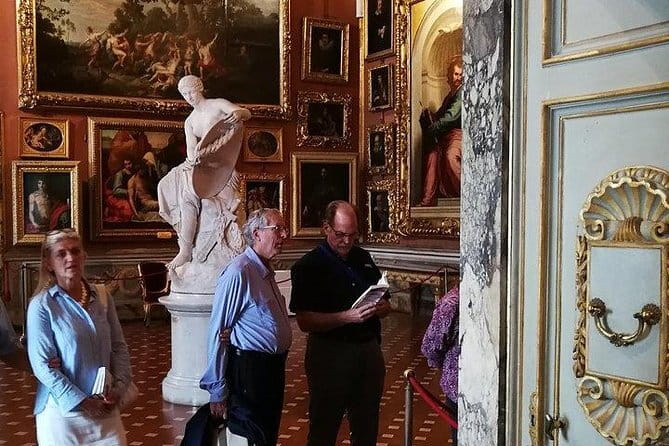
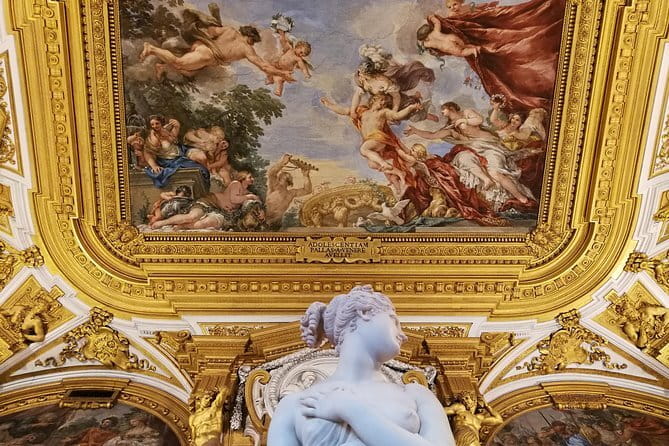
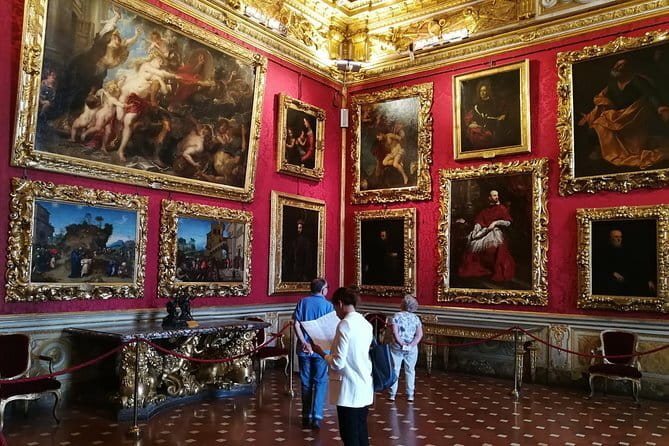
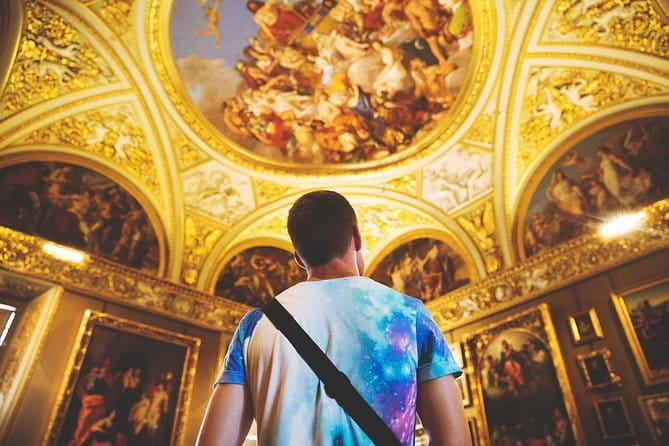
From outside, Palazzo Pitti is imposing rather than delicate. Inside, the mood changes quickly. The Palatine Gallery occupies lavish rooms that once served the grand dukes of Tuscany. Paintings cover the walls in dense arrangements, and the effect can be thrilling, but also confusing if you do not know where to look.
That is where this two-hour tour earns its keep. You are not simply shown a famous painting and sent onward. A good guide explains why a work matters, what to notice in the composition, and how the painting fits into the Medici world.
Starting in Piazza de’ Pitti
The meeting point is in front of Palazzo Pitti at Piazza de’ Pitti, 1. The opening explanation lasts about 10 minutes and sets the palace in its urban and political setting before you go inside.
This is a useful beginning. The broad square gives you time to understand the building’s scale, rather than entering immediately and trying to absorb everything at once. Your guide also explains the palace’s importance before the art begins competing for your attention.
You will want to arrive with the full names of everyone in your booking. Each person must present a valid passport or identity document matching the name supplied at booking. This is not a minor detail. A mismatch or missing full name can cause trouble at the ticket office.
The palace is near public transportation, and the activity ends back at the meeting point. Hotel pickup and drop-off are not included, so you make your own way to the square.
More Palazzo Vecchio and Pitti Palace Tours in Florence:
- Florence: Palazzo Vecchio Entrance Ticket & Audioguide
★ 4.4 · 4,822 reviews - Florence: Uffizi, Pitti Palace & Boboli Combined 5-Day Pass
★ 4.5 · 1,726 reviews - Florence: Palazzo Vecchio Guided Tour
★ 4.8 · 1,260 reviews
Inside Florence’s Largest Palace
The second part of the visit takes about 15 minutes and focuses on Palazzo Pitti itself. The guide explains the palace’s scale, ownership, and place in Florence’s political story.
Do not expect the tour to recreate the Medici household room by room. One important limitation is that many rooms do not retain their original furnishings. The palace is impressive, but this is not a fully furnished house museum showing exactly how the Medici lived each day.
Instead, the palace works as a grand setting for its art collection. Its rooms, ceilings, decoration, and views help you understand the environment in which the collection was displayed. The paintings were not assembled in a modern museum with a clear timeline. They were arranged for beauty and impact.
That arrangement is both the gallery’s charm and its challenge. You get a sense of aristocratic abundance, but you may need help sorting one period or artist from another.
The Palatine Gallery: Two Hours Among Masterpieces
The main visit lasts about 90 minutes. This is where most of your time and attention go.
The Palatine Gallery holds hundreds of paintings, with works placed across the walls of former Medici apartments. The collection includes Raphael, Caravaggio, Titian, Rubens, Pietro da Cortona, Botticelli, Tintoretto, and other celebrated artists.
A guide is particularly useful here because the gallery does not follow a simple chronological route. You may move from one major work to another without an obvious timeline. An experienced guide can point out the best-known pieces, then add smaller details that make them easier to remember.
Several guides receive strong praise for their ability to connect visual details with history. Camilla is an art restorer who brings technical knowledge to the paintings, including questions about color, method, and restoration. Cristiano has decades of experience and a clear passion for the subject. Sarah is also praised for explaining the palace and its collection in a clear way.
The exact guide will depend on your departure, but the pattern is clear: the quality of this experience depends heavily on who leads it. Fortunately, the strongest feedback focuses on guides who are warm, patient, and able to explain difficult ideas without turning the tour into a lecture.
What You Will See in the Paintings
Raphael is one of the major reasons to visit. The gallery includes several works associated with him, and the guide can help you notice the balance, gestures, expressions, and polished surfaces that make his paintings so admired.
Caravaggio brings a sharper mood. His dramatic light and intense figures give the collection a different feel from Raphael’s controlled elegance. Seeing these contrasting approaches in the same visit helps you understand that the gallery is not built around one artistic style.
Rubens adds movement and force, while Titian shows the richness of Venetian color. Pietro da Cortona connects painting with the theatrical grandeur favored by wealthy courts. Botticelli and Tintoretto add further variety.
The gallery is not a place where every painting receives equal attention. That would be impossible in 90 minutes, and it would probably exhaust you. Instead, the guide selects important works and explains why they deserve your time.
I like the interactive element reported by several people on this tour. You may be asked which works catch your eye, and the guide can then point out details in paintings you had already noticed. This makes the visit feel less like a fixed script and more like a conversation.
Still, be honest about your preferred pace. One visitor found that the guide spent too much time explaining small details in individual paintings. If you prefer to move quickly and see more rooms, the detailed approach may feel slow. If you want help understanding technique and symbolism, that same detail may be the best part of the tour.
More Museum Visits in Florence:
- Florence: Pitti Palace, Boboli Garden, Palatine Gallery Tour
★ 4.9 · 558 reviews - Pitti Palace, Boboli Garden & Palatina Gallery Guided Tour
★ 5.0 · 264 reviews - Florence: Pitti Palace and Palatina Gallery Ticket and Tour
★ 4.9 · 255 reviews - Florence: Palatina Gallery and Pitti Palace Guided Tour
★ 4.6 · 158 reviews
The Medici Story, With the Right Expectations

The Medici are central to the palace’s identity, but this is primarily an art tour. You will hear how the family took over the palace in the 16th century, how it served the grand dukes of Tuscany, and how Medici power ended in the 18th century.
You will also learn how the collection reflects money and authority. Owning major works was not only a matter of personal taste. Art helped powerful families display education, prestige, and political reach.
But do not book this experience expecting a long account of Medici marriages, rivalries, scandals, or household routines. The historical material supports the paintings. It does not replace them.
That distinction matters because the tour’s title may lead you to expect equal attention to arts and family history. If you want the best experience, think of it as a Palatine Gallery tour with Medici context.
Views of Santo Spirito and Boboli Gardens
The palace windows provide a welcome break from the crowded walls. You can look toward Brunelleschi’s Santo Spirito Basilica and see views of the Boboli Gardens.
These views help connect the palace to the rest of Florence. You are not looking at an isolated museum. You are seeing the city from a building created for people who shaped its politics, art, and appearance.
The gardens are not included in the tour ticket, however. If you want to walk through Boboli, you must leave the palace, join the appropriate line, and pay separately. This surprised at least one person who assumed the garden visit came with the palace admission.
My advice is simple: decide before booking whether you want both sites. The gallery tour can fill two hours on its own. If you have more time and enjoy formal gardens, adding Boboli may make sense. If your schedule is tight, the palace and gallery are enough for a focused visit.
Why the Small Group Matters
The group limit is 14 people, and some groups may be smaller. That is a practical advantage inside a gallery where paintings cover the walls and rooms can feel visually crowded.
With fewer people, you have a better chance of standing near the guide and seeing the details being discussed. You can ask questions without stopping a large crowd, and the guide can respond to individual interests.
Earsets are provided when there are more than four participants. This matters because a guide’s explanation is easy to lose when other groups are nearby or when you are standing at the back of a room.
The small-group format does not guarantee a private tour. You still move at the group’s pace, and the guide must balance different interests. But it is a better setup than a large group for a collection that rewards close looking.
Price and Overall Value at $82.27
At $82.27 per person, this is not a cheap museum entry. You are paying for the timed ticket, a licensed English-speaking guide, a small group, and the convenience of having the collection explained.
The value depends on how you use the visit. If you already know a lot about Renaissance and Baroque painting, you may prefer to enter independently and set your own pace. The gallery can be explored without a guide, and some people find guided explanations too detailed.
For most visitors, though, the price makes more sense when you consider the gallery’s layout. Hundreds of paintings can blur together without a plan. A guide who selects the key works and explains their techniques can make the experience far more rewarding than a quick walk through on your own.
The strongest guides also add personal insight. Camilla’s restoration background, for example, helps explain paintings from a technical angle, not just through dates and famous names. That kind of perspective is difficult to gain from a label.
The ticket does not include food, drinks, transportation, hotel pickup, or the Boboli Gardens. Factor in the separate garden cost if you want a longer Pitti Palace visit.
Who Should Book This Florence Tour?
I would choose this tour if you want art explained in plain language and prefer a focused visit to wandering through a large collection alone.
It suits:
- First-time visitors who want to see major Renaissance and Baroque works.
- People interested in painting technique, symbolism, and restoration.
- Anyone who finds large museums confusing without a route.
- Visitors who prefer small groups to crowded guided tours.
- Families with children aged six or older, provided an adult accompanies each child.
- People who want to connect Medici power with the art the family collected.
I would be more cautious if your main goal is a detailed family saga about the Medici. You will get useful historical context, but the paintings remain the central subject.
I would also think twice if you dislike slow, detailed discussion. The guide may spend several minutes on one painting, including small visual features. That is a plus for some people and a drawback for others.
Practical Details Before You Go
The tour lasts about two hours and is offered in English. It begins and ends at Palazzo Pitti in Florence.
Confirmation arrives at booking. The minimum age is six, and children must be accompanied by an adult. Most people can participate, and the palace is near public transportation.
Bring the same valid passport or identity document used for the booking details. Full names must be supplied for all participants. This is especially important because the attraction may deny entry if the voucher does not list everyone correctly.
You can cancel for a full refund up to 24 hours before the start time. Changes or cancellations made less than 24 hours before the start time are not accepted for a refund. The activity also requires a minimum number of participants, so a cancellation by the operator may lead to another date, another experience, or a full refund.
Should You Book the Palatine Gallery Tour?
Book it if you want the Pitti Palace’s art to make sense rather than simply pass before your eyes. The timed entry, small group, and strong English guides add real value, especially in a gallery arranged for visual effect instead of a tidy timeline.
Go in with the right idea. This is an art tour with Medici background, not a full tour of Medici life. It does not include Boboli Gardens, and the rooms do not all retain their original furnishings.
For an art-minded visit to Florence, I think the tour is worth the price. You get major names, an imposing palace, city views, and the chance to ask questions. If you mainly want gardens or a family-history lecture, spend your money elsewhere or add another Pitti experience.
FAQ
Where does the tour begin?
The tour begins in front of Palazzo Pitti at Piazza de’ Pitti, 1, 50125 Firenze, Italy.
Where does the tour end?
The activity ends back at the meeting point at Palazzo Pitti.
How long does the experience last?
The tour lasts approximately two hours. The itinerary includes about 10 minutes in Piazza Pitti, 15 minutes focused on Palazzo Pitti, and 90 minutes in the Palatine Gallery.
Is admission to the Boboli Gardens included?
No. The experience includes timed entry to Palazzo Pitti and the Palatine Gallery, but the Boboli Gardens require separate admission.
What artists can I expect to see?
The collection includes works by Raphael, Caravaggio, Titian, Pietro da Cortona, Rubens, Botticelli, Tintoretto, and other artists.
How large is the tour group?
The tour has a maximum of 14 participants. Earsets are provided when there are more than four participants.
What identification do I need?
Each person must bring a valid passport or identity document matching the name supplied at booking. Full names for all participants must appear on the voucher before entry.
Just added around Florence
- the Medici family in Florence: Palazzo Medici and Medici Chapels★ 4.5 · 10 reviews
- Uffizi and Palazzo Vecchio Combo Private Tour★ 5.0 · 3 reviews
- The Pitti Palace private tour: Splendours of the Royal Residence★ 5.0 · 4 reviews
- FLORENCE: Uffizi Gallery + Palazzo Vecchio monolingual Guided Tour – Small Group★ 5.0 · 9 reviews
- Small-Group Palazzo Vecchio Secret Passages Tour with Lunch Or “Gelato”★ 4.0 · 92 reviews
- Palazzo Vecchio Tales – into Medici’s secrets and mythology simbols★ 5.0 · 18 reviews
- The Medicis: The Movie, The Family, The Palace!★ 5.0 · 9 reviews
- Timed Entry Ticket to Pitti Palace and Boboli Gardens in Florence★ 3.5 · 118 reviews
Palazzo Vecchio and Pitti Palace Tours, compared.
Uffizi, Pitti Palace & Boboli Combined 5-Day Pass
Read our review →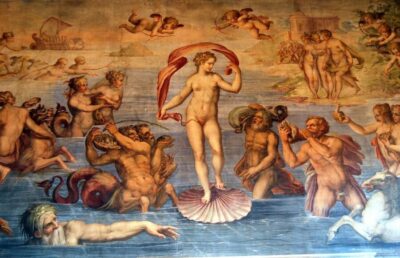
Palazzo Vecchio: Skip-the-Line Entry and Secret Passage Tour
Read our review →
Browse the lists this tour appears in