
REVIEW · ITALY
Guided Tour of Rolli Palaces UNESCO Site, Genoa
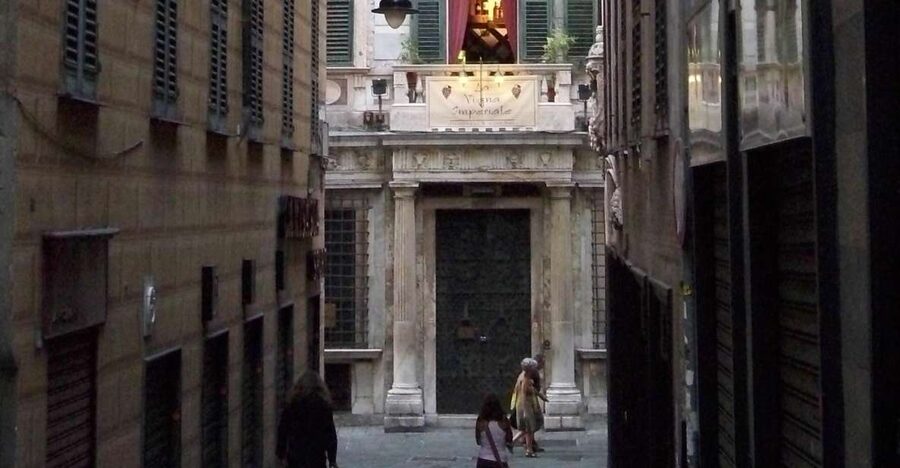
Palace doors open onto Genoa’s Golden Century. This $16 guided walk takes you into four aristocratic residences tied to the Rolli system, with frescoes, grand stairways, painted rooms, and a clever bit of palace politics. I especially like the access to Palazzo Rosso and the chance to see less familiar interiors at Palazzo Lomellino and Palazzo Tobia Pallavicino. The main drawback is that the tour runs in Italian and English, so every explanation takes twice as long.
The 2.5-hour route is a smart way to understand Genoa’s old center without wandering past its grandest buildings. Guides such as Ana, Manuela, Marina, and Fausta have been praised for clear, lively presentations, though the bilingual format can occasionally feel slow or tiring. Bring patience, and expect plenty of stairs.
Key points at a glance
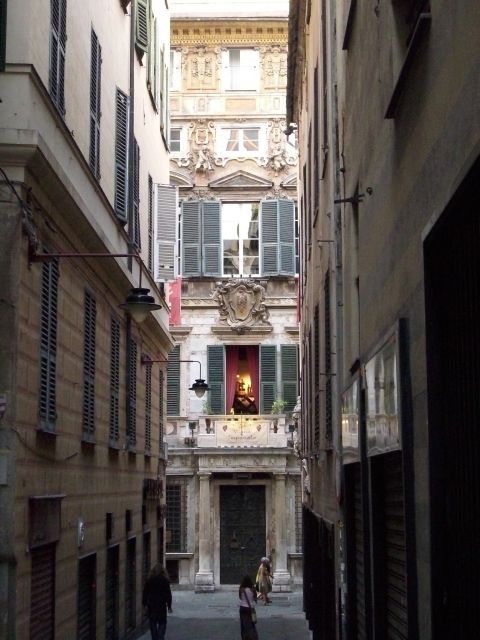
- Four historic palaces in one walk: Visit Palazzo Rosso, Palazzo Lomellino, Palazzo Tobia Pallavicino, and Palazzo Imperiale.
- A rare look inside noble homes: The tour explains how Genoese aristocrats lived during the 16th and 17th centuries.
- The Golden Room at Palazzo Tobia Pallavicino: This is one of the route’s most ornate and memorable interiors.
- A surprise at Palazzo Lomellino: Look for the hidden fresco and, when available, the garden area.
- Strong value at $16: Entrance to several palaces and a live guide cost far less than many major Italian city tours.
- Bilingual delivery: English and Italian are offered together, which works well with a skilled guide but adds time.
Why Genoa’s Rolli Palaces matter
Genoa’s Rolli Palaces are not simply a collection of pretty old buildings. They were part of an organized state hospitality system created by the Senate of the Republic of Genoa in 1576.
The city’s leading families built grand residences along what became known as Strada Nuova and nearby streets. When an important visitor arrived, the government could assign that person to one of these private palaces. The homes were listed on parchment rolls, known as the Rolli, and divided into three balloting lists according to size and status.
The system matched a palace to the rank of the visitor. Cardinals, princes, and viceroys went to the grandest houses. Important landowners and other senior figures went to the next group. Ambassadors and lesser princes were assigned to the third.
That detail changes the way you look at the buildings. These were private homes, but they also served as official accommodation for state occasions. Genoa had created an early form of luxury public lodging, long before modern hotels.
The Rolli system received UNESCO World Heritage status in 2006. The recognition covers the palaces’ architecture, planning, and social purpose. You are not only looking at ceilings and staircases. You are seeing the machinery of Genoa’s political power during the city’s Secolo d’Oro, or Golden Century.
The route also connects with Peter Paul Rubens. In the early 17th century, the Flemish painter published drawings of Genoese palaces as models for noble residences in Antwerp. That gives the tour a useful European angle: Genoa’s palaces were admired beyond Italy as examples of how wealthy families could display status through architecture.
A few more palace visits around Italy worth a look
- Venice: Doge’s Palace Reserved Entry Ticket
★ 4.6 · 42,716 reviews - Doge’s Palace & St. Mark’s Basilica with Terrace Access Tour
★ 4.7 · 10,697 reviews - Venice: Doge’s Palace and St Mark’s Basilica Walking Tour
★ 4.4 · 6,291 reviews
Starting at Via Garibaldi 12red
The tour begins at the Tourist Information Centre at Via Garibaldi, 12red, 16124 Genova GE. Genoa’s address system can be confusing, so use the full address rather than relying on a general search for Via Garibaldi.
This is a good central meeting point because the route focuses on the historic palace district. The guide leads the group between buildings rather than putting you on a bus or transporting you from site to site. That makes the experience feel connected to the city itself.
The route is described as walk-friendly, but do not mistake that for step-free. You will encounter staircases inside the palaces, and Palazzo Imperiale is particularly associated with its grand stairs. One visitor specifically advised being prepared for lots of steps, while still finding the effort worthwhile.
At the start, listen carefully for the guide’s explanation of the bilingual format. The tour is conducted in both Italian and English, often by switching from one language to the other. A skilled guide can keep the rhythm moving, but you should expect the commentary to take longer than a single-language tour.
Palazzo Rosso and the Strada Nuova museums
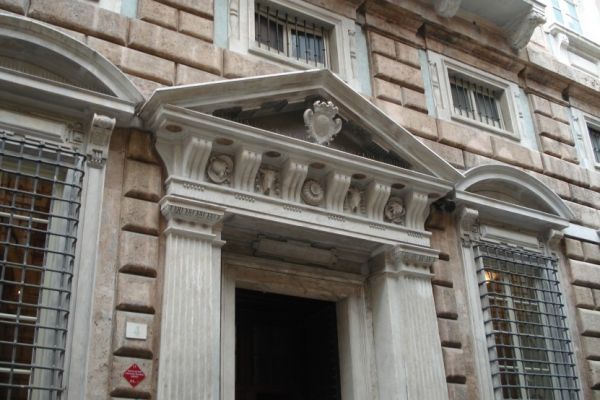
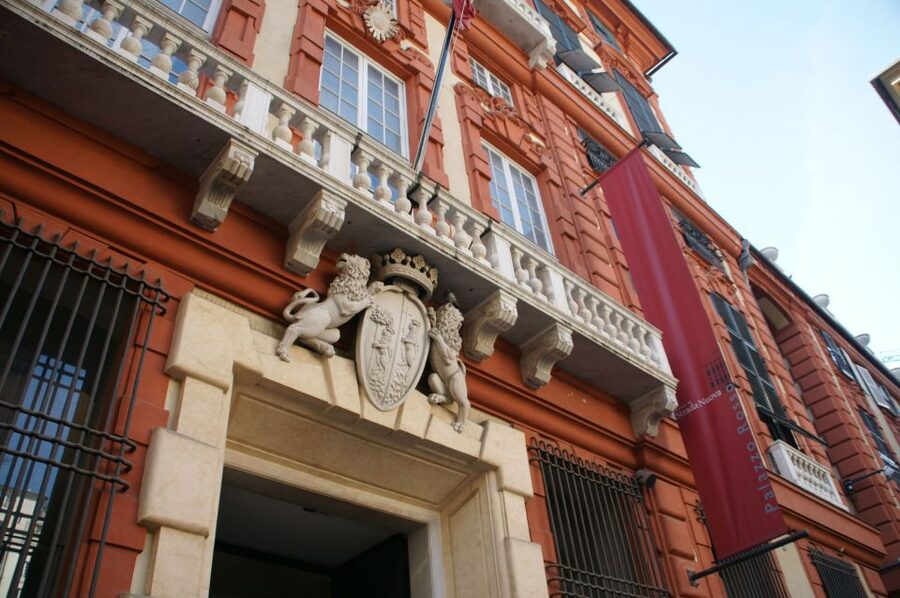
Palazzo Rosso is one of the clearest reasons to book this walk. It is part of the Strada Nuova Museums, a group of important historic residences on Genoa’s celebrated palace street.
The visit takes you through beautiful rooms decorated for aristocratic life. Look up as much as you look forward. Frescoes, painted ceilings, artwork, and ornate details help explain how these families used interior decoration to announce their wealth and taste.
This is not just a quick look at an exterior. Entrance to Palazzo Rosso is included, and the palace provides the most substantial museum-style stop on the route. You get a sense of the rooms as designed spaces rather than isolated art displays.
One older experience also praised the view from the top of Palazzo Rosso as a memorable finish. Treat that detail as something that may depend on the day’s access and schedule, but it is worth asking the guide about it if the upper viewpoint is available.
The tradeoff is that a guided visit may not cover every floor or every room. One person who enjoyed the tour still wished the palace visit included the whole building rather than only one level. That is fair criticism. You gain a focused introduction to several palaces, but you do not get an exhaustive museum visit at each one.
Palazzo Tobia Pallavicino and the Golden Room
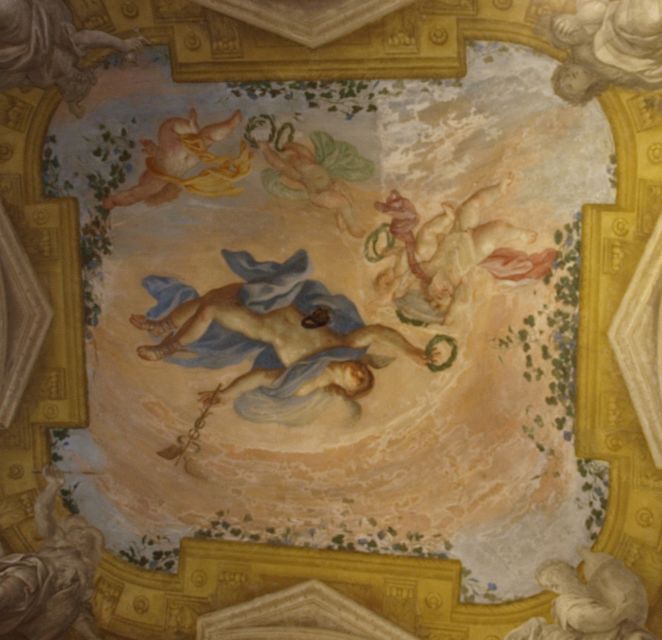
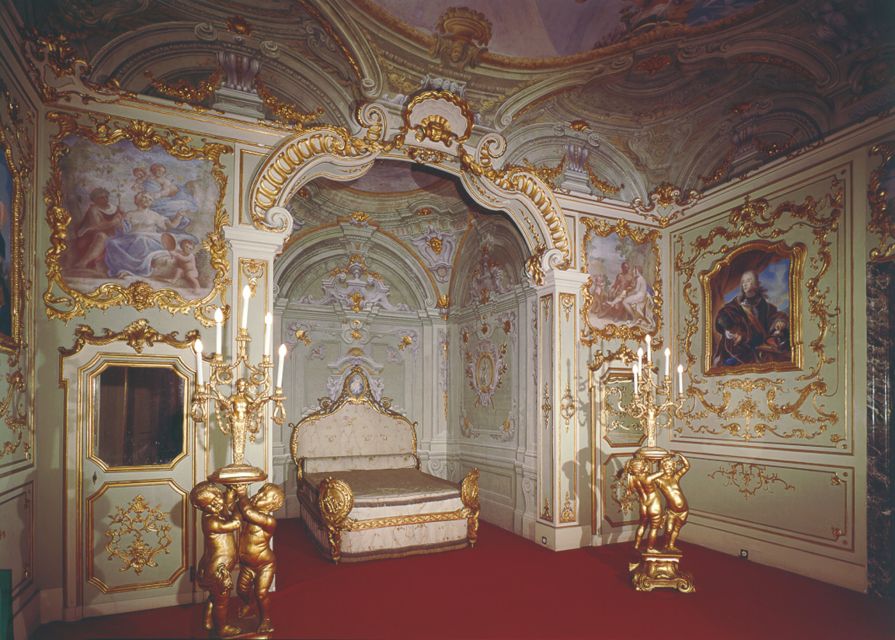
Palazzo Tobia Pallavicino supplies one of the route’s strongest visual moments: the Golden Room.
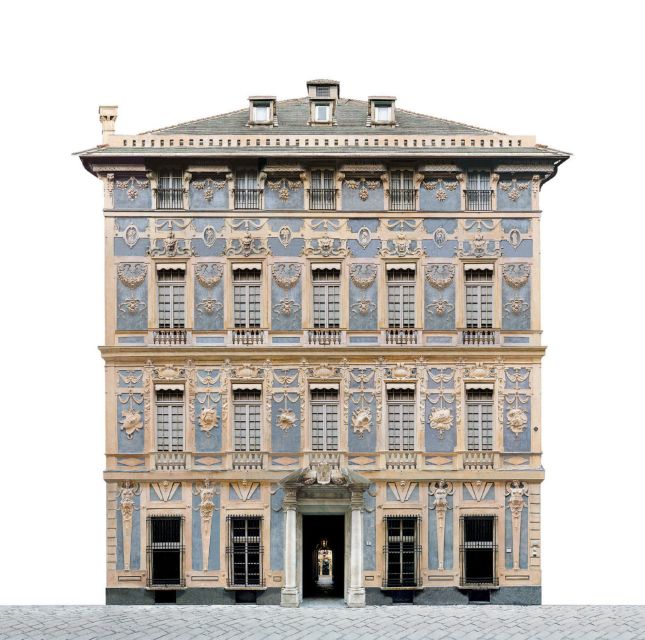
The name tells you what to expect. This is a richly decorated interior designed to impress, with gilded surfaces and the formal elegance associated with Genoa’s upper class. The room helps make the Rolli system understandable in a single glance. A residence selected to host important officials needed to signal wealth, order, and power immediately.
I like this stop because it shows that the palaces are not interchangeable. Each building contributes something different. Palazzo Rosso offers a broader museum setting, while Palazzo Tobia Pallavicino gives you a concentrated burst of decorative spectacle.
Your guide’s explanation matters here. Without context, the Golden Room can become another pretty Italian chamber. With the story of state visits, noble families, and social rank, its decoration becomes a form of public diplomacy inside a private home.
The bilingual format may be most noticeable in rooms like this. You want time to look closely, but the guide must repeat the explanation in two languages. English speakers should stay near the guide and avoid assuming the commentary will come in one uninterrupted block.
Same place, a different set of state rooms:
- Legendary Venice: Doge’s Palace, St Mark’s & VIP Terrace Access
★ 4.5 · 5,033 reviews - Florence: Palazzo Vecchio Entrance Ticket & Audioguide
★ 4.4 · 4,822 reviews - Florence: Entrance Ticket to Pitti Palace
★ 4.5 · 4,528 reviews - Venice: Doge’s Palace and St. Mark’s Basilica Tour
★ 4.5 · 3,734 reviews
Palazzo Lomellino and the surprise garden
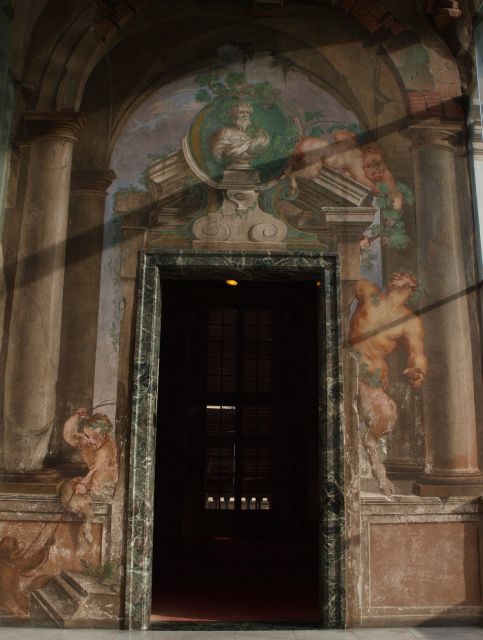
Palazzo Lomellino brings a different mood to the tour. The appeal is not only the grand rooms but also the chance to notice an unexpected garden or courtyard space within the dense old city.
The route includes a hidden fresco at Palazzo Lomellino. That sort of detail is exactly why a guide helps. A painted feature can be easy to miss when you are moving through a large historic building, especially if it is not in the main ceremonial room.
A garden visit is not always what people expect from Genoa’s central palace district. One particularly enthusiastic account described a surprise garden, and another guide was praised for adding small details about historic shops, known as botteghe storiche, along the way. Those touches connect the palaces to the streets around them rather than treating each building as a sealed museum.
Keep your expectations sensible. The experience includes a visit to Palazzo Lomellino, but the exact access within a historic building can vary. Events may also be taking place. On one occasion, a wedding was being prepared, yet the group was still allowed inside. That suggests the route can sometimes involve real working historic spaces rather than perfectly controlled museum rooms.
Palazzo Imperiale and the grand staircase
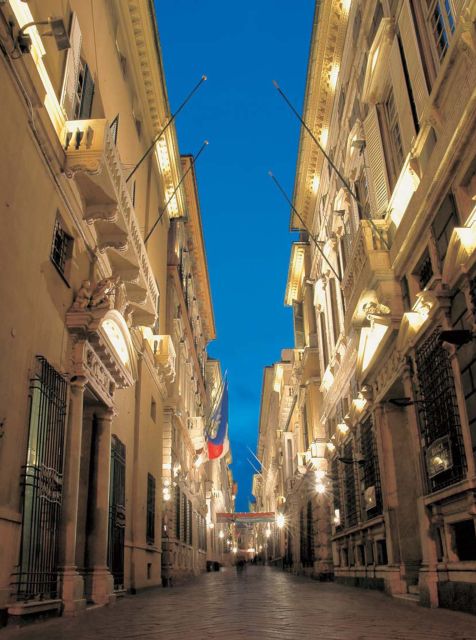
Palazzo Imperiale is included with entrance, and its magnificent staircase is a featured moment of the walk.
Staircases in Genoese palaces were practical, theatrical, and social. They guided visitors upward while creating a sense of arrival. In a city built across steep ground, the vertical movement is part of the architecture, not an inconvenience added later.
This stop is important for anyone who wants to understand how the palaces were arranged. The Rolli residences often used open staircases, courtyards, loggias, and changing levels to link grand interiors with gardens and street entrances.
You should be comfortable with repeated stairs before booking. The route itself is described as manageable on foot, but the interiors are not flat modern galleries. If you prefer a gentle museum visit with minimal climbing, this may not be your best choice.
For most people, the stairs add to the experience. They make the buildings feel like homes designed around ceremony rather than rooms arranged for modern visitors. Still, wear sensible shoes and avoid assuming that a 2.5-hour walking tour will feel like a seated lecture.
What the guide adds
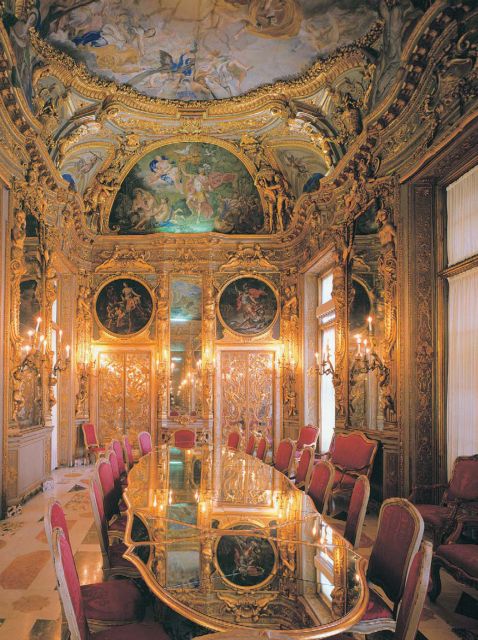
The guide is the difference between a pleasant palace visit and a useful one. Strong guides have explained the history clearly, answered questions patiently, and kept the tone lively across both languages.
Ana was praised for a presentation that was clear, informative, and funny. Manuela was described as generous with her time and especially comfortable in English. Fausta was singled out for handling Italian and English without making either group feel ignored. Marina was praised for friendly, thorough explanations.
Those examples point to the tour’s greatest strength: the human interpretation. You are not left to guess why one building had a grand courtyard or why another room used so much gold. The guide links architecture, social rank, city politics, and daily life.
There is one real limitation. Switching between Italian and English can be awkward, especially if you booked expecting an English-only experience. One person found the pauses problematic, while another felt the guide managed the two languages extremely well. The result depends partly on the group and partly on the guide’s technique.
If you need English-only commentary, check the language arrangement before paying. If you can accept a slower pace, the bilingual format lets Italian and English speakers share the same route and can work very well with a polished guide.
Is $16 good value?
At $16 per person, this is unusually good value for Genoa.
The price includes the guided tour plus entrance to Palazzo Imperiale, Palazzo Rosso, Palazzo Lomellino, and Palazzo Tobia Pallavicino. Even if you place only modest value on the commentary, four palace visits for this price make the walk an economical way to see the city’s aristocratic side.
The best value comes from access. You can walk along Via Garibaldi and admire impressive facades on your own, but the interiors are the real prize. A guide also points out features you might overlook, such as the hidden fresco at Palazzo Lomellino or the significance of the Golden Room.
You should not expect a private tour at this price. A small group may be available, but the activity is still designed as a shared guided walk. The bilingual presentation also means that your time is divided between two languages.
For most visitors, that is a sensible trade. You get a focused introduction to an important UNESCO site, several interior visits, and a guide who can provide the connections that signs alone often miss.
Who should book this palace walk?
I would recommend it to anyone visiting Genoa who wants more than a quick look at the old port and main streets. The tour is especially useful early in your stay because it gives you a framework for understanding the city’s grand central district.
It suits:
- First-time visitors who want the major palace context without planning several separate museum visits
- Art and architecture fans interested in frescoes, painted rooms, courtyards, and staircases
- People who prefer a guide to explain social and political history as they walk
- Budget-conscious visitors looking for several included entrances
- English and Italian speakers comfortable sharing a bilingual tour
It may be less suitable if you want to explore each palace at your own pace. It is also not ideal if you dislike stairs or need uninterrupted English commentary.
The pace is brisk enough to cover four residences in 2.5 hours, but not so rushed that the experience becomes a checklist. Several people felt the time passed quickly, which is a good sign for a walking tour with this much content.
Practical advice before you go
Arrive at the Tourist Information Centre on Via Garibaldi with the full address ready. The meeting point is specific, and Genoa’s numbering system can be less intuitive than expected.
Wear comfortable shoes. The route is walk-friendly, but there are stairs, especially at Palazzo Imperiale and within the historic residences. You will enjoy the palaces more if you are not worrying about footwear.
Expect Italian and English throughout. If you want to ask questions, tell the guide early that you would appreciate time for them. One guide was praised for patiently answering even very small questions, and that sort of exchange can make the history more personal.
The tour lasts 2.5 hours, so plan your day around a substantial walking activity rather than a quick stop. The listed start time can vary, so check availability when booking.
You can cancel up to 24 hours ahead for a full refund, and the reserve-now, pay-later option lets you keep plans flexible. Those terms are useful if your Genoa schedule depends on trains, weather, or a changing Italian itinerary.
Should you book the Rolli Palaces tour?
Yes, if you want an affordable, guided introduction to Genoa’s most elegant historic residences.
The strongest reasons are the price, the four included palace visits, and the quality of guides who can bring the Rolli system to life. Palazzo Rosso, the Golden Room at Palazzo Tobia Pallavicino, the hidden fresco at Palazzo Lomellino, and Palazzo Imperiale’s staircase give the route enough variety to avoid feeling repetitive.
Book with two reservations in mind: the tour includes stairs, and it is bilingual. If those points work for you, $16 buys a very useful look at the city’s Golden Century, with access that would be difficult to organize as neatly on your own.
FAQ
How long does the Rolli Palaces tour last?
The tour lasts 2.5 hours.
How much does the tour cost?
The listed price is $16 per person.
Where does the tour begin?
It begins at the Tourist Information Centre, Via Garibaldi, 12red, 16124 Genova GE, Italy.
Which languages are offered?
The tour is conducted in English and Italian with a bilingual guide.
Which palaces are included?
The route includes Palazzo Rosso, Palazzo Lomellino, Palazzo Tobia Pallavicino, and Palazzo Imperiale.
Is entrance to the palaces included?
Yes. The experience includes entrance to Palazzo Imperiale and Palazzo Rosso, plus visits to Palazzo Lomellino and Palazzo Tobia Pallavicino.
Is a small group available?
A small-group option is available.
Can I cancel the booking?
You can cancel up to 24 hours in advance for a full refund. You can also reserve now and pay later.
Just added around Italy
- Palermo: City & Palazzo dei Normanni Guided Walking Tour★ 4.7 · 28 reviews
- Palermo: Norman Palace Ticket & Audio App Downloadable★ 3.5 · 4 reviews
- Palermo: Palatine Chapel, Audio App & optional Norman Palace★ 3.8 · 70 reviews
- Palazzo Vecchio Secret Passages Tour & Lunch or “Gelato”★ 4.3 · 16 reviews
- Palazzo Vecchio Small Group Tour★ 4.9 · 10 reviews
- Palazzo Normanni and Palatine Chapel Tour – Ticket Included (Italian)★ 3.8 · 14 reviews
- Palazzo Vecchio: Private Guided Museum Tour & Tower Tickets★ 4.7 · 18 reviews
- Palazzo Vecchio 90-Minute Morning Guided Tour★ 4.7 · 104 reviews
Italy Palace Tours, compared.
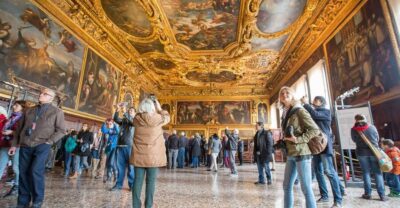
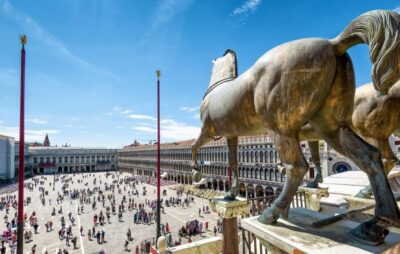
Doge’s Palace & St. Mark’s Basilica with Terrace Access Tour
Read our review →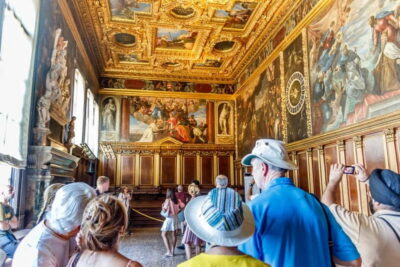
Doge’s Palace and St Mark’s Basilica Walking Tour
Read our review →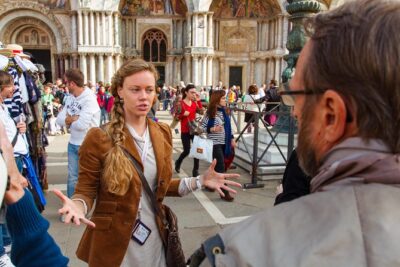
Legendary Venice: Doge’s Palace, St Mark’s & VIP Terrace Access
Read our review →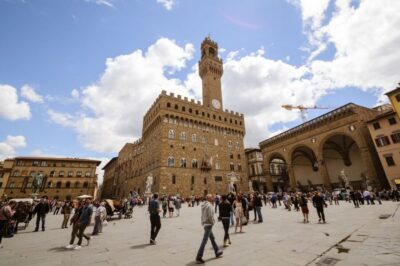
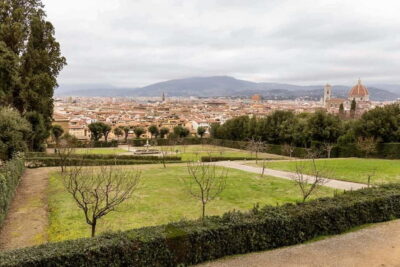
Venice In a Day: St Mark’s, Doges Palace Gondola Ride & City Tour
Read our review →Browse the lists this tour appears in