
REVIEW · FRANCE
Château-Thierry: Belleau Wood & the 2nd Battle of the Marne
The woods still tell the story. This private tour connects Belleau Wood, nearby villages, cemeteries, and battlefield monuments into one clear account of the 1918 fighting. I especially like the chance to walk among original foxholes and trenches, and I value the way guide Frederick explains the ground from a military point of view. The main drawback is the price: $759 for up to four people is fair for a private day, but expensive for one or two.
This is a serious battlefield visit, not a quick photo stop. Frederick, a former French Army colonel, has led the tour for years and brings particular knowledge of Marine history. Allow seven hours, bring patience for cemetery visits and walking over uneven ground, and remember that food is not included.
Key points to know before booking
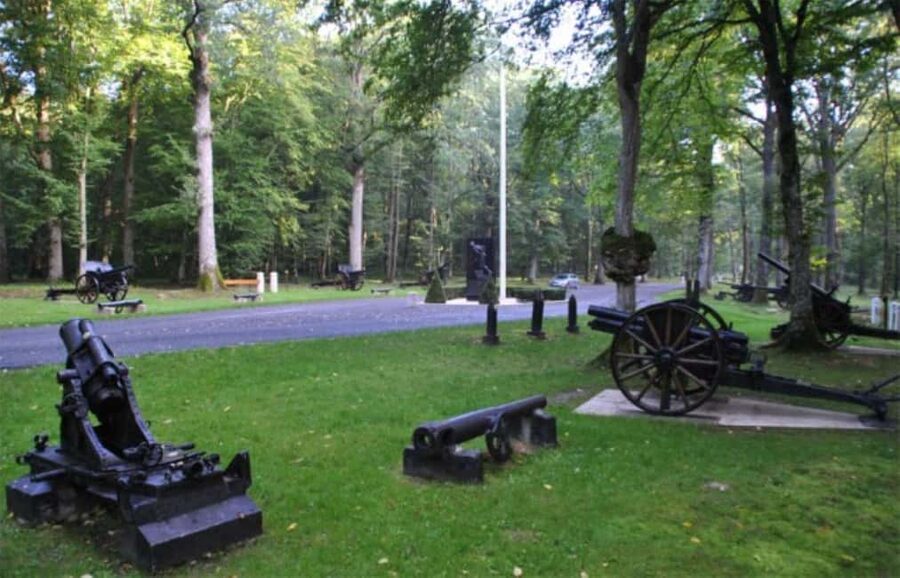
- Belleau Wood still holds foxholes and trenches: You walk through surviving traces of the fighting rather than viewing the battle only from a roadside monument.
- The tour follows the battle across several villages: Lucy-le-Bocage, Bouresches, and Belleau help you understand why this was a scattered, difficult fight.
- Marine history receives careful attention: The route includes the 2nd Division monument, the 6th Marine Regiment area, Lieutenant Osborne’s grave, and the Marines named on the chapel wall.
- The views explain the strategy: Hill 204 and the German Cemetery offer broad views that show why high ground mattered to both armies.
- The human cost remains central: You visit the graves of Lieutenant Osborne and poet Joyce Kilmer, along with memorials to soldiers lost at Croix Rouge Farm.
- It works best as a private group experience: The $759 price covers up to four people, with private transport, water, and an English or French-speaking guide.
Why Belleau Wood needs a guide
Belleau Wood is easy to underestimate. The name suggests one isolated forest, but the fighting spread through villages, farms, roads, hills, and woods around Château-Thierry. Without a guide, you can see a monument or a cemetery and still miss how the pieces fit together.
I like the way this tour builds the story before reaching the main wood. You first visit the places where troops attacked, moved, and held ground. By the time you walk through Belleau Wood, the foxholes and trenches have meaning. You are not simply looking at dips in the earth. You are connecting them to the attacks discussed earlier in the day.
Frederick is a major reason to consider this tour. The information provided describes him as a former French Army colonel and a long-time Belleau Wood specialist. That background matters here because the battle requires more than dates and names. You need someone who can explain why a village, ridge, or field mattered to soldiers trying to advance.
The personal reports also emphasize his punctuality, humor, flexibility, and respect for the site. That combination is useful. A battlefield tour can become dry or overly solemn, but humor used with care helps keep seven hours engaging. At the same time, the comments make clear that Frederick treats the ground with real respect, especially for former Marines and families connected to the battle.
More Chateau and Wine Estate Tours in France
- Medoc or Saint Emilion Wine Tasting and Chateau from Bordeaux
★ 5.0 · 1,415 reviews - From Paris: Full-Day Loire Valley Chateaux Tour
★ 4.4 · 1,269 reviews - Versailles Château and Gardens Walking Tour
★ 4.5 · 727 reviews
Lucy-le-Bocage and the 2nd Division monument
The tour begins in Lucy-le-Bocage, where you visit the center of the village and see the 2nd Division monument. This is a good opening stop because it places the American forces within the local setting rather than starting with a broad military lecture.
You then cross the village to see the main place connected with the 6th Marine Regiment. That small-scale setting is important. Battle history often gets reduced to large formations and famous dates, but village streets help you picture the practical problem of moving men, supplies, and orders through contested ground.
I would pay close attention here to the relationship between the monument and the village around it. The village is not just a backdrop. It helps show how the fighting affected ordinary places and how American military memory became part of the French countryside.
Bouresches and the Marine attack
Bouresches brings the story closer to the combat itself. Here, Frederick discusses the Marine attack on the village, the heroic action of Captain Duncan, and Lieutenant Osborne of the US Navy, who received the Medal of Honor.
This stop has extra weight because Lieutenant Osborne is later visited at Aisne-Marne American Cemetery. You first hear about his action in the setting where the fighting occurred, then encounter his grave in a quiet cemetery. That link between battlefield and burial place gives the day a strong thread.
The tour information does not provide a detailed account of Captain Duncan’s action, so you should expect the guide to supply the fuller explanation on site. That is one reason a specialist guide is valuable. The itinerary names people who might otherwise pass quickly through a general World War I tour.
Walking through Belleau Wood
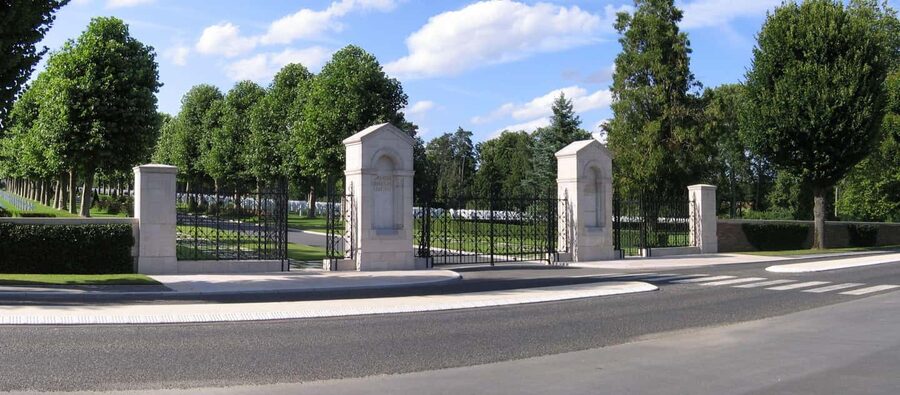
Belleau Wood is the heart of the day. You walk through the woods to see remains of the battle, including foxholes and trenches. This is the most active part of the tour, and it is also where sturdy footwear and reasonable mobility matter most.
I like that the visit involves walking through the actual wood rather than stopping only at a monument. Surviving earthworks give you a physical sense of the fighting. They also show how much of battlefield study comes from small features rather than grand structures.
Do not expect a polished museum path at every step. The attraction here is the ground itself. The route may feel demanding for anyone who has trouble walking over uneven terrain, and the experience is not suitable for wheelchair users. Children under 11 are also not accepted.
The emotional effect can build slowly. You may first focus on the foxholes, then realize how close the combat positions were to villages, farms, and cemeteries visited later. The tour works best when you allow time to look rather than treating the wood as another item to check off.
Same place, a different set of state rooms:
- Paris: Versailles Palace and Gardens Full Access Ticket
★ 4.6 · 41,579 reviews - Versailles: Skip-the-Line Tour of Palace and Gardens Access
★ 4.7 · 10,429 reviews - From Paris: Versailles Palace & Gardens with Transportation
★ 4.6 · 6,222 reviews - Versailles: Skip-the-Line Guided Palace Tour and Full Access
★ 4.6 · 5,214 reviews
Belleau village and Aisne-Marne Cemetery
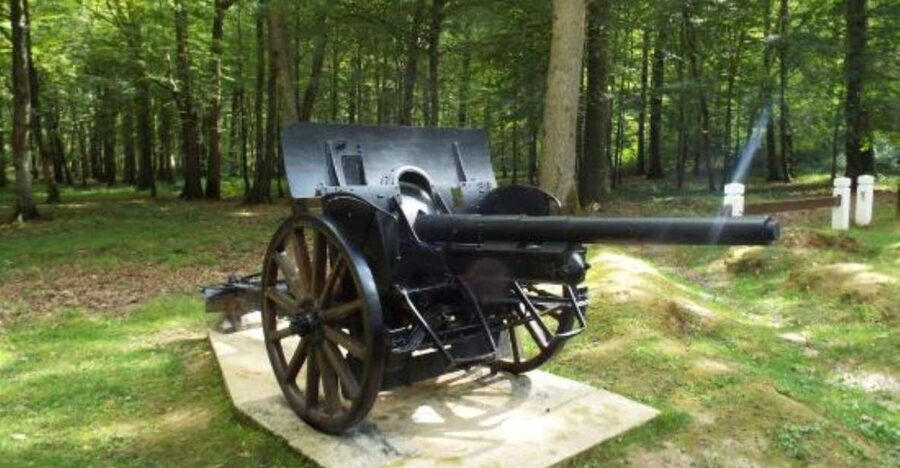
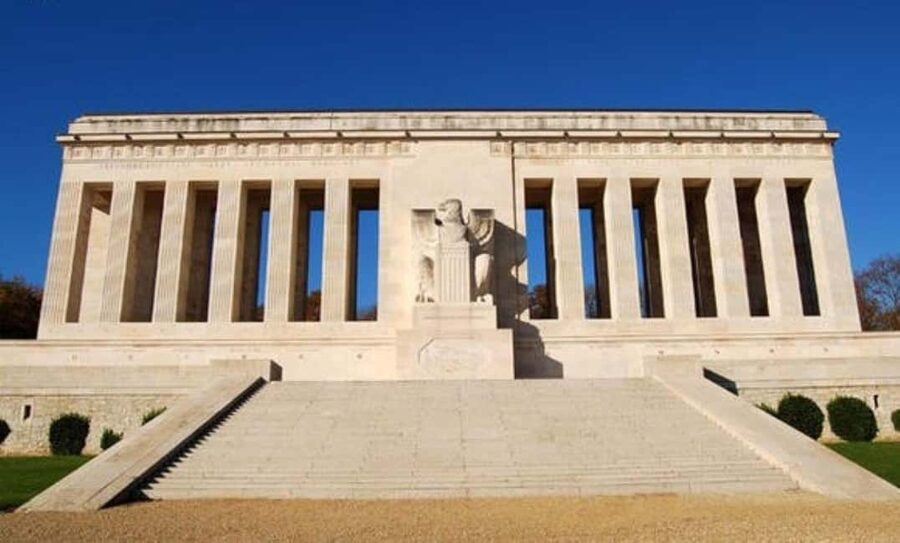
In Belleau village, the tour continues to Aisne-Marne American Cemetery. You visit Lieutenant Osborne’s grave and the cemetery chapel, then see the wall listing the missing Marines and soldiers.
This is one of the day’s strongest transitions. The woods show the physical remains of battle, while the cemetery gives names and places to the dead. Lieutenant Osborne’s grave offers a direct connection to the Bouresches discussion, and the chapel wall widens the story to include those whose remains were never identified or recovered.
Cemetery visits require a different pace. I would not rush this section, even though several more stops follow. The silence and order of the grounds contrast sharply with the confusion of the battle. The effect is especially strong for Marines, military families, and anyone tracing a relative who fought in the area.
The tour does not include food or snacks, so you should plan for the seven-hour day accordingly. Bottled water is provided in the vehicle, but personal meals and drinks are your responsibility.
The German Cemetery and the view from the battlefield
The German Cemetery offers a useful change in viewpoint. From here, you get a panorama of the battlefield and can consider the fighting beyond the American memorial story.
That balance matters. The tour focuses heavily on American and Marine history, as it should for many people who book it, but the German cemetery reminds you that this ground held soldiers from both sides. It also gives Frederick another place to explain how positions related to one another across the area.
The panorama is not just scenery. It helps you understand distance, visibility, and the challenge of moving across open ground. Battlefield maps can make an attack look simple. A broad view often shows why the same advance was slow, costly, and difficult to control.
Hill 204 and its strategic view
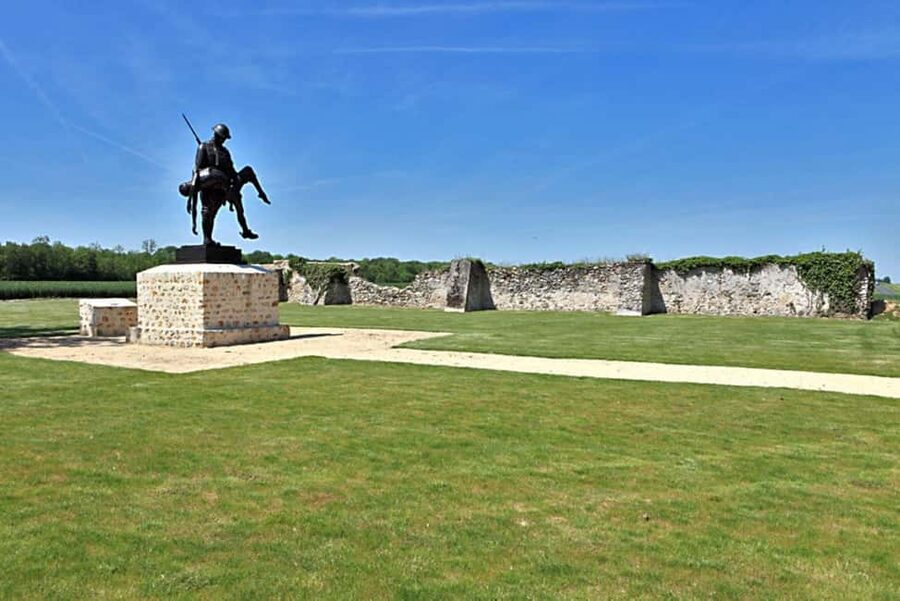
Hill 204 is another key position. You visit the monument, look across the battlefield, and tour the interpretive center. The view helps explain why the hill mattered to both German and Allied forces.
This is the kind of stop that rewards a guide who understands military geography. High ground can control movement and observation, and the view gives you a practical way to understand that point. I find this more useful than hearing that a hill was strategic without seeing what it commanded.
The interpretive center adds context to the outdoor monument and panorama. Since the tour already includes several memorials and cemeteries, the center provides a different form of learning. You can connect the physical view with the historical explanation before moving on to the farm positions.
Croix Rouge Farm and the cost of the attack
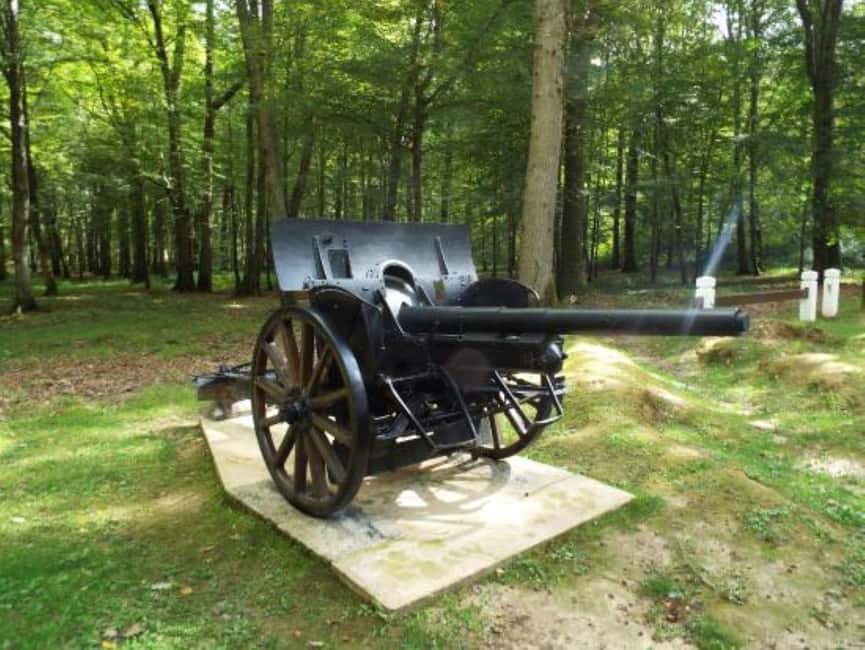
At fortified Croix Rouge Farm, you see remains of a position occupied by German forces. Frederick explains the action involving the 42nd Division and the attack by the 167th Infantry Regiment from Alabama, which suffered heavy losses.
This stop expands the story beyond the Marines. The battle involved many American units, and the farm gives the 42nd Division a clear place in the route. The monument dedicated to the soldiers who died there keeps the focus on sacrifice rather than tactics alone.
Farm sites can be harder to interpret than formal memorials. There may be fewer obvious structures, and you might need the guide to point out what remains and explain its role. That is not a weakness of the site. It is simply part of visiting a battlefield where much of the evidence is low to the ground or spread across private-looking rural spaces.
For me, this is also where the tour earns its broader value. If you only want a Marine-focused pilgrimage, the early stops may be the main draw. If you want a fuller account of the battle around Château-Thierry, Croix Rouge Farm makes the day more complete.
Joyce Kilmer at Oise-Aisne American Cemetery
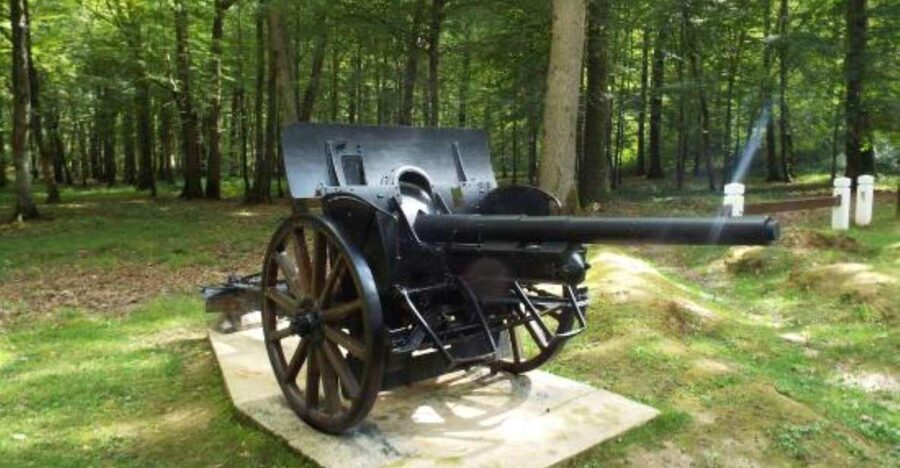
The next major cemetery is Oise-Aisne American Cemetery, where you stop at the grave of Joyce Kilmer. Kilmer was a poet in the 165th Infantry Regiment of the 42nd Division and was killed in action on July 30, 1918.
This adds a personal and cultural dimension to the military story. You are not only seeing officers, units, and formations. You are also visiting the grave of a known poet who served as a soldier and died during the campaign.
The stop may appeal most to readers familiar with Kilmer, but you do not need a literary background to understand its value. A named grave makes the war feel less abstract, while the connection to the 42nd Division ties the cemetery back to Croix Rouge Farm.
As with Aisne-Marne Cemetery, I would give yourself time for quiet reflection. The day covers a lot of ground, but the cemeteries are not filler between battle sites. They are central to understanding what the fighting cost.
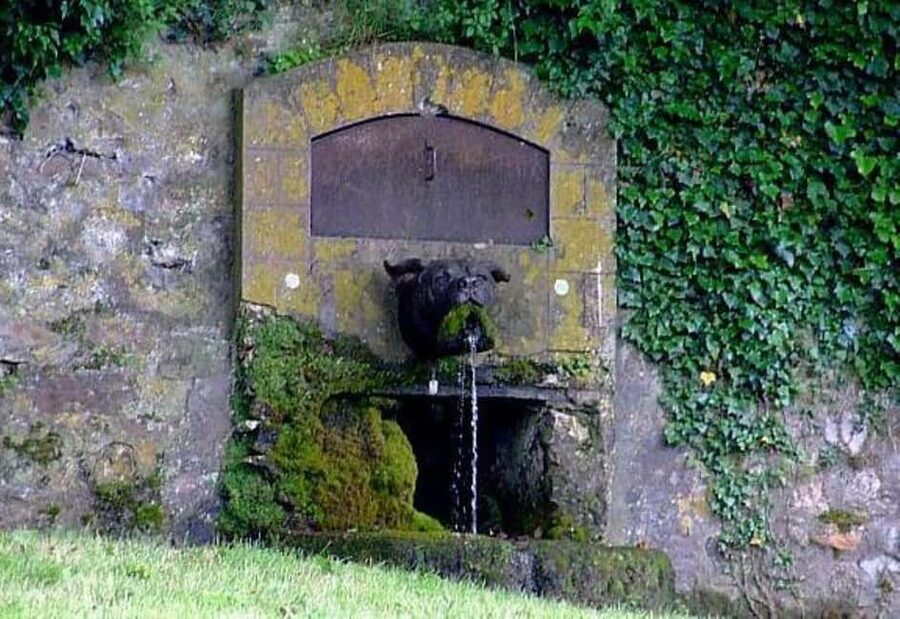
The Quentin Roosevelt Fountain
The final stop is the Quentin Roosevelt Fountain, offered by the Roosevelt family to the village in memory of their son. It is a small but memorable ending because it returns the story to a local community.
After woods, hills, farms, monuments, and cemeteries, a village fountain offers a more intimate reminder of remembrance. It also shows how American families and French villages remained connected through the memory of the war.
One past participant specifically valued the chance to take a sip from the famed fountain. That detail gives the stop a simple, human quality. It is not the largest memorial of the day, but it may be one of the most personal.
What the $759 private price gets you
The cost is $759 per group of up to four people for seven hours. With four people, that works out to about $190 per person. With two people, it is about $380 each, and a solo booking carries the full group price unless the provider offers another arrangement.
That price makes the most sense for a family, a group of Marines, or friends with a strong interest in World War I history. You are paying for private transportation, a live English or French-speaking guide, and a route that would be difficult to organize efficiently on your own.
I would not call it a bargain for a single visitor. The value comes from Frederick’s military background, the private format, and the number of sites covered in seven hours. You also avoid trying to connect scattered villages, woods, cemeteries, and hills by yourself.
The private format gives your group room to ask focused questions. That matters if you are tracing a relative, studying Marine history, or trying to understand a particular regiment. It also means the pace can feel more personal than a large group outing.
Who should book this battlefield tour?
I would recommend it most strongly to:
- Former or serving Marines and their families
- People researching relatives who fought at Belleau Wood or in the 42nd Division
- Visitors with a serious interest in World War I
- Anyone who wants a military guide rather than a general sightseeing tour
- Small private groups willing to spend seven hours on memorials, cemeteries, and battlefield remains
You should think twice if you want a light half-day outing, have limited walking ability, or are traveling with children under 11. The tour is also not suitable for wheelchair users, and there is no included meal service.
The strongest praise centers on Frederick’s ability to explain the battle, his respect for the site, and his attention to Marine history. One former Marine described the ground as complicated and easy to misunderstand without context. That is the central point: Belleau Wood rewards preparation and explanation.
Practical advice for the day
Wear shoes suitable for walking through woods and over uneven ground. The route includes foxholes, trenches, village walks, cemeteries, monuments, and battlefield viewpoints, so comfort matters more than style.
Bring any family records, unit information, or names you want to discuss. The provided details show that the tour can be especially meaningful for people connected to the 2nd Division, 6th Marine Regiment, 42nd Division, 165th Infantry Regiment, or 167th Infantry Regiment.
Pack food and snacks because they are not included. Bottled water is supplied in the vehicle, and private transport keeps the day practical as the route moves between separate sites.
The tour is available in English or French. You can cancel up to 24 hours before the experience for a full refund, and reserve now while paying later, which helps if your schedule around Château-Thierry is still changing.
Should you book it?
Book this tour if Belleau Wood is a main reason for your visit, especially if you want to understand the battle rather than simply photograph a monument. The combination of Frederick’s military background, private transport, battlefield walking, cemetery visits, and wide views gives the day real depth.
Skip it if you want a cheap, casual excursion or cannot manage uneven walking. For a group of four with a strong connection to Marine or World War I history, the $759 price is reasonable. For one person, it is a serious expense, but the specialist guidance may be worth it when the site matters deeply to you.
FAQ
How long does the Belleau Wood tour last?
The tour lasts seven hours.
How much does the private tour cost?
The price is $759 per private group of up to four people.
Which languages are available?
The live guide can lead the tour in English or French.
Is transportation included?
Yes. Private transportation is included, along with bottled water in the vehicle.
Are food and drinks included?
No. Personal expenses, food, drinks, and snacks are not included.
Is the tour suitable for children?
Children under 11 are not accepted on this tour.
Is the tour accessible to wheelchair users?
No. The experience is not suitable for wheelchair users.
Just added around France
- Pierrefonds: Château de Pierrefonds Entrance Ticket★ 4.7 · 152 reviews
- Paris: Versailles Palace and Queen Hamlet E-Bike Tour★ 5.0 · 126 reviews
- Paris: Versailles Golf Cart & Bike Tour with Palace Entry★ 4.8 · 58 reviews
- Petit Palais Paris Museum of Fine Arts Tour with Tickets★ 4.2 · 3 reviews
- Paris: Palace of Versailles Private Tour with Transportation★ 5.0 · 2 reviews
- Paris: Royal Palais, Tuileries and D’Orsay Tour★ 4.8 · 3 reviews
- PARIS: Private transfer Château Versailles van 7 people 4H★ 3.0 · 4 reviews
- Paris: Palace of Versailles Ticket with Private Transfer★ 4.4 · 24 reviews
Chateau and Wine Estate Tours, compared.

Medoc or Saint Emilion Wine Tasting and Chateau from Bordeaux
Read our review →

Versailles Château and Gardens Walking Tour from Paris by Train
Read our review →
Loire Valley: Château Royal d’Amboise Entrance Ticket
Read our review →
Fontainebleau & Vaux-le-Vicomte Châteaux Day Tour from Paris
Read our review →
Browse the lists this tour appears in