
REVIEW · ITALY
Bari: Simi Palace and Byzantine Church Tour with Ticket
Bari’s oldest layers sit beneath one roof. This 80-minute guided visit takes you through Simi Palace, its Byzantine church, a Roman house, and an archaeological display filled with pottery and ceramics. I like the compact format, which gives you a clear look at Bari’s past without taking half a day, and I like that admission and a live guide are included.
The scale model is especially useful because it helps you picture how the settlement and city once looked. The main consideration is that this is a focused museum and ruins tour, not a broad introduction to all of Bari. If you want vivid storytelling about the city’s streets, churches, and food culture, you may need a separate walking tour.
The guide can lead tours in Italian, French, English, or Spanish. A French-speaking visitor gave the guide high praise for making a strong effort to speak French clearly, which is a useful sign if language matters to you. Comfortable shoes are sensible, and bring an umbrella or rain gear as requested.
Key points to know before booking
- A compact archaeological visit: The full tour lasts 80 minutes, making it easy to fit into a day of sightseeing in Bari.
- Three layers of history: You see a 16th-century palace, a Byzantine church from the 9th or 10th century, and remains of a Roman house.
- A helpful scale model: The model gives you a visual sense of the original settlement and makes the scattered ruins easier to understand.
- Rare pottery and trade clues: Italian-Mycenaean ceramics point to Bari’s links across the Mediterranean.
- A guide in four languages: Tours are offered in Italian, French, English, and Spanish, with private groups available.
- Good practical value: The $30 price includes both the Simi Palace and church entrance, plus the guided tour. Children up to age 11 enter free.
What the Simi Palace visit is really about
Simi Palace is not simply an old building with a few objects in glass cases. The visit connects several periods in Bari’s past, letting you see how later structures were built around and above earlier ones.
The palace dates to the 16th century, but the archaeological material reaches much further back. That contrast is the reason the tour works. You are not looking at one perfectly preserved monument from one period. You are reading layers of occupation in a single place.
I find this type of site rewarding because it changes how you look at Bari. The city is often introduced through its seafront, old lanes, churches, and Norman-era monuments. Simi Palace takes you below that familiar surface and shows evidence of earlier settlement, religious life, trade, and domestic buildings.
The guide matters here. Ruins can be hard to read when you see only foundations, broken walls, or partial apses. A live explanation helps you understand which pieces belong together and why the site matters.
A few more palace visits around Italy worth a look
- Venice: Doge’s Palace Reserved Entry Ticket
★ 4.6 · 42,716 reviews - Doge’s Palace & St. Mark’s Basilica with Terrace Access Tour
★ 4.7 · 10,697 reviews - Venice: Doge’s Palace and St Mark’s Basilica Walking Tour
★ 4.4 · 6,291 reviews
Starting at the archaeological display
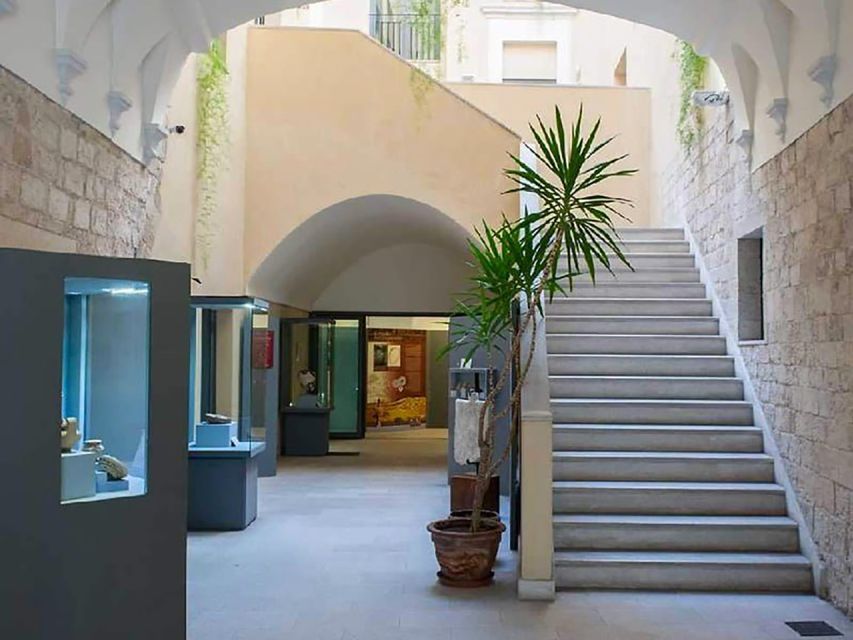
The visit includes a permanent archaeological exhibition on the ground floor. You can expect the first part of the tour to focus on objects and visual aids rather than large, complete monuments.
One of the most useful pieces is a scale model of the original settlement. Do not rush past it. Models are often the quickest way to understand a site where only fragments survive. You can compare the model with the remains around you and form a clearer picture of how Bari may have developed.
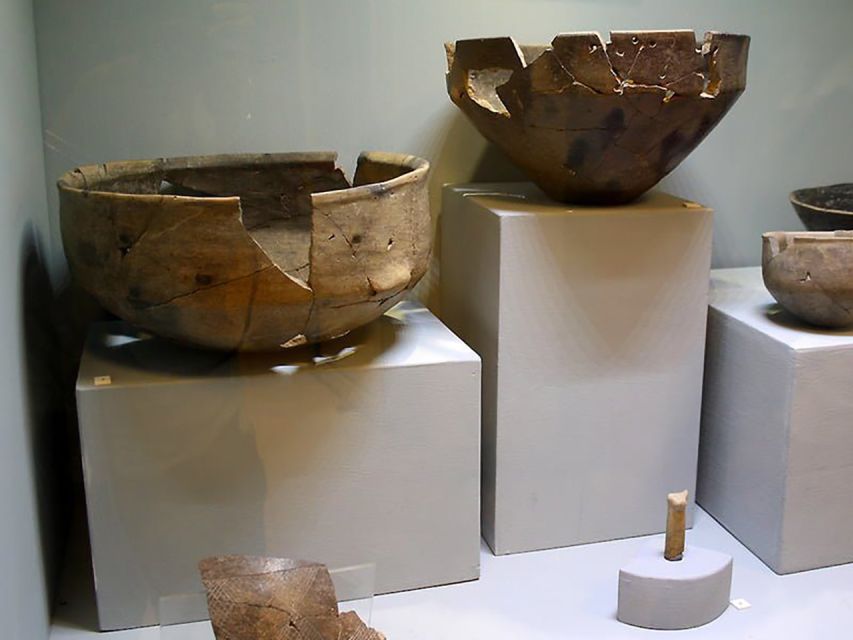
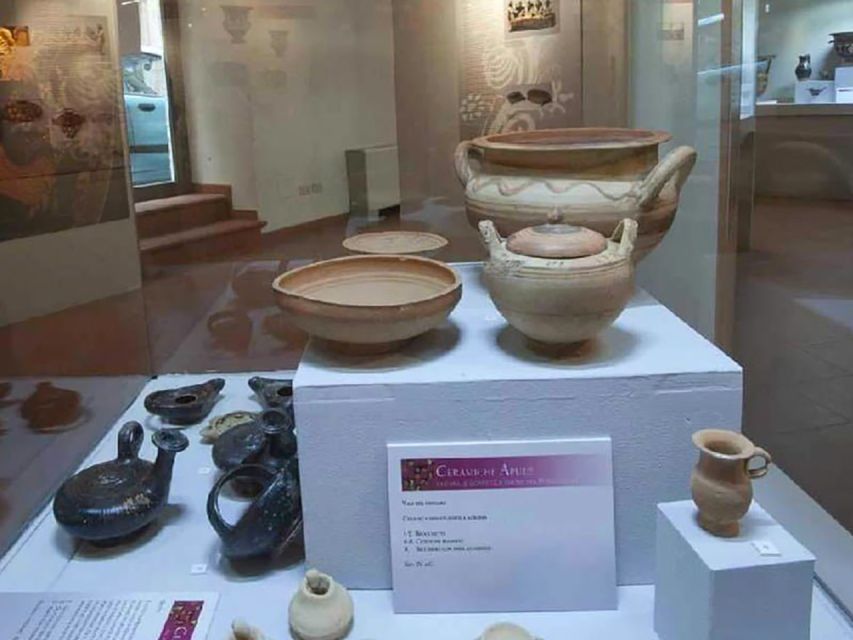
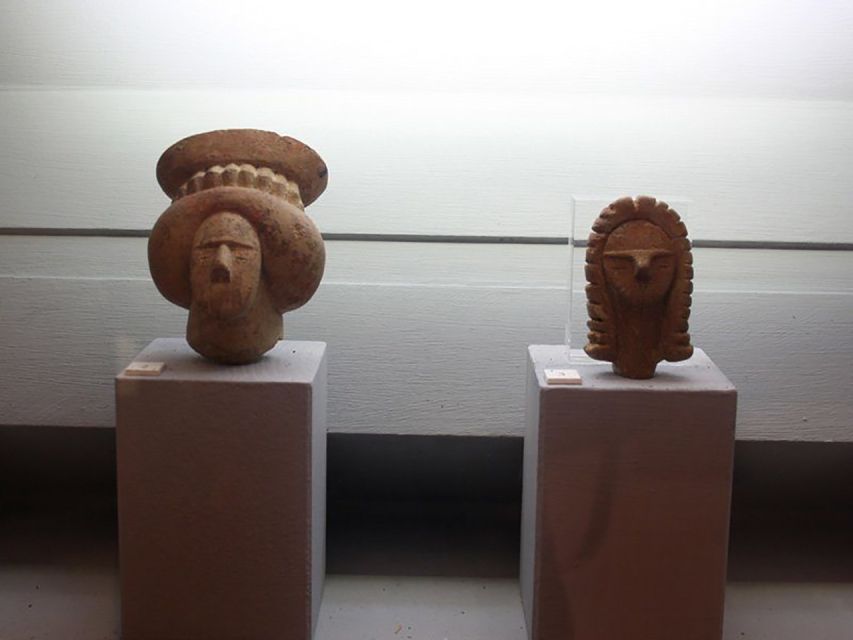
The display also includes prehistoric pottery fragments. These are not flashy objects, but they can tell you plenty. A small piece of pottery can show how people stored food, made household goods, or exchanged objects with other communities.
You will also see rare examples of Italian-Mycenaean ceramics. Their presence points to commercial connections across the Mediterranean. That detail gives the collection wider meaning: Bari was not isolated, and the objects found here reflect movement between communities.
I like this part of the tour because it gives the ruins a human scale. A broken pot fragment may seem modest next to a church apse, but it represents ordinary life. It also helps explain why archaeologists care about small finds, not only grand buildings.
Reading the Byzantine church ruins
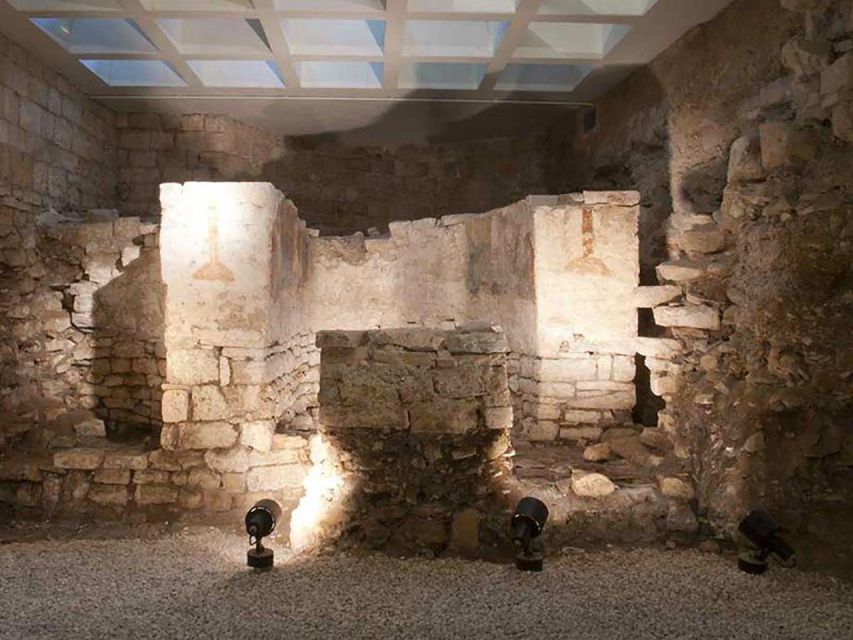
The adjacent Byzantine church is likely the most memorable section for visitors who enjoy architecture and sacred sites. It dates from the 9th or 10th century, and the remains are still clear enough to show the shape of the original religious space.
You can distinguish three apses, part of the altar, and fragments of a fresco. These surviving pieces are important because they allow you to read the church’s layout. The apses help define the eastern end of the building, while the altar area gives a sense of how worship was organized.
Do not expect a complete church with intact walls and a full interior. This is an archaeological ruin, so the experience depends on looking closely and listening to the explanation. The fragmentary fresco may be small, but it adds a human touch to the site. Paint survives where most of the decoration has disappeared.
The church also helps explain the importance of the palace complex. The palace was built on top of an earlier religious site, so the tour shows how one structure can preserve traces of another. You get a direct lesson in how cities change: buildings are reused, covered, altered, and sometimes uncovered again centuries later.
For me, this is where a guide is most valuable. Without context, three apses and a few wall fragments can look like disconnected stones. With an explanation, they become part of a church with a clear plan and purpose.
The Roman house beneath the palace
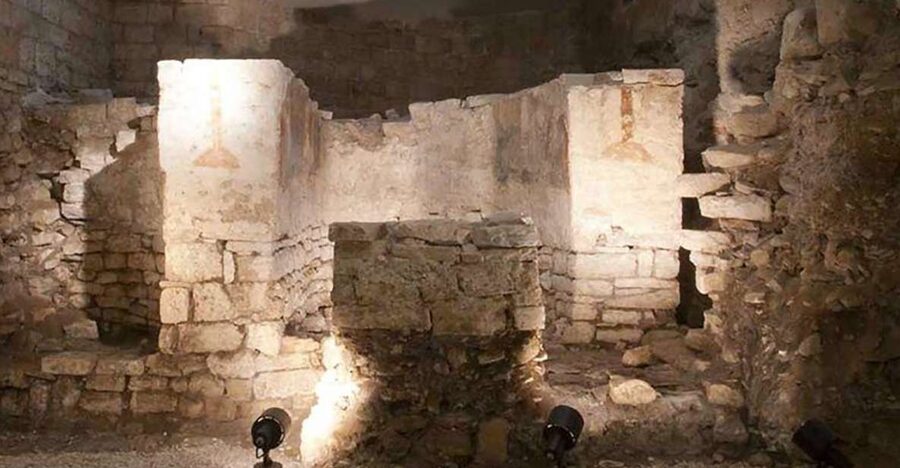
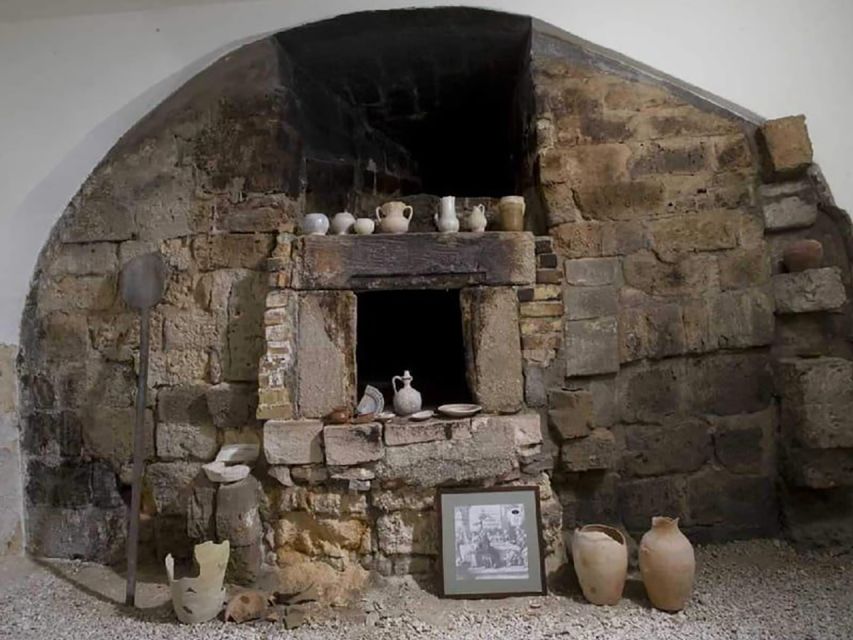
Restoration work revealed the remains of a Roman house. This is another reason the site feels layered rather than fixed in one period.
The Roman house gives you a glimpse of domestic life before the Byzantine church and later palace. The available information does not specify the full plan of the house or the household objects found inside, so you should expect a partial archaeological remain rather than a fully reconstructed residence.
Still, its presence adds an important point. The site was not used only for public or religious buildings. People also lived here. The Roman remains place everyday life beside the later church and palace, showing how the same part of Bari could serve different purposes over time.
I would pay attention to how the guide connects this house with the other remains. The strength of the tour is not any single artifact. It is the connection between the Roman, Byzantine, and 16th-century layers.
Same place, a different set of state rooms:
- Legendary Venice: Doge’s Palace, St Mark’s & VIP Terrace Access
★ 4.5 · 5,033 reviews - Florence: Palazzo Vecchio Entrance Ticket & Audioguide
★ 4.4 · 4,822 reviews - Florence: Entrance Ticket to Pitti Palace
★ 4.5 · 4,528 reviews - Venice: Doge’s Palace and St. Mark’s Basilica Tour
★ 4.5 · 3,734 reviews
Why the 80-minute length works
Eighty minutes is a useful amount of time for this kind of visit. It is long enough for a guided explanation of the exhibition, church, and Roman remains, but short enough to fit around other plans in Bari.
You can use it as a morning activity before lunch or as a cultural break between visits to the city’s better-known churches. The fixed duration also helps if you are traveling with children or with people who do not want a long museum visit.
The pace will depend on the guide and group. A private group is available, which may suit you if you want more room for questions or a slower explanation. A standard guided visit may feel more structured.
Because the tour is only 80 minutes, it cannot cover every period of Bari’s past in detail. Think of it as a focused introduction to one archaeological site. You will leave with a better understanding of this complex, not a complete history of Apulia.
Is $30 a fair price?
At $30 per person, the value depends on how much you want guided context. Admission to both the palace and church is included, as is the live guide. You are paying for a short, organized visit rather than simply entering an exhibition alone.
I consider the price reasonable for visitors who would otherwise walk through the ruins without knowing what they are seeing. The guide helps explain the scale model, pottery, ceramics, church plan, fresco fragments, and Roman house. That interpretation is the main reason to choose this experience over an unguided visit.
The price is less appealing if you prefer to spend a long time examining displays at your own pace. An 80-minute tour has a defined route and schedule, so you may not get unlimited time with every object.
Children up to age 11 have free access, which improves the value for families. If you are traveling with older children, the model and the visible church remains may hold their attention better than a display made only of small fragments.
Language, access, and what to bring
The guide can conduct the tour in English, Italian, French, or Spanish. This makes the experience easier to use for international visitors, and the French-language feedback specifically praised the guide’s effort to speak French well.
The site is listed as wheelchair accessible. If you use a wheelchair or have limited mobility, you should still confirm any needs when booking, since archaeological buildings can contain historic surfaces and uneven areas even when the experience is marked accessible.
Wear comfortable clothes and shoes. The request is practical rather than decorative. You will be walking through a palace and archaeological remains, and footwear that feels steady is a better choice than shoes selected only for appearance.
An umbrella and rain gear are also recommended. The information provided does not specify how much of the route is outdoors, so it is safest to be prepared, especially if rain is forecast.
The meeting point is the staircase in front of the entrance to the square. Arrive with enough time to identify the entrance and guide rather than trying to find the group at the last second.
Who will enjoy this tour most?
I would recommend this experience to you if you enjoy archaeology, ancient buildings, religious history, or the way cities are built in layers. It is also a good choice if you have limited time in Bari but want more than a quick look at the old center.
Families may appreciate the short length and free access for children up to age 11. The scale model gives younger visitors something concrete to look at, while the ruins provide more visual interest than a room of text panels alone.
The tour also suits repeat visitors to Bari. If you have already seen the major churches and harbor area, Simi Palace offers a different side of the city.
You may want to skip it if your main goal is food, shopping, or a broad walking tour. The focus is archaeological, and much of the evidence is fragmentary. You need some patience for pottery pieces, partial walls, and explanations about what once stood there.
Booking flexibility and group choices
You can cancel up to 24 hours in advance for a full refund, and you can reserve now while paying later. That is useful if your Apulia schedule may change, especially when you are moving between towns.
Private groups are available. This could be worthwhile for families, groups with a shared language preference, or anyone who wants to ask more questions about the remains.
The tour has a top rating based on two reviews, so the sample is small. The strongest specific praise concerns the guide’s effort and language ability, especially in French. I would treat that as encouraging, but not as proof that every guide and every group experience will be identical.
Should you book the Simi Palace tour?
Book it if you want an affordable, tightly timed look at Bari’s archaeological layers with a guide who can explain what the fragments mean. The combination of prehistoric pottery, Italian-Mycenaean ceramics, a Roman house, a Byzantine church, and a 16th-century palace gives you a lot to consider in 80 minutes.
I would especially choose it if you appreciate sites that are not rebuilt into perfect monuments. Simi Palace asks you to use the model, remains, and guide’s explanation to reconstruct the past in your mind.
Skip it if you want a large museum, extensive independent browsing, or a complete tour of Bari. For everyone else, $30 is a fair price for admission and focused interpretation, particularly with free entry for children up to 11 and several language choices.
FAQ
How long does the Simi Palace and Byzantine Church Tour last?
The tour lasts 80 minutes.
What is included in the price?
The price includes entrance to Simi Palace and the church, along with a live tour guide.
How much does the experience cost?
The listed price is $30 per person.
Which languages are available?
The guide can conduct the tour in Italian, French, English, or Spanish.
Is the tour wheelchair accessible?
Yes. The experience is listed as wheelchair accessible.
Are children admitted free?
Yes. Children up to 11 years old have free access.
Just added around Italy
- Palermo: Palatine Chapel, Audio App & optional Norman Palace★ 3.8 · 70 reviews
- Palermo: City & Palazzo dei Normanni Guided Walking Tour★ 4.7 · 28 reviews
- Palermo: Norman Palace Ticket & Audio App Downloadable★ 3.5 · 4 reviews
- Palazzo Vecchio Secret Passages Tour & Lunch or “Gelato”★ 4.3 · 16 reviews
- Palazzo Vecchio Small Group Tour★ 4.9 · 10 reviews
- Palazzo Normanni and Palatine Chapel Tour – Ticket Included (Italian)★ 3.8 · 14 reviews
- Palazzo Vecchio: Private Guided Museum Tour & Tower Tickets★ 4.7 · 18 reviews
- Palazzo Vecchio 90-Minute Morning Guided Tour★ 4.7 · 104 reviews
Italy Palace Tours, compared.

Doge’s Palace & St. Mark’s Basilica with Terrace Access Tour
Read our review →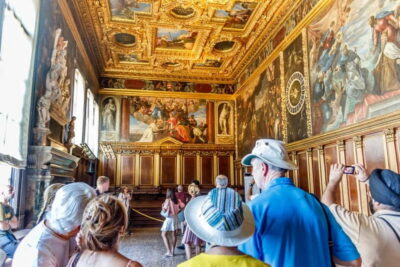
Doge’s Palace and St Mark’s Basilica Walking Tour
Read our review →
Legendary Venice: Doge’s Palace, St Mark’s & VIP Terrace Access
Read our review →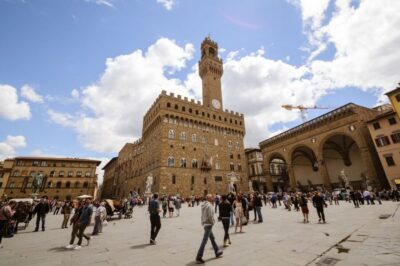
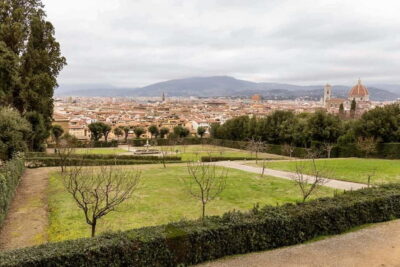
Venice In a Day: St Mark’s, Doges Palace Gondola Ride & City Tour
Read our review →Browse the lists this tour appears in