
REVIEW · AVIGNON
Avignon: Around The Palace Tour
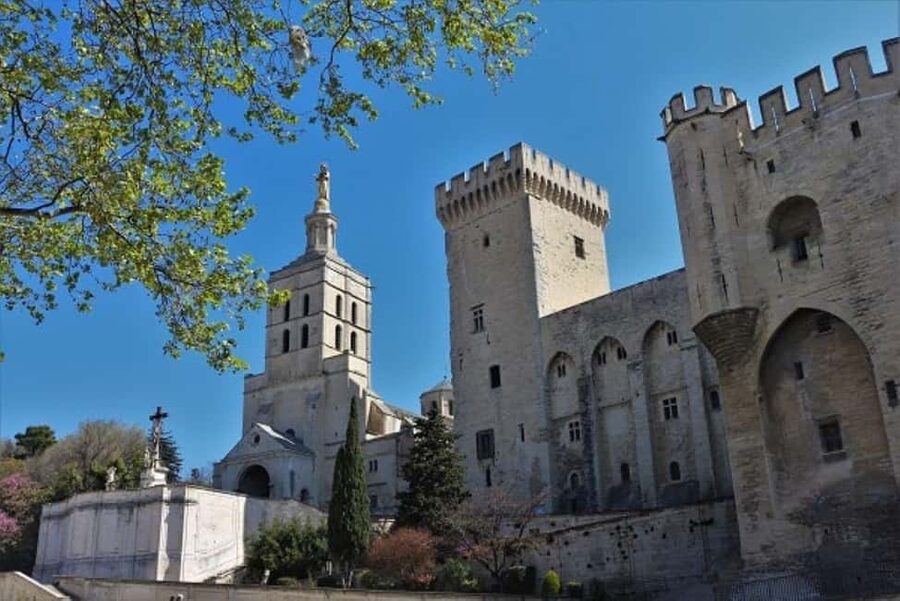
Avignon reveals itself from above. This two-hour walking tour gives you a clear introduction to the papal city, using the Palais des Papes as its main subject while also taking in the Rocher des Doms, Notre Dame des Doms Cathedral, Pont Saint-Bénézet, and the old streets around the palace. I especially like the tour’s focus on the city beyond its best-known monument, and I like the way it connects medieval politics with the Avignon Festival, trade, religion, and daily city life.
The big catch is simple: you do not enter the Pope’s Palace or walk onto the bridge. You see and discuss them from outside. That makes this a useful orientation tour, but a poor substitute for buying admission to the palace itself if your time in Avignon is limited.
The French-speaking guides are a strong point. Vincent earned particular praise for his passion and command of the city, while other recent visitors described their guides as friendly, attentive, and able to answer questions. One booking also reported that the guide did not arrive, so I would keep your confirmation details handy and allow a little time at the meeting point.
Key points to know before booking
- The palace is the subject, not an interior stop: You finish in front of the Palais des Papes, but entrance is not included.
- Rocher des Doms adds the best change of scene: The route climbs to Avignon’s main downtown garden and opens the story beyond church walls.
- The tour covers more than papal politics: Expect stories about King Philip the Fair, commerce, the Avignon Festival, Jean Vilar, and the famous bridge song.
- The starting point is easy to miss: Meet at 2 Place de l’Amirande, in front of the Roman ruins where the square meets Rue Peyrollerie.
- It is conducted in French: This matters more than the two-hour length if you do not understand spoken French comfortably.
- The $41 price buys context, not admission: The value is strongest if you want a guided introduction before exploring the monuments on your own.
Starting among the ruins at Place de l’Amirande
The tour begins at 2 Place de l’Amirande, in front of Roman ruins at the crossing of the square and Rue Peyrollerie. This is a useful starting point because the story begins before the papal era. Avignon’s past reaches back 2,500 years, and the opening section helps place the medieval city in a much longer timeline.
You will spend about 15 minutes here with the guide. Do not expect a long archaeological lesson, but do expect the first pieces of the larger story: why Avignon mattered, how its position affected trade and power, and how earlier layers remain visible in the city.
The meeting point deserves attention. The description is specific, but the old center has plenty of narrow streets and similarly named places. Look for the Roman remains rather than simply walking to the general vicinity of the palace.
The tour is led in French. That is not a minor detail. The route itself is easy to follow, but the experience depends on understanding the guide’s explanations and stories. If your French is limited, you may appreciate the sights but miss much of the value you are paying for.
A few more palace visits around France worth a look
- Paris: Versailles Palace and Gardens Full Access Ticket
★ 4.6 · 41,579 reviews - Versailles: Skip-the-Line Tour of Palace and Gardens Access
★ 4.7 · 10,429 reviews - From Paris: Versailles Palace & Gardens with Transportation
★ 4.6 · 6,222 reviews
Reading Avignon through its medieval walls
The next sections move through the old center and focus on what the walls and monuments reveal. You will spend roughly 20 minutes at one stop and another 20 minutes at the next, with the guide pointing out changes made over time since the Middle Ages.
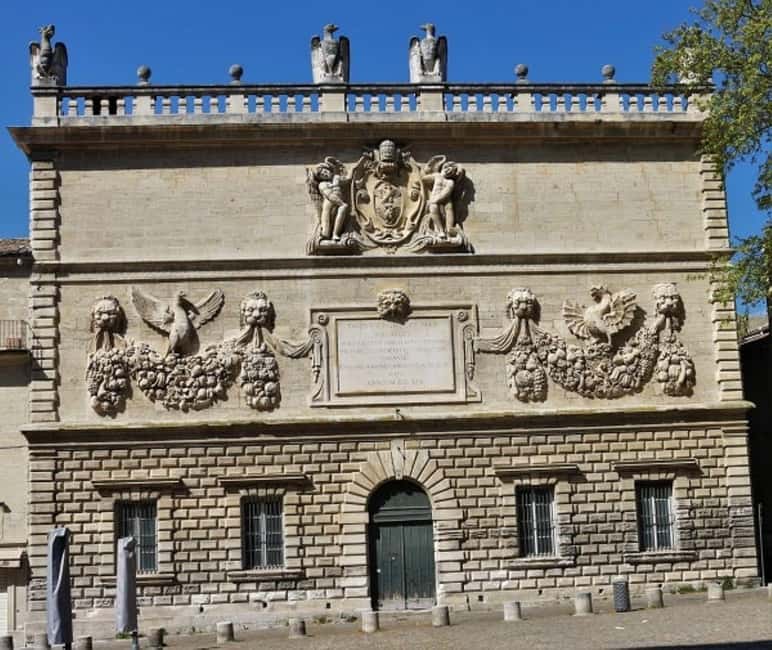
I like this approach because Avignon is not simply a collection of grand buildings. Its character comes from the way religious, political, and commercial uses have overlapped. A wall may tell you about defense, a palace façade about papal authority, and a street about the movement of goods and people.
The tour also addresses the treasures left by the popes and cardinals. That does not mean a museum-style display or a room-by-room visit. Instead, the guide uses the streets and exterior architecture to explain what the papal presence meant for Avignon and the wider region.
One recent French participant praised the way the tour connected papal power with both past and present commerce. That is the sort of connection that can make the city easier to understand. You are not just memorizing dates. You are seeing how a religious court changed the economy and public life of a southern French city.
The darker story near Utopia
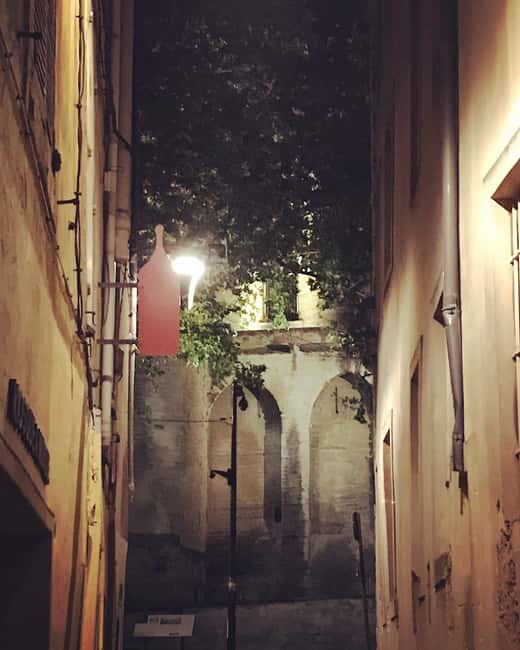
The route includes a stop in front of Utopia, where the guide presents a less comfortable side of Avignon’s past. The supplied description does not spell out every detail, so you should expect a historical story rather than a clearly defined attraction or performance.
This stop is useful because it keeps the tour from becoming a polished parade of papal grandeur. Avignon’s history includes power struggles, difficult social realities, and the effects of rulers making decisions far from ordinary people. A good city tour should leave room for those shadows.
You will spend around 15 minutes here. The stop is not likely to be the visual highlight of the route, but it adds balance. If you prefer tours that stick only to architecture, this section may feel less central. If you want a fuller account of the city, it gives the visit more weight.
Climbing to the Rocher des Doms garden
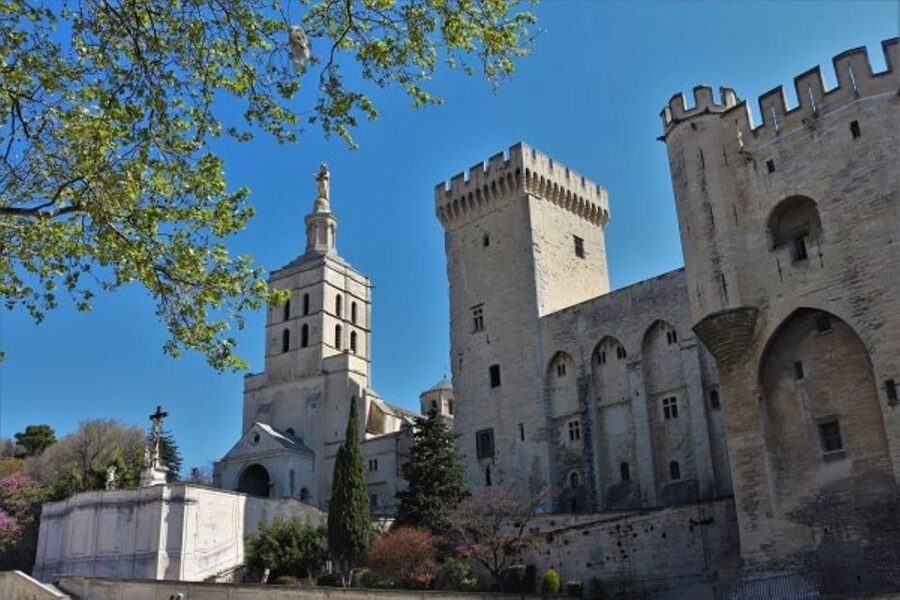
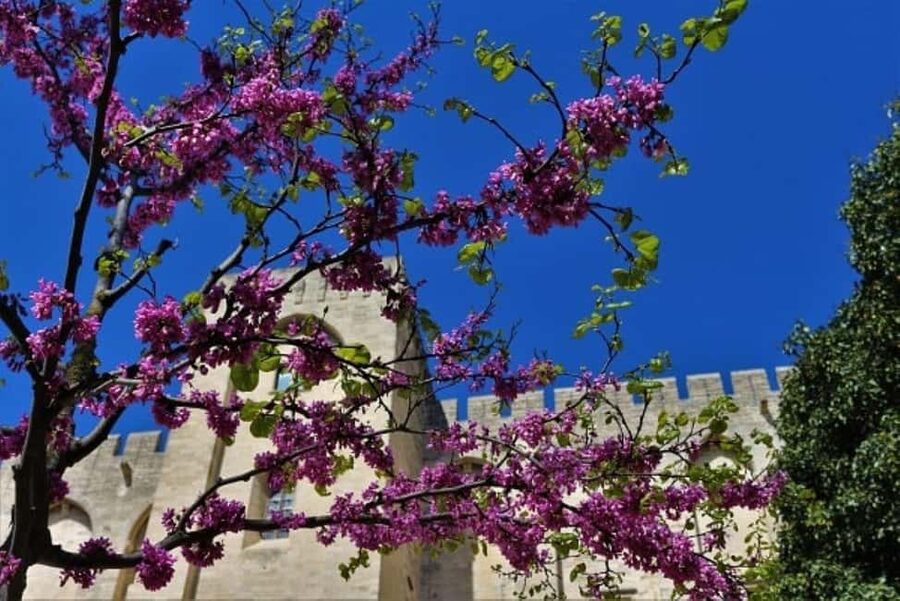
The route then climbs toward the garden of Rocher des Doms. This is the tour’s main change of pace. After several stops among streets, walls, and monuments, you reach the largest green space in central Avignon.
The garden was shaped by Avignon’s sixth pope, and the guide explains how this space fits into the city’s story. You also hear an unusual tale connected with Avignon and the region. The exact story is part of the guide’s presentation, so this is one of the moments when the French language requirement matters most.
I like the Rocher des Doms section because it gives you room to think about Avignon as a place, not only as a historic monument. The city’s position, its connection to the surrounding region, and its views from higher ground become easier to grasp here.
The climb also has a practical consequence. This is a walking tour with an uphill section, not a flat stroll around a single square. The duration is only two hours, but you should wear comfortable shoes and be ready for changes in surface and elevation. The supplied details do not give accessibility information, so anyone with mobility concerns should confirm whether the route works for them before booking.
Same place, a different set of state rooms:
- Versailles: Skip-the-Line Guided Palace Tour and Full Access
★ 4.6 · 5,214 reviews - From Paris: Versailles Palace Guided Tour & Gardens Access
★ 4.7 · 3,574 reviews - Versailles Palace and Gardens Tour from Paris
★ 4.5 · 3,390 reviews - Versailles Palace Bike Tour with Market & Marie-Antoinette hamlet
★ 5.0 · 2,680 reviews
The Pont Saint-Bénézet and the song everyone knows
Pont Saint-Bénézet receives about 20 minutes of guided attention. This is the famous Pont d’Avignon, known around the world because of the children’s song about dancing on the bridge.
The tour explains the story behind the bridge and the song, along with the bridge’s place in Avignon’s identity. You will see and discuss the bridge, but the experience does not include entry onto it. That distinction caused one of the more critical assessments of the tour, and it is fair criticism if you expected a monument visit.
Still, an exterior explanation can be worthwhile. The bridge is tied to Avignon’s geography and its role as a crossing point, not just to the tune associated with it. The guide helps connect the surviving structure with the city around it.
My advice is to decide what you want before booking. If your main goal is to walk on Pont Saint-Bénézet, buy a separate admission ticket. If you want the bridge placed into the broader story of Avignon, this stop does that without turning the tour into a formal monument visit.
Notre Dame des Doms and the final approach
The route descends to Notre Dame des Doms Cathedral for roughly 15 minutes. Here, the guide discusses the cathedral and the secrets it conceals. The stop adds another layer to the papal quarter, since the cathedral and palace work together as the religious center of old Avignon.
The cathedral is also a useful transition. The tour moves from the open space of Rocher des Doms back toward Place du Palais, bringing the story toward its most famous building. You get a sense of how closely the religious buildings were placed and how much authority was concentrated in this small part of the city.
This is still a guided exterior visit rather than a full cathedral tour. If the interior artwork or religious architecture is a priority, you should plan separate time for it. The value here is the explanation of the building’s place in Avignon’s power structure.
Finishing at the Palais des Papes
The tour ends at 17 Place du Palais, directly in front of the Palais des Papes. The final 15 minutes explain why the popes chose Avignon in the 14th century and why the palace became the largest Gothic palace in the world.
This ending works well. After hearing about the city’s location, politics, church, bridge, gardens, and trade, you are ready to look at the palace as more than a huge stone façade. The guide also covers the impact of King Philip the Fair of France, an important part of the political story behind the Avignon papacy.
You will also hear how the palace has been used and understood over time. The tour brings in the Avignon Festival, Jean Vilar, artistic exhibitions, and current city projects. That connection between medieval power and modern cultural life is one of the best features of the route.
Jean Vilar is especially important to the festival story. The tour does not treat the Palais des Papes as a sealed monument frozen in the past. It shows how the building remains part of Avignon’s public life.
But be clear about the finish. You stand in front of the palace, and the tour concludes there. Palace admission is not included. If you plan to go inside afterward, the location is convenient, but you need to arrange that visit separately.
What $41 buys you in practical terms
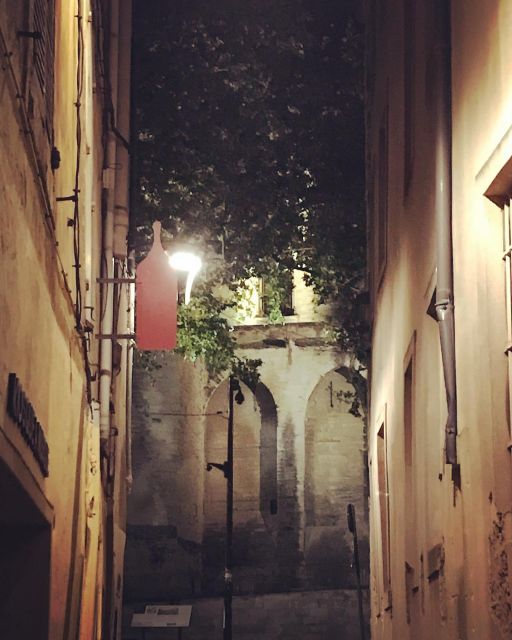
At $41 per person, the tour is not the cheapest way to see Avignon’s main sights. You are paying for a live French-speaking guide and a carefully connected explanation of the city, not for entrance tickets, food, drinks, or access to the palace and bridge.
The value is strongest in three situations:
- You have just arrived and want a two-hour orientation.
- You enjoy history but prefer stories and connections to reading plaques alone.
- You plan to visit the palace or bridge separately and want context first.
The value is weaker if you have only a few hours in Avignon and want to enter the major monuments. In that case, your money and time may be better spent on admission to the Palais des Papes, with the bridge and cathedral added according to your interests.
The tour’s 4.5 rating from 13 ratings reflects a mostly positive experience, but the sample is small. The strongest praise focuses on friendly guides, clear explanations, and passion for Avignon. One French participant appreciated the way the guide answered questions and linked papal history with commerce, the festival, and nearby sights. Vincent was singled out for his energy and deep familiarity with the city.
There is also one serious operational warning: one booking reported that the guide did not show up. That is not enough to define the whole experience, but it is a reason to arrive at the correct meeting point and keep your booking confirmation accessible.
Free cancellation is available up to 24 hours before the start for a full refund, and you can reserve now while paying later. Those terms help if your schedule is still changing, though they do not solve the language or monument-entry questions.
Who will enjoy this walk most
I would recommend the tour to you if you like walking, local history, and a guide who explains how separate places fit together. It suits someone who wants more than a quick photograph of the palace and bridge.
It is also a good choice for an early visit to Avignon. The route gives you a framework for later independent sightseeing. Afterward, you can return to the Palais des Papes, cathedral, bridge, or city streets with a better sense of what you are looking at.
French speakers will get the most from it, since French is the stated tour language. You may still enjoy the route if you understand some French, but you should not book it expecting English commentary.
I would hesitate to recommend it if your only priority is entering the palace or walking across the bridge. The tour title can sound as if it includes the palace itself, but it means walking around the monument and learning its story from the outside.
Should you book the Around the Palace tour?
Book it if you want a thoughtful introduction to Avignon that links the Palais des Papes with the Rocher des Doms, Notre Dame des Doms, Pont Saint-Bénézet, the Avignon Festival, Jean Vilar, and the city’s older political story. The guide quality appears to be the main strength, with Vincent and other guides praised for warmth, passion, and clear knowledge of Avignon.
Skip it if you have only enough time for one paid sight and that sight must be the interior of the Pope’s Palace. For $41, the tour offers valuable context, but not monument admission. Think of it as a guided city orientation with a papal focus, then decide if that matches your day.
FAQ
Where does the tour begin?
It begins at 2 Place de l’Amirande, in front of the Roman ruins at the crossing of Place de l’Amirande and Rue Peyrollerie.
Where does the tour finish?
It finishes at 17 Place du Palais, in front of the Palais des Papes in Avignon.
How long does the tour last?
The tour lasts two hours.
Is entry to the Palais des Papes included?
No. The tour finishes in front of the palace and explains its history, but palace admission is not included.
Is entry to Pont Saint-Bénézet included?
No. The tour includes a guided stop at the bridge, but it does not include entry onto the bridge.
What language is the tour conducted in?
The live tour guide speaks French, and French is the stated tour language.
What is included in the price?
A guided walking tour is included. Food and drinks are not included.
Can I cancel the booking?
Yes. You can cancel up to 24 hours in advance for a full refund. You can also reserve now and pay later.
Just added around France
- Pierrefonds: Château de Pierrefonds Entrance Ticket★ 4.7 · 152 reviews
- Paris: Versailles Palace and Queen Hamlet E-Bike Tour★ 5.0 · 126 reviews
- Paris: Versailles Golf Cart & Bike Tour with Palace Entry★ 4.8 · 58 reviews
- Petit Palais Paris Museum of Fine Arts Tour with Tickets★ 4.2 · 3 reviews
- Paris: Palace of Versailles Private Tour with Transportation★ 5.0 · 2 reviews
- Paris: Royal Palais, Tuileries and D’Orsay Tour★ 4.8 · 3 reviews
- PARIS: Private transfer Château Versailles van 7 people 4H★ 3.0 · 4 reviews
- Paris: Palace of Versailles Ticket with Private Transfer★ 4.4 · 24 reviews
France Palace Tours, compared.
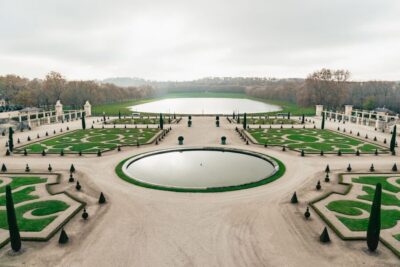
Versailles Palace and Gardens Full Access Ticket
Read our review →
Skip-the-Line Tour of Palace and Gardens Access
Read our review →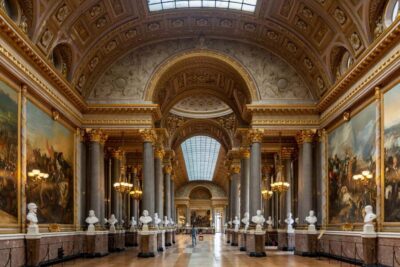
Versailles Palace & Gardens with Transportation
Read our review →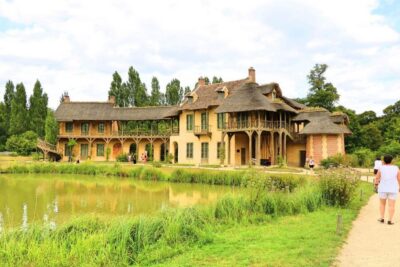
Skip-the-Line Guided Palace Tour and Full Access
Read our review →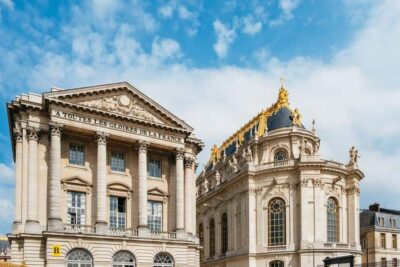
Versailles Palace Guided Tour & Gardens Access
Read our review →
Versailles Palace and Gardens Tour from Paris
Read our review →
Versailles Palace Bike Tour with Market & Marie-Antoinette hamlet
Read our review →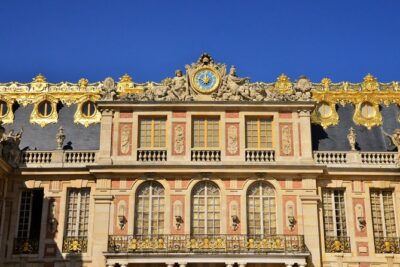
Versailles Palace Guided Tour with Reserved Entry
Read our review →Browse the lists this tour appears in