
REVIEW · ITALY
Guided visit to the Ducal Palace in Mantua
A palace this large needs a good guide. Mantua’s Ducal Palace is less a single building than a small courtly city, with courtyards, hanging gardens, apartments, and grand rooms linked around Santa Barbara. I like the way this 90-minute visit brings order to such a sprawling site, and I especially like that a licensed guide puts the Gonzaga family’s art and ambition into context. The main drawback is that the tour is conducted in Italian, and 90 minutes can only introduce a palace that deserves much longer.
Guide Cecilia has earned especially warm praise for her clear explanations, engaging manner, and even her singing. I also appreciate the practical flexibility: the price is $27 per person, cancellation is free up to 24 hours before the visit, and you can reserve now while paying later. Bring patience for the palace’s size, and ask about an audio headset if the group is large or the rooms are noisy.
Key points at a glance
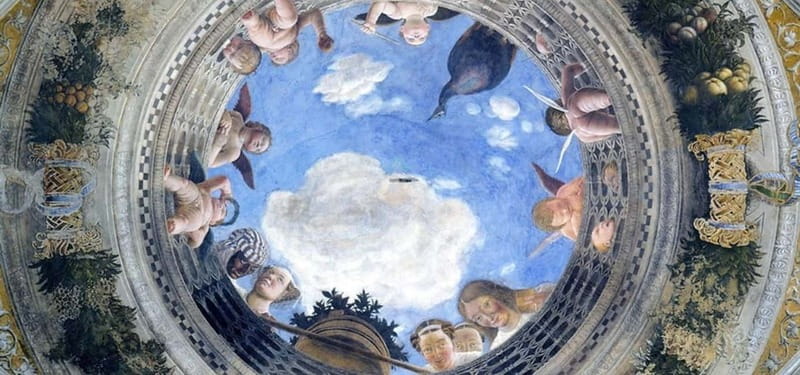
- Mantegna’s Camera degli Sposi: The famous Bride and Groom’s Chamber is the artistic high point, with its illusionistic ceiling and Gonzaga court imagery.
- A palace that feels like a town: Courtyards, squares, gardens, apartments, and ceremonial spaces make this far more than a standard royal residence.
- Cecilia’s guiding style: Her ability to explain details and curiosities keeps the tour moving through a large and sometimes confusing complex.
- Major Renaissance names in one visit: Expect Pisanello, Andrea Mantegna, Raphael, Giulio Romano, and Rubens.
- Italian-language format: The live guide speaks Italian, and some material remains in its original language, so this suits Italian speakers best.
- Good value for art lovers: At $27, the tour offers a focused introduction to a major Gonzaga collection without taking half a day.
Why Mantua’s Ducal Palace is worth your time
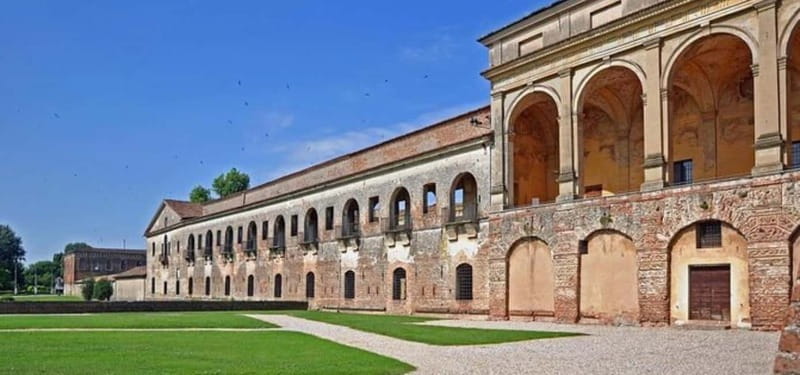
Mantua is one of Italy’s great Renaissance court cities, and the Ducal Palace explains why. The Gonzaga family ruled here for centuries, using art, architecture, marriage, ceremony, and patronage to project power well beyond the city’s size.
You do not simply enter a residence, visit a throne room, and leave. The palace is a connected web of courtyards, apartments, squares, gardens, and decorated passages. Its scale can be thrilling, but it can also be hard to grasp on your own. A guided visit gives you a route through the complex and helps you understand how the Gonzaga family used each space.
I like this kind of sightseeing because the art is not treated as a pile of famous names. Pisanello’s Gothic details, Mantegna’s court painting, Raphael-inspired woven works, Giulio Romano’s architectural decoration, and Rubens’ painting all help tell the story of a ruling family with refined taste and serious political reach.
The $27 price is fair for a 1.5-hour guided introduction, especially if this is your first visit to Mantua. It is not a full study of the palace. Instead, it gives you the main artistic landmarks and enough context to return on your own with better eyes.
A few more palace visits around Italy worth a look
- Venice: Doge’s Palace Reserved Entry Ticket
★ 4.6 · 42,716 reviews - Doge’s Palace & St. Mark’s Basilica with Terrace Access Tour
★ 4.7 · 10,697 reviews - Venice: Doge’s Palace and St Mark’s Basilica Walking Tour
★ 4.4 · 6,291 reviews
Meeting the guide in Piazza Sordello
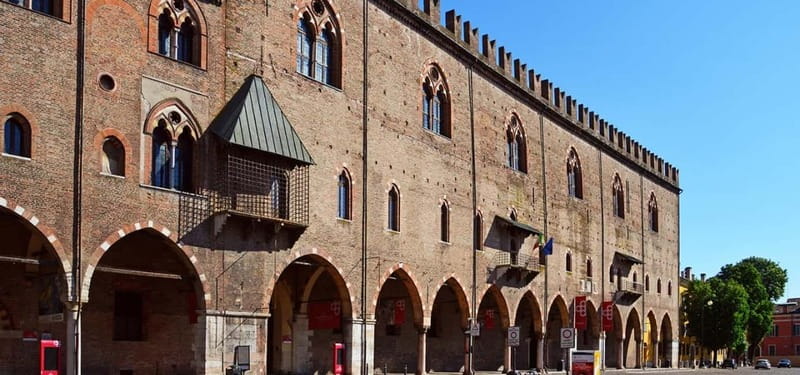
The meeting point is in front of the Ducal Palace entrance at Piazza Sordello, 40, in central Mantua. This is a useful starting place because the square puts you directly beside the palace complex rather than sending you to a distant office or pickup point.
Allow a little time to identify the correct entrance and gather before the start. The visit has a fixed duration of 90 minutes, so arriving late could mean missing the opening explanation or joining the group after it has entered the first rooms.
The provider, Italia in Tour, has more than 10 years of experience organizing guided visits in Italy. The tour uses licensed guides, which matters at a site where architecture, painting, family politics, and religious spaces are closely tied together.
Cecilia is the guide most closely associated with the praise for this experience. Her strengths are described in practical terms: she explains details and curiosities well, keeps the group moving through the rooms, and brings personality to the visit. One particularly unusual detail is her ability to sing, which may add a memorable human touch to the tour.
Seeing the Gonzaga apartments
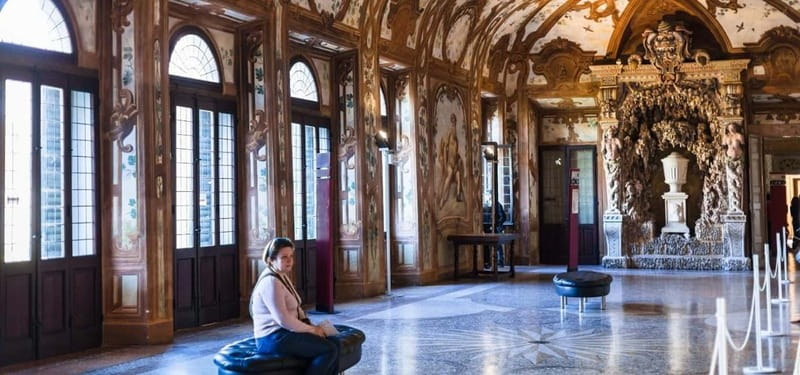
The Gonzaga apartments are an important early part of the visit. These rooms show you the palace as a working court, not just an art museum. The family lived, received diplomats, held ceremonies, and displayed its wealth in a connected set of spaces.
Your guide can help you read the rooms as expressions of status. Fine decoration was not merely there to look pretty. It told visitors that the Gonzagas belonged among Italy’s most powerful families, even though Mantua was smaller than cities such as Milan, Venice, or Florence.
The apartments also give the tour a useful human scale. Famous frescoes and grand halls can feel distant when you see them without context. The family rooms remind you that political power was performed through daily rituals, carefully chosen furnishings, religious devotion, and controlled access.
Do not expect every apartment to receive equal attention. The palace is too large, and the tour is too short for that. The guide has to select key rooms and connect them into a story. That is a sensible tradeoff, but visitors who want a room-by-room architectural study should plan additional time at the palace.
Pisanello and the palace’s Gothic details
The visit includes Gothic details connected with Pisanello. This is a valuable stop because it shows that Mantua’s artistic identity was not created all at once in a single Renaissance burst.
Pisanello’s work brings a different mood from the later grand illusionism of Mantegna or the bold architectural decoration of Giulio Romano. Look for the fine attention to line, costume, animals, and courtly life. These details help you see how art served a princely environment before the Gonzaga court fully embraced the High Renaissance.
I find this part especially useful when a guide points out small features that are easy to miss. In a large palace, your eye naturally goes toward the biggest room or most famous painting. Gothic decoration rewards a slower look, and an Italian-speaking guide can give these details a place within the palace’s changing artistic taste.
Same place, a different set of state rooms:
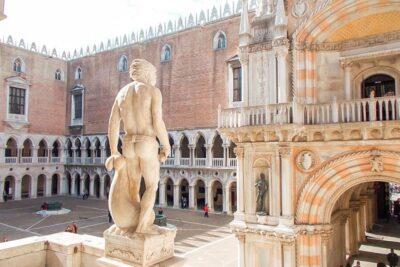
- Legendary Venice: Doge’s Palace, St Mark’s & VIP Terrace Access
★ 4.5 · 5,033 reviews - Florence: Palazzo Vecchio Entrance Ticket & Audioguide
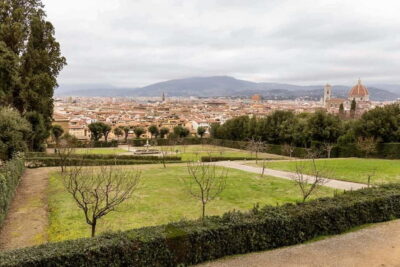
★ 4.4 · 4,822 reviews - Florence: Entrance Ticket to Pitti Palace
★ 4.5 · 4,528 reviews - Venice: Doge’s Palace and St. Mark’s Basilica Tour
★ 4.5 · 3,734 reviews
The Camera degli Sposi and Andrea Mantegna
The Camera degli Sposi, or Bride and Groom’s Chamber, is the essential stop. Andrea Mantegna painted it for the Gonzaga court, and it is one of the best-known rooms in Mantua.
The chamber’s fame comes from Mantegna’s use of illusion. Painted architecture opens the room upward, making the ceiling seem less like a flat surface and more like an imagined view into the sky. Figures and decorative elements play with the boundary between real room and painted space.
Take time to look up. The ceiling is the obvious attraction, but the walls and surrounding details also reward attention. The room presents the Gonzaga family as cultured, connected, and worthy of grand artistic treatment. This is not private decoration in a quiet corner. It is a carefully designed statement about power.
The chamber can also be the busiest and most anticipated part of the visit. Your time inside may feel brief, especially if you want to study every figure. That is one reason I would return after the guided tour if the admission arrangements allow it. The guide gives you the meaning and main features. A second look lets you enjoy the visual tricks at your own pace.
Raphael’s designs in woven form
The route continues to wall hangings designed by Raphael. These works broaden the picture of Renaissance art at the Gonzaga court.
Visitors often focus on frescoes and paintings because they dominate photographs and guidebooks. Woven works require a different kind of attention. Their colors, figures, borders, and scenes were designed to work across a large surface, and they could also signal wealth through the labor and materials involved.
The Raphael connection is important because it links Mantua to the wider artistic world of Renaissance Italy. The Gonzagas were not collecting only local work. They were placing themselves within a network of artists, workshops, and styles that reached across the Italian courts.
Here again, the guide’s explanation adds value. Without context, you might simply note that the pieces are beautiful. With context, you can understand why commissioning such works was a public statement of taste and rank.
Giulio Romano and the Corte Nuova
The Corte Nuova, or New Court, brings the tour into another phase of Gonzaga ambition. It is magnificently decorated and associated with Giulio Romano, an artist and architect known for pushing Renaissance design toward something more playful, dramatic, and theatrical.
The court helps show how the palace kept growing and changing. This was not a finished medieval structure that the Gonzagas merely inherited. Each generation added spaces and decoration to match its needs and image.
Pay attention to the relationship between architecture and painting here. The decoration is not isolated on a canvas. It works with walls, ceilings, doorways, and movement through the rooms. The palace uses art to shape how you feel as you pass from one space to another.
This section also makes the palace’s scale clear. By the time you reach the Corte Nuova, you have moved through different periods and styles without leaving the same enormous court complex. That variety is one of the palace’s great rewards, though it can also leave you wanting more time.
Rubens and the final artistic statement
The visit ends with Rubens’ masterpiece. This final stop gives the tour a strong closing point and shows that Gonzaga artistic influence continued beyond the early Renaissance.
Rubens is not simply another famous name added to the route. His presence helps you understand the palace as a place that remained connected to major European art. The Gonzaga collection and commissions reached across changing styles and generations.
Ending with Rubens also gives the guide a chance to bring the story back to the family. The palace is not only a collection of beautiful rooms. It records how the Gonzagas used art to make their court appear sophisticated, powerful, and worthy of attention.
By this point, you will have seen very different forms of artistic expression: Gothic detail, illusionistic fresco, woven design, architectural decoration, and a major painting. The range is impressive for a single guided visit.
Is 90 minutes enough?
No, not for the whole palace. Yes, for a well-chosen introduction.
One visitor made the useful point that a full day would not be enough to see everything properly, let alone 90 minutes. That is a fair warning. The tour is designed to show the essential rooms and works, not to replace a longer independent visit.
I would think of the 90 minutes as a first pass. You get a route, a story, and the names of the rooms and artists that deserve more attention. Afterward, you can decide what you want to revisit or study in greater detail.
A short tour also suits a day when you are combining Mantua with other sights. The palace visit gives you a concentrated dose of court history and art without taking over your schedule. Families may appreciate the pace, too, since a shorter visit is easier to manage than an open-ended museum wander.
The tradeoff is depth. If you want long pauses in the Camera degli Sposi, detailed architectural analysis, or a complete look at every apartment, this will feel rushed. The guide has to keep the group moving.
Language, sound, and accessibility
The live tour guide speaks Italian. Some content is presented in its original language, so you should choose this experience only if you are comfortable following an Italian-language explanation.
The tour is wheelchair accessible, which makes the guided format useful for visitors who want a planned route through a large palace complex. Still, the supplied information does not specify the exact accessibility features of every room or route, so it is sensible to confirm any particular mobility needs before booking.
One practical point deserves attention: earphones or an audio headset may help you hear the guide clearly. A comment about using auricolari suggests that sound can matter, especially when other visitors are nearby or when people without bookings gather close to the group.
This is not a minor issue. A guide can be excellent, but a missed explanation weakens the whole visit. If headsets are available, ask about them. Stay close enough to hear, while leaving room for other people to move through the palace.
The $27 price and booking flexibility
At $27 per person, this is a midrange cultural experience rather than a bargain-basement museum visit. I think the price works if you want a licensed Italian guide to identify the key rooms and explain why the Gonzaga collection matters.
The value is strongest for first-time visitors, art lovers, and people who do not want to spend their first hour trying to understand the palace layout. The guide saves you from treating the Camera degli Sposi, Raphael’s designs, Giulio Romano’s court, and Rubens as unrelated highlights.
The value is weaker if you already know the palace well or prefer reading labels at your own pace. You are paying for direction, interpretation, and a fixed route. If those are not priorities, independent exploration may suit you better.
You can cancel up to 24 hours before the visit for a full refund. The reserve-now, pay-later option also gives you some flexibility while your Mantua plans are still taking shape.
Who should book this Mantua palace tour?
I would recommend it most strongly to:
- First-time visitors to the Ducal Palace
- People interested in Renaissance painting and court culture
- Italian speakers who want a live explanation
- Families who prefer a shorter, guided museum visit
- Visitors who find large palace complexes confusing
- Anyone who wants to see the major highlights in a limited amount of time
I would be more cautious if you need an English-language guide, want a very slow art-study visit, or plan to spend most of the day examining every room. The 90-minute format is focused by necessity.
The tour also suits travelers who like a little personality from their guide. Cecilia’s praised ability to explain, entertain, and even sing suggests a visit that feels more human than a dry march from room to room. That kind of energy can make a big difference in a palace where the architecture might otherwise blur together.
Should you book the guided visit?
Book it if you want a clear route through one of Italy’s largest court palaces and you can follow Italian. For $27, you get a licensed guide, the major Gonzaga apartments, Pisanello, Mantegna’s Camera degli Sposi, Raphael-related works, Giulio Romano’s Corte Nuova, and Rubens in one compact visit.
Do not book it expecting to see every corner. Think of the tour as an organized introduction, with enough art and family history to make the palace easier to understand. If you can, leave time afterward for a second look at the rooms that catch your eye.
The best reason to choose it is simple: the Ducal Palace is too large for a casual glance, and a good guide can turn its many parts into one memorable story.
FAQ
How long does the guided visit to the Ducal Palace last?
The visit lasts 1.5 hours, or 90 minutes.
How much does the tour cost?
The listed price is $27 per person.
Where does the tour meet?
The meeting point is in front of the Ducal Palace entrance at Piazza Sordello, 40, 46100 Mantua MN, Italy.
What language is the live tour conducted in?
The live guide speaks Italian. Some content is shown in its original language.
Is the Ducal Palace tour wheelchair accessible?
Yes, the activity is listed as wheelchair accessible.
Can I cancel the booking for a refund?
Yes. You can cancel up to 24 hours in advance for a full refund.
Can I reserve the tour and pay later?
Yes. The reserve-now, pay-later option lets you book your place without paying immediately.
Just added around Italy
- Palermo: City & Palazzo dei Normanni Guided Walking Tour★ 4.7 · 28 reviews
- Palermo: Norman Palace Ticket & Audio App Downloadable★ 3.5 · 4 reviews
- Palermo: Palatine Chapel, Audio App & optional Norman Palace★ 3.8 · 70 reviews
- Palazzo Vecchio Secret Passages Tour & Lunch or “Gelato”★ 4.3 · 16 reviews
- Palazzo Vecchio Small Group Tour★ 4.9 · 10 reviews
- Palazzo Normanni and Palatine Chapel Tour – Ticket Included (Italian)★ 3.8 · 14 reviews
- Palazzo Vecchio 90-Minute Morning Guided Tour★ 4.7 · 104 reviews
- Palazzo Vecchio: Private Guided Museum Tour & Tower Tickets★ 4.7 · 18 reviews
Italy Palace Tours, compared.
Doge’s Palace & St. Mark’s Basilica with Terrace Access Tour
Read our review →
Doge’s Palace and St Mark’s Basilica Walking Tour
Read our review →
Legendary Venice: Doge’s Palace, St Mark’s & VIP Terrace Access
Read our review →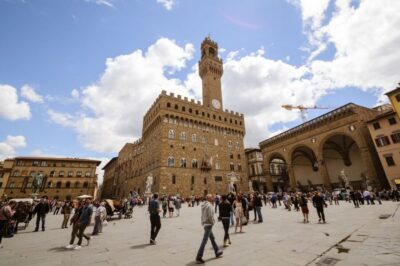
Venice In a Day: St Mark’s, Doges Palace Gondola Ride & City Tour
Read our review →Browse the lists this tour appears in