

REVIEW · FRANCE
Guided tour of the Château de Chambord
Chambord rewards curious visitors. This 90-minute visit makes France’s second most visited castle easier to understand, with lively stories about Francis I, court life, and the grand plan behind this extraordinary French Renaissance palace. I especially like the small groups of up to 10 and the interactive style, which keeps the tour from turning into a quiet march through empty rooms.
The double-helix staircase is the star. I also like that guide Sarah Guibout-Chatelain uses questions, humor, and role-playing to involve children and adults alike. The main drawback is practical: entrance tickets cost extra, and the chilly, drafty building has plenty of stairs but no elevator.
Key points to know before visiting Chambord
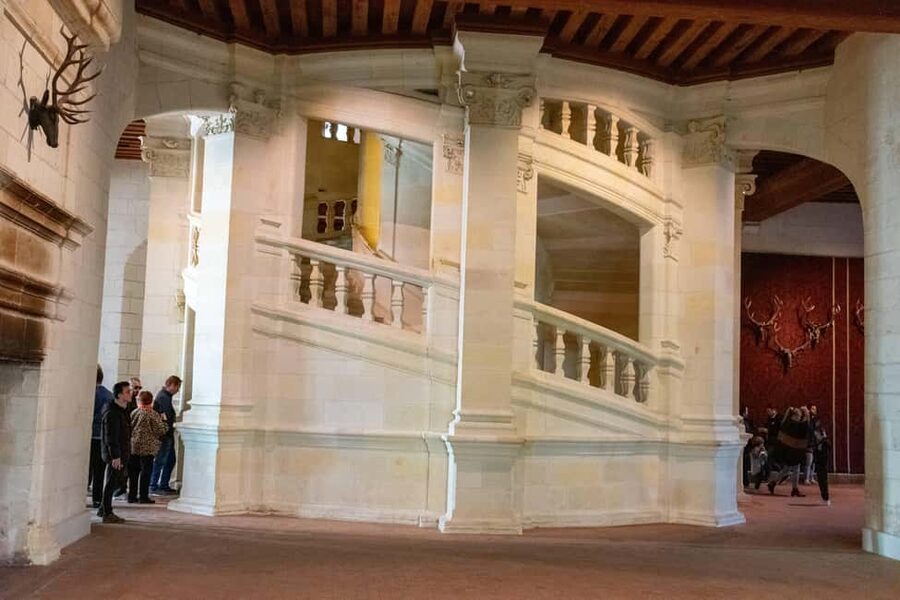
- The double-helix staircase is the tour’s big architectural moment: Two stairways twist around each other without meeting, making this one of the castle’s most memorable features.
- Guide Sarah Guibout-Chatelain brings the building to life: Her approach mixes clear explanations, questions, humor, and short scenes from court life.
- The tour ends on the castle terraces: You finish with views from above after working your way through the interior.
- You need a separate castle admission ticket: The $53 tour price covers the guide, microphone, and headphones, but not entry to Chambord.
- The building can be cold inside: It is open to the outside in places, so warm clothes matter even when the weather outside seems mild.
- This is a walking tour with stairs: It is not suitable for wheelchair users or people with mobility impairments.
Why Chambord works better with a guide
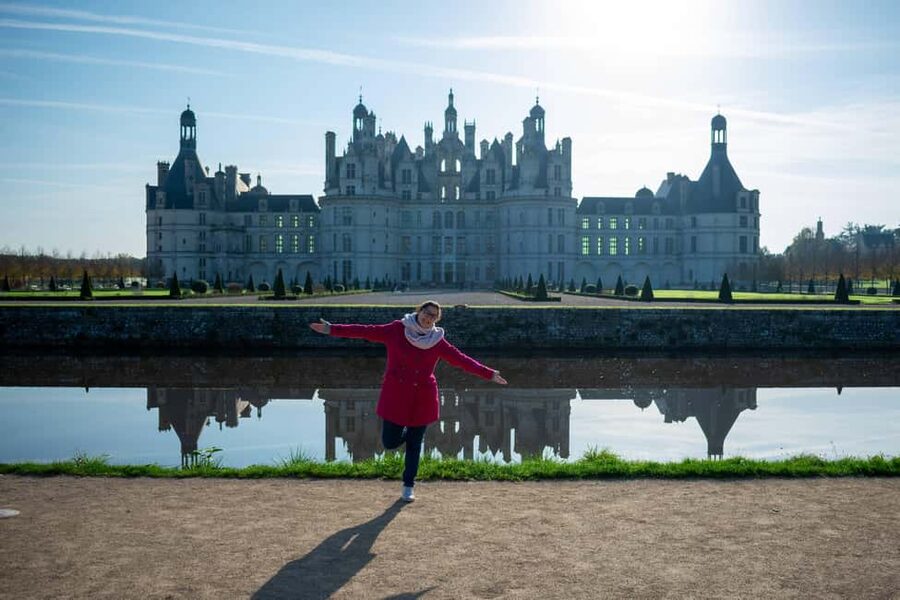
Chambord is not a small, tidy château where every room explains itself. Its size, unusual design, and grand royal purpose can leave you admiring the stonework without knowing what you are seeing or why it was built that way.
That is where this tour earns its keep. Sarah frames the castle around Francis I and his ambitious plan to create a palace worthy of the French Renaissance. You are not just shown walls, stairways, and terraces. You get a story about a king, a court, and a project that grew into one of Europe’s most famous castles.
I like the interactive format because it asks you to pay attention. Sarah may ask questions, invite you to picture yourself as a French courtier, or use the building itself as a prompt. That works well for families because children have something to do besides listen to a long stream of dates.
Adults benefit, too. A guide can point out details you would probably pass without a second thought. The tour also gives you a structure for the visit, which matters in a castle this large. Instead of wandering from room to room, you follow a clear story that ends on the terraces.
The experience is available in English and French. Some material may be presented in its original language, so ask for clarification if a phrase or historical term goes by quickly.
More Chateau and Wine Estate Tours in France
- Medoc or Saint Emilion Wine Tasting and Chateau from Bordeaux
★ 5.0 · 1,415 reviews - From Paris: Full-Day Loire Valley Chateaux Tour
★ 4.4 · 1,269 reviews - Versailles Château and Gardens Walking Tour
★ 4.5 · 727 reviews
Meeting your guide at the castle entrance
The meeting point is in front of the Château de Chambord entrance, though the exact point can vary according to the option you book. I would allow enough time to find the entrance and have your castle ticket ready before the guided portion begins.
The group is limited to 10 people. That is a useful size for an interactive visit. You can hear the guide more easily, and Sarah has a better chance to respond to questions or bring individuals into the discussion. One booking even resulted in a private visit because only two people attended, though you should not count on having the castle to yourselves.
The tour includes a microphone and headphones. These are important in a large stone building, where voices can echo and small groups can spread out near staircases or architectural details. The audio equipment also means you do not need to crowd around the guide to catch every word.
The 90-minute length is a good middle ground. It is long enough to give the castle a clear shape in your mind, but short enough to fit into a larger day at Chambord. You finish on the terraces, so you can continue exploring afterward if you have an admission ticket and time available.
Francis I and the palace built on a grand scale

The central story is Francis I and his bold plan for Chambord. Sarah explains how the castle became known as a jewel of the French Renaissance, while keeping the tone light enough for younger visitors.
That balance matters. A tour focused only on royal names and construction dates can lose you quickly. Here, the historical material is tied to the physical building. You learn about the king’s project while looking at the results of that project, which makes the story easier to follow.
The palace is famous for its architecture, and the tour gives that architecture a purpose. You can look at the design not just as decoration, but as a statement of wealth, power, and imagination. The building is meant to impress, and it still does.
I would especially recommend the guided format if this is your first visit. Without context, you may simply notice that Chambord is enormous and ornate. With Sarah’s explanations, the castle becomes a place shaped by a particular royal vision.
The tone also seems to be one of the experience’s strongest features. Sarah is described as enthusiastic, funny, and quick with information. That is useful in a building where the sheer number of details could otherwise become tiring.
The double-helix staircase, Chambord’s clever centerpiece
The famous double-revolution staircase is the part I would most want to see with a guide. Two stairways wind around the same central space, allowing people to move up and down without crossing paths in the ordinary way.
The design is more than a clever visual trick. It gives Sarah a natural way to involve you. You may be asked to imagine yourself as a member of the French court, moving through the castle while other people use the other side of the staircase. That small role-playing moment helps explain why the design was so memorable.
This is also where the interactive style makes the most sense. You are looking at a feature that is difficult to understand from a quick glance. A guide can direct your attention, explain how the two stairways relate to each other, and help you notice the effect as you climb.
The stairs come with a clear warning. You will need to climb them, and there is no elevator. Wear shoes that are comfortable for walking and steps, and consider the needs of everyone in your party before booking.
Strollers are allowed on the ground floor, but they must be left downstairs when the tour moves upstairs. That makes the experience less convenient for families with very young children. Unaccompanied minors are not allowed, so children must remain with an adult.
Same place, a different set of state rooms:
- Paris: Versailles Palace and Gardens Full Access Ticket
★ 4.6 · 41,579 reviews - Versailles: Skip-the-Line Tour of Palace and Gardens Access
★ 4.7 · 10,429 reviews - From Paris: Versailles Palace & Gardens with Transportation
★ 4.6 · 6,222 reviews - Versailles: Skip-the-Line Guided Palace Tour and Full Access
★ 4.6 · 5,214 reviews
Moving through the interior and up to the terraces
The visit involves about an hour and a half of walking and standing. There is no promise of a chair or long rest stop, so this is not a good choice if standing for that length of time is difficult.
As you move through Chambord, the guide’s job is to connect the rooms and architecture rather than simply point out isolated objects. The tour ends on the terraces, giving the route a satisfying finish. You work upward through the building and then step outside for views from the top.
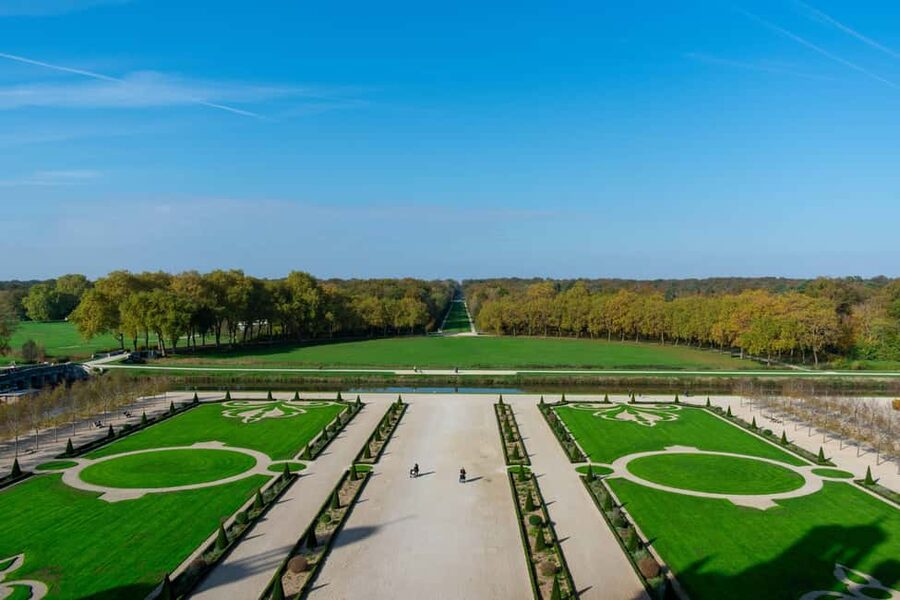
The terraces are particularly useful after the interior tour because they let you see Chambord from a different angle. Inside, you notice individual rooms, corridors, and stairs. From above, you can take in the scale of the whole palace and better understand the size of Francis I’s project.
The building’s openness creates one of the tour’s less comfortable details. Drafts can pass through the château, and the interior may feel cold, especially in winter. One visit in November prompted a warning that Chambord has very little heating. Bring a warm layer even if you do not expect severe weather.
Flash photography is not allowed. Selfie sticks are also prohibited, and you must not touch the exhibits. These rules are easy to follow, but they are worth knowing before you arrive with a camera or a large bag.
The $53 price and what you still need to pay
The tour costs $53 per person. That price covers the 90-minute guided visit with Sarah, plus the microphone and headphones. It does not cover admission to the Château de Chambord.
You need to buy the castle entrance ticket separately through the official ticket site or directly from the castle’s ticket office. This is the most important budget detail. The actual cost of your visit will be the guided tour price plus the required admission ticket.
Is $53 good value? I think it can be, particularly if you care about understanding the castle rather than simply walking through it. The group is small, the tour is led in person, and the guide adds interpretation that a self-guided screen cannot easily match.
That said, the value depends on your priorities. If you are happy to read signs, use an independent audio or tablet guide, and explore at your own pace, the extra tour cost may not suit your budget. If you want a human guide who can answer questions and keep children involved, the price is easier to justify.
One visitor specifically compared Sarah’s approach favorably with the iPad guides available at Chambord, finding her more engaging than a screen. That is the key difference here: you are paying for explanation, conversation, and a sense of flow.
The option to reserve now and pay later also helps if your Loire Valley schedule is still changing. You can cancel up to 24 hours ahead for a full refund, according to the booking terms.
Who will enjoy this tour most

I would recommend this experience to first-time visitors who want a clear introduction to Chambord. It is also a strong choice for families with children old enough to answer questions, walk for 90 minutes, and climb stairs.
History fans should appreciate the focus on Francis I and the French Renaissance. Architecture fans will get the most from the staircase and the explanations of how the palace was designed. The tour also suits anyone who prefers a small group over a large crowd following a flag.
The experience may be less suitable if you need frequent seating, cannot climb stairs, or use a wheelchair. It is specifically not suitable for wheelchair users or people with mobility impairments.
I would also think carefully about the season. Cold weather does not cancel the tour, but the open, drafty design of the building can make winter visits uncomfortable. Warm clothing is not a minor suggestion here. It may determine whether you enjoy the final 30 minutes.
Bring a passport or ID card for children if required for your booking. Large bags and luggage are not allowed, so keep your belongings small and practical.
Is Sarah’s style right for you?
Sarah’s strongest quality is her ability to make the visit feel active. She explains quickly, uses humor, and asks you to participate instead of delivering a speech while everyone looks at the floor.
Several details point to a guide who cares about the human side of the place. Sarah is praised for being easy to find, communicative, enthusiastic, and able to make the past feel close. Her approach seems especially effective for visitors who might otherwise lose interest in a long architectural explanation.
The fast pace can be a benefit, though some people may prefer a slower, quieter tour. If you want to stop for extensive photography or examine every room at your own speed, a guided route will naturally limit that freedom.
I would treat the tour as an introduction, not a complete examination of every part of Chambord. Its job is to give you the main story, highlight the most striking architecture, and leave you ready to continue on your own.
Should you book the Chambord guided tour?
Book it if you want the castle to make sense, not just look impressive. The $53 fee is an added cost because admission is separate, but the small group, personal guidance, and memorable double-helix staircase explanation offer real value.
I would book early if this is important to your schedule, since the group is limited to 10 people. Choose warm clothing, comfortable shoes, and a time when you can walk and climb without rushing.
Skip it if you need a fully accessible visit, dislike interactive guiding, or prefer to explore every room independently. For most first-time visitors who want history, architecture, and a friendly guide in one short visit, Sarah’s tour is a practical way to begin Chambord.
FAQ
How long does the Château de Chambord tour last?
The guided tour lasts 90 minutes, or one and a half hours.
Is the castle entrance ticket included?
No. You must buy the Château de Chambord entrance ticket separately through the castle’s official ticket site or ticket office.
What is included in the $53 price?
The price includes a 90-minute guided tour with a local guide, plus a microphone and headphones to help you hear the commentary.
What languages are available?
The live tour guide is available in English and French. Some content may be presented in its original language.
How large is the tour group?
The group is limited to 10 participants.
Where does the tour meet?
The meeting point is in front of the Château de Chambord entrance. The exact meeting point can vary according to the option booked.
Do I need to climb stairs?
Yes. The tour includes climbing the castle steps, including the famous double-helix staircase, and there is no elevator.
Is the tour suitable for wheelchair users?
No. The activity is not suitable for wheelchair users or people with mobility impairments.
What should I bring and what is not allowed?
Wear suitable shoes and warm clothing because the castle can be cold and drafty. Bring a passport or ID card for children. Large bags, luggage, selfie sticks, and flash photography are not allowed, and you may not touch the exhibits.
Just added around France
- Pierrefonds: Château de Pierrefonds Entrance Ticket★ 4.7 · 152 reviews
- Paris: Versailles Palace and Queen Hamlet E-Bike Tour★ 5.0 · 126 reviews
- Petit Palais Paris Museum of Fine Arts Tour with Tickets★ 4.2 · 3 reviews
- Paris: Versailles Golf Cart & Bike Tour with Palace Entry★ 4.8 · 58 reviews
- Paris: Palace of Versailles Private Tour with Transportation★ 5.0 · 2 reviews
- Paris: Royal Palais, Tuileries and D’Orsay Tour★ 4.8 · 3 reviews
- PARIS: Private transfer Château Versailles van 7 people 4H★ 3.0 · 4 reviews
- Paris: Palace of Versailles Ticket with Private Transfer★ 4.4 · 24 reviews
Chateau and Wine Estate Tours, compared.

Medoc or Saint Emilion Wine Tasting and Chateau from Bordeaux
Read our review →
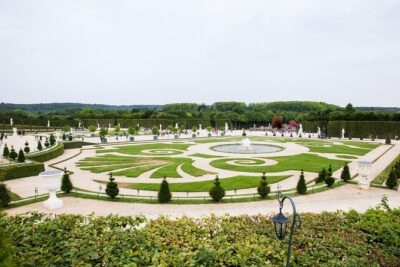
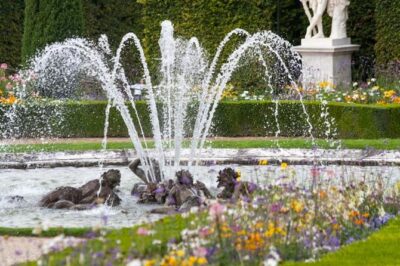
Versailles Château and Gardens Walking Tour from Paris by Train
Read our review →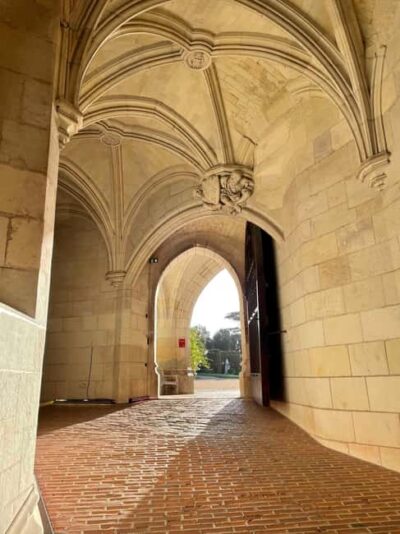
Loire Valley: Château Royal d’Amboise Entrance Ticket
Read our review →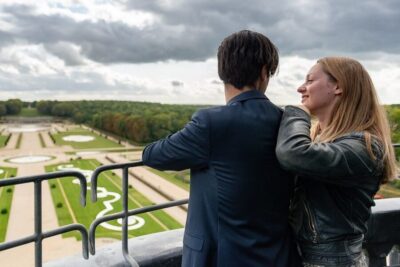
Fontainebleau & Vaux-le-Vicomte Châteaux Day Tour from Paris
Read our review →
Browse the lists this tour appears in