
REVIEW · VIENNA
Vienna: Imperial Treasury in the Hofburg Palace
Royal treasure rarely feels this close. Inside the Hofburg’s oldest section, the Swiss Wing, you can see the Austrian Imperial Crown, Holy Roman Empire regalia, Habsburg jewels, and objects that sit halfway between history and legend. I especially like the superb display of crowns and ceremonial objects, plus the chance to see an enormous emerald and parts of Empress Elisabeth’s jewelry. The main drawback is practical: the $18 admission does not include a guided tour or audio guide, and some visitors have had to exchange a printed voucher at the ticket desk rather than walk straight in.
Give yourself about an hour for a brisk visit, or 90 minutes if you want to read labels and take in the religious objects. Printed vouchers are important, and the ticket process can be less simple than expected. Still, this is one of the Hofburg’s most rewarding stops, particularly if you want to understand how the Habsburg family used crowns, relics, clothing, jewels, and ceremony to display power.
Key things to know before visiting
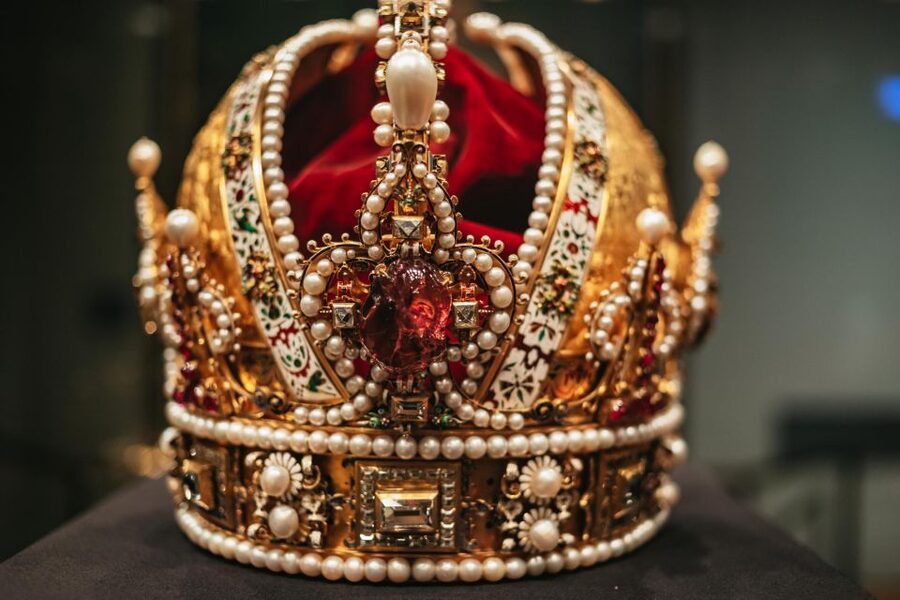
- The Imperial Crown is the star: See the crown of the Holy Roman Empire and the Austrian Imperial Crown among the most important objects in the collection.
- The Swiss Wing is part of the story: The Treasury occupies the oldest section of the Hofburg Palace, giving the visit a strong setting as well as fine objects.
- Expect more than jewelry: Religious relics, royal clothing, keys, tabards, ceremonial objects, and dynastic treasures make this more than a crown display.
- Legendary objects share the cases: Look for the Holy Lance, the agate bowl linked with the Holy Grail, and the so-called horn of a unicorn.
- Plan on one to one and a half hours: You can move through quickly, but the labels and audio material can extend the visit considerably.
- Bring the right ticket format: A printed voucher is required, and a digital code may need to be exchanged at the counter.
Entering the Hofburg’s oldest wing
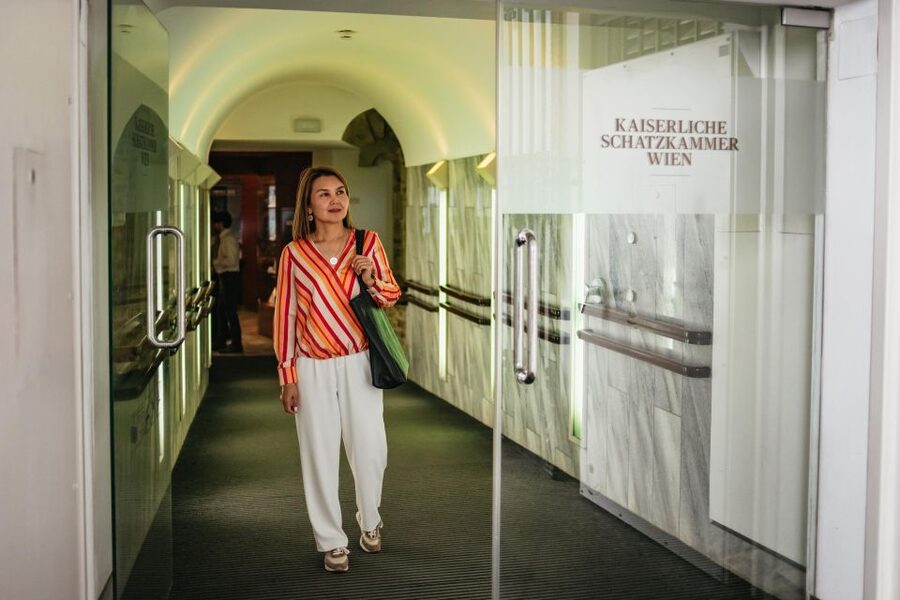
The Imperial Treasury sits in the Swiss Wing of Vienna’s Hofburg Palace. That location matters. You are not entering a modern museum built to hold a random collection of precious things. You are visiting a historic part of the imperial residence where the setting helps explain the objects on display.
The name Schatzkammer, or treasury, is fitting. The collection covers centuries of Habsburg rule and brings together secular, religious, dynastic, and ceremonial objects. The range is part of its appeal. One room may focus on royal regalia, while another presents church treasures or the clothing and symbols of a powerful order.
The entrance experience deserves a little planning. The admission is listed at $18 per person, and the ticket is valid for one day. That is a fair price for the amount of material on display, especially if you take time with the labels. However, it is not quite a skip-the-line arrangement if you must exchange a voucher for an actual ticket.
You need a printed voucher, so do not rely only on a phone QR code. A digital code has caused confusion at the counter, and some visitors have waited in line before receiving the museum ticket. If you already have a printed voucher, the process should be easier.
More Schonbrunn and Hofburg Palace Tours in Vienna:
- Vienna: Schönbrunn Palace & Gardens Skip-the-Line Tour
★ 4.7 · 7,739 reviews - Vienna: Skip-the-Line Schönbrunn Palace & Gardens Tour
★ 4.8 · 5,411 reviews - Vienna: Skip the Line Schönbrunn Palace and Gardens Guided Tour
★ 4.5 · 1,540 reviews
The imperial crowns and Holy Roman Empire regalia
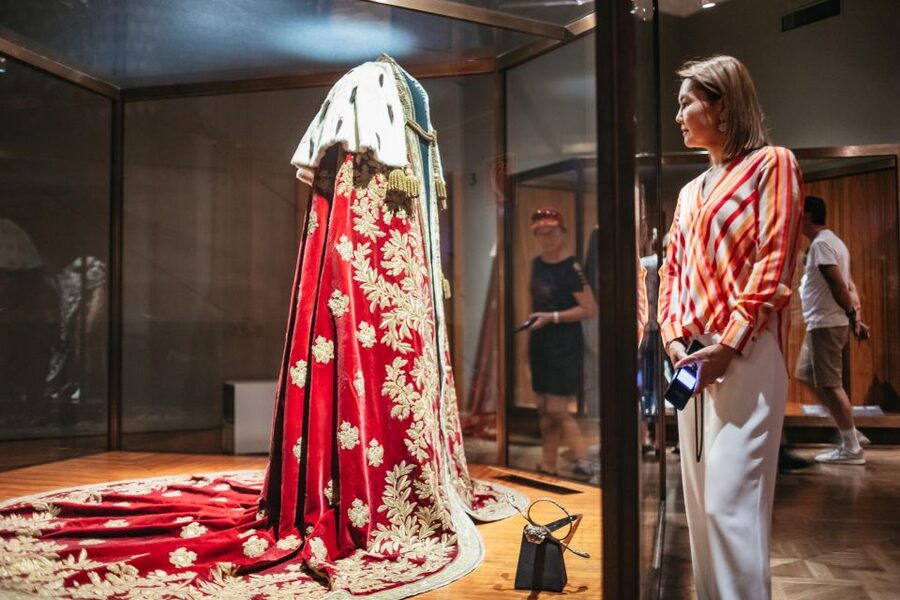
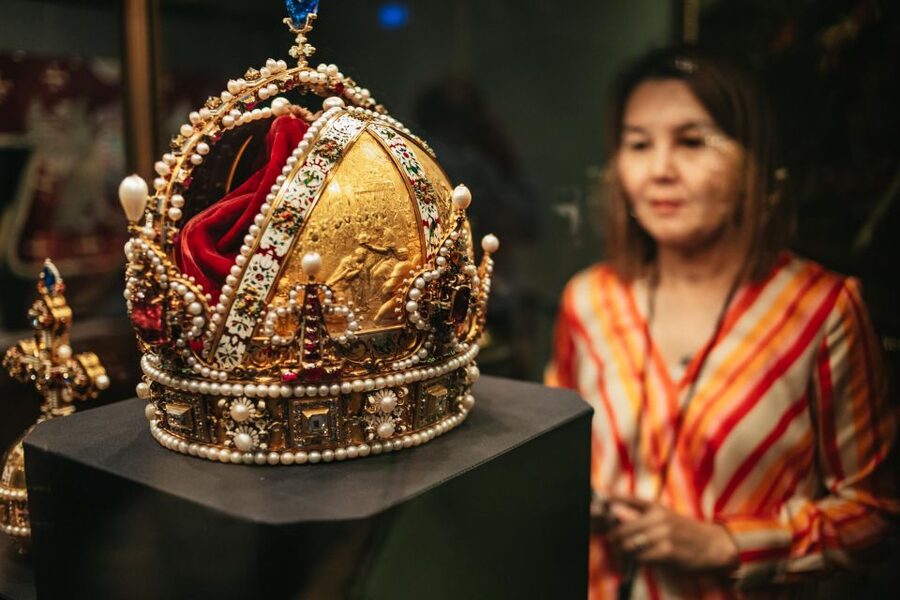
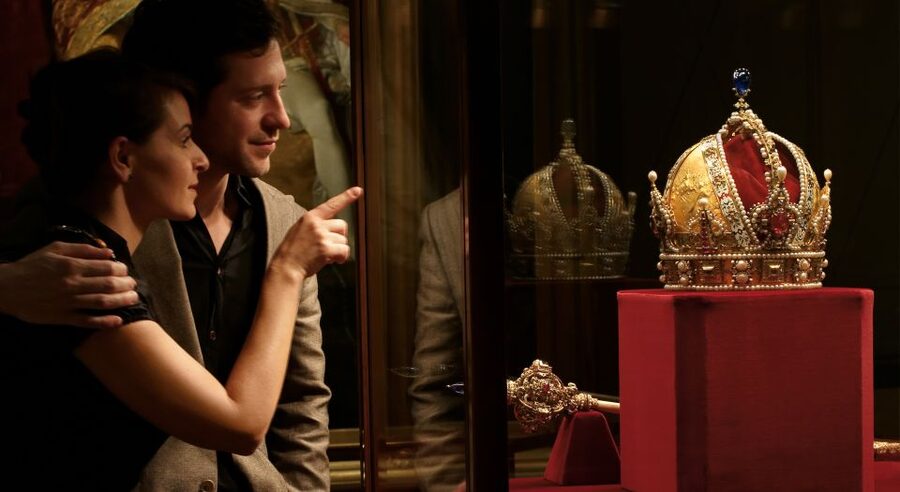
Most people come for the crowns, and the collection delivers. The Imperial Crown of the Holy Roman Empire is the object that gives the visit its grandest political meaning. It was not simply a beautiful piece of goldsmithing. A crown like this represented authority over a vast realm and helped turn a ruler into a public symbol.
The Austrian Imperial Crown is another major highlight. Its form, stones, and careful construction show how royal objects were made to communicate status from across a ceremonial hall. You can study the materials up close, then step back and think about how these pieces once appeared in processions and official settings.
I find the crowns more interesting when viewed alongside the other regalia. A crown alone can become a decorative object. Together with ceremonial clothing, orders, religious pieces, and dynastic symbols, it shows how rule was presented and reinforced.
The collection also includes the crown jewels of the Holy Roman Empire. This is where the Treasury becomes especially valuable for anyone visiting Vienna’s other imperial sights. Objects and references connected to the Habsburgs appear across the city, and seeing the actual regalia early in your stay can give later palace visits more meaning.
Do not rush this section. Look for the workmanship, the gemstones, and the way every part has a public purpose. These were objects made to be seen.
Habsburg jewels, emeralds, and Empress Elisabeth
The jewelry rooms offer a more personal side of the dynasty. Here you can see jewelry belonging to Habsburg empresses and princesses, including parts of the original jewelry associated with Empress Elisabeth, better known as Sisi.
These pieces help balance the formal grandeur of the crowns. A crown tells you how a ruler wanted to be seen by a nation. A necklace, brooch, or personal ornament can suggest how imperial women appeared at court and how luxury entered daily life.
The collection includes major gemstones, among them one of the largest emeralds in the world. Its size is the first thing you notice, but the larger point is how the Habsburgs gathered rare materials from across their territories and beyond. The stone is not merely an expensive object. It reflects the financial reach and international connections of the dynasty.
Lighting has been a concern for some visitors, so do not expect every piece to sparkle dramatically from every angle. Some cases can feel dim, particularly for small jewelry. On the other hand, subdued lighting can protect delicate objects and keep the rooms from feeling like a commercial jewelry showroom.
If you enjoy fashion, court life, or the story of Sisi, allow extra time here. If you mainly want the crowns, you can move through the jewelry rooms more quickly.
The Order of the Golden Fleece and court ceremony
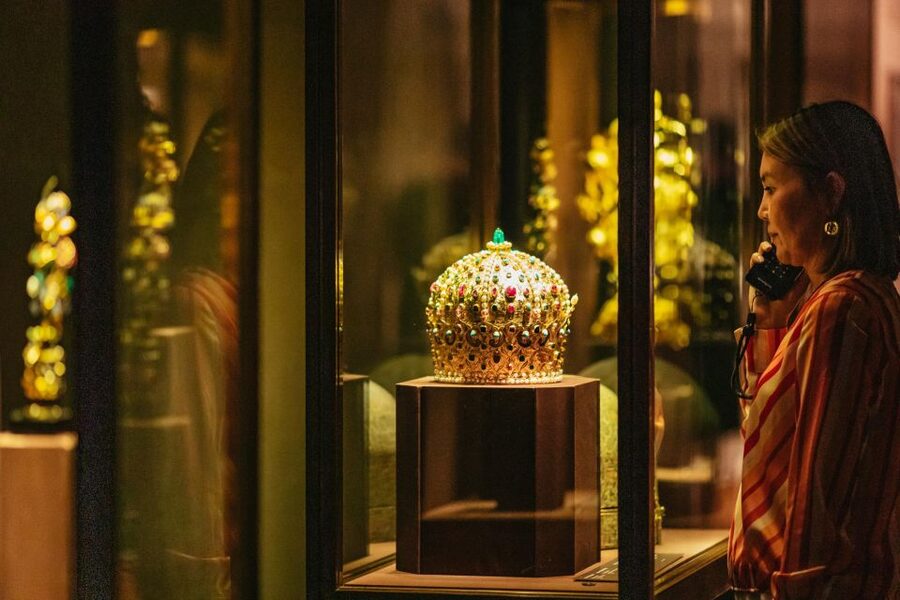
The Treasury’s display of the Order of the Golden Fleece adds a useful layer to the visit. Orders such as this were not casual clubs. They helped rulers build alliances, reward loyalty, and create a visible circle around the court.
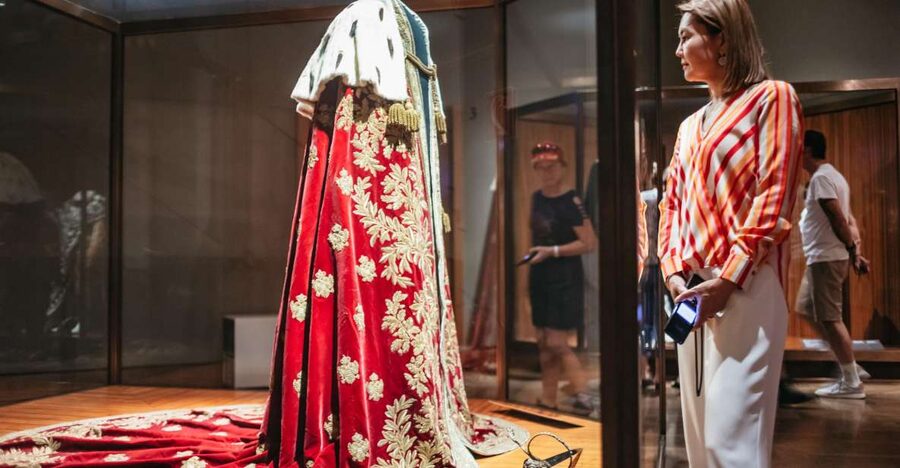
Ceremonial clothing makes that system easier to understand. Tabards, robes, and insignia were designed to identify rank and belonging. One visitor found the chamberlains’ keys and various tabards especially interesting, and I can see why. These are less instantly famous than the crowns, but they reveal how the court functioned day by day.
The keys are a fine example of the collection’s quieter pleasures. They connect an enormous imperial machine with the people who served it. The tabards show how ceremony turned a room full of officials into a carefully ordered display.
This section is worth your attention if you like political history and court ritual. It may feel less dramatic than the jewels, but it gives the crowns a working context. The Habsburgs did not rule through decoration alone. They used an elaborate structure of offices, honors, clothing, and public ceremony.
A few more palace visits around Vienna worth a look
- Vienna: Schönbrunn Palace & Garden Skip-the-Line Guided Tour
★ 4.1 · 1,240 reviews - Vienna: Panorama Train Tickets to explore Schönbrunn Palace
★ 4.3 · 1,164 reviews - Vienna: Skip-the-Line Schönbrunn Palace and Gardens Tour
★ 4.8 · 1,089 reviews - Skip-the-Line Schonbrunn Palace Guided Tour and Vienna Historical City Tour
★ 3.5 · 940 reviews
Burgundy treasures and the cradle of Napoleon II
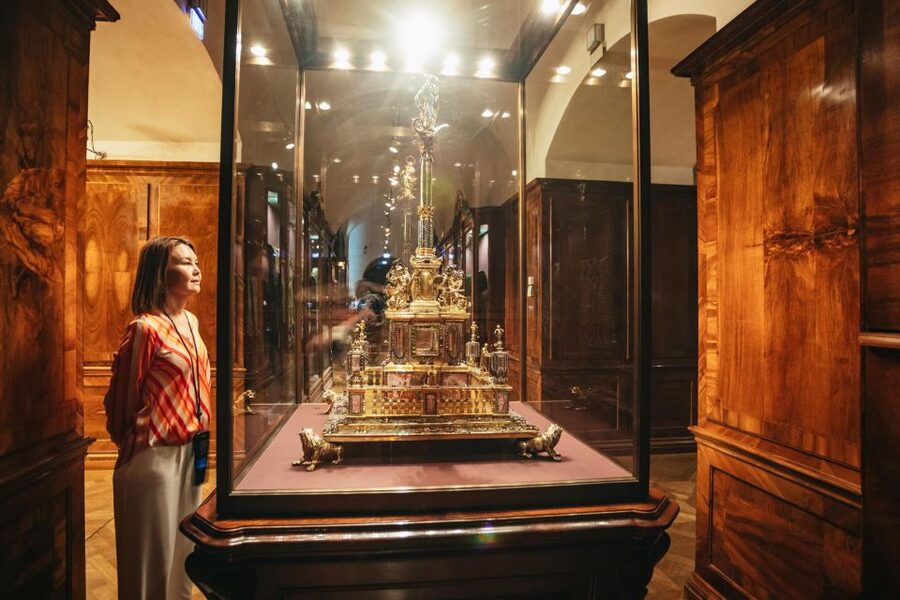
The collection reaches back before the Habsburgs’ later imperial image. Treasures connected with 15th-century Burgundy show the dynastic wealth that entered Habsburg hands through marriage, inheritance, and political connection.
This is an important reminder that royal collections grow over generations. A treasury is not assembled in one shopping trip. Objects move between families, territories, churches, and ruling houses. The Burgundy pieces help you see the Habsburg collection as a record of changing European power.
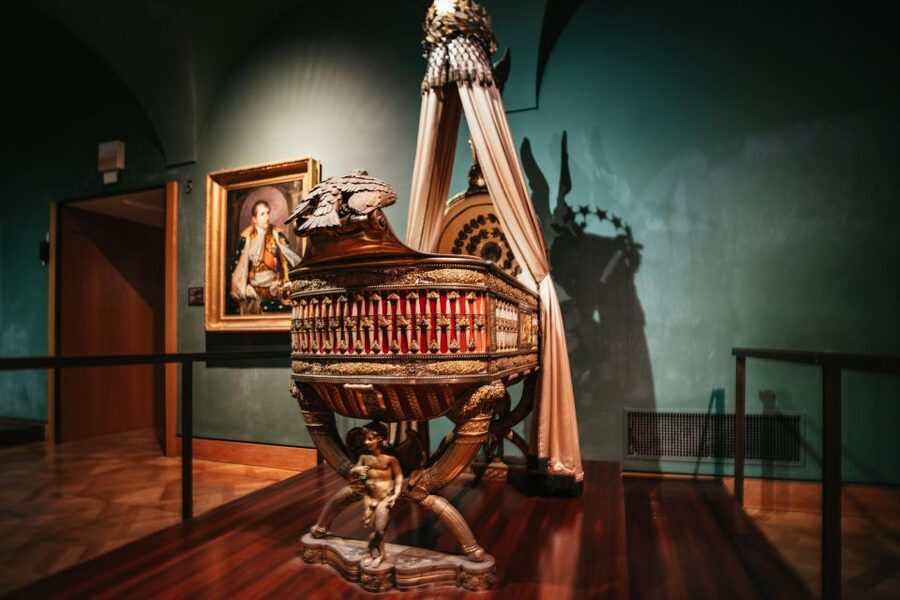
Another memorable object is the cradle of the King of Rome, Napoleon II. The cradle connects the Treasury with the Napoleonic period and with the complicated family politics of Europe. It is also a welcome change of scale after the small, precious items in the jewelry cases.
I would not visit solely for the cradle, but it is one of the objects that makes the collection feel varied. You are not simply walking past gold and diamonds. You are seeing objects linked with birth, inheritance, ceremony, faith, and military or political authority.
Holy relics and objects of legend
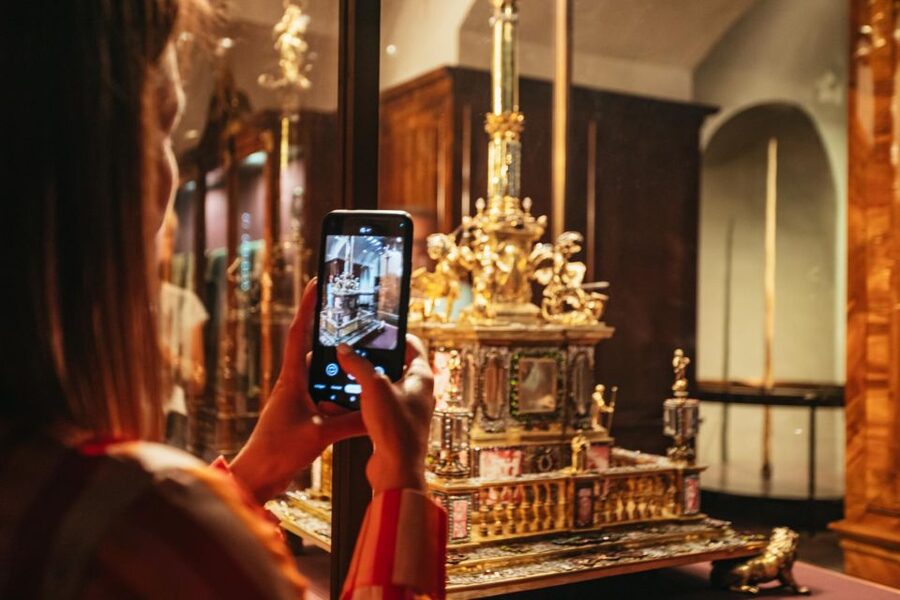
The religious treasures are among the most surprising parts of the visit. The Holy Lance, dated to the 8th century, is presented as one of the collection’s major legendary relics. Its importance comes from the belief attached to it, as well as from its age and connection with rulers who treated sacred objects as sources of authority.
The enormous agate bowl is associated with the Holy Grail. Whether you approach that connection through faith, legend, or medieval politics, the object is fascinating because it shows how material things can gather stories over centuries.
Then there is the horn of a unicorn, or what was once identified as one. Today, its presence reveals how earlier generations understood rare natural objects. A large tusk or unusual horn could become part of a royal treasury because people assigned it a place in the world of marvels and religious meaning.
These displays are best approached with curiosity rather than modern literalism. The point is not to prove the legend. The point is to see how rulers, churches, and collectors gave objects power by attaching stories to them.
For me, this is where the Treasury moves beyond a showcase of wealth. The collection also records the beliefs and imagination of the people who preserved these items.
How long to spend inside
A fast visit takes about an hour. That is enough to see the main crowns, jewels, religious objects, and ceremonial pieces without reading every label.
Plan on about 90 minutes if you want to finish the full exhibition at a relaxed pace. If you use an audio guide and listen to everything, the visit can take several hours. Some people prefer that slower approach because the objects make more sense when you know who owned them and how they were used.
The layout is generally manageable, but it can feel confusing at first. Clear labels help, although the route may not always seem obvious. Take a moment at the beginning to get your bearings instead of moving quickly from case to case.
The collection is not enormous by Vienna museum standards, which works in its favor. You can see the major highlights without spending half a day indoors. If you need a break, staff can explain how to leave and return later, making it easier to divide the visit.
Audio guides and guided visits
The basic ticket includes entrance only. A guided tour is not included, and you may come with your own guide. The booking information also lists the activity as a small group, limited to 10 participants, but that should not be confused with a built-in guided tour.
An audio guide can add a great deal. The objects are visually impressive, but their political and religious meaning is not always obvious from the case alone. If an audio option is available when you visit, I would consider paying for it, especially if you do not already know the Habsburg story.
There have been especially positive comments about guides named Petee and Alex. Petee was praised for explaining the Habsburgs, Franz Joseph, and Sisi while answering questions, and Alex received similar praise for his command of the material. Since guided access is not part of the standard admission, check exactly what your chosen ticket includes before paying.
Adult groups should also note the guide rule. One guide may receive free admission for a group of more than 10 people when accompanying that group in the museum. Groups of fewer than 10 do not receive a free guide place, and state-certified tourist guides generally enter free.
Who will enjoy the Imperial Treasury most?
I recommend this experience for:
- Anyone interested in the Habsburgs, royal families, or European court life
- Visitors who enjoy crowns, jewelry, religious objects, and ceremonial clothing
- People who want a manageable museum stop inside the Hofburg
- Families with older children who can appreciate unusual objects and legends
- Visitors planning other imperial sights in Vienna and wanting useful background first
Children and young people under 19 generally receive free admission, which makes this a practical choice for families. School groups under 19 must register through the museum’s booking department.
You may enjoy it less if you want a fully guided experience included in the price. You should also allow time for the ticket exchange and arrive with the required printed voucher.
Is $18 good value?
At $18, the Treasury is good value if you spend at least an hour inside. The collection contains major European regalia, Habsburg jewelry, sacred objects, rare stones, and unusual items that you will not see together elsewhere in Vienna.
The value drops if you rush through in 30 minutes or expect an all-inclusive guided tour. The ticket is admission only, and audio or guide services may cost extra. Still, the compact size makes it easy to fit between other Hofburg sights, and you do not need to commit an entire day.
I would place this ahead of a generic palace room visit if you prefer objects with a clear story. The crowns and relics provide strong visual rewards, while the clothing, keys, and Burgundy treasures reward closer attention.
Should you book the Imperial Treasury?
Book it if you want the most concentrated look at Habsburg power in Vienna. The Austrian Imperial Crown, Holy Roman Empire regalia, Sisi’s jewelry, the giant emerald, and the religious relics make this a memorable museum stop.
I would book with a printed voucher, allow 60 to 90 minutes, and check whether an audio guide or guided visit is included in your particular arrangement. If you want explanations from a person, look for a guided option rather than assuming the $18 entrance ticket provides one.
Skip it only if your Vienna schedule is already packed with museums and royal interiors, or if you have little interest in ceremonial objects. For most visitors who want to understand the Habsburg world beyond grand rooms and famous names, this Treasury earns its place on the Hofburg route.
FAQ
Where is the Imperial Treasury located?
It is in the Swiss Wing of the Vienna Hofburg Palace, the oldest part of the Hofburg complex.
How much does admission cost?
The listed price is $18 per person.
How long is the ticket valid?
The ticket is valid for one day. You should check availability for the starting times offered.
Is a guided tour included?
No. The entrance ticket includes admission only. A guided tour is not included, though you may come with your own guide.
Is an audio guide included?
The listed inclusions do not include an audio guide. Audio guide availability and pricing should be confirmed when booking or at the museum.
Do children enter free?
Children and young people under 19 generally receive free admission. School groups under 19 must be registered through the museum’s booking department.
Is the museum wheelchair accessible?
Yes, the Imperial Treasury is listed as wheelchair accessible.
Just added around Vienna
- Palais Lobkowitz Audio Guide Tour★ 4.0 · 3 reviews
- Imperial Gala Concert at Palais Auersperg★ 4.7 · 111 reviews
- Schönbrunn Palace & Gardens Tour★ 4.2 · 42 reviews
- Belvedere Palace & Museum Tour★ 4.5 · 18 reviews
- Vienna: Skip-the-Line Schonbrunn Palace Private Tour★ 4.8 · 85 reviews
- Skip-the-line Schonbrunn Palace Rooms & Gardens Private Tour★ 4.5 · 81 reviews
- Vienna Private City Tour: Palaces, Churches & Sacher Cake Option★ 4.5 · 41 reviews
- Private Schönbrunn Palace and Gardens Tour★ 5.0 · 46 reviews
Schonbrunn and Hofburg Palace Tours, compared.
Schönbrunn Palace & Gardens Skip-the-Line Tour
Read our review →
Skip-the-Line Schönbrunn Palace & Gardens Tour
Read our review →
Bus & Schönbrunn Palace Skip-the-Line Guided Tour
Read our review →
Skip the Line Schönbrunn Palace and Gardens Guided Tour
Read our review →
Schönbrunn Palace & Garden Skip-the-Line Guided Tour
Read our review →
Panorama Train Tickets to explore Schönbrunn Palace
Read our review →
Skip-the-Line Schönbrunn Palace and Gardens Tour
Read our review →
Skip-the-Line Schonbrunn Palace Guided Tour and Vienna Historical City Tour
Read our review →Browse the lists this tour appears in