
REVIEW · VIENNA
Vienna: Imperial Carriage Museum in Schönbrunn Palace Ticket
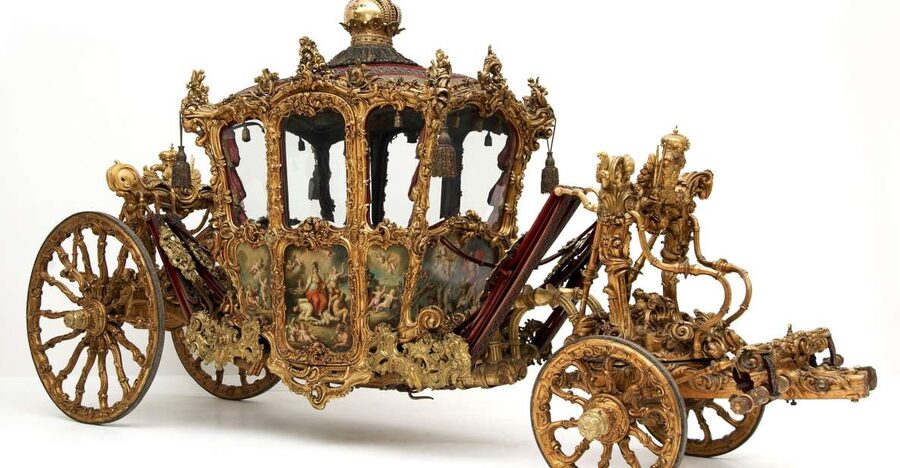
A royal coach ride without the ride. Vienna’s Imperial Carriage Museum offers a close look at the grand vehicles, travel coaches, and personal items tied to Maria Theresia, Napoleon, Franz Joseph, and Empress Elisabeth. I especially like the Baroque imperial coach and the well-planned Sisi Trail, which connects Elisabeth’s carriages with her saddle, riding chapel, and original dresses. The main drawback is practical: your voucher must be printed and exchanged at the museum, a nuisance if you arrive with only a phone.
This is a compact, focused visit rather than a guided tour. I like that the $14 ticket gives you a full day of validity and that you can add an audio guide when booking. You should allow enough time to print the voucher before reaching Schönbrunn, and remember that a guide is not included unless you bring your own.
Key points at a glance
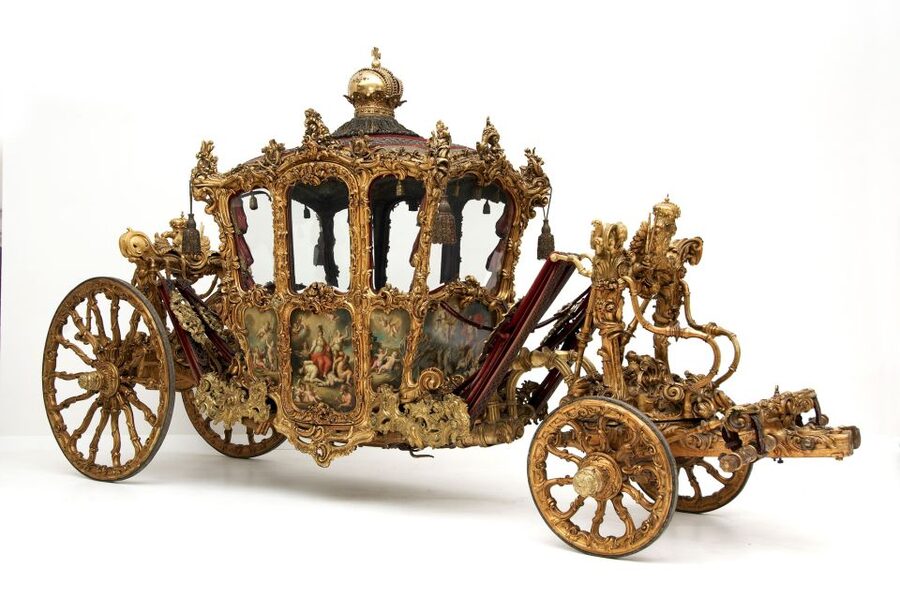
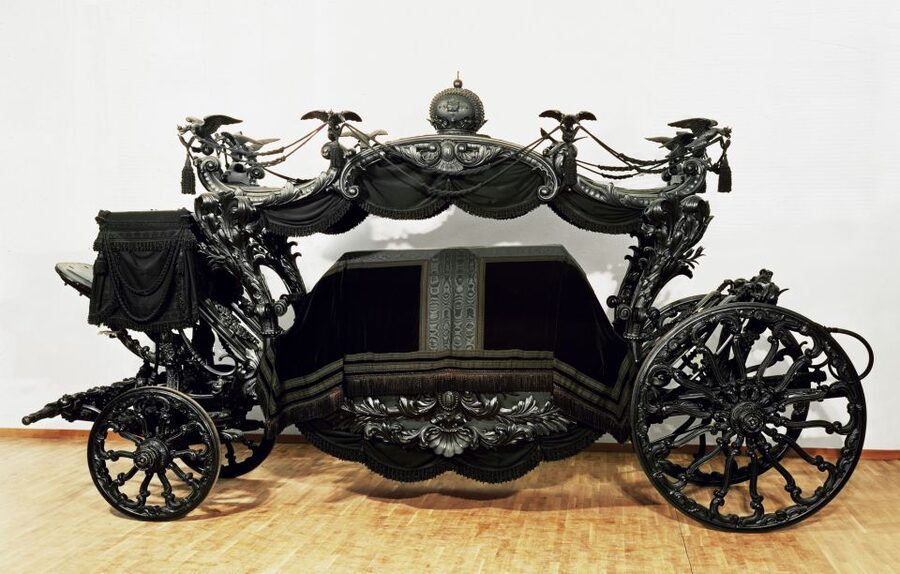
- The Baroque imperial coach is the main event: Its size, decoration, and ceremonial purpose show how rulers turned transport into theater.
- The Sisi Trail adds personal detail: Empress Elisabeth’s carriages appear beside her only surviving saddle, riding chapel, and original clothing.
- The collection covers several royal lives: Maria Theresia, Napoleon, Franz Joseph, and Habsburg children all appear through their vehicles.
- The visit is flexible: Your ticket is valid for one day, so you can fit the museum around Schönbrunn Palace plans.
- The audio guide is optional: An Italian audio guide was praised as concise and useful, though you need to select that option when booking.
- Print before you go: A printed voucher is required, and the museum exchanges it for the admission ticket.
Why these carriages tell more than a palace room
A carriage can look like a fancy object behind glass. Here, it works more like a moving biography.
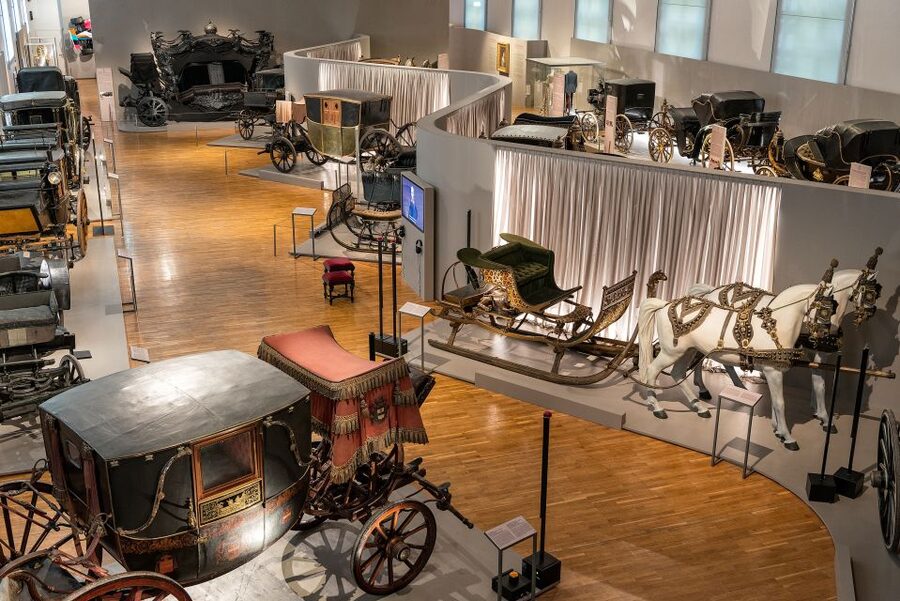
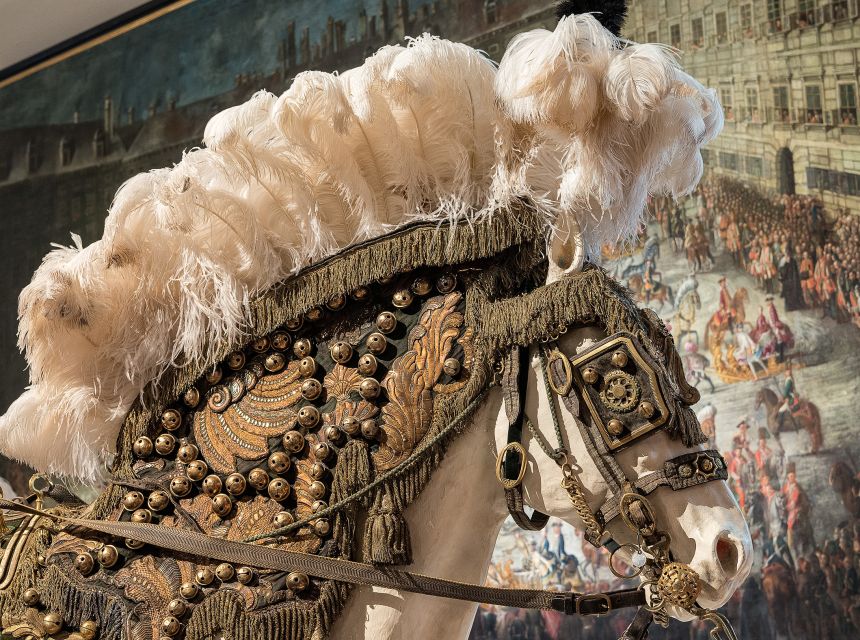
The vehicles show how members of the Habsburg family traveled, celebrated public events, moved between residences, and presented themselves to the people around them. A huge ceremonial coach tells you one thing about power. A comfortable traveling coach tells you something else about distance and daily life. A small children’s carriage gives the collection a softer, more human touch.
That range is one of the museum’s strengths. You are not looking at one repeated type of object. You move from formal state vehicles to practical travel coaches and then to charming carriages made for princes and princesses.
I find this useful if you are visiting Schönbrunn Palace and want a subject beyond rooms, portraits, and imperial decoration. The museum gives you a fresh way to think about court life. Royal authority did not stop at the palace door. It rolled through Vienna in carved wood, polished metal, fine fabric, and teams of horses.
More Schonbrunn and Hofburg Palace Tours in Vienna:
- Vienna: Schönbrunn Palace & Gardens Skip-the-Line Tour
★ 4.7 · 7,739 reviews - Vienna: Skip-the-Line Schönbrunn Palace & Gardens Tour
★ 4.8 · 5,411 reviews - Vienna: Imperial Treasury in the Hofburg Palace
★ 4.4 · 1,791 reviews
The Baroque imperial coach earns your first close look
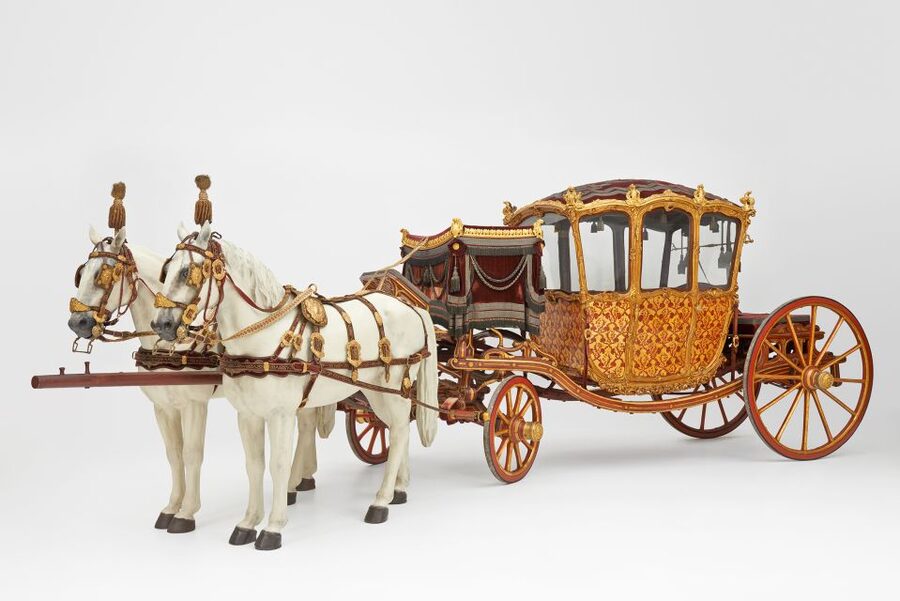
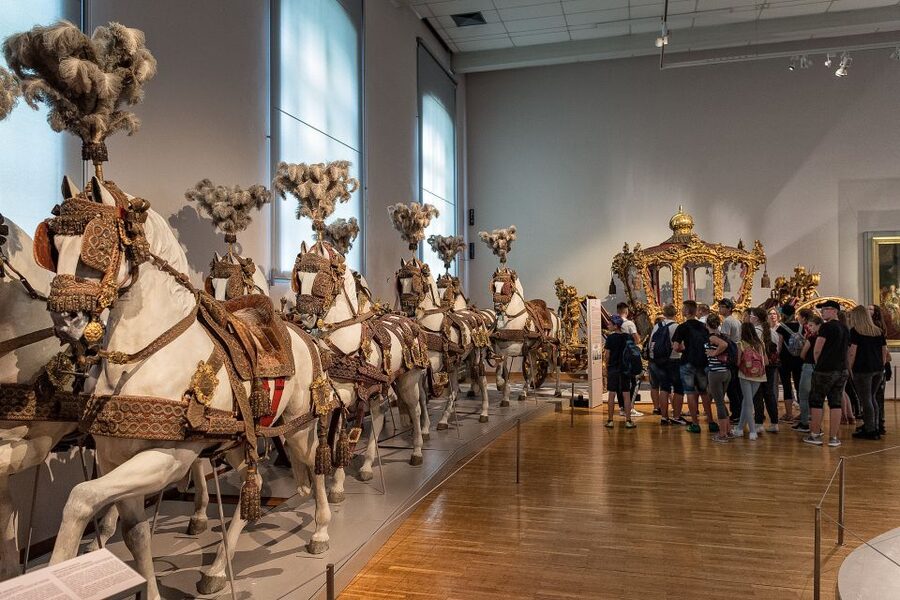
The Baroque imperial coach is the clear centerpiece. Expect a vehicle built for ceremony, not modesty. Its purpose was to make an arrival memorable, and its scale and decoration help explain why royal transport mattered so much.
Take your time here rather than treating it as one more object on a quick museum circuit. Look at how the coach announces status from every angle. Even without a guided explanation, you can read the message: this was not simply a way to get from one place to another. It was a public display of rank.
The coach also gives the rest of the collection a useful point of comparison. After seeing the grandest vehicle, the more practical coaches feel different. You begin to notice comfort, size, access, and purpose instead of seeing every carriage as equally formal.
If you are short on time, start here. Then continue to the state carriages and travel coaches. That order gives the museum a clear shape and prevents the display from becoming a blur of gilded wheels and upholstery.
Maria Theresia, Napoleon, and Franz Joseph in one collection
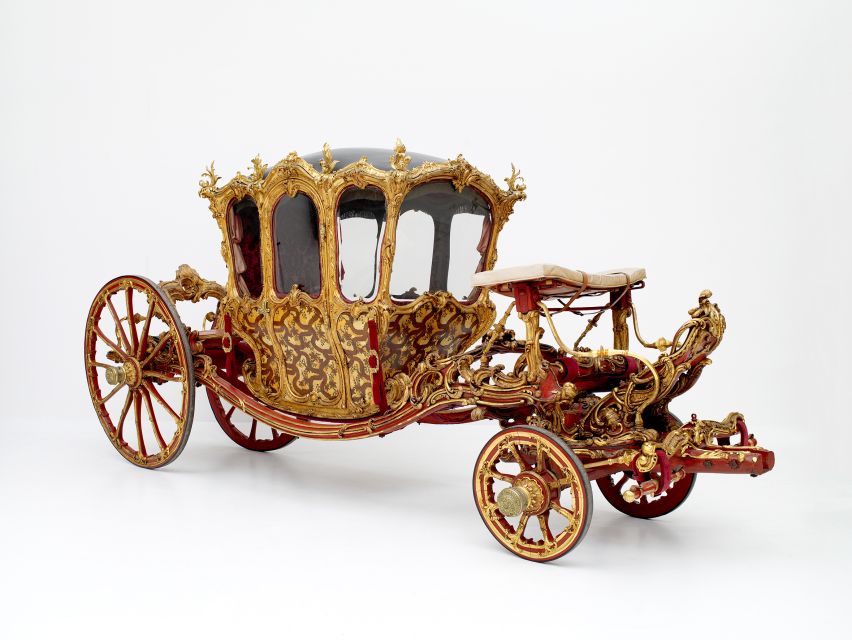
The museum follows the vehicles connected with several major rulers, including Maria Theresia, Napoleon, and Franz Joseph. Each name carries a different story, but the objects keep the focus on real things: how people traveled and how they wanted to be seen.
Maria Theresia’s carriages connect the collection to the long Habsburg period. Napoleon’s vehicles bring in a ruler whose presence reshaped much of Europe. Franz Joseph’s carriages point to the later imperial era and the public image of the monarchy.
You do not need to know every date before entering. The carriages give you a visual route through changing court life. If you enjoy history, you will find plenty to examine. If your history knowledge is limited, the collection still works because the objects are immediately understandable.
The best approach is to ask a simple question at each display: was this made for ceremony, for long-distance travel, for everyday movement, or for a child? That question helps you see the differences in design and purpose.
Following the Sisi Trail through Empress Elisabeth’s life
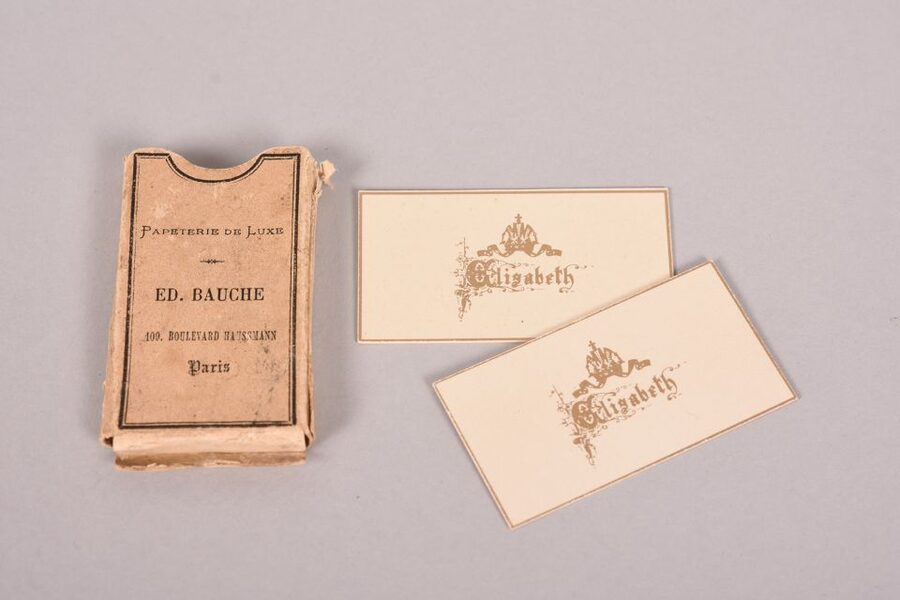
The Sisi Trail is likely the most personal part of the museum. It focuses on Empress Elisabeth’s carriages, but it does not stop with the vehicles. You also see personal objects, including her only extant saddle, her riding chapel, and sumptuous original dresses.
Those items change the mood of the visit. A carriage is public and ceremonial. A saddle or dress feels more closely tied to the person who used it. The display gives you a better sense of Elisabeth as an individual, not only as a famous imperial figure.
Her riding chapel is especially unusual. The supplied information does not spell out every detail of the object, so you should let the display and audio guide provide the explanation. Still, its inclusion shows how the museum connects transport with private habits and daily routines.
The original dresses add another layer. They help you picture how Elisabeth’s public appearance was managed, while the saddle points toward her interest in riding. Together, the objects make the Sisi Trail more varied than a simple line of royal carriages.
If Elisabeth is your main reason for visiting, choose the audio guide option if available in a language you understand. An Italian audio guide was described as concise and functional, which may suit you if you want useful context without a long lecture.
More Museum Visits in Vienna:
- Belvedere Palace & Museum Tour
★ 4.5 · 18 reviews - Venice’s Best: Basilica, Doge’s Palace, Gondola & History Gallery
★ 4.5 · 2,478 reviews - Royal Palace & Prado Museum Skip the Line Guided Tour
★ 4.5 · 1,347 reviews - Venice: City Pass with Museums including Doge’s Palace
★ 4.1 · 1,020 reviews
State carriages, travel coaches, and children’s vehicles
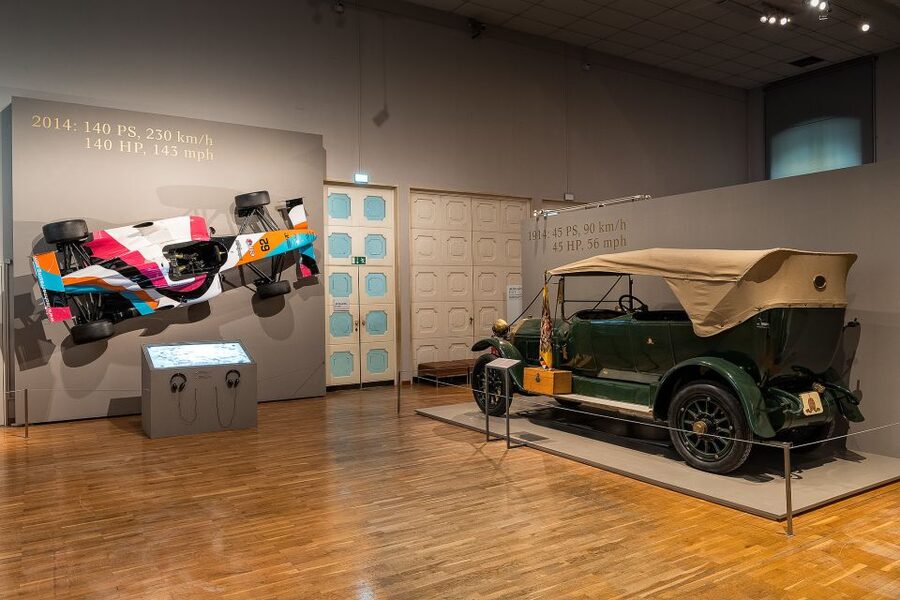
The collection becomes more interesting when you compare the grand vehicles with the less formal ones.
State carriages were designed for official appearances. Their job was to carry a ruler while sending a message to everyone watching. The decoration mattered, but so did the way the carriage presented its passengers.
Traveling coaches were built with comfort and distance in mind. They remind you that imperial life involved more than ceremonies. Rulers and their households had to move between places, often with luggage, attendants, and the practical demands of travel.
The children’s carriages are a welcome change of pace. They show the Habsburg princes and princesses in a more domestic setting. These smaller vehicles also make the museum easier to enjoy with children, since the scale and purpose are simple to understand.
I would not rush past the less grand exhibits. The great coach may draw your eye first, but the collection makes its best point through contrast. A royal family needed both spectacular vehicles and ordinary means of getting around.
What the museum visit feels like in practical terms
This is a self-guided museum visit, not a scheduled walking tour. You meet at the Imperial Carriage Museum in Schönbrunn Palace, enter with the admission ticket, and explore at your own pace.
The ticket is valid for one day, which gives you useful flexibility. You might visit the museum before or after other Schönbrunn plans, depending on the opening times and your booked starting time. Check availability when you reserve, since the ticket information asks you to select from available times.
The audio guide is not automatically included with every booking. It is included only when you book the audio guide option, so check your selection before paying. If you prefer to move quickly, the museum can still work without it, but the audio guide should help explain the people and objects more clearly.
A guided tour is not included. You can bring your own guide, though special rules apply to guide admission. A group must have at least 10 people for the free guide-ticket rule to apply, and only one guide per group receives free entry under that arrangement. A state-certified guide has free admission. For groups of fewer than 10, an extra guide or accompanying person counts as a paying member.
The most important warning is the printed voucher. You must bring a paper copy and exchange it at the museum for the admission ticket. Do not assume a phone screen will be enough. One visitor lost several hours in Vienna searching for a place or machine to print the voucher, eventually finding one in a shopping center after walking and using the metro. That is an avoidable problem, so print before heading to Schönbrunn.
Is $14 good value for one day?
At $14 per person, this is a reasonable add-on for anyone interested in imperial Vienna. The value comes from the range of material: ceremonial coaches, travel vehicles, children’s carriages, Elisabeth’s personal objects, and original clothing all sit within one focused collection.
You are not paying for a guide-led experience or a long itinerary. You are paying for access to a specialist museum and the freedom to explore it yourself. That makes the price easier to justify if you already plan to visit Schönbrunn Palace.
The value is less clear if carriages do not interest you. This is not a general overview of Vienna or a substitute for the palace rooms. It is a focused museum about imperial transport and the people connected with it.
The one-day validity helps. You do not have to force the museum into a rushed visit at one exact moment, though you still need to follow the available starting-time information. Free cancellation up to 24 hours before the visit and the reserve-now, pay-later option also make the ticket useful when your Vienna schedule is still shifting.
Who will enjoy this museum most?
I would recommend it to you if you fit one or more of these groups:
- You are already visiting Schönbrunn and want another attraction tied directly to the palace.
- You enjoy imperial history, royal ceremonies, or the practical side of historic travel.
- You are interested in Empress Elisabeth and want more than portraits and palace stories.
- You like decorative arts, clothing, vehicles, or unusual museum objects.
- You are traveling with children who may respond better to carriages than to formal rooms.
- You prefer a self-paced visit instead of a fixed guided tour.
It may be less suitable if your Vienna schedule is extremely tight or if you dislike specialized collections. The museum has a clear subject, and it does not try to be everything at once.
Small details that make a big difference
Print your voucher before leaving for Schönbrunn. This is the single most useful tip.
If you want extra context, book the audio guide option rather than assuming it is included. The Italian version has been described as short and functional, which suggests a practical format rather than a long, heavy narration.
Give the Baroque imperial coach your full attention. Then use the Sisi Trail as the second major stop, since it adds personal objects and dresses to the carriages.
Do not judge the museum only by its largest coach. The state vehicles, traveling coaches, and children’s carriages explain how court transport worked across different situations.
If you are visiting with a group, check the guide rules before arrival. The free-ticket arrangement depends on group size, and under 10 people an accompanying guide or person pays.
FAQ
Where is the Imperial Carriage Museum?
The museum is located at Schönbrunn Palace in Vienna, Austria. The meeting point is the Imperial Carriage Museum itself.
How much does admission cost?
The listed price is $14 per person. The ticket includes entrance to the Imperial Carriage Museum.
How long is the ticket valid?
The ticket is valid for one day. Check availability for the starting times offered when you book.
Is an audio guide included?
An audio guide is included only when you book that option. A guided tour is not included, and you may bring your own guide.
Do I need a printed voucher?
Yes. A printed voucher is required, and you exchange it at the museum for an admission ticket. A phone copy alone may not be accepted.
Can I cancel the ticket?
You can cancel up to 24 hours in advance for a full refund. A reserve-now, pay-later option is also available.
Should you book the Imperial Carriage Museum?
Book it if you want a focused, well-priced look at the machinery and pageantry of imperial life. The Baroque coach gives you the grand spectacle, while the Sisi Trail adds personal objects, original dresses, and a more intimate connection with Empress Elisabeth.
I would pair it with a Schönbrunn visit, not treat it as a stand-alone answer to Vienna’s history. Print your voucher ahead of time, choose the audio guide if you want more explanation, and allow enough time to compare the grand coaches with the practical and child-sized ones. If that sounds appealing, $14 buys a useful hour or more of royal context without requiring a full-day commitment.
Just added around Vienna
- Palais Lobkowitz Audio Guide Tour★ 4.0 · 3 reviews
- Imperial Gala Concert at Palais Auersperg★ 4.7 · 111 reviews
- Schönbrunn Palace & Gardens Tour★ 4.2 · 42 reviews
- Belvedere Palace & Museum Tour★ 4.5 · 18 reviews
- Private Schönbrunn Palace and Gardens Tour★ 5.0 · 46 reviews
- Vienna: Skip-the-Line Schonbrunn Palace Private Tour★ 4.8 · 85 reviews
- Skip-the-line Schonbrunn Palace Rooms & Gardens Private Tour★ 4.5 · 81 reviews
- Vienna Private City Tour: Palaces, Churches & Sacher Cake Option★ 4.5 · 41 reviews
Schonbrunn and Hofburg Palace Tours, compared.
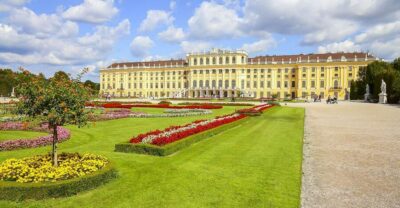
Schönbrunn Palace & Gardens Skip-the-Line Tour
Read our review →
Skip-the-Line Schönbrunn Palace & Gardens Tour
Read our review →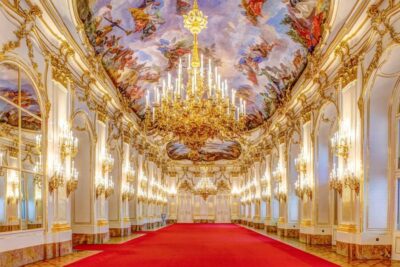
Bus & Schönbrunn Palace Skip-the-Line Guided Tour
Read our review →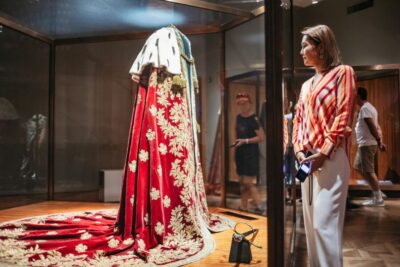
Skip the Line Schönbrunn Palace and Gardens Guided Tour
Read our review →
Schönbrunn Palace & Garden Skip-the-Line Guided Tour
Read our review →
Panorama Train Tickets to explore Schönbrunn Palace
Read our review →
Skip-the-Line Schönbrunn Palace and Gardens Tour
Read our review →Browse the lists this tour appears in