
REVIEW · TURIN
Ticketed Visit to Musei Reali and Royal Palace
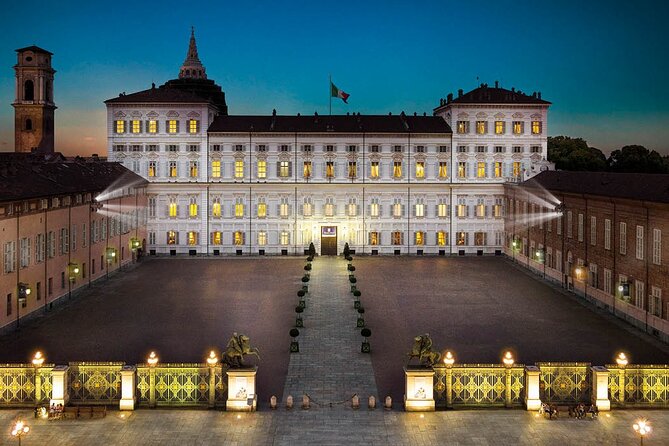
Royal Turin opens its doors. This ticket brings you into Musei Reali, centered on the Royal Palace, the former home of the Savoy family and one of Piedmont’s grandest sights. I like the chance to see several important palace rooms in one visit, and I like that skip-the-line access can save precious time. The main concern is ticket delivery: one booking failed at the entrance, so you need to check your email carefully before leaving for the museum.
At about $27.82 per person, this is a reasonable choice if you want a self-guided palace visit and prefer having admission arranged ahead of time. The visit lasts roughly two hours, but the ticket gives you no guide, no meeting point, and no built-in explanation of what you are seeing. You will get the most from it if you read a little about the Savoy court before arriving.
Key points to know before you book
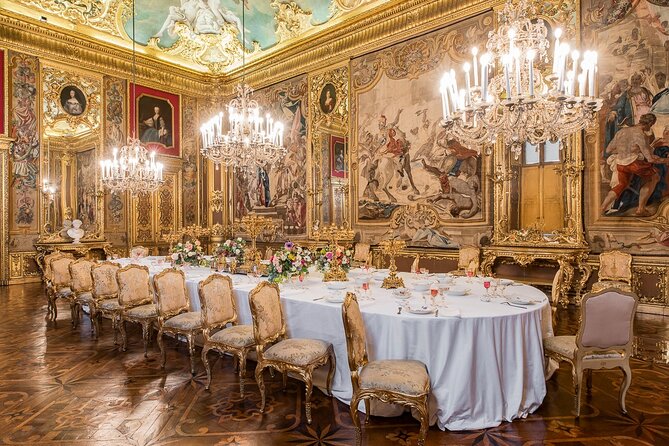
- The Royal Palace is the heart of the visit: This was the Savoy family’s official residence until 1865 and the political center of the Kingdom of Savoy for centuries.
- Grand rooms are the main reward: Look for the Throne Room, Coffee Room, Ballroom, Salone degli Svizzeri, and the Alcove Room of Charles Emmanuel II.
- Filippo Juvarra’s Scissors Staircase is a highlight: The 1720 staircase gives the palace a memorable architectural flourish.
- The basement changes the mood: Spectacular kitchens and enormous cellars add a practical, behind-the-scenes side to the royal story.
- Skip-the-line access is included: That matters most during busy periods, including Christmas, when demand can be high.
- Ticket delivery needs attention: Official tickets are reportedly sent twice, two days before the visit and again at 8 a.m. on the day itself.
Why Turin’s Royal Palace matters
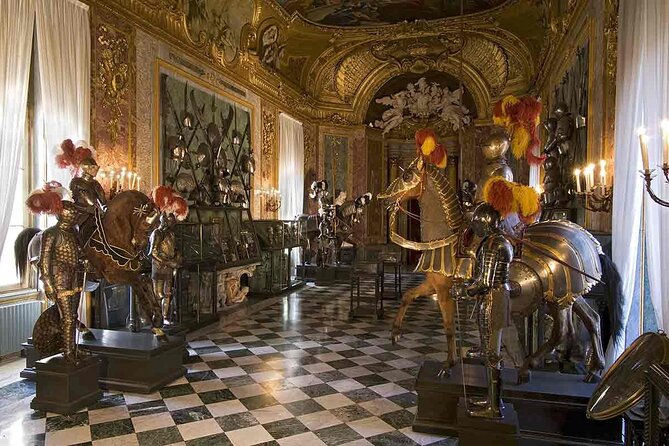
The Royal Palace is not simply a decorated old residence. It was the main Savoy home in Piedmont and the setting for royal politics over at least three centuries. That gives the rooms more weight than a collection of pretty interiors. You are walking through the place where the Savoy dynasty shaped the fortunes of Turin and the surrounding region.
The building began as the former Bishop’s Palace. Ascanio Vitozzi rebuilt it in 1584 for Charles Emmanuel I, and later architects and artists kept adding, changing, and polishing the complex. The result is not one tidy architectural style. Instead, you see layers of work from the late 16th through the 19th centuries.
I find that useful context when looking at the palace. A grand room is not just a room with a fancy ceiling. It reflects changing royal taste, court ceremony, and the need to present power in a very public way. Turin’s Savoy family later became the ruling house of unified Italy, so this palace also helps explain the political importance of the city.
The museum complex is called Musei Reali, but the Royal Palace is the clear anchor for this ticket. You should plan on spending your time inside the palace and its associated spaces rather than expecting a full guided tour of every museum collection in Turin.
More Royal Palace Tours in Italy
- Turin: Savoy Royal Palace Small Group Guided Tour
★ 4.9 · 750 reviews - Turin: Royal Palace Entry Ticket and Guided Tour
★ 4.8 · 562 reviews - Royal Palace of Turin Skip-the-Line Ticket and Guided Tour
★ 4.7 · 233 reviews
The main rooms inside the palace
The visit takes you through formal rooms designed to impress. I would pay attention to how each space serves a different purpose. Some rooms project ceremony, others private comfort, and others the machinery of court life.
The Salone degli Svizzeri is one of the largest spaces. Pelagio Palagi designed it between 1835 and 1840, giving you a strong example of the palace’s 19th-century phase. Its scale helps you understand how much space a royal household needed for official events and public display.
The Throne Room is the obvious stop for anyone interested in monarchy. Its value is not only visual. A throne room tells you how a court arranged hierarchy, ceremony, and access to the ruler. Take a moment to consider the room as a stage, with every position and movement shaped by rank.
The Coffee Room offers a different kind of royal setting. Its name suggests a more social and intimate function than the throne room, though it remains part of an elaborate palace interior. This contrast between public ceremony and private or semi-private life helps make the palace feel more human.
The Alcove Room of Charles Emmanuel II gives the visit a personal angle. Royal palaces often focus so heavily on public grandeur that private spaces get lost. Here, you get a reminder that the people behind the titles also lived, rested, and conducted personal routines within these vast surroundings.
The 19th-century Ballroom is among the most sumptuous rooms in the palace. This is the place to slow down and look upward, across the walls, and at the overall arrangement. Ballrooms were built for movement, spectacle, and social theater, so the room’s size and decoration make more sense when you picture formal court events taking place there.
The Scissors Staircase by Filippo Juvarra
Do not rush past the Scissors Staircase. Filippo Juvarra designed it in 1720, and it is one of the palace’s most memorable features.
The name comes from the staircase’s distinctive form. Even without a guide explaining every architectural detail, the shape gives the entrance a sense of movement and ceremony. Staircases in royal residences were practical, but they were also tools for staging arrival. A visitor did not simply walk upstairs. The route helped turn access to the palace into a performance.
Juvarra was one of the important architects working in Turin, and this staircase gives you a direct look at his approach. If you have limited time, keep this feature high on your list along with the Throne Room and Ballroom.
Kitchens and cellars below the palace
The basement offers a welcome change from the formal rooms above. Here you find the spectacular kitchens and enormous cellars, spaces that supported the royal household but were never meant to impress visiting dignitaries in the same way.
I like this part of the visit because it shows the work behind the ceremony. Lavish banquets required storage, preparation, staff, and supplies. The cellars and kitchens help you picture the palace as a functioning residence rather than a shell of grand rooms.
The basement also adds variety to a two-hour visit. If you spend the whole time looking at ornate interiors, the experience can begin to blur together. The service areas give you a different scale and a more practical view of court life.
The supplied information calls the kitchens spectacular and the cellars enormous, but it does not provide a detailed description of individual rooms or displays. You should expect the basement to be an important part of the route, but do not book this ticket solely for a specific kitchen installation that has not been identified.
More Royal Palace Tours in Turin:
- Small-group Royal Palace Skip-the-line Tour
★ 5.0 · 131 reviews - Private Turin Royal Palace Tour with Holy Shroud Chapel
★ 4.5 · 73 reviews - Royal Palace and Shroud Chapel with local Guide & ticket
★ 5.0 · 64 reviews - Royal Palace of Turin and Palazzo Madama Night Guided Tour
★ 4.9 · 27 reviews
What two hours feels like
The stated duration is approximately two hours. That is enough time for a focused visit, especially if you move steadily through the principal rooms and basement areas.
I would not treat two hours as a strict timed tour. There is no guide and no meeting point, so your pace is your own. You can spend longer in the Ballroom or staircase, or move faster through rooms that matter less to you.
For a first visit to the Royal Palace, two hours should work well as part of a Turin sightseeing day. The palace is substantial, but you are not committing an entire morning or afternoon. If you enjoy reading every panel and studying architectural details, you may want extra time beyond the approximate duration.
The lack of a guide is both a benefit and a limitation. You avoid being tied to a group schedule, which lets you linger where you want. On the other hand, you will need to provide your own historical background and make sense of the changes made by different architects.
Is $27.82 good value?
At $27.82 per person, the ticket is not a bargain-basement admission, but it can be fair value if skip-the-line entry saves you from a long wait. The price makes the most sense for visitors with limited time, people traveling during a busy period, or anyone who prefers to arrange admission before reaching the palace.
The value is less clear if you expect a guided experience. This is a ticketed visit, not a tour with a named guide or scheduled commentary. You are paying for entry and convenience, not personal interpretation.
I would compare the price with the standard admission available for your date before booking. Prices can vary, and the information provided here does not state the museum’s regular walk-up price. If the difference is small, the convenience may justify booking ahead. If the difference is large, you need to decide how much skip-the-line access is worth to you.
The visit is usually booked about seven days in advance. That suggests you should not leave planning until the last moment, especially if your Turin dates fall in a high-demand period.
Skip-the-line access and busy dates
Skip-the-line access is included, which is one of the clearest practical advantages. It can reduce uncertainty when you have other plans in Turin and do not want your day shaped by an unpredictable queue.
Christmas periods can be especially busy. One booking arranged for a family during the holiday rush initially faced difficulty joining the desired visit because demand was high. The staff eventually found seats and allowed entry after a wait for availability. That story suggests two useful things: busy dates can create real pressure, and staff may work to solve problems when space is limited.
Still, courtesy is not a guarantee of immediate entry. If you visit during a crowded period, build some flexibility into your schedule. Do not place a train departure, restaurant reservation, or another timed sight right after the palace.
The ticket problem you should take seriously
The most important warning concerns the admission email. One customer arrived without usable tickets and had to pay again at the ticket office. The provider responded that Viator sends official tickets rather than vouchers, reportedly twice: two days before the visit and at 8 a.m. on the day itself.
That means you should search your inbox and spam folder during the final 48 hours. Look again on the morning of your visit. Save the official ticket where you can open it quickly, and do not rely on an older booking confirmation if it does not contain the actual admission document.
There is no physical meeting point because this is not a guided group tour. That makes the ticket itself especially important. You need to arrive at the museum with the correct admission document and follow the entry instructions provided with it.
Because the experience is non-refundable and cannot be changed for any reason, check the date before completing payment. A mistake here is costly.
Who will enjoy this visit most?
I would recommend this ticket to you if you enjoy architecture, royal interiors, and European political history. It also suits independent visitors who prefer moving at their own pace rather than following a guide from room to room.
Families can benefit from the flexible timing, particularly if different people want to pause in different spaces. The kitchens and cellars may also give younger visitors a more concrete sense of how a palace worked.
The visit is less suitable if you want a detailed explanation from a historian or guide. You may find the formal rooms impressive but hard to interpret without preparation. If that sounds like you, read about the Savoy dynasty and the palace’s main architects before arriving.
Most people can participate, and the museum is near public transportation. The available information does not give specific details about every accessibility feature, so you should contact the provider or museum directly if you have particular mobility needs.
A sensible way to plan your visit
Before you go, spend a few minutes learning the names Charles Emmanuel I, Charles Emmanuel II, Pelagio Palagi, and Filippo Juvarra. Knowing who they are will make the rooms easier to place in time.
During the visit, I would use this rough order of attention:
- Start with the major formal rooms, including the Salone degli Svizzeri, Throne Room, and Ballroom.
- Look for the Coffee Room and Alcove Room to compare public ceremony with more personal palace life.
- Give the Scissors Staircase a proper pause rather than treating it as a passageway.
- Finish with the kitchens and cellars for a practical look at the household behind the court.
You do not need to race. The palace’s strength is its variety, from vast ceremonial spaces to working areas below ground. A steady two-hour visit should give you a good sense of the complex without turning the day into a single indoor marathon.
Should you book the Royal Palace ticket?
Book it if you want a convenient, self-guided visit to one of Turin’s most important historic buildings and value skip-the-line access. The best reasons are the palace’s outstanding rooms, Juvarra’s staircase, the basement kitchens and cellars, and the chance to see the former center of Savoy power in roughly two hours.
Think twice if you expect a guided tour, personal commentary, or flexible cancellation. The ticket is non-refundable, and the email delivery issue means you must monitor your inbox and bring the correct official ticket.
For an independent visitor who plans carefully, this is a practical way to see the Royal Palace. Just confirm your date, watch for the admission email, and allow extra schedule space during Christmas and other busy periods.
FAQ
Where is this experience located?
It is located at Musei Reali in Turin, Italy.
What is included in the ticket?
The ticket includes admission to Musei Reali and skip-the-line access.
How long does the visit take?
The visit lasts approximately two hours.
Is a guided tour included?
The information provided describes a ticketed visit and does not include a guide or guided commentary.
Is there a meeting point?
No. A meeting point is not provided for this experience.
What is the price?
The listed price is $27.82 per person.
What rooms can I see at the Royal Palace?
The palace includes the Salone degli Svizzeri, Throne Room, Coffee Room, Alcove Room of Charles Emmanuel II, and 19th-century Ballroom.
Can I see the palace kitchens and cellars?
Yes. The palace basement houses the kitchens and cellars.
When will I receive confirmation?
Confirmation is sent within 48 hours of booking, subject to availability.
Can I cancel or change the booking?
No. The experience is non-refundable and cannot be changed for any reason.
Just added around Turin
- Wine Tasting near Royal Palace of Turin★ 4.5 · 24 reviews
- Reggia di Venaria and Stupinigi Hunting Palace★ 5.0 · 5 reviews
- Stupinigi Hunting Palace & Sacra di San Michele★ 4.5 · 13 reviews
- Turin Royal Palace Private Guided Tour with Skip-the-Line Entry★ 5.0 · 5 reviews
- Royal Palace and Sacra di San Michele★ 4.0 · 9 reviews
- Private Turin Royal Palace Tour with Holy Shroud Chapel★ 4.5 · 73 reviews
- Turin: Royal Palace Guided Tour★ 5.0 · 4 reviews
- Skip-the-Line Ticket and Guided Royal Palace of Turin Group Tour★ 4.5 · 10 reviews
Royal Palace Tours, compared.
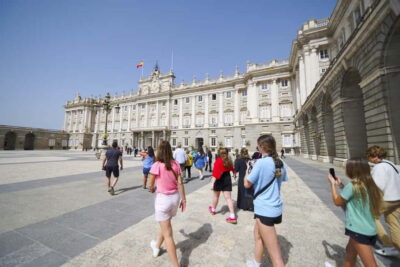
Royal Palace Expert Guided Tour with Skip-the-Line
Read our review →

Dubai To Abu Dhabi: Grand Mosque, Royal Palace & Etihad Towers
Read our review →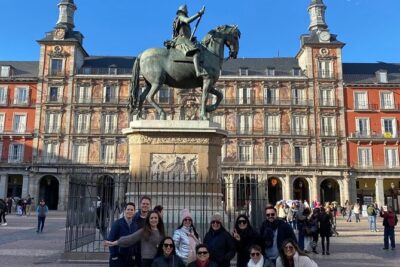
Madrid Essential: Historic Center, Plaza Mayor & Royal Palace
Read our review →
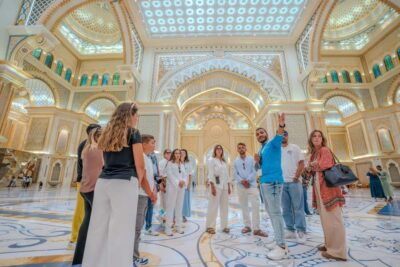
Abu Dhabi Day-Trip Grand Mosque, Royal Palace & Lunch
Read our review →
Browse the lists this tour appears in