
REVIEW · FRANCE
Château Balestard La Tonnelle : The “Origins” tour
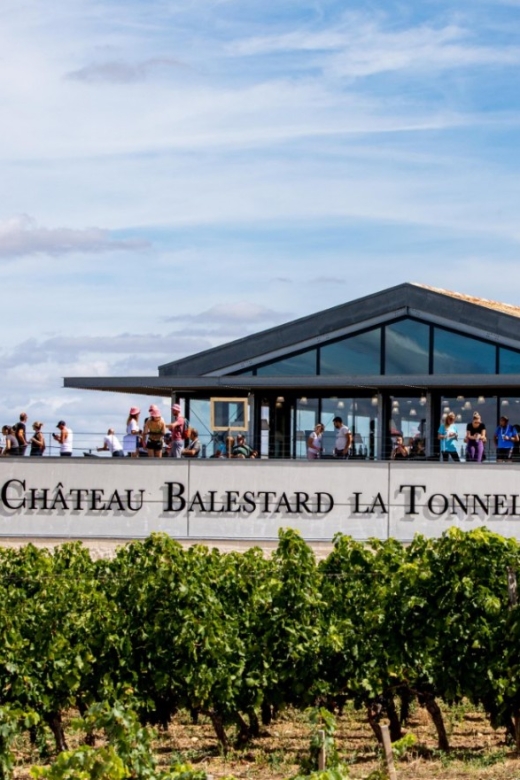
Saint-Émilion looks best with wine in hand. Château Balestard La Tonnelle combines a 15th-century watchtower with a striking 2019 bioclimatic cellar, then finishes on a 400-square-meter terrace facing the village and nearby appellations. I like the mix of old stone and modern winemaking, and I like that a one-hour visit includes three red wines, including a Grand Cru Classé. The main limitation is simple: there is no food, so plan this as a focused wine stop rather than a full afternoon outing.
I also appreciate the small groups, capped at eight people, and the choice of French or English tours. Guide Audre earned especially warm praise for her polite, friendly manner and for speaking Spanish during one visit. You will need to arrive at the boutique five minutes early, since a delay of more than 20 minutes can cancel the visit.
Key points at a glance
- A terrace with a 360-degree view: The 400-square-meter terrace looks toward Saint-Émilion and the surrounding appellations.
- Old and new in one short visit: A 15th-century watchtower shares the property with a 2019 architect-designed bioclimatic cellar.
- Three wines included: The tasting features three red wines, including a Grand Cru Classé.
- A family estate since 1647: The property connects today’s wine production with a long-running Saint-Émilion family story.
- Small groups matter: With no more than eight participants, the tour should feel more personal than a large cellar visit.
- Easy planning: Parking is free, wheelchair access is available, and you can cancel up to 24 hours before the start for a full refund.
Why the Origins tour works in one hour
The Origins tour is designed for travelers who want a clear introduction to a Saint-Émilion estate without spending half a day there. In one hour, you see the property, learn how wine moves from vineyard to bottle, and taste three reds at the end.
I like that the visit follows the actual path of production. You begin with the vineyard, move into the vat room, continue to the barrel cellar, and finish with the wines in your glass. That order gives the visit a useful backbone. Instead of treating the château as a pretty backdrop for a tasting, the tour explains what each working area does.
The small-group limit of eight is another strong point. A group this size makes it easier to hear the guide and ask questions. It also suits people who prefer a calm visit rather than a crowded tasting-room routine. The tour is live and available in French or English. One past guest also had a Spanish-speaking experience with Audre, but Spanish is not listed as a standard tour language, so I would not count on it unless you confirm in advance.
At $23 per person, the experience offers solid value for a Saint-Émilion wine visit. You are paying for a guided tour, the production areas, three tastings, the terrace setting, and access to a property with both historic and modern features. The price is especially reasonable if you want more than a tasting flight alone.
Still, keep the limits in mind. One hour passes quickly. You will receive an introduction rather than a long technical seminar, and the visit does not include lunch, snacks, or other drinks. If you want a leisurely meal among the vines, this is not that kind of booking.
More Chateau and Wine Estate Tours in France
- Medoc or Saint Emilion Wine Tasting and Chateau from Bordeaux
★ 5.0 · 1,415 reviews - From Paris: Full-Day Loire Valley Chateaux Tour
★ 4.4 · 1,269 reviews - Versailles Château and Gardens Walking Tour
★ 4.5 · 727 reviews
Finding the château and starting at the watchtower
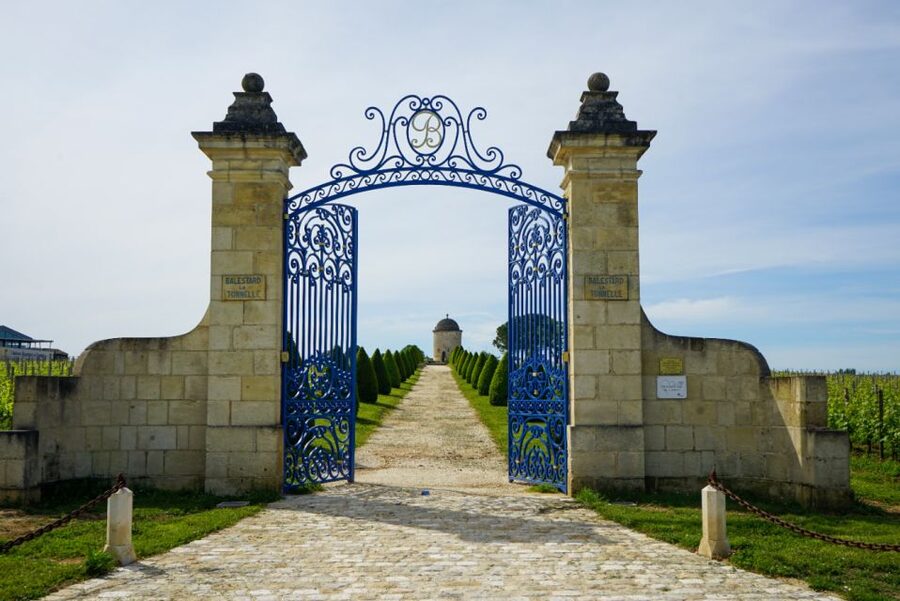
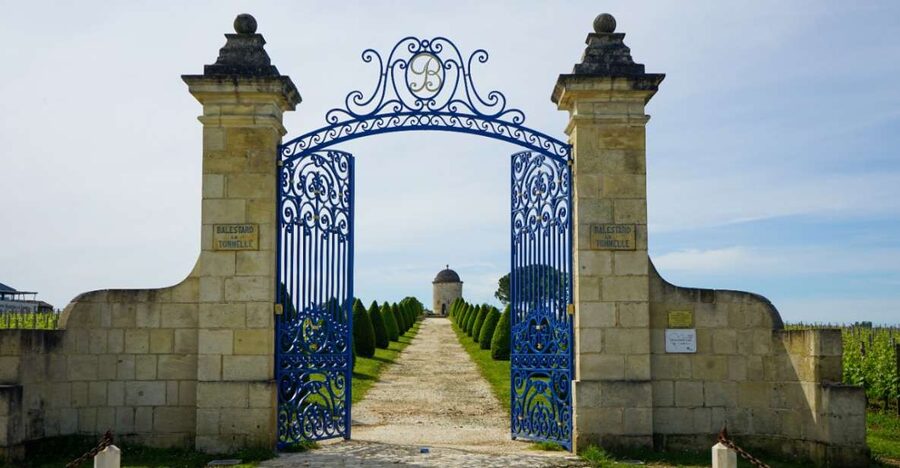
The meeting point is Château Balestard La Tonnelle. After parking, you first make your way to the shop by following the path from the watchtower.
That instruction matters because the watchtower is not simply a photo stop. It helps you orient yourself when you arrive and gives the property its first strong visual note. I would allow a little extra time for parking and walking to the boutique, especially since the château asks you to arrive five minutes before the scheduled start.
The free parking lot adds practical value. You do not need to build a separate parking plan into your visit, which helps if you are touring the Saint-Émilion area by car. The property is in Nouvelle-Aquitaine, in the Saint-Émilion wine area, and the tour begins and ends at the château.
Arriving on time is important here. A delay of more than 20 minutes may lead to cancellation, so this is not a good activity to squeeze between two uncertain appointments. Book it when you can reach the property without rushing.
The shop serves as the starting point, and it is also where you can browse and buy wine after the tour. That makes the arrival sequence straightforward: park, follow the path to the boutique, check in, and join the guide.
The limestone plateau and the family story
The first part of the experience introduces the vineyard and the limestone plateau of Saint-Émilion. The plateau is one of the key geographic features of the area, and its mention gives the tour a sense of place beyond the château walls.
I value this part because wine makes more sense when you connect the bottle to its ground. The tour does not present the estate as an isolated building. It links the vines, the plateau, the production rooms, and the finished wine.
The family has been established in Saint-Émilion since 1647. That date gives the visit a long view without requiring you to sit through a heavy history lecture. The property’s story is tied to a working family estate, not only to an old façade.
The 15th-century watchtower adds another layer. You get a genuine remnant from the past beside a contemporary wine facility. That contrast is one of the most appealing reasons to choose this château. The old structure gives the property character, while the newer building shows how the estate works today.
I would not expect the tour to provide a full history of every owner or every stage of the family’s past. The information promises a guided introduction to the estate, its winemaking, and its buildings. If you want a detailed archival history, you may need a longer specialist visit elsewhere.
Inside the 2019 bioclimatic cellar
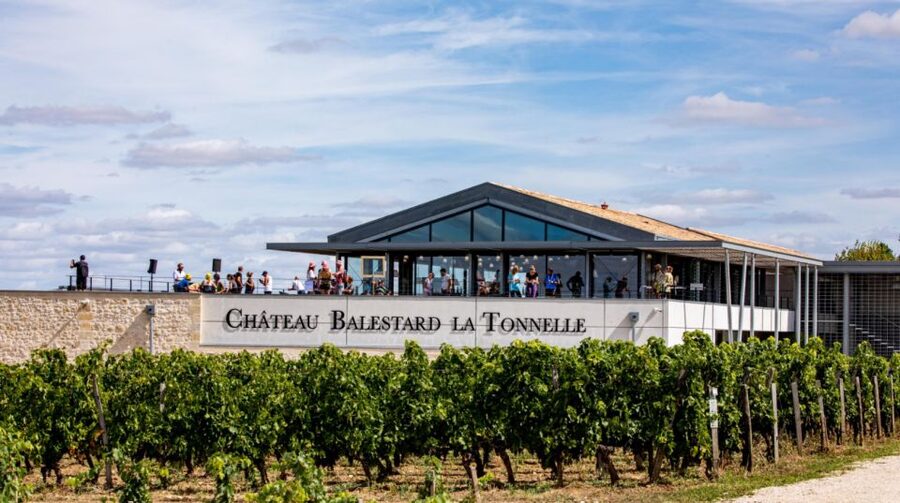
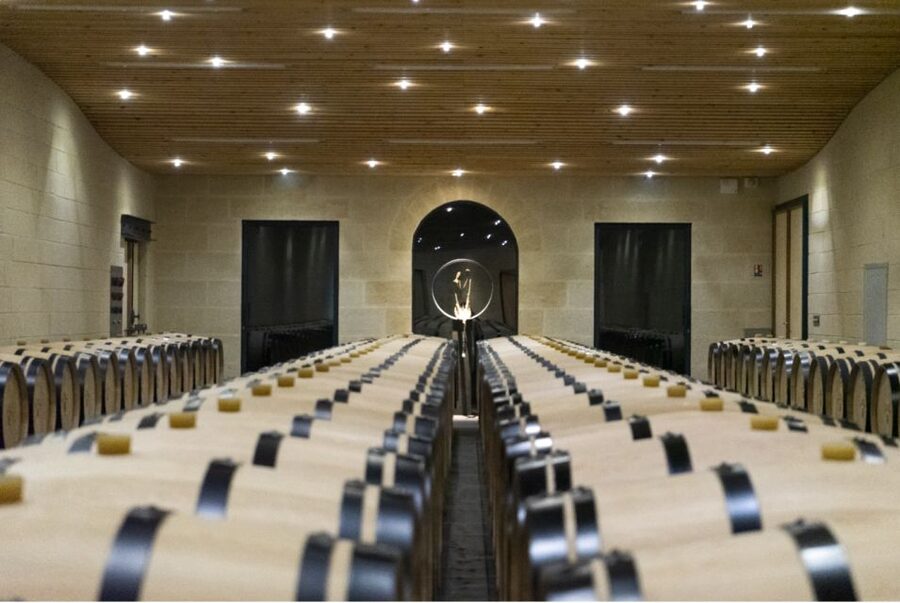
The modern part of the château is the architect-designed bioclimatic cellar, dating from 2019. This is not just a new room added for show. It gives you a chance to see how a historic estate can use a contemporary building for current wine production.
The word bioclimatic points to a building designed with climate and environmental conditions in mind, though the available information does not spell out its specific systems. I would treat this as an architectural and winemaking highlight rather than assume particular energy equipment or methods.
The cellar helps balance the visit. The watchtower and family history look backward, while the 2019 building shows the estate’s present direction. For me, that combination makes the château more interesting than a property that offers only old stone and a standard tasting room.
The tour also includes the vat room and barrel cellar. These are useful stops because they explain two different stages of wine production. The vat room is part of the early production process, while the barrel cellar shows the wine during its later development. The guide connects these spaces to the finished bottles you taste at the end.
You should expect an educational walk rather than a hands-on workshop. There is no indication that you will operate equipment or take part in production. Instead, you learn how the process moves from the vineyard to the vat room, then to the barrel cellar, and finally to the tasting glass.
Cleanliness also received specific praise in the feedback, with one person describing the facilities as very clean and orderly. That matters in a working wine setting. It suggests the tour areas are maintained with care, though you should still follow the guide’s instructions as you move through production spaces.
Same place, a different set of state rooms:
- Paris: Versailles Palace and Gardens Full Access Ticket
★ 4.6 · 41,579 reviews - Versailles: Skip-the-Line Tour of Palace and Gardens Access
★ 4.7 · 10,429 reviews - From Paris: Versailles Palace & Gardens with Transportation
★ 4.6 · 6,222 reviews - Versailles: Skip-the-Line Guided Palace Tour and Full Access
★ 4.6 · 5,214 reviews
Three reds on the panoramic terrace
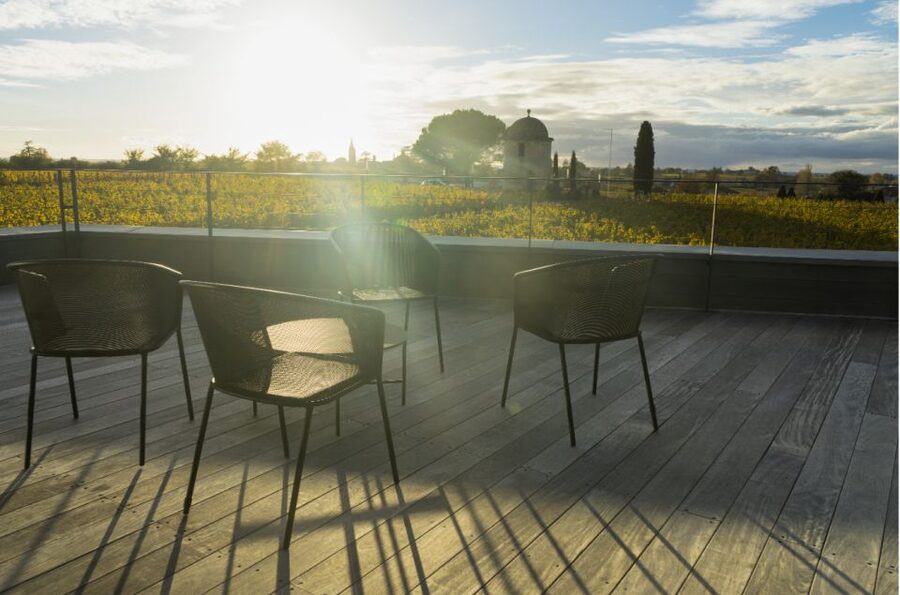
The tasting is the reward at the end of the tour. You sample three red wines, including a Grand Cru Classé, on the panoramic terrace.
This setting gives the tasting more meaning. From a room, you can taste the wine. From the terrace, you can connect it to Saint-Émilion and the surrounding appellations. The 400-square-meter platform offers a 360-degree panoramic view, with the village of Saint-Émilion as the main visual anchor.
The terrace is one of the strongest reasons to choose this experience. It turns the final tasting into a place-based moment rather than a simple pour at a counter. The view also gives you a chance to pause after the cellar visit and take in how the estate sits within the wine area.
The tasting includes three reds, so this is not a broad survey of many styles or regions. It is a focused look at wines connected to the property. The inclusion of a Grand Cru Classé adds interest and gives the tasting a higher-end point of comparison.
I would approach the tasting as an introduction, not a formal wine course. The supplied details do not specify the exact vintages, tasting notes, pour sizes, or how the wines are selected. If those details matter to you, ask the guide during the visit.
A relaxed mood seems to be part of the appeal. One account described the tasting as informal and pleasant, with the chance to sample the wines on the terrace after the château visits. That suits people who want a friendly introduction without stiff ceremony.
You can also shop at the property afterward. If you find a wine you like, buying directly at the château is convenient. The tour does not include food, though, so do not expect cheese, bread, or a meal to accompany the three wines.
What the small group changes
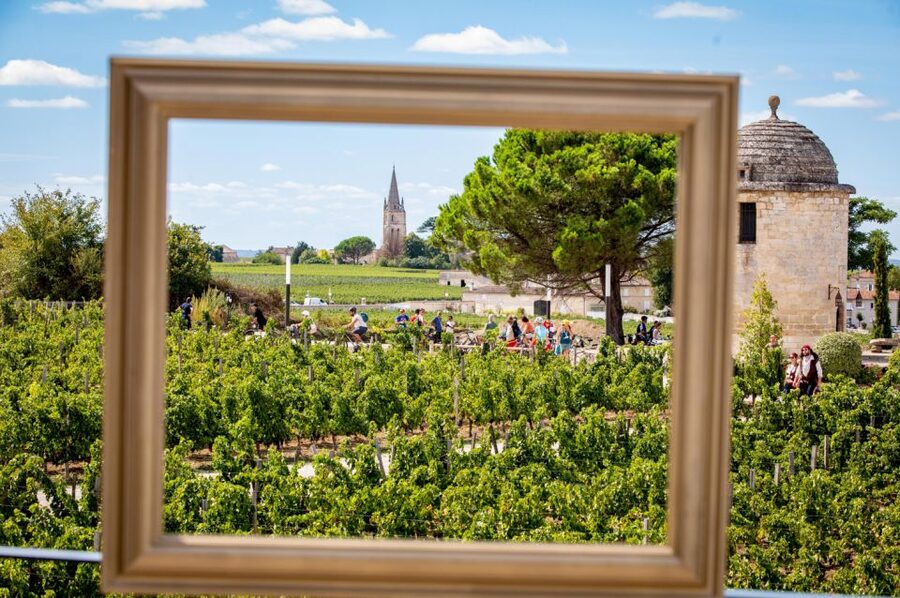
Eight people is a useful ceiling for a one-hour wine tour. It is large enough to keep the visit social but small enough that the guide can usually address individual questions.
The feedback repeatedly points to the quality of the explanations. One Spanish visitor praised the careful and interesting explanations, while a Dutch-speaking guest noted that the guide spoke very good English and explained the tour well. Another person described Audre as kind and courteous, with the tour available in Spanish during that visit.
Those details suggest that communication is a major strength. You will not simply be led from room to room without context. The guide’s role is to explain the estate and make the production stages understandable.
Of course, a small group does not guarantee a private tour. The experience remains a shared visit, and the exact rhythm may depend on the questions asked by the group. Still, the eight-person limit is a meaningful improvement over a crowded wine tasting.
The tour is wheelchair accessible, which makes it more practical for many visitors. The information does not describe every surface, route, or restroom arrangement, so anyone needing specific mobility details should confirm them with the château before booking.
How to plan your visit
The activity lasts one hour, and the start times depend on availability. I would treat that hour as a fixed appointment, not a loose drop-in visit.
Arrive at least five minutes early and go to the boutique after parking. The route from the watchtower to the shop is part of the arrival process, so do not wait in the car until the exact start time.
Free parking makes the château easier to add to a driving day in the Saint-Émilion area. The tour begins and ends at the same property, so you do not need to arrange separate transport between stops.
The booking terms are also flexible. You can reserve now and pay later, and cancellation up to 24 hours in advance allows a full refund. That is useful if your French wine-country plans depend on weather, a rental car schedule, or another timed appointment.
I would avoid booking the tour immediately before a train, lunch reservation, or another activity that cannot move. The visit itself lasts one hour, but you may want time afterward for the shop, photographs, or a slower look from the terrace.
Who should choose this château?
I would recommend the Origins tour to anyone visiting Saint-Émilion who wants a compact introduction to wine production and a strong view at the end.
It is especially well suited to:
- First-time visitors who want the basic path from vineyard to bottle
- Wine drinkers interested in both historic buildings and modern architecture
- Couples and small groups who prefer a quiet visit
- People who value an English or French live guide
- Visitors seeking a Grand Cru Classé tasting without booking a long, expensive program
- Drivers who want free parking and a one-hour stop
It may be less suitable if you want a meal, a long technical tasting, or a full-day estate program. The tour is concise, and the three-wine tasting is focused rather than extensive.
The perfect audience is someone who likes context but does not want a lecture. You see the vineyard, the old watchtower, the modern cellar, the vat room, and the barrel cellar, then taste three reds with Saint-Émilion in view.
Should you book the Origins tour?
I would book it if you want good value in a compact format. The $23 price covers a guided hour, three red wines, a Grand Cru Classé, the 400-square-meter terrace, and a look at both a 15th-century structure and a 2019 cellar.
The best feature is the combination of place and process. You do not just taste wine. You see where it begins, learn how it is handled, and finish with a view that ties the experience to Saint-Émilion.
Skip it only if you need food included, want a lengthy tasting, or cannot reliably arrive on time. For most people with a spare hour and an interest in Saint-Émilion wine, this is a sensible, well-priced stop.
FAQ
How long does the Origins tour last?
The guided visit lasts one hour and includes the wine tasting.
How many wines are included?
You taste three red wines, including a Grand Cru Classé.
Where does the tasting take place?
The tasting takes place on the château’s 400-square-meter panoramic terrace, with a 360-degree view toward Saint-Émilion and the surrounding appellations.
What languages are available?
The live tour is offered in French and English. One past visit also included a Spanish-speaking guide, but Spanish is not listed as a standard tour language.
Is the tour wheelchair accessible?
Yes, the experience is listed as wheelchair accessible.
Is parking available?
Yes, free parking is available at the property. After parking by the watchtower, follow the path to the shop.
Can I cancel my reservation?
Yes. You can cancel up to 24 hours in advance for a full refund. You can also reserve now and pay later.
Just added around France
- Pierrefonds: Château de Pierrefonds Entrance Ticket★ 4.7 · 152 reviews
- Paris: Versailles Palace and Queen Hamlet E-Bike Tour★ 5.0 · 126 reviews
- Paris: Versailles Golf Cart & Bike Tour with Palace Entry★ 4.8 · 58 reviews
- Petit Palais Paris Museum of Fine Arts Tour with Tickets★ 4.2 · 3 reviews
- Paris: Palace of Versailles Private Tour with Transportation★ 5.0 · 2 reviews
- Paris: Royal Palais, Tuileries and D’Orsay Tour★ 4.8 · 3 reviews
- PARIS: Private transfer Château Versailles van 7 people 4H★ 3.0 · 4 reviews
- Paris: Palace of Versailles Ticket with Private Transfer★ 4.4 · 24 reviews
Chateau and Wine Estate Tours, compared.
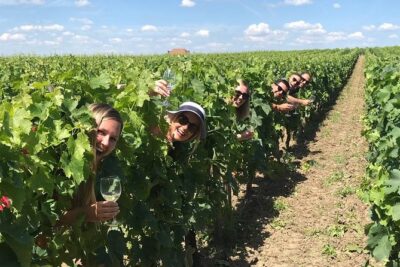
Medoc or Saint Emilion Wine Tasting and Chateau from Bordeaux
Read our review →
Versailles Château and Gardens Walking Tour from Paris by Train
Read our review →
Loire Valley: Château Royal d’Amboise Entrance Ticket
Read our review →
Fontainebleau & Vaux-le-Vicomte Châteaux Day Tour from Paris
Read our review →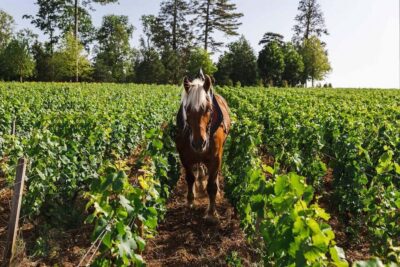
Browse the lists this tour appears in