
REVIEW · FRANCE
Luxury Tour of Château de La Dauphine
Royal roots meet working wine country. This Château de La Dauphine tour gives you two things I especially like: access to an 18th-century château linked to the mother of Louis XVI, and a clear look at how a modern biodynamic vineyard makes its wine. The tasting of three estate wines adds real value to the visit.
The main drawback is the short schedule. In roughly one to one and a half hours, you see the park, château, vines, technical buildings, and tasting room, so the experience is a brisk overview rather than a slow country afternoon. Also, the non-refundable booking rule means you should be certain of your plans before paying.
At a Glance: What Makes This Tour Special
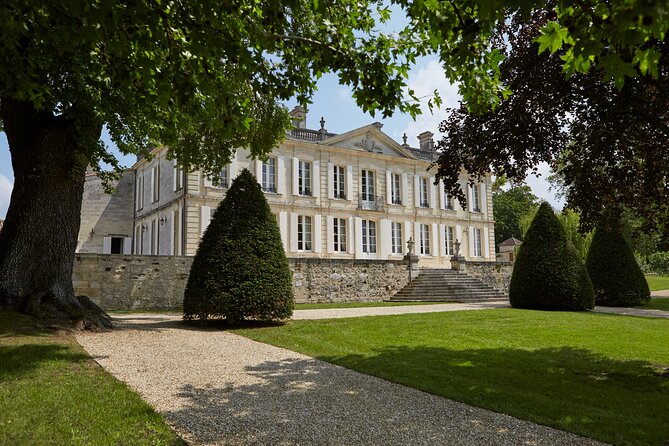
- A royal connection: Marie-Josèphe de Saxe, Dauphine of France and mother of Louis XVI, stayed at the château.
- A 66-hectare working estate: The vineyard follows organic and biodynamic practices, with decisions made plot by plot.
- Three wines included: You taste wines from Château de La Dauphine and its second label, Delphis de La Dauphine.
- Old meets new: The tour moves from historic rooms to modern cellar buildings and unusual cupola-arranged tanks.
- Strong guiding: Guides including Gaspard, Carissa, and Pascal have been praised for clear explanations and warmth.
- Convenient timing: Tours operate daily from 9:30 a.m. to 3:30 p.m. during the stated season, with a mobile ticket.
Why Fronsac Gives the Visit More Meaning
Fronsac is not simply a stop near Bordeaux where you taste red wine and move on. It is an old wine region tied to Cardinal Richelieu and his grand-nephew, a period when Fronsac wine was considered among the kingdom’s most prestigious.
That background helps explain why Château de La Dauphine places so much weight on both its past and its production methods. The estate is not presenting a decorative manor with a few vines behind it. It is a 66-hectare vineyard that still produces two wines, Château de La Dauphine and Delphis de La Dauphine.
I like this combination because it gives you several ways into the subject. You can care about French royal history, architecture, farming, cellar design, or simply a good glass of wine. The tour tries to connect all of them without turning the visit into a lecture.
The château’s name recalls Marie-Josèphe de Saxe, the Dauphine of France who stayed at the estate. She was the mother of France’s last kings, including Louis XVI. That detail gives the interior visit a clear human connection. You are not just walking through an old building. You are seeing a place linked to the royal family during a changing period in French history.
More Chateau and Wine Estate Tours in France
- Medoc or Saint Emilion Wine Tasting and Chateau from Bordeaux
★ 5.0 · 1,415 reviews - From Paris: Full-Day Loire Valley Chateaux Tour
★ 4.4 · 1,269 reviews - Versailles Château and Gardens Walking Tour
★ 4.5 · 727 reviews
Entering the Château and Its 18th-Century Rooms
The tour begins with the park and the interior of the 18th-century château. The setting is one of the strongest parts of the visit, especially if you enjoy historic homes that remain tied to a working property.
You can expect the guide to explain the château’s royal connection before moving into the broader story of the estate. Guides have been praised for making the information easy to follow, including Carissa, whose English was singled out as excellent, and Gaspard, who was praised for his friendly explanation of the vineyard soil.
The building itself is described as beautiful, but the appeal is not only visual. Its rooms provide a useful contrast with the practical work happening outside. A polished historic interior can make a wine estate feel remote from farming. Here, the tour links the old house to the soil, vines, tanks, barrels, and finished bottles.
That said, the château portion is not presented as a long architectural study. If you want a full museum-style visit with many rooms and extensive period furnishings, this may feel brief. The tour has several subjects to cover, and the vineyard and cellar receive equal attention.
The 66-Hectare Vineyard and Biodynamic Farming
After the château, the visit turns toward the vineyard and the estate’s environmental approach. Château de La Dauphine describes the property as BIO& BIODYAMIE, meaning its work follows organic and biodynamic principles.
The most useful point for you is that the estate says its choices are made plot by plot. That suggests a careful approach rather than one broad rule applied across every row of vines. The guide can explain how soil and growing conditions affect the work, as Gaspard did when discussing vineyard soils.
You do not need a technical wine qualification to get something from this section. The explanations are meant to show how decisions in the vineyard affect what later happens in the cellar. Pascal was praised for giving clear explanations of biodynamics, and one family group found the guide patient and easy to follow.
This is also where the visit feels most connected to present-day wine production. The royal association attracts attention, but the vineyard philosophy gives the estate a current purpose. You see why the property wants to be open to wine tourism rather than keeping its work behind closed doors.
I would pay close attention here if environmental practice matters to you. The tour does not treat biodynamics as a decorative label. It is presented as part of the estate’s working philosophy. Still, the supplied details do not specify every farming method or certification, so you should treat the visit as an introduction rather than a full agricultural course.
The Modern Cellars and Cupola-Arranged Tanks
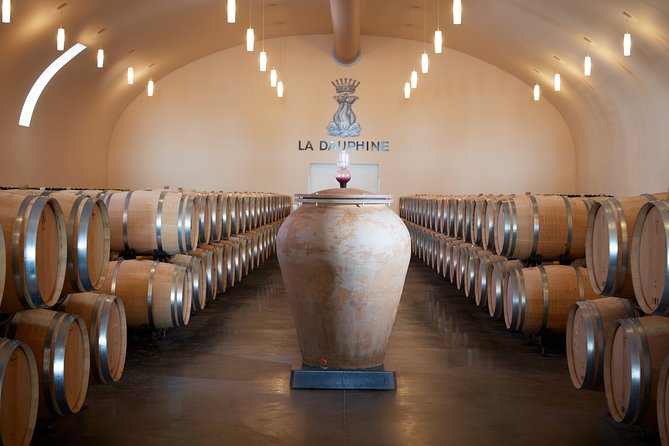
The technical buildings provide one of the more unusual parts of the experience. The estate combines older winemaking traditions with modern production spaces, and the tanks are arranged in a cupola formation.
That design detail gives the cellar visit a visual point of interest beyond rows of barrels. You will also hear about the different barrels and how the production area supports the two estate wines. Gaspard was praised for explaining the vats and barrels in a way that made the process easy to understand.
I like this section because it answers a question many château tours leave vague: what happens after the grapes leave the vineyard? You move from the growing side of wine to the production side, seeing how the estate’s philosophy continues indoors.
The technical buildings are modern, but the tour does not frame modern equipment as a rejection of tradition. Instead, the estate presents the two as partners. Older methods and newer design share the same goal, making wine with care and consistency.
The tradeoff is that anyone hoping to see active harvest work may find the visit quieter outside harvest season. The available information promises an explanation of the buildings, vats, and barrels, not a hands-on production session. Even so, this part should appeal to anyone who wants more than a pretty view and a quick tasting.
Same place, a different set of state rooms:
- Paris: Versailles Palace and Gardens Full Access Ticket
★ 4.6 · 41,579 reviews - Versailles: Skip-the-Line Tour of Palace and Gardens Access
★ 4.7 · 10,429 reviews - From Paris: Versailles Palace & Gardens with Transportation
★ 4.6 · 6,222 reviews - Versailles: Skip-the-Line Guided Palace Tour and Full Access
★ 4.6 · 5,214 reviews
Three Wines in the Tasting
The tour ends with a tasting of three wines from the estate. The selection comes from Château de La Dauphine and Delphis de La Dauphine, giving you a chance to compare the property’s main wines and second label.
A tasting of three wines is a sensible amount for a one-hour to one-and-a-half-hour tour. You get enough variety to notice differences without turning the visit into a long drinking session. Guides can also connect the wines to the vineyard work and cellar methods you have just seen.
The tasting appears to take place in the château shop or tasting area. One Spanish-language visit included the château interior, vineyard, technical installations, and three wines tasted in the shop. That same visit was especially fortunate because the guests were the only Spanish-speaking participants at the time.
The strongest praise for the wines is direct and practical. One English-speaking visitor enjoyed them enough to plan to order them through a United States distributor. Another group left with several bottles, pleased with both the wines and the estate’s environmental approach.
You should not expect the $17 price to include a full meal or a large flight of wines. It is a guided estate visit with three tastings. That keeps the cost modest for a château experience, but it also means the value depends on how much you enjoy the story behind the bottle.
How the $17 Price Works for You
At $17, this tour offers good value if you want a compact introduction to a Bordeaux-area wine estate. You receive access to the park, the historic château, vineyard explanations, the technical buildings, and three wines. A private-feeling setting with royal connections would often cost more elsewhere, although the experience here is not described as a private tour.
The word luxury may suggest a long, lavish event. In practice, the value comes from the setting and the range of subjects covered, not from luxury extras. You are paying for access, interpretation, production insight, and a tasting in a short time.
The price is especially fair for people who would otherwise spend the afternoon visiting several estates without learning much about how the wines are made. Here, the tour moves from history to soil, farming, cellar design, and tasting in one place.
Still, compare your expectations with the length. If you want a relaxed lunch in the gardens, extra tastings, or a long private conversation with a winemaker, the standard visit may not provide that. A Dutch-speaking group had an indoor lunch and rosé when poor weather made the garden unsuitable, but that should not be treated as a standard inclusion in this tour.
Guides, Languages, and the Feel of the Visit
The guiding is one of the best-supported strengths of this experience. Gaspard has been praised for his friendly manner and soil explanations. Carissa received particularly strong praise for her English and for making the château and vineyard story interesting.
The available experiences also point to French, English, and Spanish-language visits. A Spanish-language group received a complete tour covering the château, installations, vineyard, and tasting. You should confirm your preferred language when booking because language availability may depend on the schedule.
The tone appears friendly rather than formal. A French visit was praised for a warm welcome and clear explanations, while another group appreciated a guide who was patient with children. That makes this a reasonable choice for a mixed-age group, provided everyone is comfortable with a wine-focused visit.
Small groups may get the most from the experience, especially if the guide can respond to questions about soil, biodynamics, or cellar work. The tour information does not give a fixed maximum group size, so you should not assume a private or tiny group.
Timing, Access, and Planning Advice
The stated tour duration is approximately one hour to one and a half hours. That makes it easy to fit into a day of exploring Fronsac, but you should allow enough time to arrive at the estate and avoid booking another activity too tightly afterward.
Opening hours are listed as 9:30 a.m. to 3:30 p.m., Monday through Sunday, from November 1, 2024, through October 31, 2025. Since dates and hours can change, check the current schedule before setting your day around the visit.
A mobile ticket is provided, which keeps entry simple. Confirmation is expected within 48 hours of booking, subject to availability. The booking is non-refundable and cannot be changed for any reason, so check your date, time, transport plan, and language preference first.
Most people can participate, according to the available information. No special access requirements are described, so contact the provider directly if you need specific mobility information or other arrangements.
The estate is in Fronsac, in an arc of the Dordogne. The supplied details do not give transport instructions or an exact meeting address, so you should confirm those before departure rather than relying on a general map pin.
Who Will Get the Most From Château de La Dauphine
I would recommend this tour to you if you want a short, well-rounded introduction to a Bordeaux wine estate. It suits people who enjoy historic buildings but also want to see real production spaces and understand the environmental choices behind the wine.
It is a good match for:
- Couples looking for a scenic and meaningful stop, especially since the grounds have provided a memorable setting for a marriage proposal.
- Wine learners who want to connect vineyard soil, biodynamic farming, cellar equipment, and tasting.
- Families with older children who can follow a guided heritage and winemaking visit.
- Visitors who prefer a compact tour instead of a half-day wine excursion.
- People who appreciate tastings with context rather than tasting-room samples without explanation.
I would be more cautious if you want a very long château visit, a guaranteed private guide, or a meal as part of the $17 price. The experience covers plenty, but it moves quickly.
Should You Book This Tour?
Yes, if you want strong value and variety in a short visit. The mix of royal history, an active 66-hectare vineyard, biodynamic farming, modern cupola-arranged tanks, and three wines gives you far more than a simple tasting.
Book it for the setting and the explanations, not for luxury service in the hotel sense. If you can visit during the listed hours and are comfortable with a non-refundable reservation, Château de La Dauphine is a smart Fronsac stop. I would especially choose it if you want to understand how an estate links its old château to present-day wine production.
FAQ
Where is Château de La Dauphine?
Château de La Dauphine is in Fronsac, France, in an arc of the Dordogne.
How long does the tour last?
The tour lasts approximately one hour to one and a half hours.
What does the tour include?
It includes the park, the interior of the 18th-century château, the vineyard, an explanation of the estate’s environmental philosophy, the technical buildings, and a tasting of three estate wines.
Which historical figure is connected with the château?
Marie-Josèphe de Saxe, Dauphine of France and mother of Louis XVI, stayed at the estate.
How many wines are included?
The tasting includes three wines from the estate.
Which wines does the estate produce?
The estate produces Château de La Dauphine and Delphis de La Dauphine.
When is the tour available?
The stated opening period is November 1, 2024, through October 31, 2025, with hours from 9:30 a.m. to 3:30 p.m. daily.
Is a mobile ticket available?
Yes, the experience includes a mobile ticket.
Can the booking be canceled or changed?
No. The experience is non-refundable and cannot be changed for any reason. Confirmation is sent within 48 hours of booking, subject to availability.
Just added around France
- Day Tour of Chateaux of Chenonceau, Chambord & Caves Ambacia from Tours/Amboise★ 4.5 · 155 reviews
- Guided walking tour of Chenonceau chateau★ 4.5 · 2 reviews
- Day Tour of Chateaux of Chenonceau & Chambord from Tours/Amboise★ 5.0 · 17 reviews
- Price instead: From Strasbourg to Château ,Riquewihr and Colmar★ 4.0 · 5 reviews
- Visit and Tasting Château Saint-Georges Cote Pavie, Grand Cru Classé★ 5.0 · 135 reviews
- Area ,Opera, Jewellery,Fashion,Palais Royal walking tour★ 5.0 · 47 reviews
- WW1 Belleau Wood and American Monument in Château-Thierry – Day trip from Paris★ 5.0 · 15 reviews
- Versailles Palace & Giverny Private Tour with Lunch&Hotel Pick-up★ 5.0 · 48 reviews
Chateau and Wine Estate Tours, compared.
Medoc or Saint Emilion Wine Tasting and Chateau from Bordeaux
Read our review →
Versailles Château and Gardens Walking Tour from Paris by Train
Read our review →
Loire Valley: Château Royal d’Amboise Entrance Ticket
Read our review →
Fontainebleau & Vaux-le-Vicomte Châteaux Day Tour from Paris
Read our review →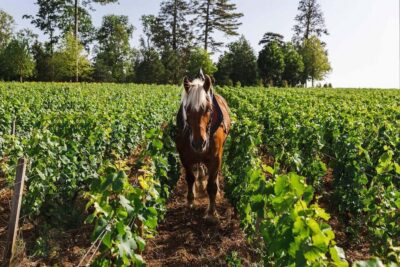
Browse the lists this tour appears in