
REVIEW · BANGALORE
Old Bangalore Historical Walk thro Palace, Temples, Fort & Market
Old Bangalore comes alive on foot. This 3 to 4 hour walk links Tipu Sultan’s teak palace, an active Hindu temple, a surviving fort, two very different religious sites, and the noisy lanes of KR Market. I like the strong mix of history and daily life, and I like that the group is limited to 10 people, which leaves room for questions and personal guidance. The main consideration is the walking environment: market streets can be crowded, noisy, and full of vehicles, cows, workers, and shoppers.
I also appreciate the way this route crosses between Hindu, Jain, Islamic, and royal history without treating them as isolated sights. Guides such as Raghavendra and Vanaja have been praised for answering questions, helping with photographs, and offering useful suggestions for the rest of your day. You should dress modestly, though, since both temples require covered shoulders and legs, and women should carry a scarf.
Old Bangalore in six revealing stops
- A 230-year-old teak palace: Tipu Sultan’s Summer Palace uses carved wood and Islamic design rather than grand stone construction.
- A working Hindu temple: Kote Venkataramana Temple gives you a chance to observe prayer and see carved mythological figures.
- A small remnant of Bangalore Fort: Only about 5 percent of the original fort remains, but the surviving section connects the city to its 16th-century founder, Kempegowda.
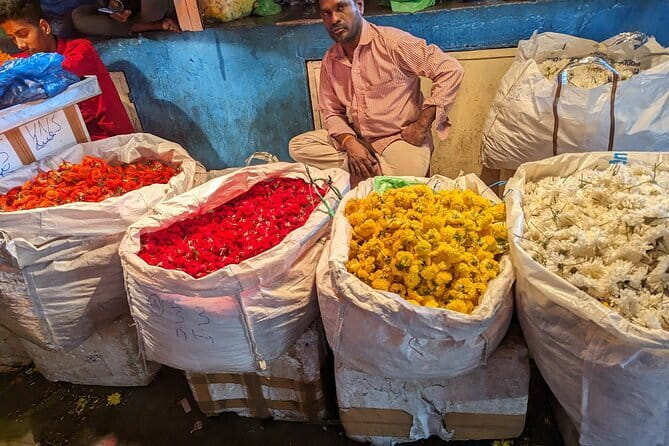
- KR Market at full volume: Flowers, fruit, vegetables, hawkers, buyers, coolies, bicycles, cows, and dogs create the walk’s most intense hour.
- A quiet Jain sanctuary: Shri Adinath Jain Shwetamber Mandir provides a sharp contrast to the market, with carvings and inlay work.
- A convenient city-center finish: The walk ends close to Chickpet metro station, useful if you want to continue exploring on your own.
Why this walk works so well
Many city tours show you one historic building, then move on to another. This route is better connected. It shows how old Bangalore’s political past, religious life, trade, and ordinary street activity still occupy the same compact part of town.
You begin at Tipu Sultan’s Summer Palace and finish at the Jain temple near Chickpet. In between, you see a Hindu temple beside the palace, a remnant of the old fort, and one of the city’s major markets. That sequence gives you a useful reading of Bangalore: royal power, faith, defense, commerce, and neighborhood life all packed into a few hours.
I especially like the contrast between the buildings and the streets. The palace and temples ask you to slow down and look closely. KR Market does the opposite. It pulls your attention in several directions at once. The value is not just in seeing monuments, but in understanding how the old city feels when it is working.
The tour costs $22.38 per person. For that price, you receive a licensed, Government of India approved guide and admission to the monuments. Since the experience lasts close to four hours and combines several major sights, I consider it a good use of money if you have limited time in Bangalore. Lunch, gratuities, and transport from your hotel are extra, so factor those into your budget.
More Palace Walking Tours in India
- Tipu Palace + Koté Vishnu + Fort + KR Market + Jain Temple = Bengaluru Pété Walk
★ 5.0 · 150 reviews - Bangalore: Palace, Temples, Fort & Markets Walking Tour
★ 4.9 · 97 reviews - Bangalore: Walking Tour of Fort, Palaces, and Market
★ 5.0 · 58 reviews
Tipu Sultan’s Summer Palace: wood, shade, and royal ambition
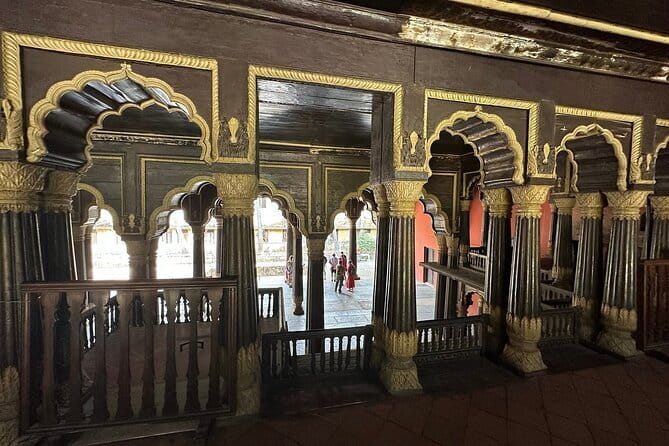
The first stop is Tipu Sultan’s Summer Palace at 42 Tippu Sultan Palace Road in Chamrajpet. Allow about 45 minutes here, with admission included.
The palace is roughly 230 years old and built mainly from teak wood. That alone makes it different from the stone-heavy royal buildings you may see elsewhere in India. The design follows Islamic architectural ideas, and the wooden construction gives the site a more intimate scale than the word palace might suggest.
A guide adds real value here. Without context, it can be easy to walk through a historic building, admire the columns and carved surfaces, and leave without understanding its place in Bangalore’s story. The guide can connect the palace to Tipu Sultan, the city’s former royal power, and the building methods that made this structure distinctive.
Give yourself time to look upward and around the edges of the rooms. Woodwork can be easy to overlook when you are focused on the larger shape of a building. The palace is not a huge complex, so the 45-minute stop should feel measured rather than rushed.
This is also a good place to begin because it is calmer than the market. You can get your bearings, learn the basic story of old Bangalore, and then see how the rest of the walk moves from formal architecture into working streets.
Kote Venkataramana Temple and the etiquette of worship
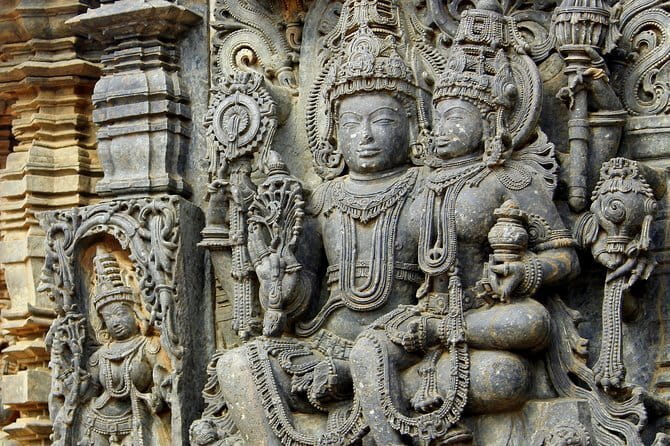
The Hindu temple sits beside Tipu’s palace, a useful reminder that Bangalore’s religious and royal sites are not separated into neat zones. It was built in 1690 by Chikkadevaraja Wodeyar and is known for stone sculptures of figures from Indian mythology.
You spend about 30 minutes here. Admission is free, but the temple is an active place of worship, not simply a monument. You may see prayers being offered by devout Hindus, so the guide’s help matters. You can learn what you are looking at while keeping a respectful distance from worshippers.
This stop gives the tour a different kind of history. The palace presents royal architecture and political power. The temple presents a continuing religious tradition, with rituals and beliefs that remain part of daily life.
Dress correctly from the start. Your legs and shoulders should be covered, and women should carry a scarf. These rules apply to both temples on the walk. If you arrive in clothing that does not meet the requirements, your visit may be limited or less comfortable.
The temple’s carved stonework rewards close attention. Rather than trying to inspect every figure quickly, I would ask the guide to point out a few important details and explain their meaning. That approach leaves you with a clearer memory than a hurried sweep through the walls.
Bangalore Fort and the small piece that remains
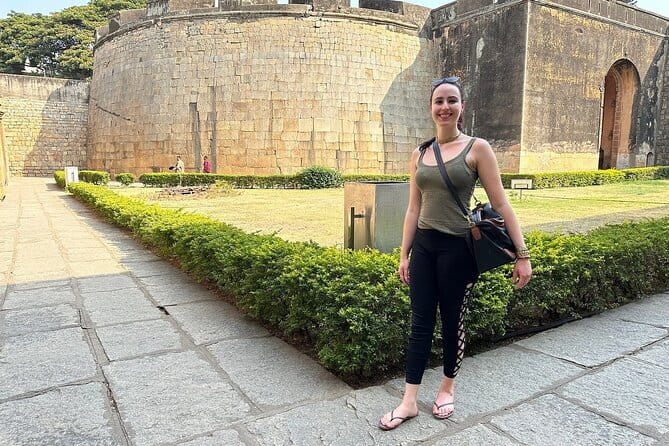
The next stop is Bangalore Fort, with about 30 minutes set aside. Kempegowda, the founder of Bangalore, built the original fort in the 16th century as a mud fort. Hyder Ali rebuilt it in stone during the 1760s.
Only around 5 percent of the original fort remains. That number sets the right expectation. You are not entering a vast defensive complex with walls stretching across the city. You are seeing a surviving fragment, carefully maintained and open to visitors.
The fort matters because it helps explain Bangalore’s growth. The city did not begin as the modern technology center you may know today. Its early story includes local rule, military power, royal ambition, and changing control. The guide can make that long story easier to follow while you stand among the remains.
Some visitors may find this stop less visually dramatic than the palace or market. That is a fair point. The fort is best understood as a historical piece of the city rather than a major architectural showpiece. Its limited remains make the explanation especially important.
I like the way the fort fits into the route. After the palace and temple, you see another layer of old Bangalore’s past. Then the walk moves into the present-day market, where history gives way to noise, trade, and constant movement.
Same place, a different set of state rooms:
- Jaipur Guided City Tour: City Palace, Jantar, Hawa & Jal Mahal
★ 5.0 · 186 reviews - Full-Day Jaipur City Tour with Amber Fort and City Palace
★ 5.0 · 99 reviews - 2-Day Private Tour of Jaipur from Delhi: City Palace, Hawa Mahal and Amber Fort
★ 4.5 · 29 reviews - Jaipur: Elephant Activities Feed, Paint & Ride with Pickup
★ 5.0 · 22 reviews
KR Market: Bangalore at full volume
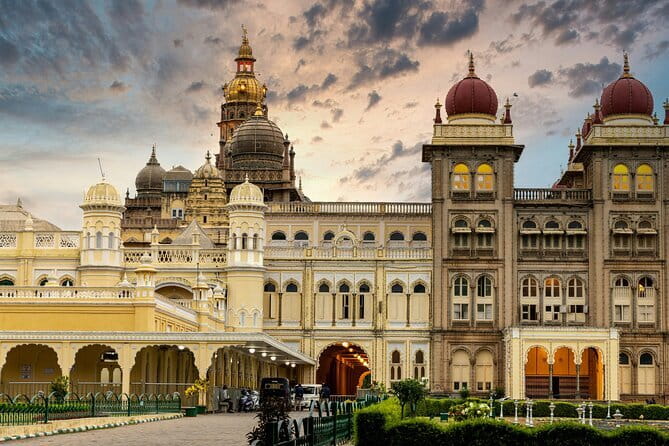
Sri Krishnarajendra Market, usually called KR Market, receives about an hour. This is likely to be the most intense part of the walk, and it is where comfortable shoes and alertness matter most.
The market and its surrounding streets are filled with fruit, flowers, vegetables, vendors, workers, coolies, hawkers, buyers, bicycles, cows, dogs, and vehicles. The route description does not promise a polished shopping district, and that is exactly the point. You see commerce as it happens, not as a staged cultural display.
The market engages every sense. You will hear bargaining and traffic, smell produce and flowers, and watch goods move through crowded lanes. Your guide helps turn the confusion into a scene you can understand. Pay attention to the work behind the buying and selling: people carrying loads, arranging produce, serving customers, and moving through narrow spaces with practiced care.
This is also the best place for photography tips. Raghavendra has been praised for helping visitors plan photographs, and the market offers plenty of visual material. Still, ask before photographing people at close range, and keep your camera secure in crowded areas.
The drawbacks are practical. The streets can be congested, and you may need to share narrow paths with traffic and animals. If you dislike crowds, noise, or strong market smells, this hour could feel tiring. The walk does not try to smooth away those conditions. Instead, it lets you see old Bangalore as a working part of the city.
I would not schedule a formal lunch during this section. Lunch is not included, and the market stop is focused on walking and observation. You can make separate plans after the tour ends.
The Jain temple: a quiet finish near Chickpet

The final stop is Shri Adinath Jain Shwetamber Mandir on Chickpet Road. The visit lasts about an hour, and admission is free.
Jainism began in India at least 2,500 years ago and developed alongside Buddhism. Its central principles include non-violence and vegetarianism. You do not need a detailed background in Jain philosophy to appreciate this stop, but the guide’s explanation helps you understand why the temple feels different from the Hindu temple earlier in the walk.
After KR Market, the temple offers a marked change of pace. You leave the market noise behind and focus on quiet interiors, carvings, and inlay work. That contrast is one of the strongest features of the entire experience. The route does not simply pile one attraction after another. It gives you space to notice how different religious settings shape the atmosphere of old Bangalore.
As at the Hindu temple, modest clothing is required. Keep your shoulders and legs covered, and bring a scarf if needed. Entry to temples and monuments can depend on working hours and seasonal changes, so the precise order or access may vary.
The temple is also the practical end point. It is close to Chickpet metro station, making it easier to continue to another part of Bangalore without paying for a return transfer. You can ask the guide for suggestions about what to do next. Raghavendra, in particular, has helped visitors plan the rest of their day after the walk.
Timing, group size, and transport
The walk is advertised as lasting approximately 3 to 4 hours. The listed stops add up to about 3 hours and 45 minutes, so plan on using most of that window. Do not book a tight appointment immediately afterward.
The maximum group size is 10 people. That is small enough for the guide to answer questions and keep the group together through crowded streets. It also helps at the temples, where a large tour group could feel intrusive.
The meeting point is Tipu Sultan’s Summer Palace, 42 Tippu Sultan Palace Road, Kamalanagar, Chamrajpet, Bengaluru, Karnataka 560018. The walk ends at Shri Adinath Jain Shwetamber Mandir, Chickpet Road, Ragipet, Mamulpet, Bengaluru, Karnataka 560053, close to Chickpet metro station.
Transport from your hotel to the starting point and back can be arranged for an additional fee. The price depends on your hotel, so you need to provide that information before the fee can be proposed. Since the tour is not a round trip, the metro location at the end is useful.
Confirmation is provided at booking, and the tour is near public transportation. Most people can take part, but the crowded market streets and several hours of walking may not suit anyone who needs a slower, more accessible route.
Who will get the most from this experience
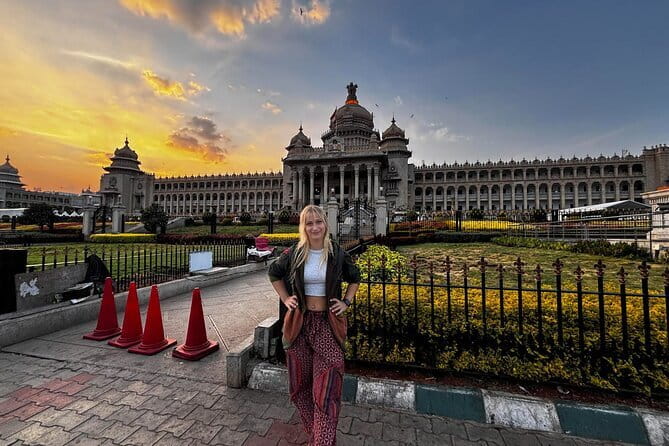
I would choose this walk if you have only a few hours in Bangalore and want more than a single palace visit. It is particularly useful during a short work trip, since it brings together several major cultural stops in one compact outing.
It also suits you if you want a guide to explain religious customs and local history while you walk. The praise for guides including Vanaja, Raghavendra, and Vasuki points to careful communication, useful local suggestions, and a willingness to answer questions.
You may want a different plan if you prefer quiet, spacious attractions or dislike uneven, crowded city streets. KR Market is central to the experience, not a minor add-on. The tour also has a firm clothing requirement, and temple access can change with opening hours or seasonal conditions.
The price is reasonable for the combination of guide service, admissions, and time spent on five substantial stops. The strongest value comes from the range: palace, Hindu temple, fort, market, and Jain temple in one morning or afternoon. You are paying for interpretation and access to a connected part of the city, not simply entry tickets.
Should you book the Old Bangalore Historical Walk?
Book it if you want an honest look at old Bangalore in a short amount of time. The route gives you architecture, faith, history, street commerce, and practical help from a small-group guide. The shift from the calm palace and temples to the forceful energy of KR Market is the experience’s main strength.
Before booking, make sure you can cover your shoulders and legs, carry a scarf if needed, and handle a crowded market walk. Also leave room in your schedule after the tour.
With 100 percent recommendation and a 5 out of 5 rating from 62 ratings, the experience has a strong record. More important, its design makes sense: you see the old city as a living place, not just a collection of monuments. For $22.38, that is a fair deal.
FAQ
How long does the Old Bangalore Historical Walk last?
The walk lasts approximately 3 to 4 hours. The planned stops total about 3 hours and 45 minutes, so you should allow most of an afternoon or morning.
Where does the walk begin?
It begins at Tipu Sultan’s Summer Palace, 42 Tippu Sultan Palace Road, Kamalanagar, Chamrajpet, Bengaluru, Karnataka 560018, India.
Where does the walk end?
It ends at Shri Adinath Jain Shwetamber Mandir on Chickpet Road. The temple is close to Chickpet metro station.
What should I wear to visit the temples?
Your legs and shoulders should be covered. Women should also carry a scarf because the walk visits both a Hindu temple and a Jain temple.
Are monument entry fees included?
Yes. Entry fees at all monuments are included. Tips for the guide, lunch, and transport are not included.
How large is the tour group?
The activity has a maximum of 10 participants. Group discounts are available, and a mobile ticket is offered.
More Shopping Trips in India
- Seoul: Palace, Temple and Market Guided Foodie Tour at Night
★ 4.9 · 750 reviews - Seoul Night Palace & Market Food Tour with Vehicle
★ 5.0 · 275 reviews - Versailles Full-Day Electric Bike Tour : Market, Picnic & Palace
★ 5.0 · 239 reviews - Grand Palace, Damnoen Floating Market & Maeklong Market Tour
★ 4.8 · 173 reviews
More Market Visits in India
- Bangalore Walking Tour KR Flower Market,Fort,Tippu palace
★ 5.0 · 8 reviews - Mysore: Palace, Art Gallery & Devaraja Market Walking Tour
★ 5.0 · 7 reviews - Versailles Palace Bike Tour with Market & Marie-Antoinette hamlet
★ 5.0 · 2,680 reviews - Versailles Bike Tour with Market, Gardens & Guided Palace Tour
★ 5.0 · 1,121 reviews
Just added around India
- Overnight Pangong Tour From Leh With Thiksey & Shey Palace★ 5.0 · 4 reviews
- Mysore: 2-Day Palace and Gardens Tour from Bangalore★ 3.3 · 3 reviews
- Mysore: Palace, Art Gallery & Devaraja Market Walking Tour★ 5.0 · 7 reviews
- Leh: 3Hours short Trip – Spituk Monastery, Leh Palace & More★ 4.9 · 8 reviews
- Jaipur Sightseeing by Tuk-Tuk: Temples, Palaces & Markets★ 5.0 · 4 reviews
- Jaipur: Heritage Forts & Palaces Tour with Monkey Temple★ 5.0 · 2 reviews
- Jaipur: City Palace, Hawa Mahal & Jantar Mantar Private Tour★ 5.0 · 2 reviews
- Jaipur: Night Open Jeep Safari with City Lights & Palaces★ 5.0 · 10 reviews
Palace Walking Tours, compared.
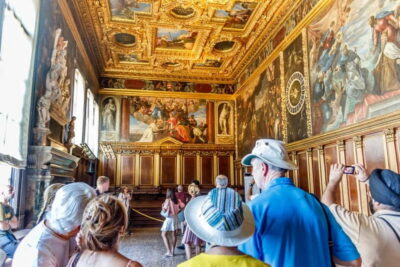
Doge’s Palace and St Mark’s Basilica Walking Tour
Read our review →

Walking Tour of Split and Diocletian’s Palace
Read our review →
Grand Palace and Wat Phra Kaew Guided Walking Tour
Read our review →
Imperial Palace and Shogun Historical Walking Tour
Read our review →
Madrid Old Town & Royal Palace Walking Tour Skip the Line Ticket
Read our review →
Knossos: Knossos Palace Skip-the-Line Guided Walking Tour
Read our review →
Browse the lists this tour appears in