

REVIEW · VENICE
Venice: Lords of the Night Prison’s Palace Cells & Tortures
Crime has always had a place in Venice. This short visit takes you behind the grand spectacle of St. Mark’s Square and into the Prison Palace, where dark cells, old courtrooms, torture devices, inmate graffiti, and the story of Casanova reveal a harsher side of the Venetian Republic. I especially like the chance to see rooms many visitors miss, and the guides add far more color than the display signs alone. The main drawback is size: you may finish in 45 to 60 minutes, and the prison can feel small if you expect a vast complex.
At about $11 per person, this is one of the easier historic stops to fit into a Venice day. I like the small-group format, which makes it simple to ask questions, and I appreciate that the visit gives context to the Council of Ten and the old Venetian justice system. Just know that this ticket does not include the Doge’s Palace or the inside of the Bridge of Sighs.
Key points at a glance
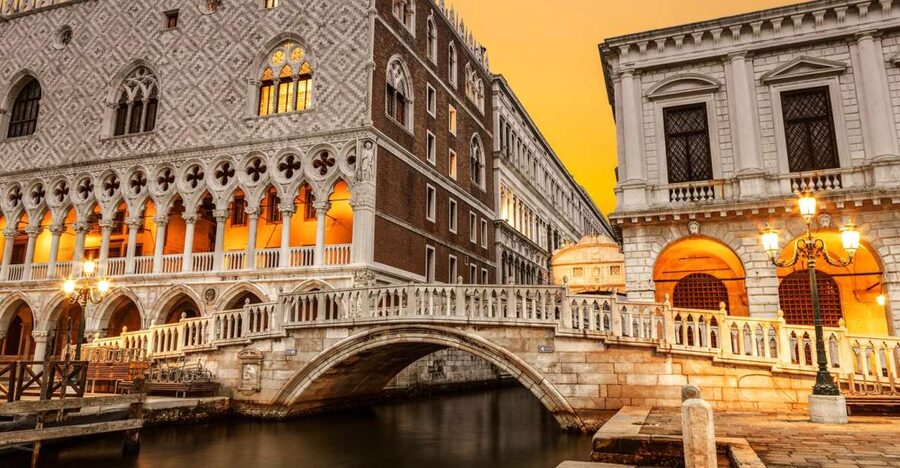
- Casanova’s escape route: Hear how the famous Venetian prisoner escaped, including the attic area connected with his imprisonment.
- A prison beside St. Mark’s: Cross the bridge beside the Doge’s Palace and enter a working historic building overlooking the Riva degli Schiavoni.
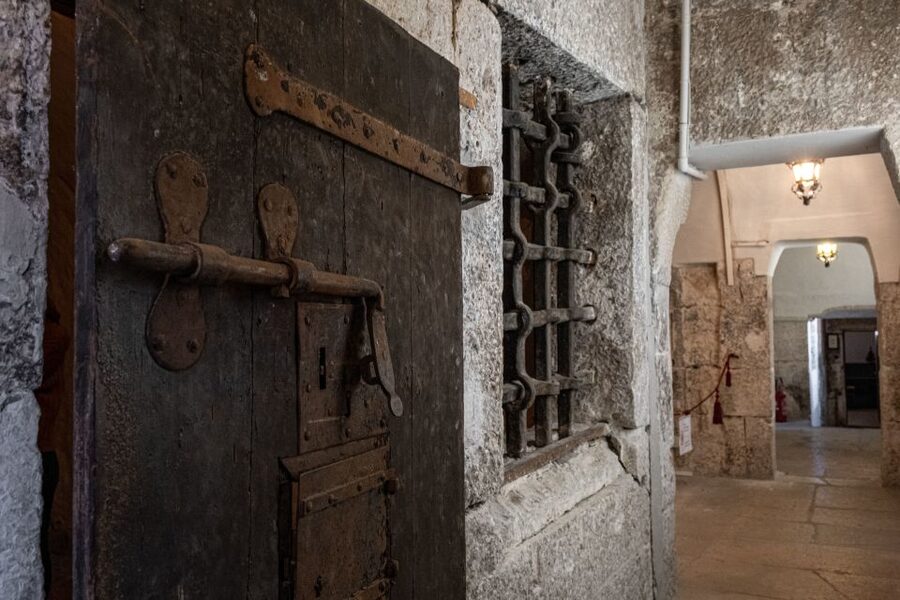
- Cells and inmate graffiti: See where prisoners slept and view marks left on the walls by people held there.
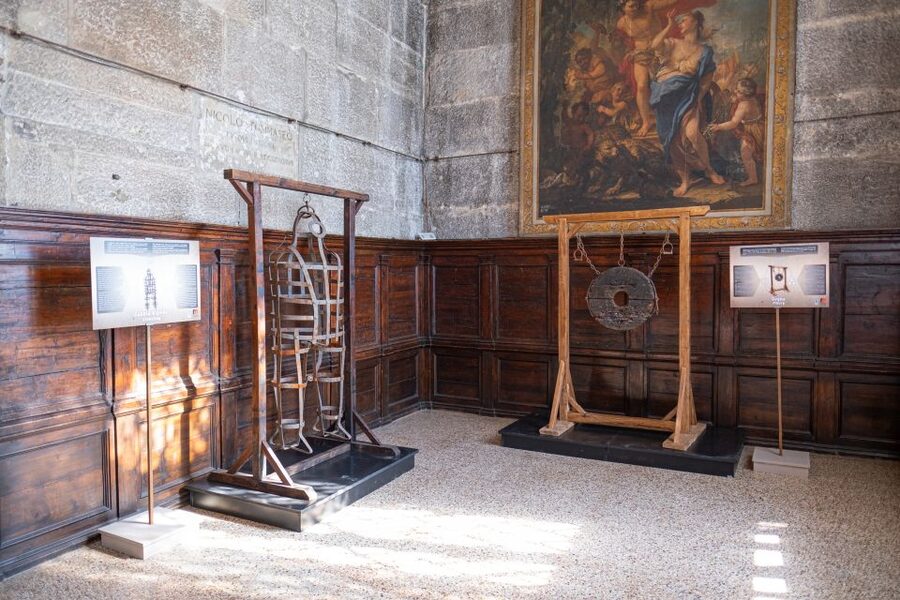
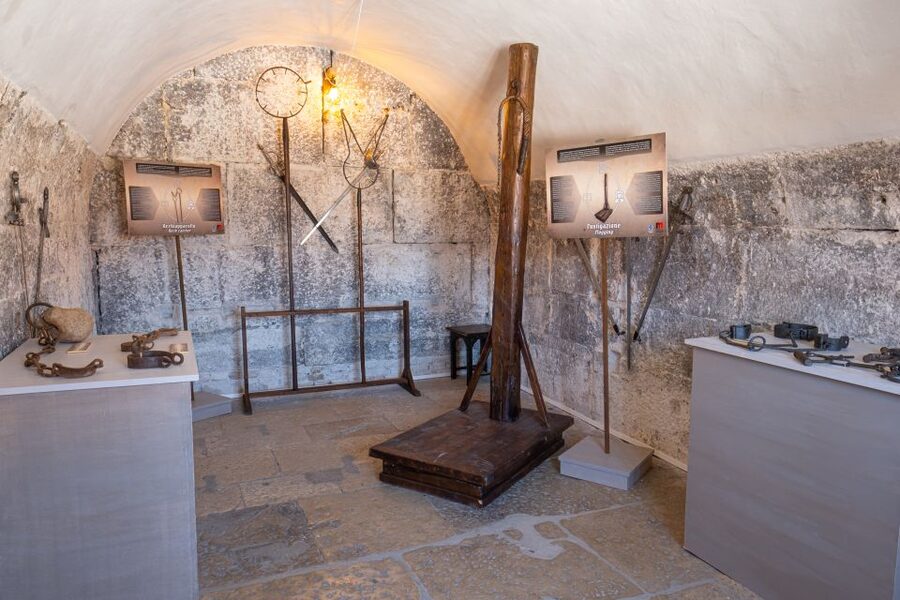
- Torture displays: The exhibits include old punishment devices, some of which may be disturbing for children or sensitive visitors.
- Guide or audio option: A live guide is available in Italian and English, while audio guides are offered in four languages.
- Short, good-value visit: Plan on roughly an hour, making this easy to pair with St. Mark’s Square or the Doge’s Palace.
Finding the Prison Palace beside St. Mark’s Square
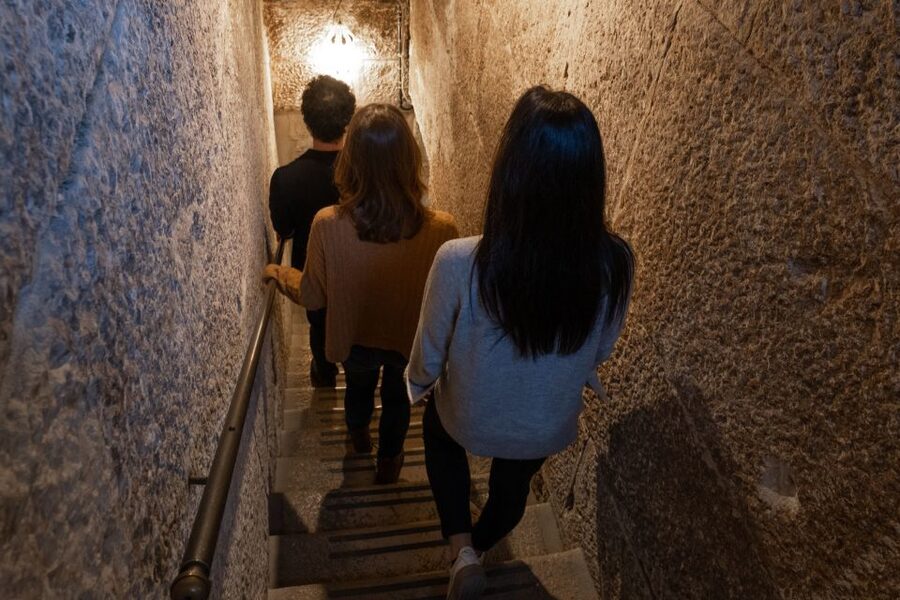
The meeting point is the Palazzo delle Prigioni, or Prison Palace, just off Piazza San Marco. Stand with the Doge’s Palace in front of you and the San Marco basin behind you. Walk to the right side of the Doge’s Palace entrance, cross the bridge, and look for the prison entrance on your left.
That sounds simple, but the entrance can be easy to miss. You need to go into the building and up the stairs, and one visitor missed the downstairs area because the directions were not clear enough. I would arrive a little early and look for the entrance rather than waiting beside the Doge’s Palace.
The location is a major advantage. You do not need a separate trip across Venice, and the visit works well before or after the Doge’s Palace. The prison overlooks the Riva degli Schiavoni, so you are standing in one of the city’s grandest areas while entering a place designed to confine people.
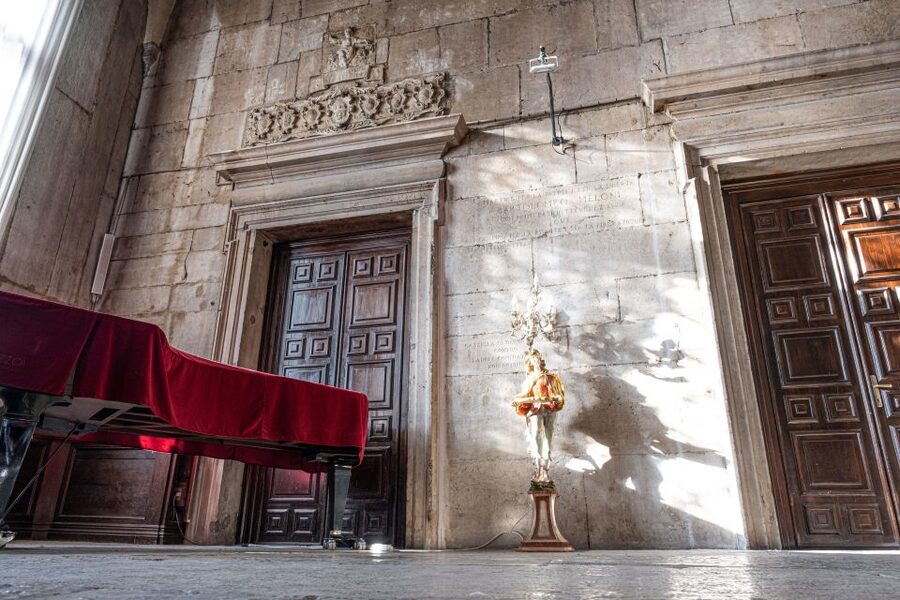
The building now serves as the seat of the Artistic Circle, which hosts cultural events and concerts. That modern use does not erase the older atmosphere. Inside, the heavy rooms and narrow passages offer a sharp change from the marble ceremonies and open water outside.
More Evening Trips in Venice:
- Exclusive Evening at Schönbrunn Palace: After-Hours Audiotour, Dinner, Concert
★ 4.0 · 930 reviews - Vienna: Schönbrunn Palace Evening Tour, Dinner and Concert
★ 4.4 · 889 reviews - Seoul: Palace, Temple and Market Guided Foodie Tour at Night
★ 4.9 · 750 reviews
The opening courtroom and the machinery of Venetian justice
The tour begins with the prison’s formal spaces, including an imposing courtroom. This helps explain that the building was not simply a place where people were locked away. It was part of a larger legal system controlled by the Council of Ten, a powerful body made up of Venice’s highest political figures.
Your guide explains how the Council of Ten supervised justice across Venetian territories. That political background gives the cells more meaning. You are not just looking at old walls and metal objects. You are seeing one part of a system that combined government, law, punishment, and secrecy.
The best guides keep this section moving. Tiziana, Julia, Christian, Kristian, and other guides have been praised for making the subject clear and lively. Some guides have handled English and Italian in the same group, and one young guide even managed three languages. If your tour is bilingual, the talk may take longer, but the arrangement can work well when the guide keeps the explanations focused.
A live guide is worth considering if you want the stories behind the objects. The labels explain some of the basics, but they cannot always tell you how the rooms were used or connect the devices to Venice’s justice process. One advantage of the guide is the chance to ask questions as you go.
Entering the cells and learning about prison life

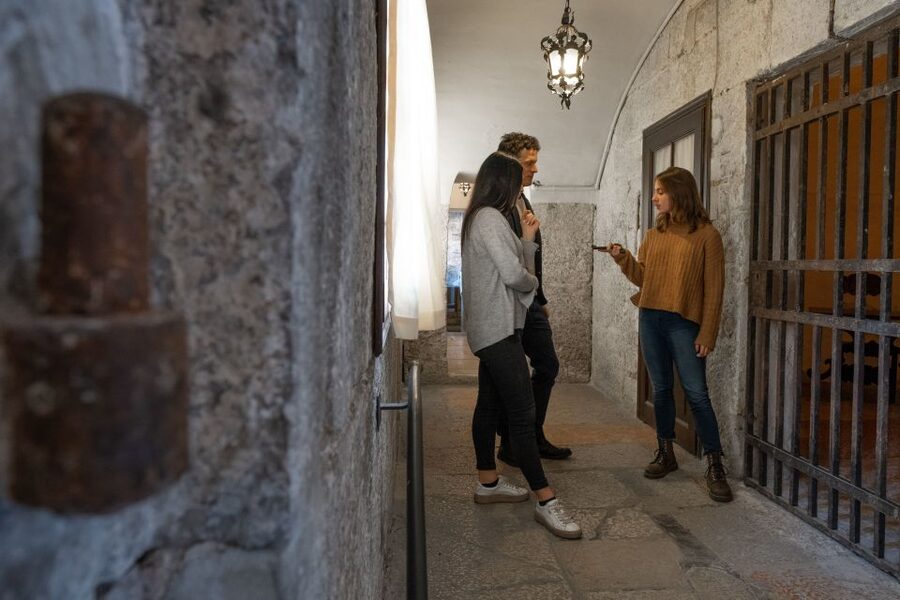
From the public rooms, you move into the darker cells. This is the part I find most effective because the prison feels less like a museum display and more like a place where people actually lived under confinement.
You learn about food, drink, sleeping arrangements, and the daily limits placed on inmates. The information helps you picture the ordinary side of imprisonment, not just the dramatic punishment devices. The cells are also a reminder that old prisons were places of waiting, discomfort, and uncertainty.
Look closely at the walls. Actual graffiti left by inmates is one of the more personal details in the building. These marks connect the rooms to individual prisoners in a way that a polished historical display cannot. They also make the visit feel less theatrical and more direct.
The prison is not enormous. You will not spend half a day wandering through endless corridors, and that may disappoint you if you imagined a large fortress. On the other hand, the compact layout keeps the visit manageable. You can give the cells your attention without becoming worn out by a long museum route.
Access involves stairs and old interior spaces, so this visit is not recommended for people with limited mobility. It is best suited to anyone comfortable walking through historic buildings without modern museum access at every point.
Torture rooms and the darker side of the display
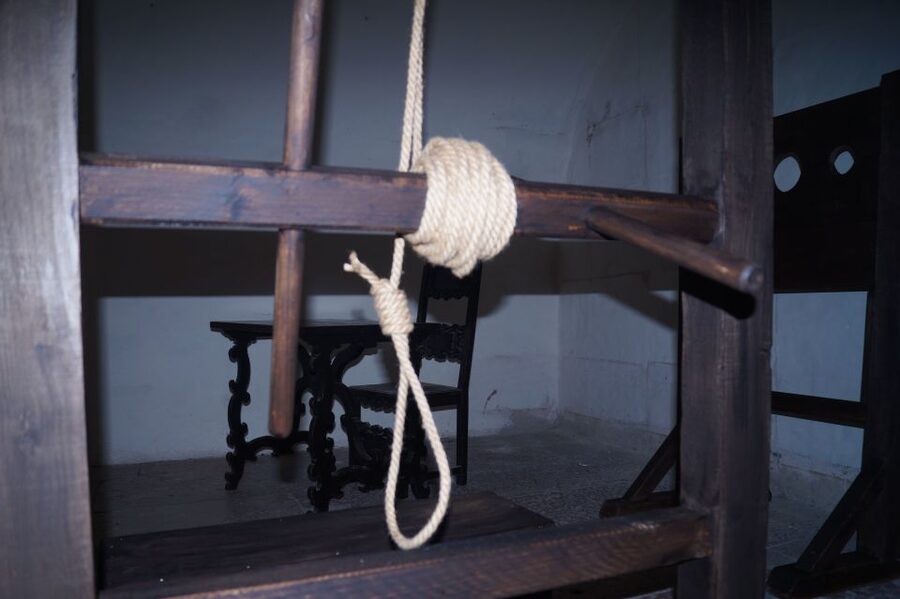
The torture section is the most eye-catching part of the experience. The exhibition includes a range of punishment devices, with displays spread over two floors. Some objects are identified as dating from at least the 17th century, though the exact period of every item may not be immediately clear.
This section is presented in a fairly direct way. You see the tools and hear how punishment worked, rather than receiving a long academic lecture. Some people will find that fascinating. Others may feel that the display gives more attention to torture than to the prisoners themselves.
That is a fair criticism. If you mainly want a detailed account of inmate life, the visit may feel short on personal stories. If you enjoy crime, punishment, and unusual old objects, the devices are likely to hold your attention.
The material can be disturbing, but the guide’s tone makes a difference. Several guides have been praised for adding humor without making light of the subject. That balance is useful, especially in a mixed group with children. The attraction can work for older children who are interested in history, but you should decide for yourself how comfortable they are with grim displays.
You may also find that the signs provide much of the basic information. If you read every label carefully, you can learn a good deal without a guide. The guide becomes more valuable when you want explanations of objects without detailed captions, a clearer account of the legal system, or answers to questions that arise along the way.
A few more palace visits around Venice worth a look
- Venice: Doge’s Palace Reserved Entry Ticket
★ 4.6 · 42,716 reviews - Doge’s Palace & St. Mark’s Basilica with Terrace Access Tour
★ 4.7 · 10,697 reviews - Venice: Doge’s Palace and St Mark’s Basilica Walking Tour
★ 4.4 · 6,291 reviews - Legendary Venice: Doge’s Palace, St Mark’s & VIP Terrace Access
★ 4.5 · 5,033 reviews
Casanova, the attic, and the escape story
Casanova’s presence gives the visit its most famous human story. He was arrested by the Lords of the Night, an authority connected with policing and criminal justice in Venice, and held in the prison complex.
The guide tells the story of his escape, including the route that took him out through the building’s upper areas. The attic section is especially memorable because it connects the tale to a physical place rather than leaving it as a legend heard in a square.
Do not expect a theme-park version of Casanova. The appeal is seeing the actual setting linked with a famous jailbreak and understanding how a prisoner could use the building’s layout to his advantage. The story also gives the tour a welcome change of pace after the darker torture displays.
The Casanova material is one reason I would choose the guided option if available. A printed sign can give you the basic event, but a good guide can explain the route, the risks, and the strange details that make the escape memorable. The best guides, including Julia and Christian, have been praised for answering questions rather than simply reciting prepared facts.
What the guided option adds
You can enter with an audio guide or choose a live guide, depending on the ticket option. Audio commentary is available in English, French, Spanish, and Italian. Live tours are offered in Italian and English, and the tour may be bilingual.
A live tour usually lasts about 45 to 60 minutes. That timing is ideal if you are building a busy day around St. Mark’s Square. It is long enough to cover the cells, courtroom, torture displays, and Casanova story without turning into a full afternoon commitment.
Small groups are another plus. Groups have sometimes been as small as two people, and groups of around six are easy to hear and manage. You can ask a question without shouting across a large room, and the guide can adjust the explanation when the group shows interest in a particular object.
The quality depends on the individual guide, but the strongest comments focus on clear explanations, warmth, and enthusiasm. One university criminology student received praise for combining professional detail with an approachable manner. That sort of guide can make a modest museum feel much more rewarding.
The bilingual format deserves a practical note. If one guide is speaking in English and Italian, you may spend longer listening than you would on a single-language tour. Still, this arrangement has worked well for many groups, especially when the guide keeps both versions concise.
Ticket value and what is not included
At $11 per person, this is a good-value add-on near St. Mark’s Square. Venice sightseeing can become expensive quickly, and this visit gives you a distinct subject for a relatively low price. You are paying for access to a real historic prison, not just a display placed in a modern exhibition hall.
The value is strongest if you enjoy unusual history and want something different from churches, palaces, and views over the lagoon. It is also useful when you have a spare hour between larger attractions.
The value is weaker if you expect a large prison complex or a long, detailed museum visit. Some people finish quickly, especially if they do not use a guide. The exhibits can also feel more focused on torture devices than on the wider lives of prisoners.
Your ticket does not include entry to the Doge’s Palace or access to the Bridge of Sighs. This matters because the Bridge of Sighs is seen from the Doge’s Palace route, not from this separate prison visit. If walking inside the bridge is important to you, you need to book the Doge’s Palace experience as well.
Entry is available from 10:00 a.m. to 5:00 p.m. The reservation is valid for one day, with starting times subject to availability. You can cancel up to 24 hours before the visit for a full refund, and a reserve-now, pay-later option may help if your Venice schedule is still changing.
Who will enjoy this Venice prison visit?
I would recommend it most strongly to you if you enjoy:
- Venetian political and legal history
- Crime stories and old punishment methods
- Smaller museums with real rooms rather than grand reconstruction
- Casanova’s life and escape
- Short activities that fit between major sights
- Guided visits where you can ask questions
It is also a sensible choice for families with older children who can handle grim subjects. The rooms and objects offer plenty to discuss, and the visit is short enough to hold attention. Still, the torture displays are not gentle, so use your judgment with younger children.
You may want to skip it if you dislike graphic punishment exhibits, need step-free access, or want a large palace experience. The visit has a narrow focus. It is about prison rooms, justice, punishment, and a famous escape, not a full survey of Venice.
Should you book the Prison Palace tour?
Book it if you have about an hour near Piazza San Marco and want a different view of Venice. The $11 price, central location, short duration, and strong live guiding make it an easy addition to your day.
Choose the guided option if you want the Council of Ten explained, the Casanova escape told properly, and more detail than the display signs provide. Choose audio or entry-only access if you prefer to move at your own pace and are happy reading.
I would not treat this as a replacement for the Doge’s Palace. Instead, think of it as a smaller companion visit. The Doge’s Palace shows Venice in its public and ceremonial role. The Prison Palace shows what happened when that political machine turned toward accusation, judgment, and confinement.
FAQ
Where is the Prison Palace in Venice?
It is beside Piazza San Marco, near the Doge’s Palace. With the Doge’s Palace in front of you and the San Marco basin behind you, walk to the right, cross the bridge, and find the entrance on your left.
How much does the experience cost?
The listed price is $11 per person.
How long does the visit take?
The guided visit generally lasts about 45 to 60 minutes. The booking is valid for one day, with available starting times shown when you check.
What are the opening hours?
The Prison Palace is open from 10:00 a.m. to 5:00 p.m.
Is the Doge’s Palace included?
No. The ticket does not include access to the Doge’s Palace.
Can I enter the Bridge of Sighs with this ticket?
No. Access to the Bridge of Sighs is not included.
Is a guide included?
A guided tour is included only if you select that option. An audio guide option is also available.
Which languages are offered?
Live guiding is available in Italian and English. Audio guides are available in English, French, Spanish, and Italian. The live tour may be bilingual.
Is the tour suitable for people with limited mobility?
No. The visit is not recommended for people with mobility impairments, and the route includes stairs and historic interior spaces.
Just added around Venice
- Venice: Gondola Ride and a Gala Dinner in a Venetian Palace★ 4.8 · 17 reviews
- Doge’s Palace, St. Mark’s & Gondola Ride with Options★ 4.8 · 14 reviews
- Venice: Doge’s Palace and Basilica Tour with Gondola Ride★ 4.2 · 5 reviews
- Doge’s Palace & St Mark’s Basilica Entry + Campanile Options★ 4.4 · 41 reviews
- Doge’s Palace small group or private tour with a local guide★ 5.0 · 18 reviews
- Venice: Doge’s Palace, Bridge of Sights, St.Mark’s Basilica★ 3.0 · 12 reviews
- Venice: Basilica and Doge’s Palace Tour with Gondola Ride★ 4.4 · 85 reviews
- Basilica and Doge’s Palace tour with Lunch & Murano★ 3.8 · 4 reviews
Evening Experiences, compared.

Exclusive Evening at Schönbrunn Palace: After-Hours Audiotour, Dinner, Concert
Read our review →
Schönbrunn Palace Evening Tour, Dinner and Concert
Read our review →
Palace, Temple and Market Guided Foodie Tour at Night
Read our review →
Alhambra and Nasrid Palaces Guided Tour at Night
Read our review →
Evening at Schönbrunn Palace Vienna: 3-course Dinner and Concert
Read our review →
Seoul Night Palace & Market Food Tour with Vehicle
Read our review →
Buenos Aires: Palacio Barolo Guided Night Tour with Wine
Read our review →
The Alhambra and Nasrid Palaces Guided Night Tour
Read our review →Browse the lists this tour appears in