
REVIEW · VENICE
Venice: Doge’s Palace Skip-the-Line Tour with Prisons
Venice’s power wears a very beautiful disguise. This 75-minute visit brings you into the Doge’s Palace, where Venetian rulers and councils directed a thousand-year-old republic. I like the skip-the-line entrance and the way a good guide turns vast paintings and grand rooms into a readable story. I also like that the route includes the Bridge of Sighs and the old prisons, not just the palace’s showpiece halls.
The main drawback is the tight schedule. Seventy-five minutes is enough for a brisk introduction, but not enough to study every painting or room. Security checks still apply, and crowded halls or a crackling microphone can make parts of the commentary harder to follow.
Key points to know before booking
- Casanova’s prison: Enter the old Venetian prison associated with Giacomo Casanova and see the route prisoners took across the Bridge of Sighs.
- Three architectural eras: Look for Byzantine, Gothic, and Renaissance details in one extraordinary building.
- Art with context: Tintoretto, Titian, Veronese, and Bellini are easier to appreciate when a guide explains what you are seeing.
- A real time-saver: The separate entrance avoids the line for non-reserved visitors, although everyone must still pass through security.
- Extra museum access: Your ticket also includes the Correr Museum, Archaeological Museum, and Biblioteca Marciana, with access valid for three months from the date of issue.
- Guide quality matters: Guides such as Denise, Donatella, Marco, Marina, and Louisa have been praised for humor, local insight, and clear storytelling, but headsets can sometimes be imperfect.
Why the Doge’s Palace matters
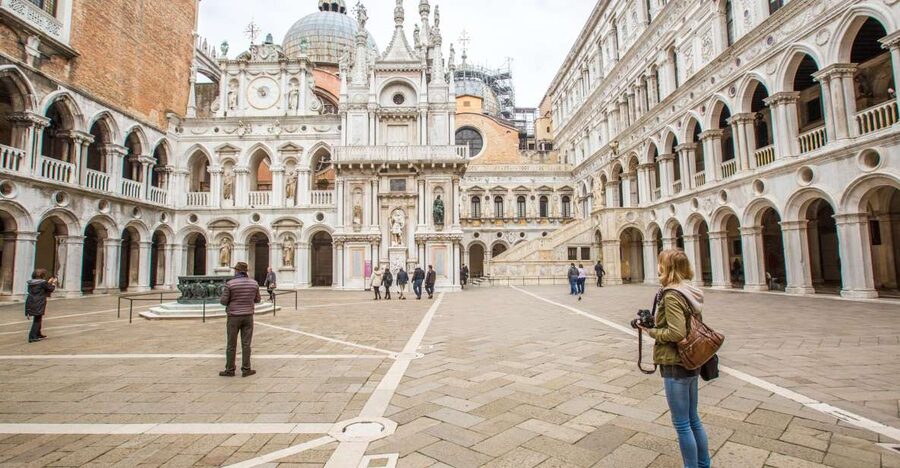
The Doge’s Palace was not simply a residence for one grand Venetian ruler. It was the working center of Venetian political power, where the doge and his council managed the affairs of the republic.
That distinction helps you read the building correctly. The palace was designed to impress, but it was also an office complex, courtroom, ceremonial stage, and administrative machine. Behind the decoration was a government that controlled trade, diplomacy, law, and military decisions.
I find this political setting more useful than a quick list of dates. The enormous rooms begin to make sense when you understand that they were built to project stability and authority. Venice wanted visiting ambassadors, merchants, and citizens to see a state that looked wealthy, orderly, and permanent.
Your guide supplies the backstory as you move through the palace. The best guides do not simply point at a famous canvas. They explain why it is in that room, who commissioned it, and how the art supported the image of Venetian power.
More Skip-the-Line Palace Tickets in Italy
- Skip-the-Line: Doge’s Palace & St. Mark’s Basilica Fully Guided Tour
★ 4.5 · 1,892 reviews - Venice: Doge’s Palace Skip-the-Line Ticket with Guidebook
★ 4.0 · 1,196 reviews - Doge’s Palace Skip-the-Line Guided Tour
★ 4.3 · 897 reviews
Entering through the busy heart of St. Mark’s Square
The palace sits beside St. Mark’s Basilica, in one of Venice’s most crowded and visually powerful areas. Your meeting point can vary according to the option you book, so check your confirmation carefully rather than assuming you will meet directly at the palace entrance.
The skip-the-line arrangement is one of the strongest reasons to book a guided visit. In high season, the regular entrance queue can become a serious time sink. One family reported that the ordinary line would have taken about three hours, making the reserved entry well worth the $54 price.
That benefit does not mean you walk straight inside without stopping. Security checks are mandatory, and you may still wait briefly at the entrance. The important distinction is that you skip the line for visitors without reserved tickets, not every possible delay.
A few people have found the meeting process less tidy than expected, particularly when gathering at a tour shop before walking to the palace. Give yourself extra time, especially if you are arriving from the railway station or another part of Venice. The city’s lanes are easy to misread, and a late arrival can mean missing the group.
The government rooms and the gold staircase
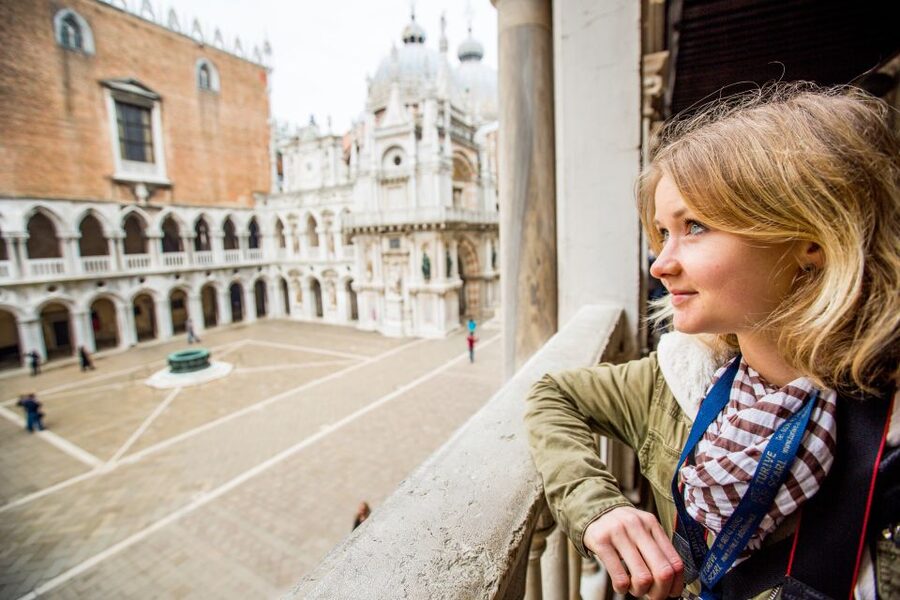
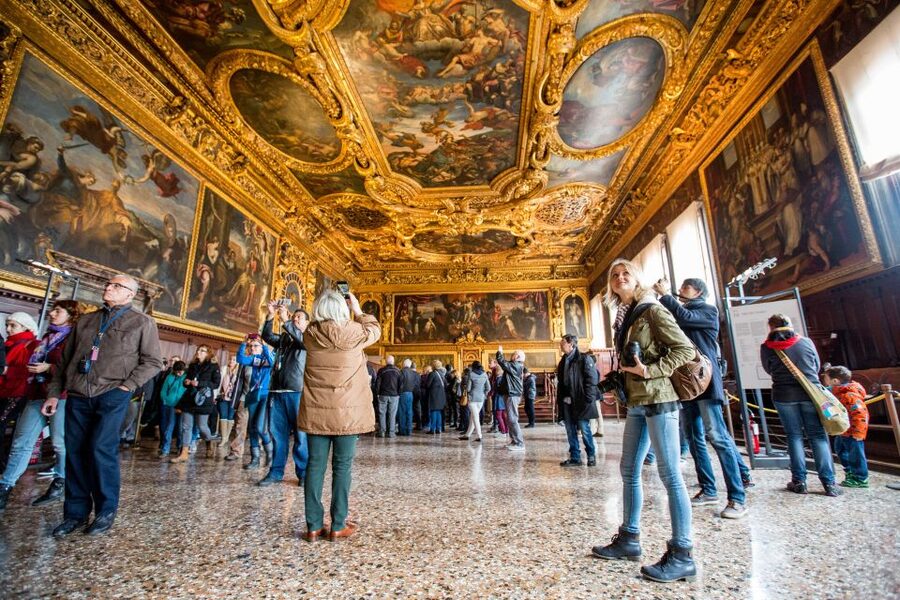
Inside, the tour usually moves through the palace’s formal rooms and government spaces. These interiors were built to make power visible, and they do so with a generous supply of gilding, carved details, painted ceilings, and monumental canvases.
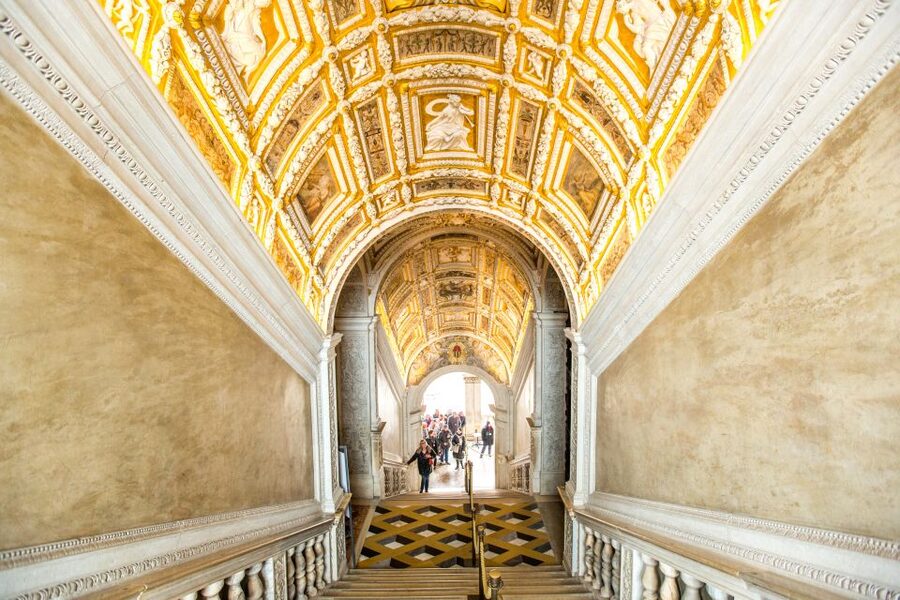
The Gold Staircase is an early visual jolt. Its decoration is not shy. You are meant to feel that you are moving from ordinary Venice into the world of the ruling state.
Look upward as often as you look ahead. The palace’s best details are frequently above eye level, where painted scenes, ornamental borders, and elaborate ceilings compete for attention. A guide helps you choose where to focus because there is simply too much to absorb in one pass.
The route also introduces the residential and administrative side of the building. This is valuable because the palace can otherwise feel like a chain of magnificent rooms without a clear purpose. Your guide connects the spaces to the doge, the councils, and the machinery of government.
The tour is not designed for a slow, solitary art visit. You will move with the group, pause for explanations, and then continue. That pace suits first-time visitors who want a clear framework, but art lovers may wish to stay afterward and revisit favorite rooms.
Tintoretto, Titian, Veronese, and Bellini
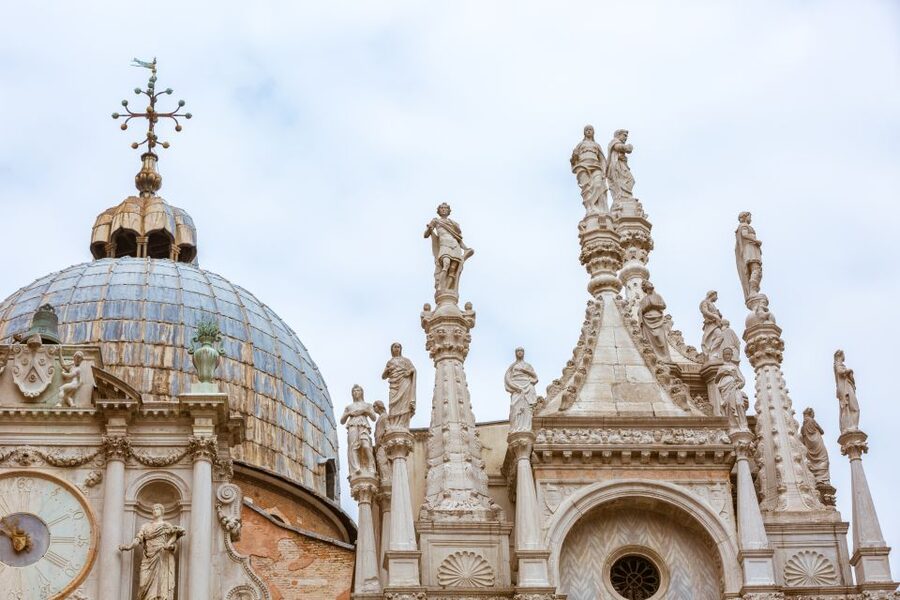
The palace contains works by some of Venice’s most important painters, including Tintoretto, Titian, Veronese, and Bellini. The artwork is not presented like a quiet gallery collection. It is part of the building’s political message.
That is why the guide’s explanation matters. Without context, a vast ceiling painting can register as an impressive blur of color and bodies. With a few clear points about the subject, patron, or intended effect, you can see how the scene helped glorify Venice and its governing institutions.
Several guides have been praised for adding just this kind of context. Denise, a Venetian with family connections reaching back generations, has been especially appreciated for linking the palace to the wider story of Venice. Her humor and local perspective made the history feel spoken rather than recited.
Other guides named in strong feedback include Donatella, Marco, Marina, Louisa, and Filippo. Marco has been praised for combining historical detail with jokes and a comfortable pace. Donatella has been described as friendly, articulate, and very prepared. Of course, you cannot normally select the guide by name, so treat these examples as a sign of what a strong tour can offer, not a promise about your particular departure.
More Skip-the-Line Palace Tickets in Venice
- Skip-the-Line Guided Tour of Doge’s Palace
★ 4.2 · 472 reviews - Venice: Skip-the-Line Doge’s Palace & Basilica Walking Tour
★ 4.6 · 294 reviews - Skip the Line Venice Doge’s Palace and St. Mark’s Basilica Tour
★ 4.0 · 263 reviews - Doge’s Palace, Bridge of Sighs & Prison Skip-the-Line Tour
★ 4.9 · 254 reviews
Crossing the Bridge of Sighs
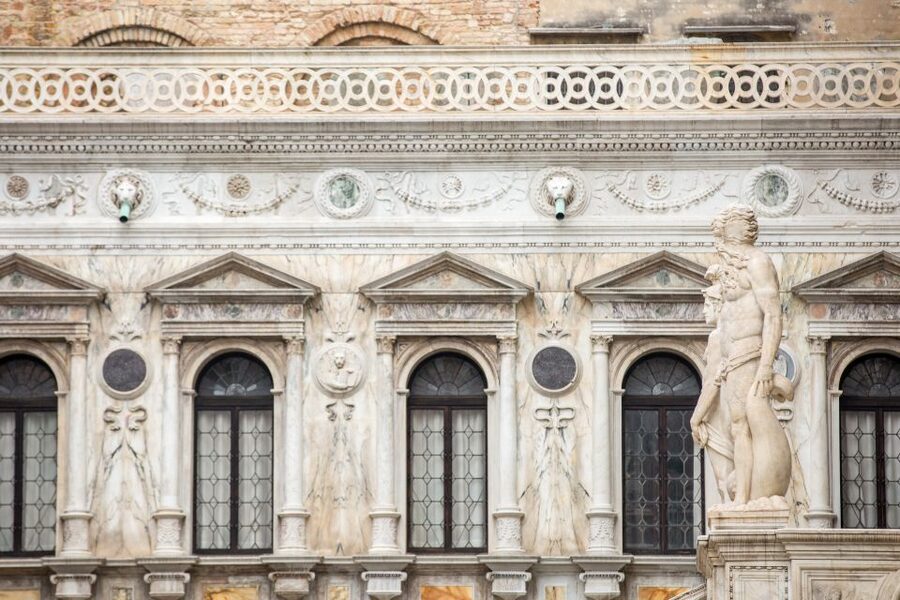
The Bridge of Sighs connects the Doge’s Palace with the prison buildings. Its name invites romantic pictures, but the original experience was grim. Prisoners crossed it after proceedings in the palace, catching a final view of Venice through the stone screens and small windows.
Walking this route gives the bridge a different meaning. From outside, it is one of Venice’s most photographed details. From inside, it becomes part of a legal and prison system.
The passage can feel narrow and atmospheric. You will not get a long, open viewpoint, and this is not a scenic overlook in the usual sense. Its power comes from the story attached to the crossing and the contrast between the palace’s glittering rooms and the confinement that followed.
If you are interested in social history, this section may be the most memorable part of the tour. It shifts attention away from rulers and masterpieces and toward the people caught in the republic’s justice system.
Casanova and the Venetian prisons
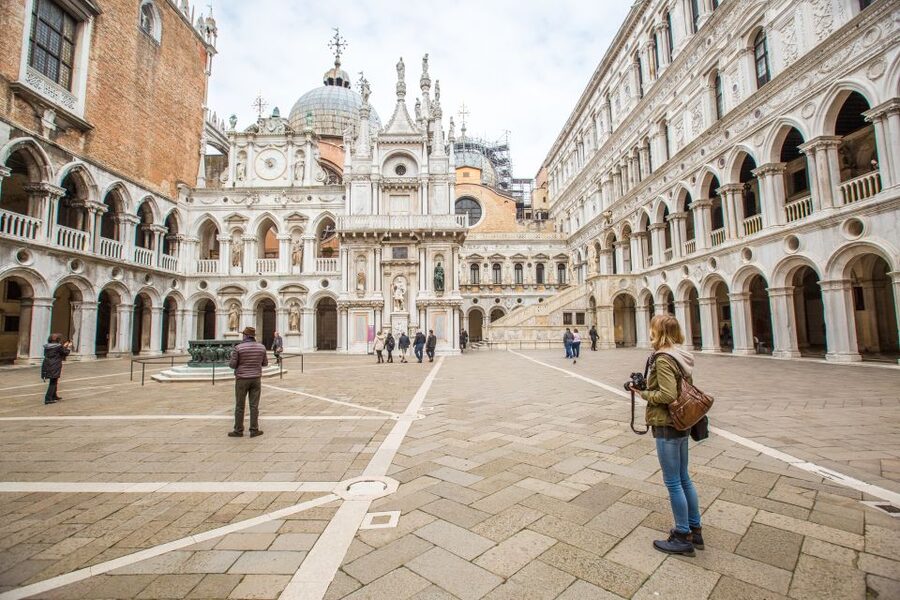
The prison section is a major reason to choose this tour instead of a palace-only visit. You enter the old cells and see the less polished side of Venetian government.
Giacomo Casanova is the best-known name linked to these prisons. He was incarcerated there and later escaped, a story that gives the otherwise austere rooms an immediate human connection. The cells are a useful counterpoint to the palace’s ceremonial splendor: one side displays wealth and authority, while the other shows what happened when the state exercised its authority against an individual.
Do not expect a long prison study. The whole experience lasts about 75 minutes, and the guide must cover the palace, bridge, and cells within that window. Still, the prison visit gives the tour a beginning, middle, and end. You see how power was displayed, how decisions were made, and how punishment could follow.
Some people may find the route physically tiring. There can be periods of standing and movement, with limited seating along the way. If you are over 65 or need frequent rests, tell the guide when the tour begins and consider that the pace may not suit every mobility level.
What the 75-minute pace feels like
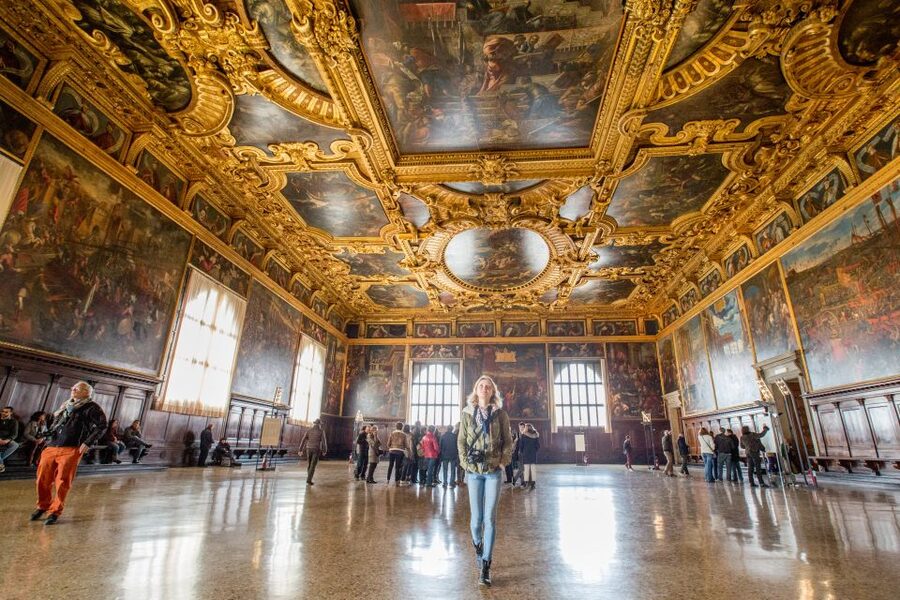
A one-hour-plus format works well in Venice, where the city offers endless distractions and your sightseeing day may already be full. You get a focused introduction without giving the palace an entire morning.
The trade-off is depth. You may wish to linger in a room, inspect a painting, or explore the armory in detail, but the group needs to keep moving. One useful feature is that visitors have sometimes been able to remain in the palace after the guided portion, allowing extra time to look again at rooms and artworks. Confirm the current arrangement on the day, since access after the tour can depend on the ticket and operating conditions.
This flexibility makes the tour more useful than its short length suggests. Treat the guided portion as your orientation, then use any remaining palace access to revisit what caught your attention.
The pace has generally been praised when the guide manages it well. A good guide gives enough background to make the place meaningful without burying you in names and dates. Filippo, for example, was praised for presenting enough history to form a complete story without overwhelming the group.
Audio equipment, crowds, and language
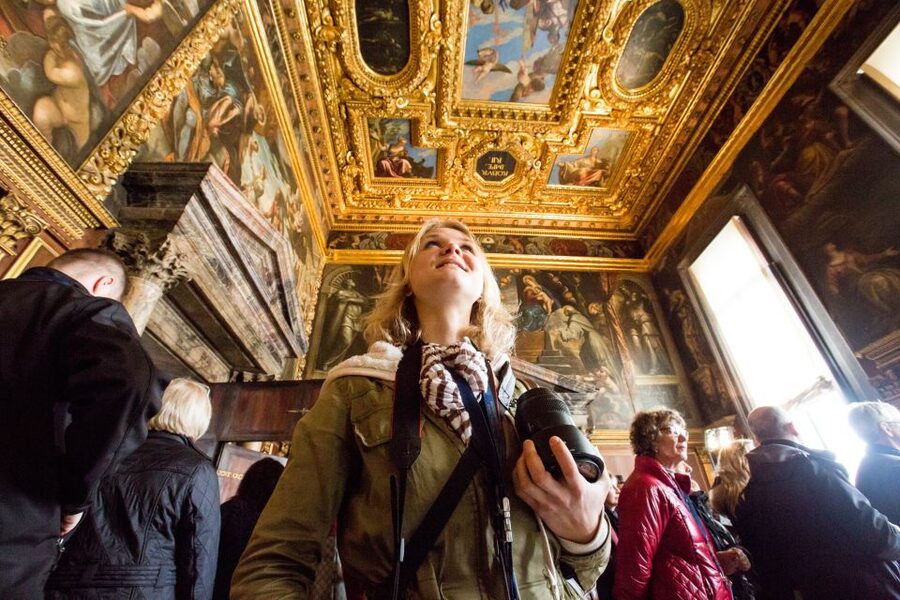
The tour offers live guiding in English, Spanish, French, German, and Italian. In November through March, the tour may be bilingual, so expect the commentary to take longer or alternate between languages.
Headsets are normally part of the group setup, but sound quality can vary. Static, crowd noise, and an unfamiliar accent have occasionally made the guide difficult to follow. This matters in the palace because the rooms are large and groups may spread out around paintings or doorways.
Stay close enough to see the guide and keep your receiver at a comfortable volume. If you cannot hear, speak up early rather than waiting until the group has moved on. A few people have suggested bringing personal stereo earphones if the equipment allows it, though you should confirm compatibility before relying on them.
Flash photography is not allowed. You can admire the interiors and take photographs where permitted, but keep the flash off and follow staff instructions.
Is $54 good value?
At $54 per person, this is not the cheapest way to enter the Doge’s Palace. The value comes from combining reserved admission, a live guide, the prison route, the Bridge of Sighs, and entry to the St. Mark’s Square museums.
The museum admission is a useful extra. Your ticket includes the Correr Museum, Archaeological Museum, and Biblioteca Marciana. These museum tickets do not include guiding, but they remain valid for three months from the date of issue, giving you time to return rather than forcing everything into one afternoon.
For a first visit, the price makes sense if the regular queue is long. Time in Venice is costly, and standing outside for hours is a poor use of it. The guided explanation also adds value if you are not already familiar with Venetian political history or Renaissance art.
The calculation changes if you prefer to read labels quietly and set your own pace. You may find a self-guided visit more satisfying, especially if you want to focus on particular artists or spend a long time in one room.
Children up to age six go free. The tour may suit families with older children because the prison and Casanova story offer a concrete plot amid the formal art and government history. One family with children aged seven to eleven found the guide’s humor helped keep them engaged.
Who should book this tour?
I would recommend it to a first-time Venice visitor who wants the palace explained rather than simply photographed. It suits anyone interested in politics, architecture, art, crime, or the way a city-state organized its power.
It is also a practical choice for a short stay. You can cover the palace, bridge, and prisons in one compact visit, then use the museum ticket on another day.
I would think twice if you need a fully accessible route or cannot stand for long stretches. Some people with mobility limitations have missed parts of the tour, and there may not be enough seating at each stop. The available information does not promise a fully step-free experience, so contact the provider before booking if access is important.
The tour is also less ideal for visitors who already know the palace well and want uninterrupted time with individual artworks. In that case, use the guided visit as an introduction only if the skip-the-line benefit is worth it.
Should you book the Doge’s Palace tour?
Book it if you want the essential story of Venice’s political center in a manageable 75 minutes. The strongest reasons are the reserved entrance, the excellent potential for local storytelling, the Bridge of Sighs, and the prison section linked to Casanova.
I especially like that the experience does not stop at grand rooms and famous paintings. It shows the machinery of government and the darker rooms where that government held prisoners. Just allow extra time to find the meeting point, expect a security check, and remember that guide audio can be uneven.
For a first visit to Venice, this is a sensible, high-value way to make sense of one of the city’s most important buildings.
FAQ
How long does the Doge’s Palace tour last?
The guided experience lasts 75 minutes. The scheduled route includes the Doge’s Palace, the prisons, and the Bridge of Sighs.
What does the $54 price include?
The price includes guided entry to the Doge’s Palace, the prisons, and the Bridge of Sighs. It also includes entry tickets to the Correr Museum, Archaeological Museum, and Biblioteca Marciana.
Does the ticket include a guide at the St. Mark’s Square museums?
No. The museum ticket includes admission only and does not include a guide. It is valid for three months from the date of issue.
Do I really skip the line?
You skip the line for visitors without reserved tickets through a separate entrance. You must still pass through the palace’s mandatory security check, so a short wait is possible.
Can I visit the prisons and Bridge of Sighs?
Yes. The guided route includes both the Venetian prisons and the Bridge of Sighs.
Is Casanova’s prison included?
Yes. The prison section includes the site associated with Giacomo Casanova, who was incarcerated there and later escaped.
Which languages are available?
Live guiding is available in English, Spanish, French, German, and Italian. From November through March, the tour may be bilingual.
Are children free?
Children up to age six can join for free.
Can I take photographs inside?
Photography rules apply inside the palace. Flash photography is not allowed.
Can I cancel the booking?
You can cancel up to 24 hours in advance for a full refund. The reserve-now-and-pay-later option lets you hold a place without paying immediately.
More Doge's Palace and St Mark's Tours in Venice
- Venice: Doge’s Palace Reserved Entry Ticket
★ 4.6 · 42,716 reviews - Doge’s Palace & St. Mark’s Basilica with Terrace Access Tour
★ 4.7 · 10,697 reviews - Venice: Doge’s Palace and St Mark’s Basilica Walking Tour
★ 4.4 · 6,291 reviews - Legendary Venice: Doge’s Palace, St Mark’s & VIP Terrace Access
★ 4.5 · 5,033 reviews
Just added around Venice
- Venice: Gondola Ride and a Gala Dinner in a Venetian Palace★ 4.8 · 17 reviews
- Doge’s Palace, St. Mark’s & Gondola Ride with Options★ 4.8 · 14 reviews
- Venice: Doge’s Palace and Basilica Tour with Gondola Ride★ 4.2 · 5 reviews
- Doge’s Palace & St Mark’s Basilica Entry + Campanile Options★ 4.4 · 41 reviews
- Doge’s Palace small group or private tour with a local guide★ 5.0 · 18 reviews
- Venice: Doge’s Palace, Bridge of Sights, St.Mark’s Basilica★ 3.0 · 12 reviews
- Venice: Basilica and Doge’s Palace Tour with Gondola Ride★ 4.4 · 85 reviews
- Basilica and Doge’s Palace tour with Lunch & Murano★ 3.8 · 4 reviews
Doge's Palace and St Mark's Tours, compared.

Doge’s Palace & St. Mark’s Basilica with Terrace Access Tour
Read our review →
Doge’s Palace and St Mark’s Basilica Walking Tour
Read our review →
Legendary Venice: Doge’s Palace, St Mark’s & VIP Terrace Access
Read our review →

Venice In a Day: St Mark’s, Doges Palace Gondola Ride & City Tour
Read our review →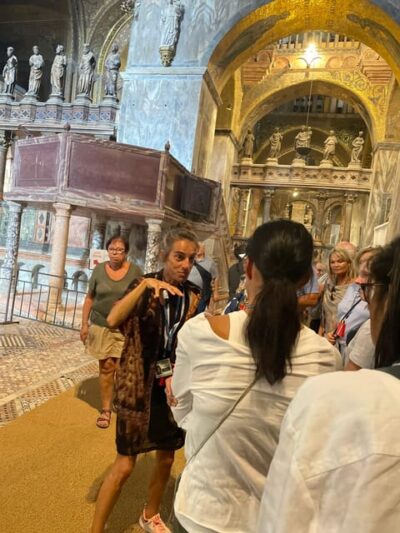
St. Mark’s Basilica & Doge’s Palace Tour with Ticket
Read our review →