
REVIEW · CANADA
Québec City: Saint-Louis-Forts-and-Châteaux visit
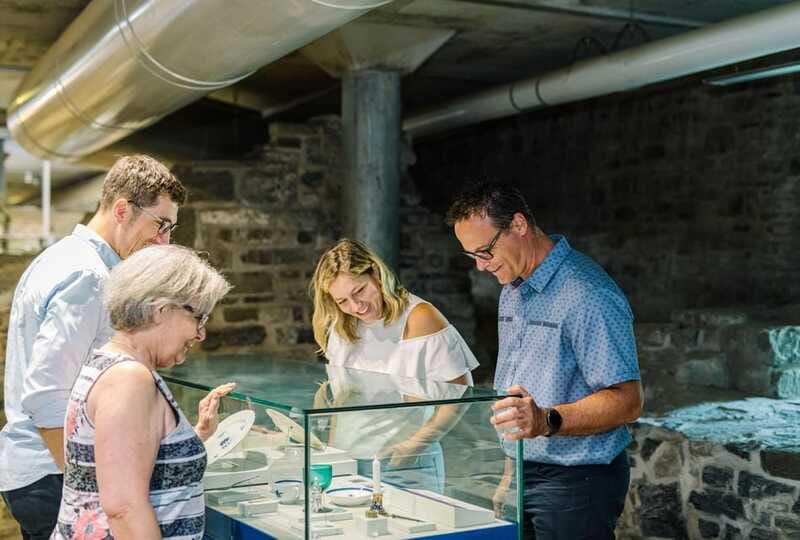
History is hiding under Quebec City’s busiest terrace. For just $9, this one-hour visit takes you below Dufferin Terrace into the remains of Château Saint-Louis, once the official residence and seat of power for French and British governors from 1620 to 1834. I like the way the tour turns an easy Old Québec stroll into a close look at diplomacy, daily life, architecture, and archaeological discovery. I also like the 120-plus artifacts, which give the buried site a practical, human feel.
The main consideration is mobility. You reach the site by descending stairs, and the attraction is not suitable for wheelchair users or people with mobility impairments. The audio tour also uses a bit of theatrical storytelling, with the listener sometimes placed in the role of a governor or servant. That will entertain some people, but if you prefer plain museum narration, choose the live guide when available.
Key Points To Know Before You Go
- The site sits beneath Dufferin Terrace: Start with St. Lawrence River views, then go below the boardwalk to see the remains of the château.
- The visit covers more than 200 years: French and British governors used this location as a residence and political headquarters from 1620 to 1834.
- The Huron-Wendat perspective matters: A special exhibition examines diplomatic alliances with colonial governors from the Nation’s point of view.
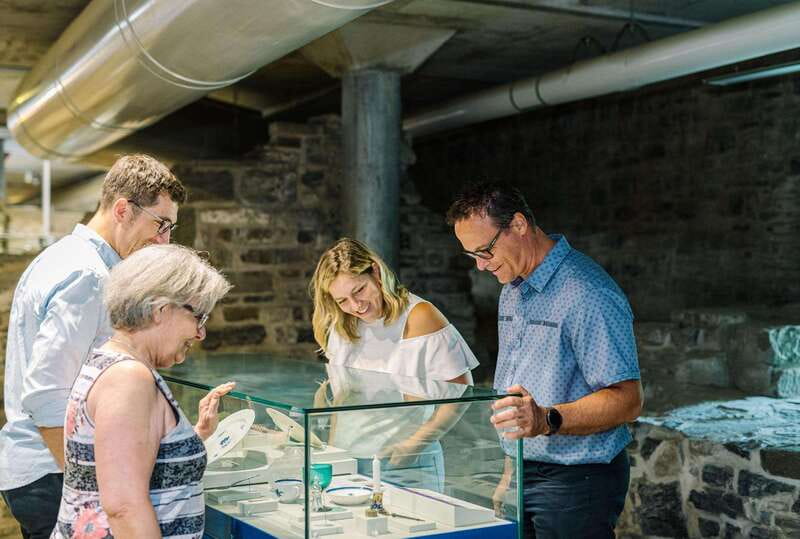
- More than 120 artifacts are displayed: Archaeological finds help explain architecture, household routines, food storage, and personal habits.
- You can choose a guide or audio tour: On-site heritage guides and a downloadable Parks Canada app are available, with live tours offered in English, French, Spanish, German, and Chinese.
- Plan for stairs and light packing: Food, drinks, luggage, large bags, pets other than assistance dogs, and bare feet are not allowed.
Starting at Dufferin Terrace
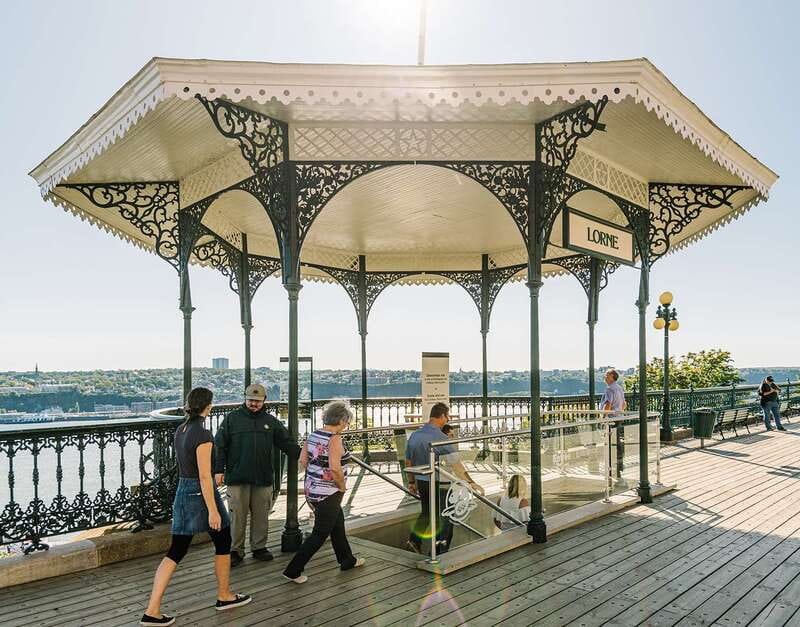
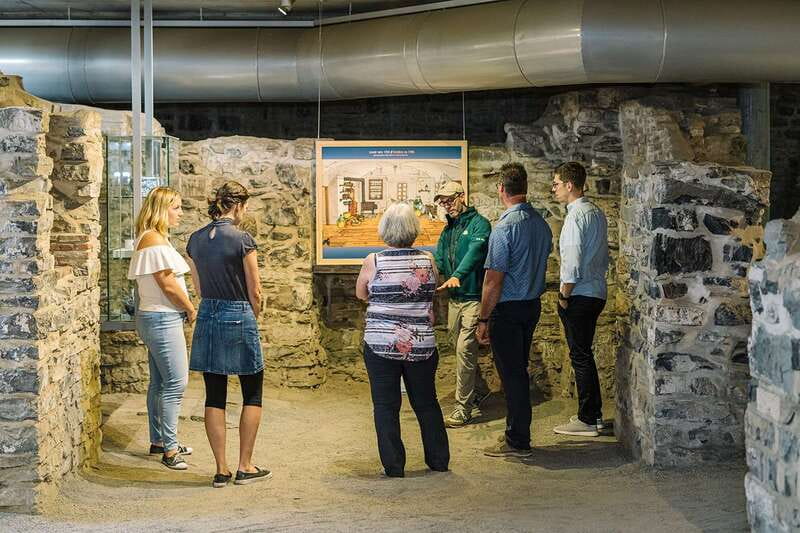
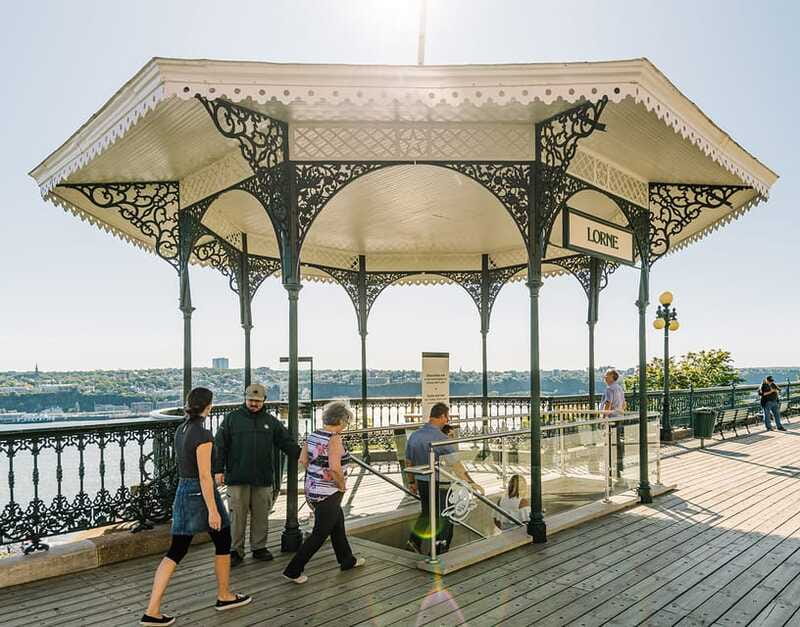
Your meeting point is easy to find if you know what to look for. At the beginning of Dufferin Terrace, locate the green and white kiosk with a Canadian flag and a Frontenac sign. A heritage guide wears a green and beige uniform.
This is a smart starting place because Dufferin Terrace gives you one of Old Québec’s best views across the St. Lawrence River before you head underground. Take a moment here. The contrast is part of the experience: above you, a busy promenade and grand hotel; below you, foundations and objects from a former seat of government.
The tour lasts about one hour, so it fits neatly between other Old Québec sights. You do not need to give up half a day or rearrange your entire schedule. I would place it alongside a walk through the historic district, especially if you want to understand why the area around Château Frontenac became such a powerful center.
The first practical warning is the descent. The site is not suitable for wheelchair users or people with mobility impairments, and large bags are not permitted. Travel light. A small personal bag is a better choice than luggage or a full daypack.
More Chateau and Wine Estate Tours in the world:
- From Lisbon: Sintra, Pena Palace & Wine Tasting Small-Group Tour
★ 5.0 · 252 reviews - Lisbon: Sintra Private Day Trip with Pena Palace & Wine Tasting
★ 5.0 · 226 reviews - Lisbon: Sintra, Pena Palace & Wine Tasting Small-Group Tour
★ 4.9 · 156 reviews
Going Below the Boardwalk
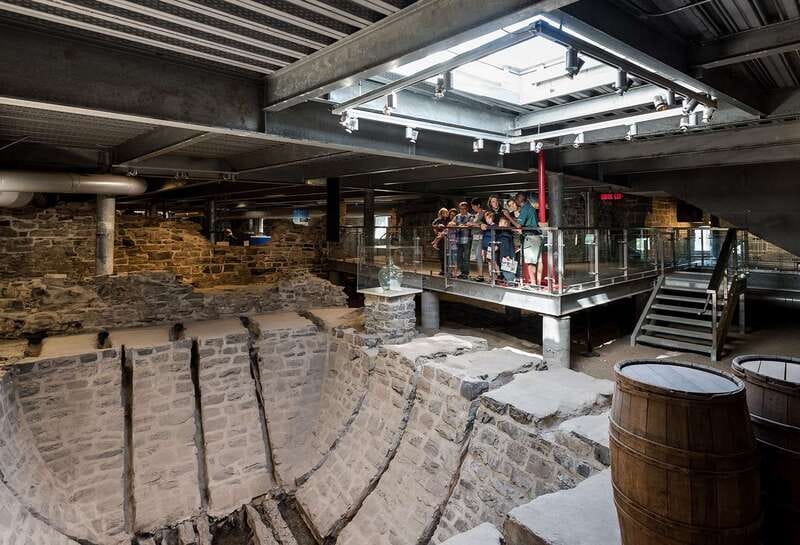
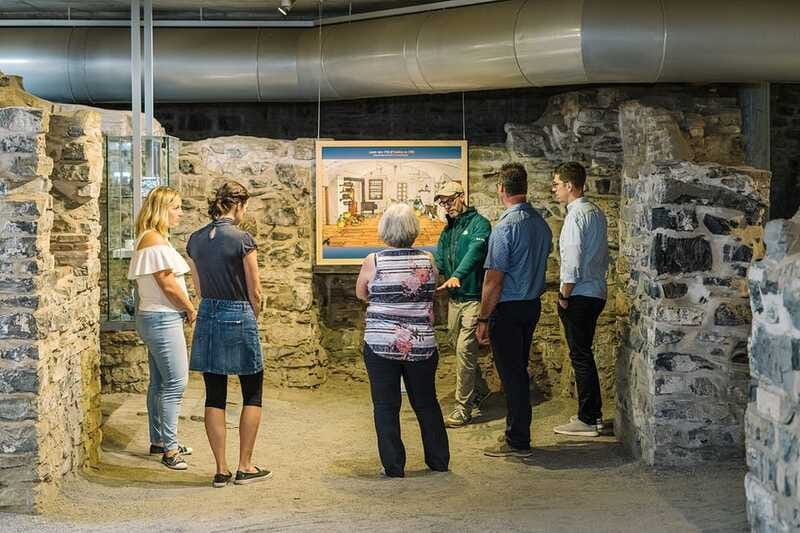
Once you descend, the modern terrace gives way to the remains of Château Saint-Louis. The experience is not about walking through a complete palace. You are looking at archaeological remains and exhibits that help you picture a complex that changed over more than two centuries.
That distinction matters. If you expect intact rooms, polished furniture, or a fully rebuilt château, this visit may feel modest. If you enjoy fitting clues together, the site becomes far more rewarding. The foundations, building plans, artifacts, and explanations help you picture how the complex developed and how its use changed over time.
One especially useful part of the visit is the attention given to architecture and planning. A recent audio-tour experience found that the site made it easier to visualize the château’s layout, evolution, and government role. That is exactly what an archaeological site should do. It gives you enough information to picture the vanished building without pretending that the remains are something they are not.
The location also explains its importance. This was the official residence of French and British governors, so decisions made here affected more than local administration. Diplomacy, colonial policy, and relationships with First Nations all passed through this place. You are not simply looking at old walls. You are standing where political choices shaped much of North American history.
What the Remains Reveal About Power
Château Saint-Louis served as a seat of power between 1620 and 1834. That long span lets the tour move beyond a single date or famous person. You get a sense of how authority operated over time, how the site changed, and how different colonial governments used the same location.
The tour also brings out the contrast between public ceremony and private routine. Lavish events took place here, but daily life depended on less glamorous details. The objects recovered from the archaeological digs help connect grand diplomacy with ordinary work.
You might learn how an icebox was used, what grooves in the bottom were for, or why women used bottles of ammonia. These small details are among the most memorable parts of the visit because they make the past feel practical rather than distant. A political decision can seem abstract. A household object with a clear purpose is easier to remember.
That balance is one of the attraction’s strengths. You hear about governors, alliances, and major decisions, but you also get clues about servants, household equipment, and personal habits. The result is a fuller picture of the site, even though the original château is gone.
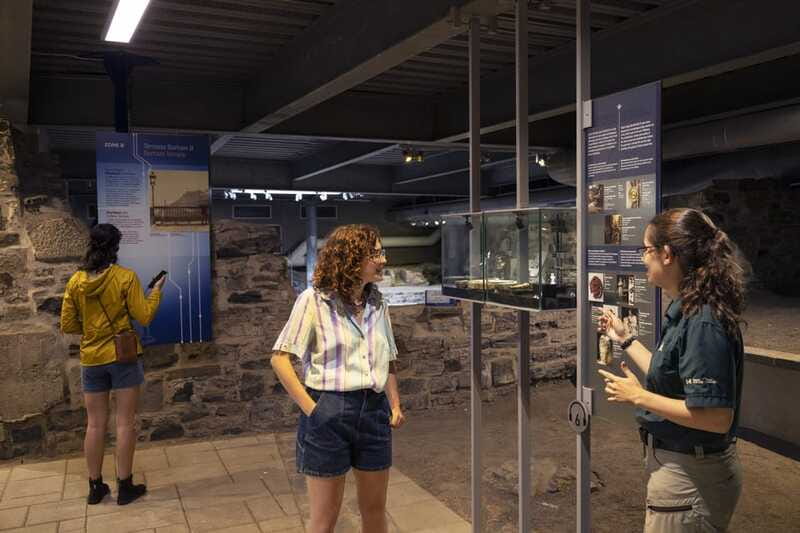
The archaeological display includes more than 120 artifacts, and they are not just decorative extras. They help explain how people lived in the buildings above these foundations. Give yourself time to look closely. A quick glance at the remains will not offer as much as pairing each object with the story of the place.
The Huron-Wendat Exhibition
The section on Huron-Wendat diplomacy is an important part of this visit. It examines alliances between the Huron-Wendat Nation and colonial governors, and it is presented in collaboration with the Nation.
This perspective improves the tour because it avoids telling the story only through French and British authority. Colonial officials may have used Château Saint-Louis as their base, but diplomacy involved First Nations leaders, communities, and political interests as well. The exhibition gives you a chance to consider those relationships from a Huron-Wendat point of view.
You should pay attention here even if your main interest is architecture. The remains show where power was concentrated, while this exhibition helps explain that power was never exercised in isolation. Alliances, negotiations, and diplomatic decisions shaped the region.
The subject also fits naturally with the site’s role. Château Saint-Louis was not merely a residence. It was a place where governments dealt with major political questions. The Huron-Wendat material adds necessary context to that story and gives the visit more substance than a simple tour of colonial ruins.
Same place, a different set of state rooms:
- Venice: Doge’s Palace Reserved Entry Ticket
★ 4.6 · 42,716 reviews - Paris: Versailles Palace and Gardens Full Access Ticket
★ 4.6 · 41,579 reviews - Granada: Alhambra & Nasrid Palaces Tour with Tickets
★ 4.7 · 19,801 reviews - Sintra: Pena Palace and Park Entrance Ticket
★ 4.2 · 17,410 reviews
Choosing Between a Guide and the Audio Tour
You can visit with an on-site heritage guide or use the downloadable Parks Canada app for a self-guided audio tour. Both options cover the site, but they suit different styles.
I would choose the live guide if you enjoy asking questions or want the clearest explanation of the archaeological remains. The strongest guide experiences are animated as well as informative. One recent visit described the guide as entertaining and able to make the subject enjoyable, while another praised the tour for being highly interactive.
A guide can also adjust the pace. If you are curious about an artifact or want more context about the Huron-Wendat exhibition, a live person can respond in the moment. Live tours are offered in English, French, Spanish, German, and Chinese, though you should check the available starting times and languages for your date.
The audio option gives you more independence. You can move at your own pace and avoid depending on a group’s rhythm. The Parks Canada app is intended to add context to the self-guided circuit, so download it before beginning if you choose that format.
The audio experience is not entirely traditional. Some sections place you in the role of a governor or servant, creating an audio-theater effect. That can make the visit lively, especially for families and people who enjoy role-playing. If you prefer straightforward interpretation, it may feel a little forced. This is the clearest reason to favor a live guide.
A One-Hour Visit That Rewards Attention
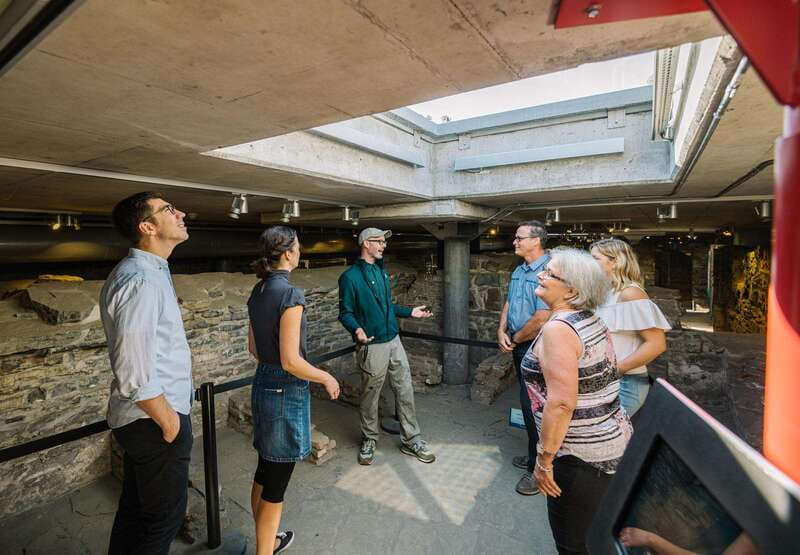
One hour is enough to see the main remains and artifacts without tiring you out. The schedule is especially useful in Old Québec, where you may want to fit in the fortifications, Place Royale, the Château Frontenac area, and the riverfront on the same day.
Do not treat the visit as a quick photo stop. The site works best when you listen to the explanations and connect the pieces. First, you see the location from above. Then you descend into the remains, learn how the château developed, examine the artifacts, and consider the diplomatic history tied to the site.
The tour moves between broad history and small facts. One moment you are considering the role of governors in North American politics. The next, you are thinking about an icebox or an odd household tool. That change of scale keeps the hour from becoming a lecture.
You may also find that the remains require imagination. There is no complete château to walk through, and the archaeology may not be immediately clear without interpretation. The guide or app does much of the work of explaining what you are seeing. Come ready to picture the structures rather than expecting a fully restored interior.
Is the $9 Price Good Value?
At $9 per person, this is one of the easier Old Québec attractions to recommend on cost alone. The price covers access to the archaeological site, the artifacts, and either a self-guided audio experience or an on-site heritage guide, depending on the option you choose.
The real value comes from the setting. You are not paying only for a display of old objects. You are visiting the former seat of French and British government in the city and learning how the site connected household life, political authority, and diplomacy.
The visit is also short enough to reduce the risk of a poor fit. If archaeological sites are not your favorite, you have committed only about an hour. If you enjoy history, the price is low for the amount of context packed into that time.
The main limitation is that the cost does not buy a complete historic building. You see remains, not reconstructed rooms. That is normal for an archaeological site, but it is worth knowing before you arrive. The experience is strongest for people who value interpretation and artifacts over grand interiors.
Members of the Canadian Armed Forces, Canadian veterans, and their immediate families may receive daily admission free at Parks Canada sites by presenting the applicable Platinum Une FC card or Canadian veteran service card. The guided tour itself is not included in that benefit.
Who Will Enjoy This Most?
I would recommend the visit to you if you like history that connects large political events with everyday objects. It is a good match for people interested in colonial government, archaeology, First Nations diplomacy, or the evolution of Old Québec.
Families may appreciate the short length and the household details. The audio roles can add energy for some children, although younger visitors who need constant activity may find the archaeological remains less immediate.
It also suits repeat visitors to Québec City. If you have already walked Dufferin Terrace and admired Château Frontenac, going below the boardwalk gives you a different view of the same area. You see the place not as a postcard setting, but as a working center of government.
I would think twice if stairs are difficult for you, if you are carrying luggage, or if you want an intact château interior. I would also select the live guide if you dislike theatrical audio narration. The attraction remains worthwhile, but the format matters.
Practical Details for a Smooth Visit
Arrive at the green and white kiosk at the beginning of Dufferin Terrace and look for the Frontenac sign. The guide, when assigned, wears a green and beige uniform.
Food and drinks are not allowed inside. Large bags and luggage are also prohibited, and pets are not permitted except for assistance dogs. Bare feet are not allowed, which is sensible advice for an archaeological site with stairs and uneven surfaces.
You can cancel up to 24 hours before the scheduled visit for a full refund, and the reserve-now, pay-later option allows you to keep your plans flexible. Starting times vary, so check availability before choosing your day.
Should You Book the Saint-Louis Forts and Châteaux Visit?
Book it if you want a compact, inexpensive look at the political heart of old Québec. The artifacts, household details, and Huron-Wendat perspective give the site more depth than a simple walk around foundations. The visit is particularly strong when a lively heritage guide leads it.
Choose the audio option if you prefer independence, but know that parts of it use role-playing. Skip the attraction if stairs are a serious problem or if your main goal is to tour a complete, furnished château.
For most history-minded visitors, $9 and one hour is a fair trade. You leave with a better sense of what once stood beneath Dufferin Terrace, how governors lived and governed, and how diplomacy connected this single site to the wider history of North America.
FAQ
How long does the Saint-Louis Forts and Châteaux visit last?
The visit lasts about one hour.
How much does admission cost?
The listed price is $9 per person.
Where do I meet the guide?
Meet at the beginning of Dufferin Terrace, beside the green and white kiosk with a Canadian flag and a Frontenac sign. The guide wears a green and beige uniform.
Is the visit guided or self-guided?
You can choose an on-site heritage guide or a self-guided audio tour using the downloadable Parks Canada app.
Which languages are available?
Live tours are offered in English, French, Spanish, German, and Chinese.
Is the site accessible for wheelchair users?
No. The site is not suitable for wheelchair users or people with mobility impairments, and the visit includes stairs.
Just added around the world
- Wine Tasting near Royal Palace of Turin★ 4.5 · 24 reviews
- Reggia di Venaria and Stupinigi Hunting Palace★ 5.0 · 5 reviews
- Stupinigi Hunting Palace & Sacra di San Michele★ 4.5 · 13 reviews
- Royal Palace and Sacra di San Michele★ 4.0 · 9 reviews
- Turin Royal Palace Private Guided Tour with Skip-the-Line Entry★ 5.0 · 5 reviews
- Private Turin Royal Palace Tour with Holy Shroud Chapel★ 4.5 · 73 reviews
- Turin: Royal Palace Guided Tour★ 5.0 · 4 reviews
- Skip-the-Line Ticket and Guided Royal Palace of Turin Group Tour★ 4.5 · 10 reviews
Chateau and Wine Estate Tours, compared.

Medoc or Saint Emilion Wine Tasting and Chateau from Bordeaux
Read our review →
Versailles Château and Gardens Walking Tour from Paris by Train
Read our review →
Loire Valley: Château Royal d’Amboise Entrance Ticket
Read our review →
Fontainebleau & Vaux-le-Vicomte Châteaux Day Tour from Paris
Read our review →
Browse the lists this tour appears in