
REVIEW · ITALY
Palazzo Vecchio: Skip-the-Line Entry and Secret Passage Tour
Secret doors, twisting stairs, and Medici intrigue await. Palazzo Vecchio’s secret passage tour takes you beyond the rooms most visitors see, with access to private spaces, concealed routes, and remarkable Renaissance details. I especially like the intimate group of no more than four and the way guides such as Francesco, Julia, Marta, and Francesca bring the palace’s political drama to life. The main drawback is practical: narrow, winding stairs and tight spaces make this a poor choice if you have limited mobility or feel uneasy in enclosed areas.
At $37 per person, this is a fair deal if you want more than a quick look at Florence’s old government palace. You receive skip-the-line admission, a 75-minute English tour, and time afterward to explore the public rooms on your own. Just remember that the tower requires a separate ticket, and the tour itself does not cover every part of the building.
Key points to know before booking
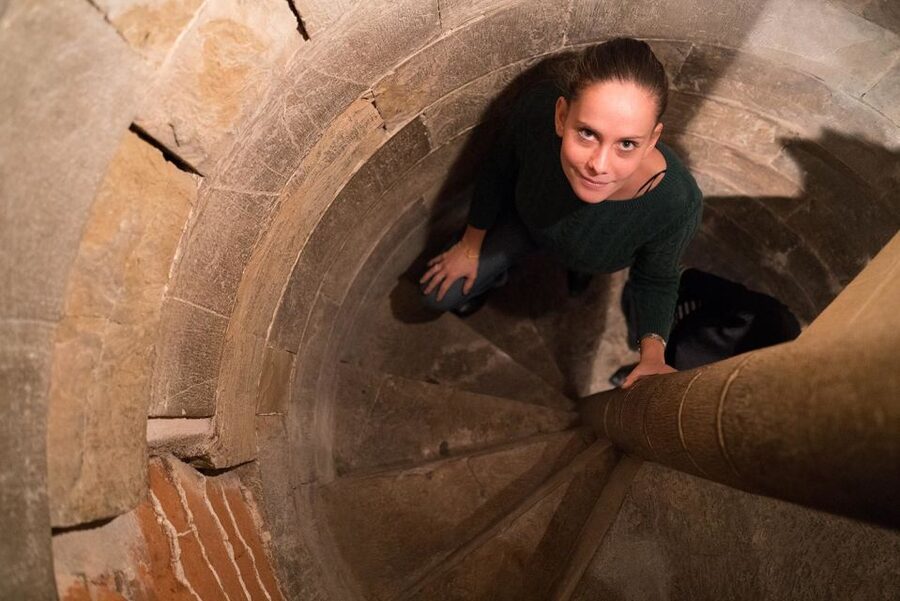
- The tour enters spaces closed to most visitors: Expect secret doors, private rooms, concealed stairways, and less familiar corners of Palazzo Vecchio.
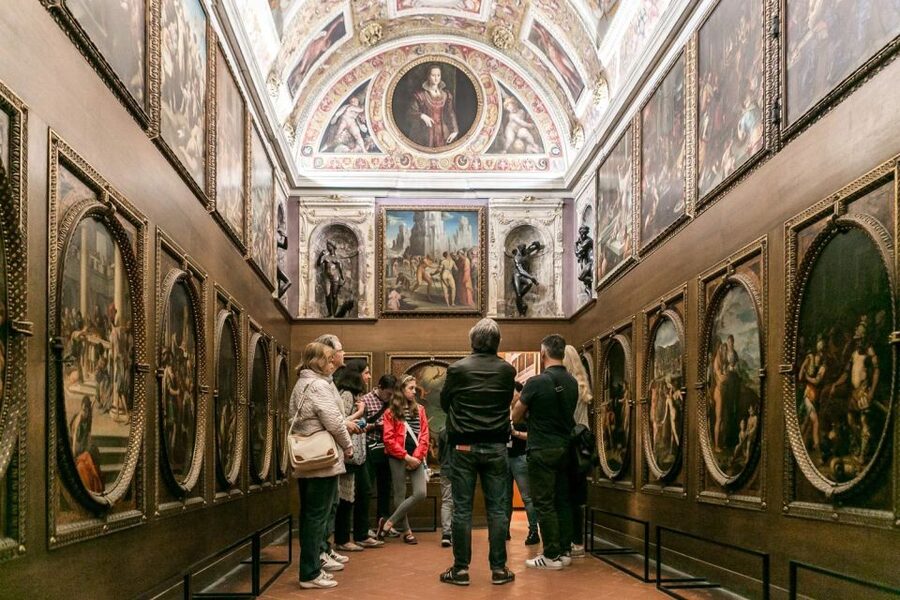
- Francesco I de’ Medici’s studiolo is a major highlight: This small, ornate study was designed as a treasure room for rare and precious objects.
- The group is limited to four people: That makes it easier to hear the guide and see cramped rooms without a crowd pressing in.
- The route includes narrow, twisting stairs: You need steady footing, and claustrophobic visitors may find parts of the tour uncomfortable.
- The tour finishes in the Hall of the Five Hundred: From there, you can continue through the public museum independently.
- The $37 price includes skip-the-line entry and guiding: It is strongest value for visitors who care about Medici history, architecture, and access beyond the standard route.
Why Palazzo Vecchio’s secret passages are worth your time
Palazzo Vecchio can look like a grand civic museum from the outside, and that is only half the story. It was also a working seat of power, a Medici residence, and a building shaped by privacy, security, and political theater.
That is what makes this tour more than a walk through old rooms. You are not simply looking at paintings and frescoes from a distance. You are tracing how rulers moved through the palace, stored prized objects, worked in private, and kept certain parts of their lives away from public view.
I like this approach because it gives the palace a human scale. The large ceremonial rooms show power in public. The passageways and private studies show how that power operated behind closed doors.
The small-group format matters here. With only four participants, you should have a clear view when the guide points out a disguised doorway or explains how a staircase fits inside the palace walls. In a larger group, those details could easily become a neck-craning exercise.
More Skip-the-Line Palace Tickets in Italy
- Skip-the-Line: Doge’s Palace & St. Mark’s Basilica Fully Guided Tour
★ 4.5 · 1,892 reviews - Venice: Doge’s Palace Skip-the-Line Tour with Prisons
★ 4.1 · 1,637 reviews - Venice: Doge’s Palace Skip-the-Line Ticket with Guidebook
★ 4.0 · 1,196 reviews
Meeting at Piazza della Signoria without confusion
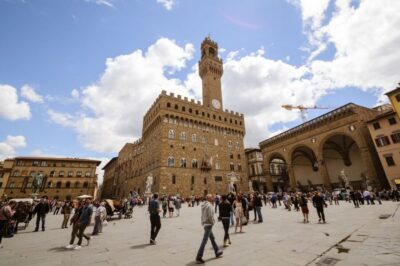
The entrance to Palazzo Vecchio is on Piazza della Signoria, one of Florence’s most prominent squares. Once inside the palace courtyard, do not wait in the main ticket queue.
Go directly to the InfoPoint counter at the ticket office and exchange your voucher for the tour ticket. This detail is easy to miss, so allow enough time to find the courtyard and counter before the starting time.
The meeting instructions can feel less obvious than expected because the relevant ticket desk is inside the building. If you arrive at the piazza and see a line, do not assume it is yours. Head into the palace courtyard and ask staff for the InfoPoint if needed.
The skip-the-line benefit is useful, particularly when the main hall is crowded or a civic event is taking place. It does not mean you can ignore the meeting time. You still need to arrive early enough to complete the voucher exchange.
Entering through a secret door
The guide begins by placing the palace in context, including its role in Florence and the Medici family’s connection to the building. That opening matters because the secret rooms make more sense once you understand why privacy and controlled movement were important here.
The route then moves into areas that are not part of the ordinary public visit. You might pass through concealed doors, narrow corridors, and stairways built into the thick walls. The appeal is partly visual, but it is also physical. You are moving through the building rather than only observing it from a gallery floor.
One particularly unusual feature is the mysterious staircase associated with Gualtieri di Brienne. It is the sort of architectural detail that can disappear during a standard palace visit, yet it reveals how much of the building remains tucked behind its formal rooms.
The stairs are not just a theatrical prop. They help you understand the palace as a layered structure, with routes for servants, rulers, guards, and private movement. The guide explains how these passages and rooms fit into the wider building.
Expect a few tight turns and uneven-feeling moments in the route. The experience is not physically extreme, but it does demand more care than a normal museum corridor.
Francesco I de’ Medici’s small treasure room
The studiolo of Francesco I de’ Medici is one of the tour’s most memorable stops. It is a compact study created as a place for rare and precious objects, and its scale makes a sharp contrast with the enormous ceremonial spaces elsewhere in the palace.
This room is valuable because it shows a more private side of Medici taste. Instead of a huge hall designed to impress diplomats and citizens, you see an intimate space shaped around collecting, curiosity, and personal display.
Your guide can help you read the room as more than decoration. Details that look like ornament begin to suggest the interests and personality of its owner. The experience is especially rewarding if you enjoy Renaissance art but prefer smaller, more personal settings to monumental halls.
Guides have been praised for turning these stops into stories rather than reciting dates. Francesco, Julia, Sara, Marta, and Francesca are among the guides who have made strong impressions with clear explanations, humor, and lively accounts of Medici family characters.
Guide quality is important on this tour because some rooms are small and their meaning is not immediately obvious. A quiet or less expressive guide may still provide solid information, but an engaging guide makes the passageways feel purposeful rather than merely unusual.
More Palazzo Vecchio and Pitti Palace Tours in Italy:
- Florence: Palazzo Vecchio Entrance Ticket & Audioguide
★ 4.4 · 4,822 reviews - Florence: Entrance Ticket to Pitti Palace
★ 4.5 · 4,528 reviews - Florence: Uffizi, Pitti Palace & Boboli Combined 5-Day Pass
★ 4.5 · 1,726 reviews - Florence: Palazzo Vecchio Guided Tour
★ 4.8 · 1,260 reviews
The Tesoretto and Cosimo I’s working world
Another distinctive stop is the desk of Cosimo I de’ Medici, known as the Tesoretto. The name suggests something small and precious, and the setting offers a glimpse into the administrative and personal world behind the palace’s public image.
This is where the tour connects objects and rooms with the practical work of ruling. Cosimo’s power was displayed in grand halls, but it also depended on decisions made in smaller spaces, at desks and behind doors.
I find this contrast useful when visiting Palazzo Vecchio. The Hall of the Five Hundred can make Florence’s rulers seem almost larger than life. The Tesoretto brings them back to a human scale, surrounded by the tools and rooms connected with daily authority.
You should listen closely here. The room itself may not have the visual punch of the palace’s largest halls, but the explanation gives it weight. The tour is at its best when it shows how architecture, objects, and political life fit together.
Looking above the Hall of the Five Hundred
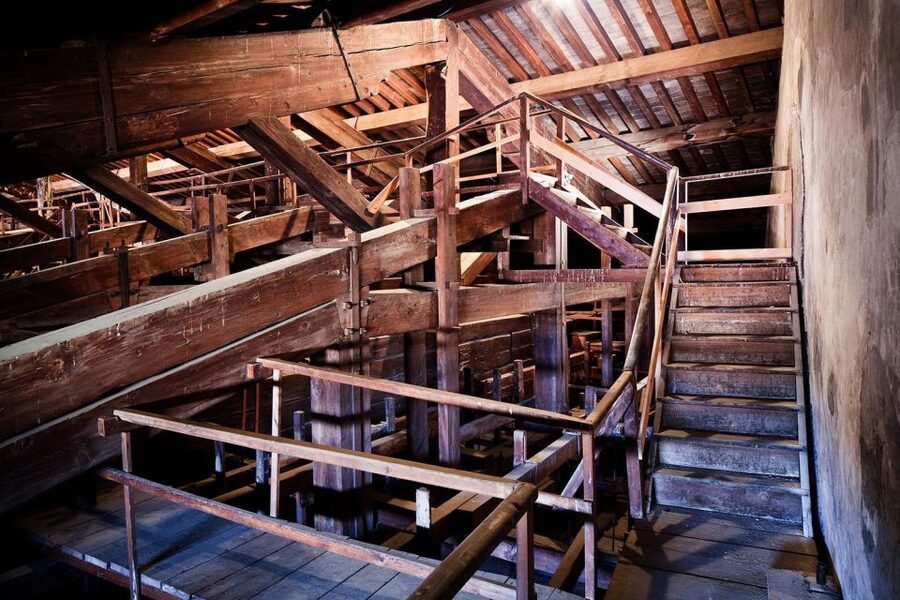
The final part of the secret tour turns your attention to the structure supporting the paneled ceiling of the Salone del Cinquecento, or Hall of the Five Hundred. Giorgio Vasari designed the huge trussed structure, an engineering feat concealed above the grand public room.
This is a strong ending because it shifts the focus from secret movement to hidden construction. You see that Palazzo Vecchio’s drama is not only painted on its walls. It also depends on the unseen framework holding up one of Florence’s most famous interiors.
The hall itself is a major public space, tied to civic power, art, and ceremony. Once the guided portion ends there, you can continue exploring the rest of the palace at your own pace.
That arrangement works well. The guide supplies the access and interpretation you could not easily arrange alone, then leaves you in a central room from which you can visit the public areas without being rushed by a group.
Set aside another hour if you want to see the rest of Palazzo Vecchio properly. The 75 minutes refers to the secret tour, not the amount of time you need for the entire museum.
What the $37 price really buys you
At $37 per person, the cost is higher than simply walking into a standard museum visit, but the comparison is not quite fair. The fee includes skip-the-line admission, a live English-speaking guide, and entry to parts of the palace that are not normally open to the general public.
The best value comes from the access. If you are already interested in the Medici family, Renaissance art, or historic buildings, the additional fee buys a different kind of visit rather than just a faster entrance.
The small group strengthens that value. A limit of four means the tour feels closer to a private visit than a standard crowded museum walk. You can ask questions, hear the explanation, and see what the guide is indicating.
The price may feel less worthwhile if you only want to admire the main public rooms. In that case, a regular palace ticket may be enough. This tour is for the visitor who wants the extra stories and restricted spaces.
It is also worth knowing what is not included. The tower is a separate experience with a different ticket, so do not book this expecting rooftop or tower access.
The physical side: stairs, heat, and tight spaces
The most important caution is the route itself. You will encounter narrow, twisting stairs, and some passages are cramped. Parts of the secret rooms can become hot in summer.
This is not recommended for people with limited mobility. It may also be uncomfortable if you have claustrophobia, trouble with stairs, or very large feet. One participant left early because the confined spaces became too much.
You do not need to treat this warning as a reason to avoid the tour automatically. For many people, the tight spaces are exactly what makes the route memorable. But you should make an honest assessment before booking, since the physical setting cannot be separated from the experience.
Wear practical shoes and keep your belongings manageable. The supplied information does not promise lifts, wide stairs, or an alternate route, so do not assume the staff can replace the secret passage route with an easy-access version.
How the guides shape the experience
The strongest part of this tour is often the guide’s storytelling. Names such as Francesco, Julia, Marta, Sara, Giulia, Roberta, Francesca, and Martina have been associated with warm, clear, entertaining tours.
Their role is not simply to point at a door. A good guide explains why the door mattered, who might have used it, and how the room connects with the palace’s wider story.
The best guides also adjust to the group. Families have found the tour engaging, including teenagers who were tiring of churches and conventional museums. An engineering-minded visitor can appreciate the ceiling structure, while art lovers can focus on the studiolo and Renaissance decoration.
Guide style can vary. One guide may be animated and humorous, while another may speak more quietly. The tour’s subject gives every guide good material, but delivery affects how much you take away.
The language is English only. If you need another language, this is not the right booking.
Who should book this tour?
I would choose this tour if you want Palazzo Vecchio to feel like a lived-in seat of power rather than a collection of grand rooms. It suits you especially well if you enjoy:
- Medici family stories and Florence’s political past
- Small rooms, private studies, and unusual architecture
- Renaissance art with a guide to explain the details
- Behind-the-scenes access
- Small groups and time for questions
- Family sightseeing that needs a little mystery and movement
It is also a good choice for repeat visitors who have already seen Florence’s major public sights. The secret rooms give you a fresh reason to return to Palazzo Vecchio.
I would skip it if you dislike stairs, tight spaces, or guided visits. It is not ideal if your priority is the tower, since tower entry is separate. It may also be too specialized if you only want a quick look at the palace’s main halls.
Booking and timing advice
You can cancel up to 24 hours before the tour for a full refund, and the reservation option allows you to hold a place without paying immediately. Starting times vary, so check availability for your date.
Arrive with enough time to enter the courtyard and find the InfoPoint counter. The palace is easy to locate on Piazza della Signoria, but the internal ticket procedure can cause confusion if you are rushing.
Plan for 75 minutes with the guide, then add about an hour if you want to explore the rest of the palace. This prevents the common mistake of treating the secret route as a complete Palazzo Vecchio visit.
Should you book Palazzo Vecchio’s secret passage tour?
Yes, if you want the palace’s lesser-seen side and can manage narrow stairs. The small group, off-limits rooms, Medici connections, and Vasari’s concealed ceiling structure give you far more than a routine museum walk.
I would call it a particularly good Florence choice for families, history fans, curious first-time visitors, and anyone who likes architecture with a little suspense. Book it with realistic expectations: the route is physically confined, the tour is English only, and the tower is not included.
For $37, the tour earns its price through access and explanation. You are paying to see how the palace worked behind its public face, not simply to enter another Renaissance building.
FAQ
How long is the Palazzo Vecchio secret passage tour?
The guided experience lasts 75 minutes. You can explore the rest of Palazzo Vecchio afterward on your own.
What does the $37 ticket include?
The price includes skip-the-line admission to Palazzo Vecchio and a guided English-language tour of the secret passages and restricted areas.
Is the tour conducted in English?
Yes. The listed tour language is English.
How large is the tour group?
The group is limited to four participants, making it a small-group experience.
Where do I meet the guide?
Enter Palazzo Vecchio from Piazza della Signoria. Once inside the courtyard, go to the ticket office and head to the InfoPoint counter to exchange your voucher for the tour ticket.
Are Palazzo Vecchio’s narrow stairs suitable for everyone?
No. The tour is not recommended for people with limited mobility. It includes narrow, twisting stairs and confined areas that may also be difficult for people with claustrophobia.
Is the Palazzo Vecchio tower included?
No. The tower requires a separate ticket and is not included in this secret passage tour.
Just added around Italy
- Palermo: City & Palazzo dei Normanni Guided Walking Tour★ 4.7 · 28 reviews
- Palermo: Norman Palace Ticket & Audio App Downloadable★ 3.5 · 4 reviews
- Palermo: Palatine Chapel, Audio App & optional Norman Palace★ 3.8 · 70 reviews
- Palazzo Vecchio Secret Passages Tour & Lunch or “Gelato”★ 4.3 · 16 reviews
- Palazzo Vecchio Small Group Tour★ 4.9 · 10 reviews
- Palazzo Normanni and Palatine Chapel Tour – Ticket Included (Italian)★ 3.8 · 14 reviews
- Palazzo Vecchio: Private Guided Museum Tour & Tower Tickets★ 4.7 · 18 reviews
- Palazzo Vecchio 90-Minute Morning Guided Tour★ 4.7 · 104 reviews
Palazzo Vecchio and Pitti Palace Tours, compared.
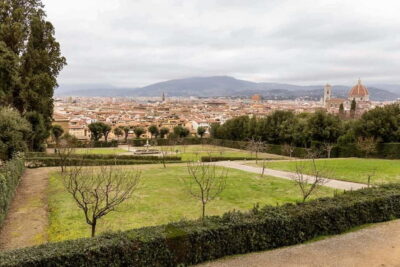
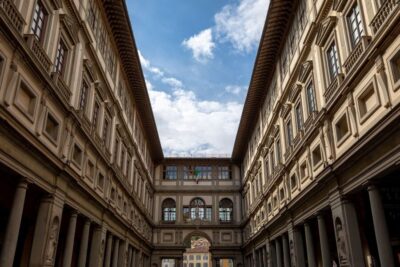
Uffizi, Pitti Palace & Boboli Combined 5-Day Pass
Read our review →

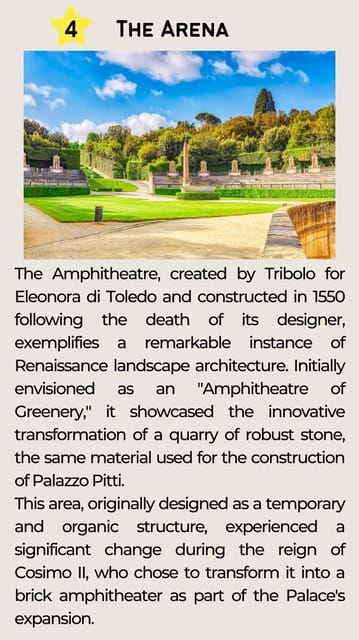

Pitti Palace, Boboli Garden, Palatine Gallery Tour
Read our review →Browse the lists this tour appears in