
REVIEW · PORTUGAL
Monumental and historic Porto with the Stock Exchange Palace
Porto reveals itself one street at a time. I like the way this four-hour walk joins the grand sights, such as São Bento Station and Palácio da Bolsa, with the narrow lanes of the Sé district. I also like that guide Karen brings in local stories, food stops, and the contrast between old Porto and its present-day life. The main drawback is the extra €10 admission for Palácio da Bolsa, and the steep, uneven streets make this a poor fit for wheelchair users.
This is a French-language walking tour for people who want more than quick photo stops. You move from São Bento toward the Cathedral, cross the historic center, take in views toward Gaia and the Douro, then finish near the river. Wear shoes with a firm grip, and expect a fair amount of walking on hills and old paving.
Key points at a glance
- São Bento starts the story: Begin with one of Porto’s most memorable interiors before setting off through the old town.
- The Sé district feels lived-in: The Cathedral area includes narrow streets, local homes, and everyday city life, not just monuments.
- Karen earns strong praise: Her French tours are noted for clear explanations, friendly company, local anecdotes, and places to consider for tastings.
- Palácio da Bolsa is the paid highlight: The guided visit is scheduled with an official French-speaking guide, but the €10 entry fee is extra.
- The river views keep coming: Look toward the Luis I Bridge, Maria Pia Bridge, Gaia docks, wine lodges, rabelo boats, and the old wall.
- The route ends in Vila Nova de Gaia: This is useful if you plan to continue along the waterfront or visit a wine lodge afterward.
Why this Porto walk works well
Porto is compact on a map, but its old center is not simple to read. Streets tilt, lanes twist, and the city’s landmarks appear at different levels. A guide helps you connect the sights instead of treating them as isolated stops.
This tour gives you a broad introduction in four hours. You see the main monuments, walk through the medieval core, hear about Porto’s past and present, and finish across the river in Vila Nova de Gaia. That makes it a useful first-day activity, especially if you want to get your bearings before exploring alone.
I particularly like the balance between formal monuments and ordinary streets. The Cathedral is important, but the lanes around Sé are just as valuable because they show how the historic center is inhabited. You might see laundry, doorways, small corners, and daily routines that disappear if you move only between major squares.
The experience is conducted in French. That matters more than it might seem. Historical details, local expressions, and quick questions are easier to follow in your strongest language, especially on a walking tour where the guide is speaking while you move through busy streets.
More Heritage Trips in Portugal:
- Sintra Historical Jeep Adventure – Palaces & Secret Routes
★ 5.0 · 314 reviews - Sintra Historical Jeep Adventure – Palaces & Secret Routes
★ 4.9 · 230 reviews - Mateus Palace – In the Footsteps of Wine History
★ 5.0 · 3 reviews
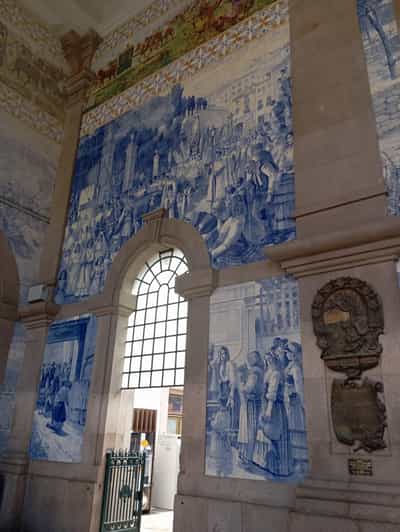
São Bento Station and the first look at Porto
The meeting point is Pier 1, where the guide carries a Portuguese flag. The tour itself begins at São Bento Station, so take care to check the exact meeting instructions when booking. The route information places the start at the station and the finish in Vila Nova de Gaia.
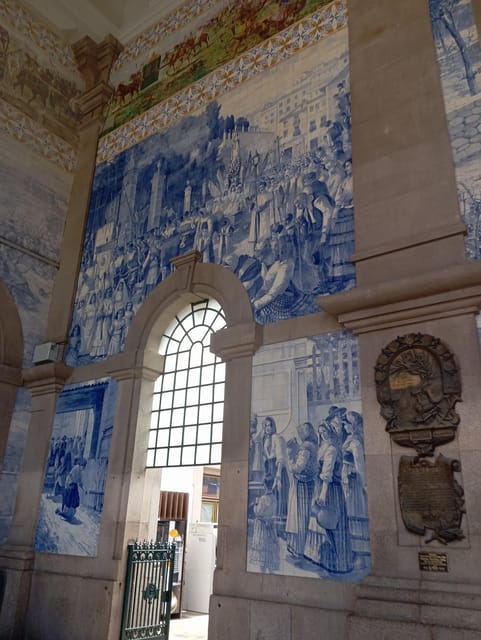
São Bento is a smart opening stop because it introduces both Porto’s transport history and its decorative style. The visit lasts about 15 minutes, including a guided explanation and time for scenic views. The station is famous for its tiled interior, though the supplied details do not promise a full private visit or extended time inside, so think of this as an introductory stop rather than a long architectural tour.
I like starting here because the station puts you right in the middle of Porto’s old center. From São Bento, the route can move naturally toward the Cathedral and the upper historic streets. You do not waste the first part of the morning on a long transfer.
Keep your camera ready, but listen first. The point of a guided stop is not only to photograph the walls. It is to understand why this station belongs in a tour of monumental Porto and how it connects with the city around it.
The Sé district, where Porto feels most authentic
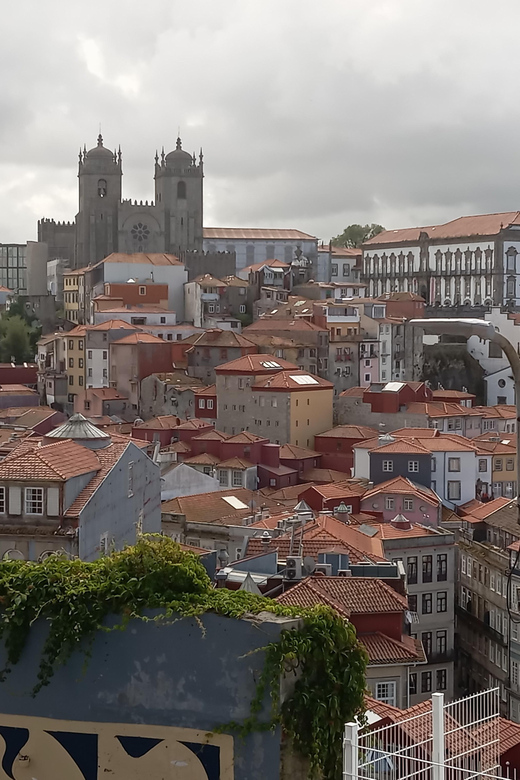
The longest part of the walking route takes place around Sé, Porto’s Cathedral district. Allow roughly one hour here. You will walk through medieval streets, pause for explanations, and take in views along the way.
This is where the tour gains its character. The old center is a UNESCO World Heritage Site, but it is not presented as a frozen museum. The lanes are described as inhabited and authentic, which means you get a look at a part of Porto that still functions as a neighborhood.
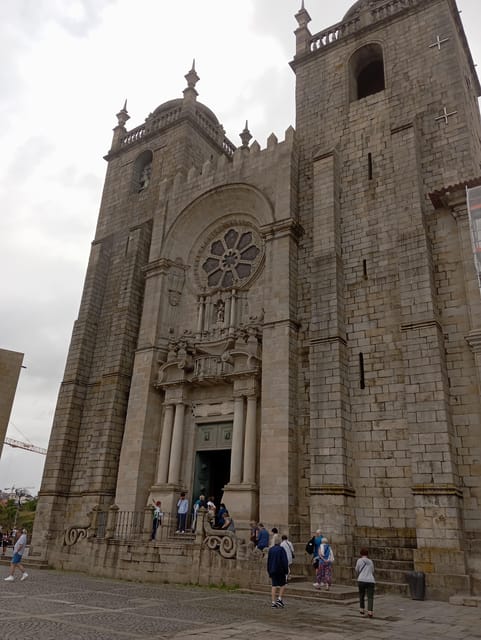
The Cathedral itself is one of the key stops, but the surrounding streets deserve equal attention. Their narrow scale helps explain the old city’s shape. You may find the route more interesting if you pay attention to small details: how buildings meet the street, how lanes change level, and how views open suddenly between old walls.
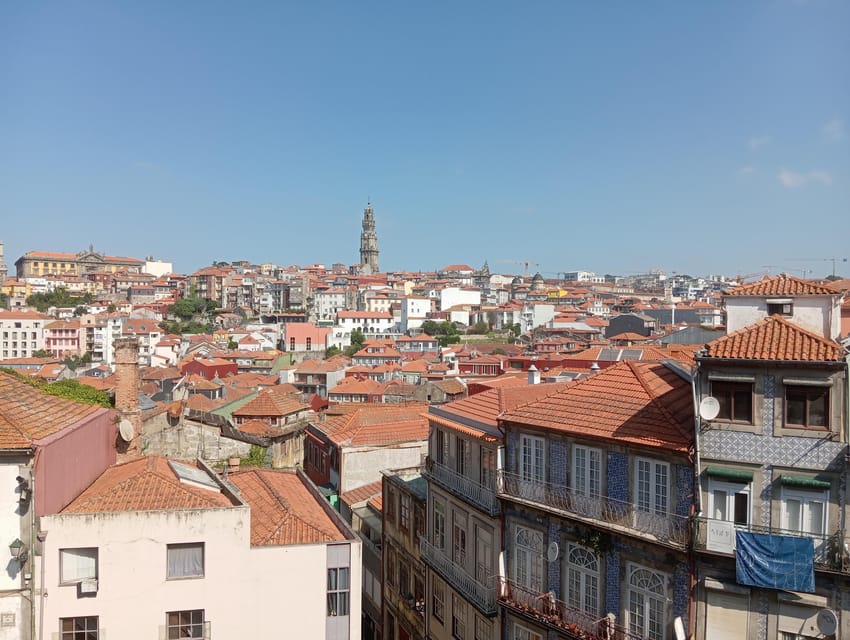
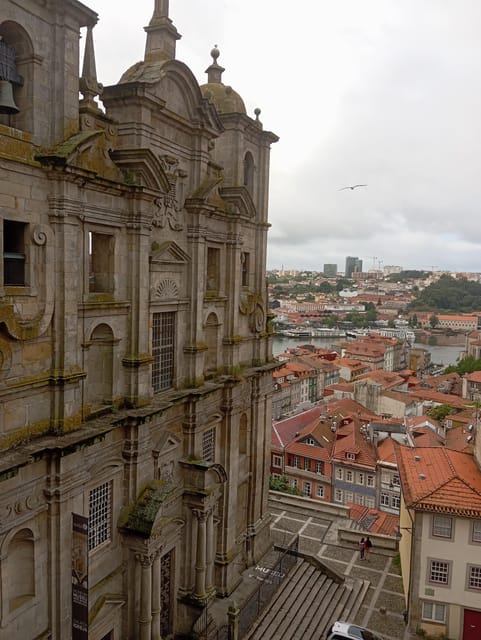
The route also includes panoramic views toward the Clerics Tower and the classified historic area. You should not expect a long stop at every monument named in the description. Instead, this section works as a guided walk through a dense part of Porto, with viewpoints and short explanations placed along the way.
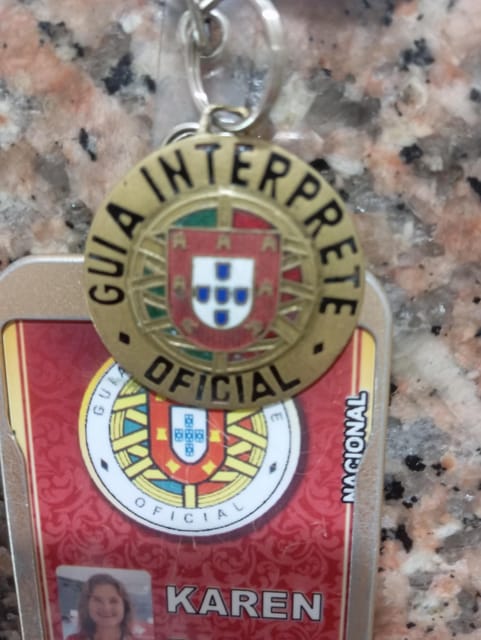
Guide Karen is a major part of the appeal. French-speaking feedback repeatedly praises her kindness, detailed explanations, knowledge of Porto, and ability to point out streets and corners that are easy to miss. She is also praised for discussing both the city’s past and its contemporary life, a useful mix for anyone who wants Porto to feel like a living place rather than a history lesson.
Town Hall, Clerics Tower, and the city’s grander face
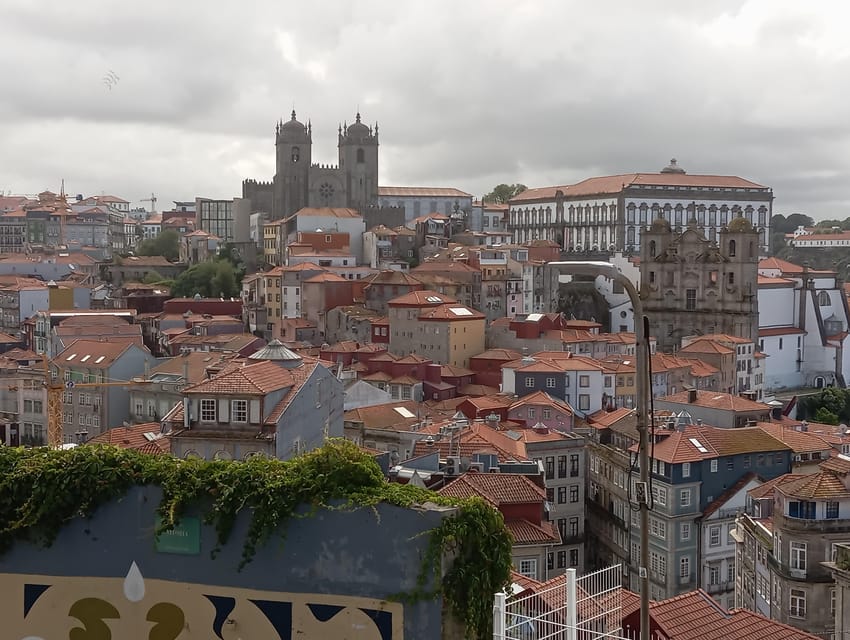
As you leave the Sé area, the route takes in views of the Town Hall and Clerics Tower. These sights help you see another side of Porto. The Cathedral district feels medieval and close-packed, while the civic center gives you broader streets and a more formal urban setting.
The tour description also includes panoramic views of the classified area. This is valuable because Porto’s beauty often depends on seeing how its parts fit together. From higher ground, you can better understand the relationship between the upper city, the river, the Ribeira waterfront, and Gaia across the Douro.
The timing is fairly brisk. Four hours sounds generous, but the route covers several districts and includes a substantial paid monument. If you like lingering for long photographs, you may need to return to some places later on your own.
That is not a flaw so much as a choice. This tour aims to give you a strong overview. It is better for connecting the dots than for studying every church façade in detail.
A few more palace visits around Portugal worth a look
- Sintra: Pena Palace and Park Entrance Ticket
★ 4.2 · 17,410 reviews - Lisbon: Pena Palace, Sintra, Cabo da Roca, & Cascais Daytrip
★ 4.7 · 9,981 reviews - Small Group Tour to Sintra, Pena Palace, Cabo Roca and Cascais
★ 5.0 · 3,559 reviews - Lisbon: Sintra, Pena Palace, Cabo da Roca, & Cascais Tour
★ 4.9 · 3,509 reviews
Palácio da Bolsa, Porto’s grand indoor stop
The Stock Exchange Palace, or Palácio da Bolsa, is the tour’s main indoor attraction. The visit lasts about 30 minutes and includes a skip-the-ticket-line guided visit with an official French-speaking guide.
The building adds a different mood after the medieval lanes. Instead of narrow streets and worn stone, you get a grand civic interior tied to Porto’s commercial past. The Church of São Francisco and Infante Square are also part of this portion of the route, helping place the palace within the historic center around the old trading district.
There is an important cost detail: admission to Palácio da Bolsa is not included. The additional fee is listed as €10. At a total advertised price of $47 per person, you should calculate the final amount with that extra charge in mind.
Even with the added fee, the palace may be the best value part of the outing for visitors who want a guided interior visit without waiting in the regular ticket line. If you are mainly interested in outdoor streets and viewpoints, the extra admission may matter more to your decision.
The skip-the-line arrangement also helps protect the four-hour schedule. Porto’s old center has plenty to see, and a long ticket queue could easily eat into the walking portion. The palace visit is short, so do not expect a slow, room-by-room architectural study. It is a focused introduction within a wider city tour.
Ribeira, the bridges, and the view toward Gaia
From the historic center, the route continues toward Ribeira and the river. This is the part of Porto most visitors picture first: waterfront buildings, old bridges, boats, and the opposite bank of Vila Nova de Gaia.
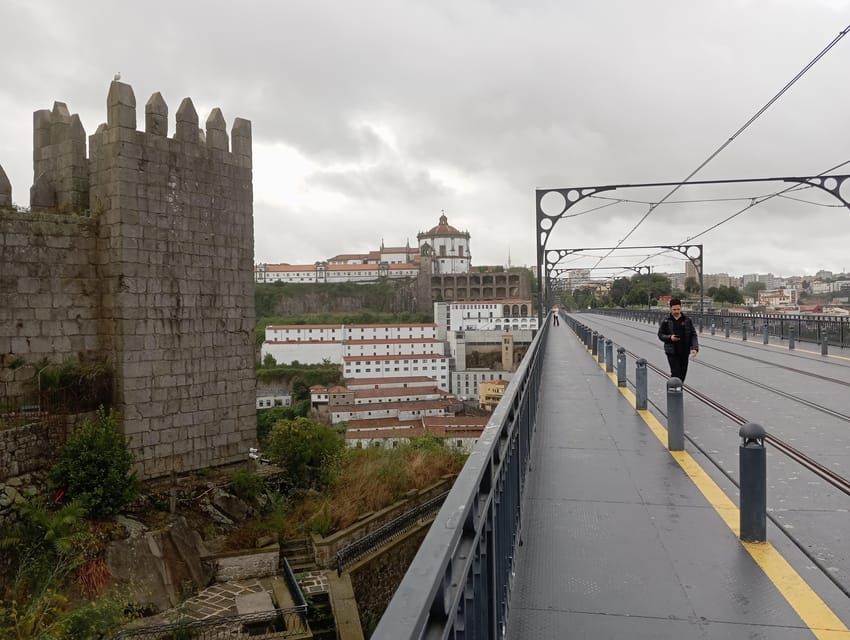
You see the Luis I Bridge, one of the defining structures of the Douro, along with the Maria Pia Bridge. The route also takes in the old wall, the Gaia docks, wine cellars, and rabelo boats. These details connect the city’s architecture with its river trade and wine culture.
The views are a strong reason to choose this tour. Porto can feel confusing when you are down among the lanes. At the river, the city opens up. You can compare the Porto side with Gaia, see where the wine lodges sit, and get a clearer idea of how the two places relate.
The tour does not promise a boat trip or wine tasting. It introduces the docks, wineries, and rabelo boats from the walking route. Karen’s guidance may also help you identify places worth considering for tastings later, a point specifically praised in the feedback.
The finish in Vila Nova de Gaia is practical. You can continue along the docks, investigate a wine lodge, or make your own way back to Porto. Just remember that the tour is not a round trip to São Bento. Plan your next stop from Gaia rather than assuming you will end where you began.
What the price gives you
The advertised price is $47 per person, with the Palácio da Bolsa admission fee added separately at €10. The core value comes from the four-hour French-language guiding, not from admissions to a long list of attractions.
I think the price is reasonable for visitors who want a structured introduction and an official guided palace visit. The route includes several of Porto’s major sights, and a good guide can save you time by explaining what deserves a closer look and what you can simply admire while walking.
The value is weaker if you already know Porto well or prefer exploring without a schedule. You will pass many places quickly, and the tour does not include a boat ride, wine tasting, or extra museum entries.
The six available ratings are all five out of five, with especially warm praise for Karen. The strongest points are consistent: detailed explanations, a pleasant manner, stories about Porto’s streets, and discoveries that people felt they would have missed alone. That is useful evidence about the guide’s style, though a perfect small sample cannot tell you how every future departure will feel.
Who should book this experience
I would choose this tour if you want Porto explained in French and prefer a guide who combines major monuments with local streets. It suits first-time visitors, couples, small groups, and anyone who wants a solid overview before spending more time independently.
It is also a good match if Palácio da Bolsa is high on your list. The skip-the-line guided entry gives the palace a clear place in the morning rather than leaving it as an uncertain extra.
You may want a different plan if you use a wheelchair, dislike steep old streets, or need long periods at each stop. The experience is specifically not suitable for wheelchair users, and comfortable shoes are essential.
The tour is also less suitable for visitors who want a food-focused outing or a river cruise. Tastings may be discussed, but they are not included. The focus is history, monuments, neighborhoods, and views.
Practical details before you go
The duration is four hours, and starting times depend on availability. Free cancellation is allowed up to 24 hours before the activity for a full refund. You can also reserve now and pay later, which helps if your Porto plans are still shifting.
Wear comfortable shoes with good support. Old streets and hills are part of the point here, but they can be tiring. Keep water with you, and allow a little time to locate the meeting point at Pier 1 and the guide’s Portuguese flag.
The tour is in French, with some content shown in its original language. If you do not speak French, this is not the right choice simply because the route sounds appealing. The explanations are a central part of the experience.
Should you book it?
Book this walk if you want a French-speaking introduction to Porto that covers São Bento, Sé, Ribeira, Gaia, the bridges, and Palácio da Bolsa in one well-packed morning or afternoon. The strongest reason to choose it is Karen’s praised combination of detailed history, personal stories, and friendly guidance.
Skip it if you want a slow photography session, a food tour, or a boat ride. Also factor in the €10 palace admission and the hilly streets. For the right visitor, this is a useful, human-scale way to meet Porto before setting off on your own.
FAQ
How long is the Porto walking tour?
The tour lasts four hours.
Where does the tour start?
The tour starts at São Bento Station. The meeting point is Pier 1, where the guide presents a Portuguese flag.
Where does the tour finish?
The tour finishes in Vila Nova de Gaia.
Is the Palácio da Bolsa admission included?
No. Admission to Palácio da Bolsa costs an additional €10.
Is the tour conducted in French?
Yes. It includes a live French-speaking guide, and some content is shown in its original language.
Is the tour suitable for wheelchair users?
No. The activity is not suitable for wheelchair users.
What should I bring?
Bring comfortable shoes, since the experience is a four-hour walking tour through Porto’s historic streets.
Just added around Portugal
- Pena Palace, Moorish Castle,Quinta ad Regaleira:Walking tour★ 5.0 · 3 reviews
- Porto Bishop’s Palace Guided Tour★ 4.5 · 8 reviews
- National Sintra Palace E-Ticket and Audio Guide★ 3.4 · 28 reviews
- Mateus Palace – In the Footsteps of Wine History★ 5.0 · 3 reviews
- Mafra: National Palace of Mafra Entry Ticket★ 4.5 · 190 reviews
- Madeira: Botanical, Monte Palace, and Palheiro Gardens★ 5.0 · 4 reviews
- Lisbon:Pena Palace, Regaleira, Monserrate Palace & Roca Cape★ 4.9 · 10 reviews
- Lisbon – Sintra, Pena Palace, Cabo da Roca & Cascais Tour★ 5.0 · 17 reviews
Historical Tours, compared.
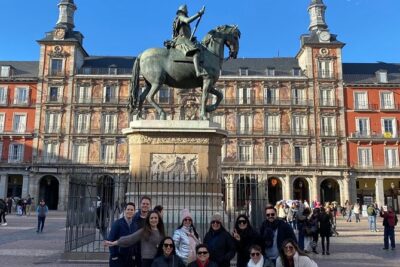
Madrid Essential: Historic Center, Plaza Mayor & Royal Palace
Read our review →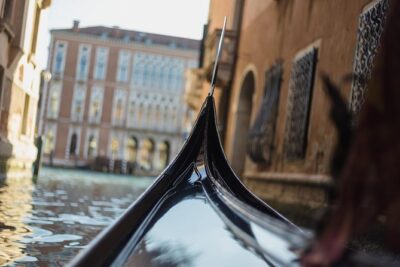
Venice’s Best: Basilica, Doge’s Palace, Gondola & History Gallery
Read our review →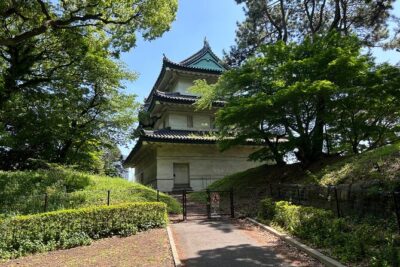
Imperial Palace and Shogun Historical Walking Tour
Read our review →
Abu Dhabi Grand Mosque, Palace, and Heritage Village
Read our review →
Skip-the-Line Schonbrunn Palace Guided Tour and Vienna Historical City Tour
Read our review →
Madrid in a Day Tour:Royal Palace, Historic Center & Prado Museum
Read our review →
Basilica, Doge’s Palace, History Gallery & Bell Tower Option
Read our review →Browse the lists this tour appears in