
REVIEW · LUANG PRABANG (PROVINCE), LAOS
Luang Prabang: Cooking Class at the Former Royal Palace
Start with the market, then cook. This four-hour Luang Prabang experience combines a guided morning market visit with hands-on Lao cooking at the former royal palace setting of Victoria Xiengthong Palace. I like the small groups of up to 10 and the chance to learn from chefs such as Noi, Noy, and Vannasone. I also like that you eat the food you prepare, with recipes to take home. The main drawback is the gap between activities: while the chef prepares ingredients, you may have roughly two hours to visit nearby temples, cafes, and shops rather than cook continuously.
This is a good choice if you want more than a restaurant meal. You see the ingredients in their market setting, learn how herbs and vegetables fit into Lao cooking, then work on several dishes beside the Mekong. Just remember that drinks and tips cost extra, and you should be comfortable standing for long periods.
Key points at a glance
- Morning market with a chef: Walk or ride by tuk tuk or bicycle through Luang Prabang’s food market and learn what unfamiliar herbs, vegetables, and spices are used for.
- Three to four Lao dishes: Depending on the day, the menu may include soup, laab, fresh appetizers, sticky rice, and a coconut dessert.
- Riverside cooking: The class takes place at Alame Restaurant, associated with Victoria Xiengthong Palace, with views toward the Mekong.
- Small-group instruction: Groups are limited to 10, though the class may feel more hands-on when fewer people book.
- Recipes included: You receive recipes so you can try the dishes again at home.
- Vegetarian cooking is possible: Tell the operator ahead of time if you need a vegetarian option.
A market introduction to Lao food
The morning begins at Victoria Xiengthong Palace on Kounxoau Road, near Wat Xiengthong Temple. From there, the group reaches Luang Prabang’s morning market by bicycle or tuk tuk.
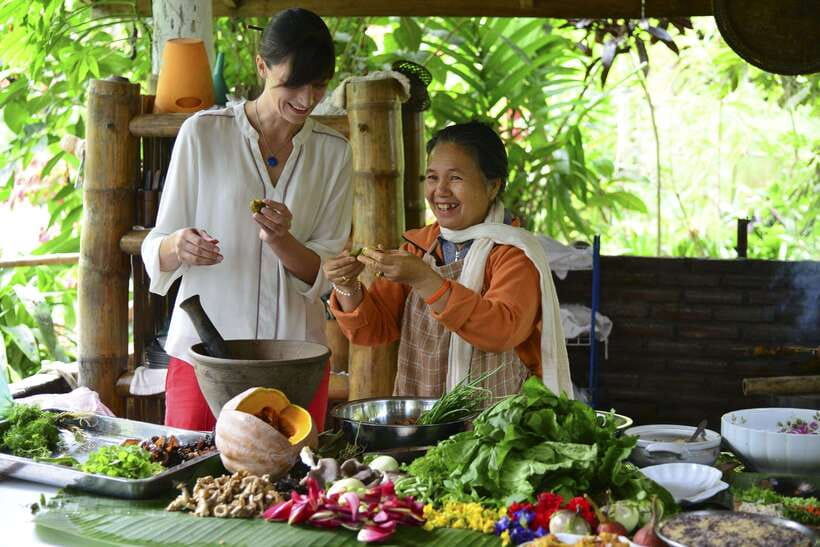
This is not simply a quick stop to buy ingredients. The chef explains what you are seeing, how the foods are used, and which items are worth tasting. For many people, this is the most useful part of the morning because Lao cooking relies on ingredients that may be unfamiliar if you mostly cook European or North American food.
You might see fresh herbs, vegetables, spices, fruit, and other market foods used later in the class. Chef Noi has bought small items for participants to sample, which gives the tour a more direct feel than simply walking past the stalls. You get a sense of texture and flavor before those same ingredients appear on your plate.
The market can be crowded, wet, noisy, and a little intense. That is part of its value, but it also means you should wear practical clothes and bring a hat. You will be on your feet for a good stretch, so comfortable shoes matter more than looking polished.
A chef-led market visit also helps you understand why Lao food tastes the way it does. Fresh herbs and vegetables are not decorative extras here. They help shape the balance of a dish, especially in laab, soups, and salads. The guide can explain those connections while the food is still in front of you.
More Royal Palace Tours in the world:
- Madrid: Royal Palace Fast-Access Admission Ticket
★ 4.6 · 13,856 reviews - Madrid: Royal Palace Expert Guided Tour with Skip-the-Line
★ 4.7 · 8,407 reviews - Amsterdam: Royal Palace Entry Ticket + Audio guide
★ 4.6 · 7,889 reviews
The two-hour pause between market and class
The timing deserves a clear explanation. The market visit takes about an hour, followed by roughly two hours of cooking activity, but the full experience can run close to four hours. Several people have found that the chef needs time to prepare ingredients after the market visit.
During this pause, you may have time to get coffee, visit nearby temples, browse shops, or sit near the Mekong. Some may see this as a pleasant break in a relaxed morning. If you want nonstop chopping and cooking from the moment you leave the market, it could feel like dead time.
I would plan for it rather than treat it as a surprise. Wear a hat for the market, carry only what you need, and use the break to see the area around Wat Xiengthong. The meeting point puts you in a useful part of Luang Prabang, so the pause does not have to be wasted.
This arrangement also means the class can begin with a prepared kitchen and a calm teacher. That helps keep the cooking organized, especially when the group includes beginners. Still, I would ask at the start how much preparation you will do yourself if learning each dish from start to finish is important to you.
Cooking beside the Mekong at Alame Restaurant
After the market and break, you return to Alame Restaurant, the riverside restaurant connected with Victoria Xiengthong Palace. The setting is one of the experience’s strongest features. The cooking area is on a terrace or peaceful outdoor space, with the Mekong nearby and a quieter mood than the market.
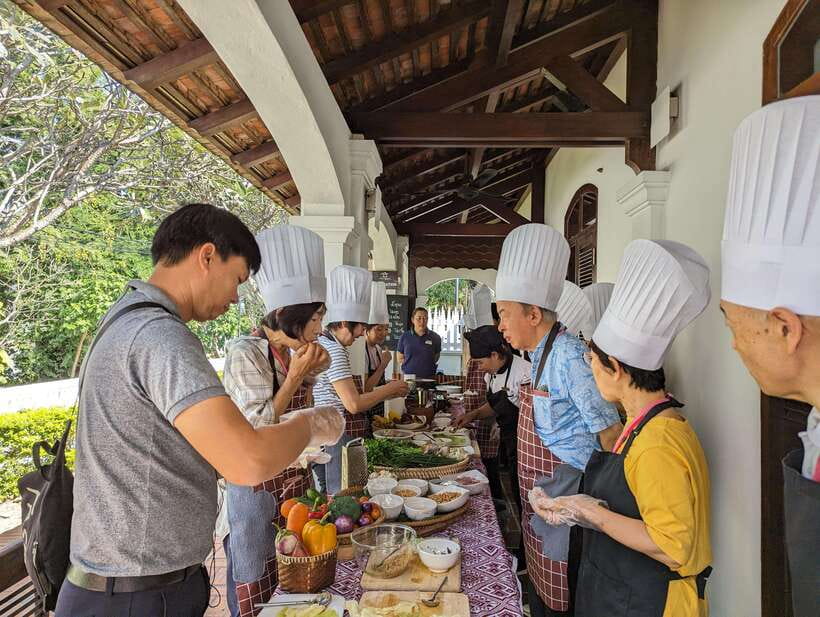
This is not a formal demonstration where you sit and watch someone else do all the work. You cut, mix, season, and cook under instruction. The exact division of tasks depends on the group and the menu, since everyone may contribute to shared dishes rather than prepare a complete dish alone.
That detail matters. If you join with a group of seven or 10, you may not handle every step of every recipe. You could help prepare one part of several dishes instead. The benefit is variety and teamwork. The tradeoff is that you may not learn one recipe from raw ingredients to finished plate on your own.
The group limit of 10 keeps the class reasonably personal. If only a few people book, the experience can become much more individual. One participant had a private class, which allowed direct attention from the chef. With a full group, you should expect a more social class and shared preparation.
The chefs receive especially warm praise for their manner. Noi is described as patient, funny, organized, and clear in her instructions. Vannasone has also led the market and cooking portions. The tone appears relaxed rather than hurried, which suits a class where the point is to learn, not race through a recipe.
What you may cook
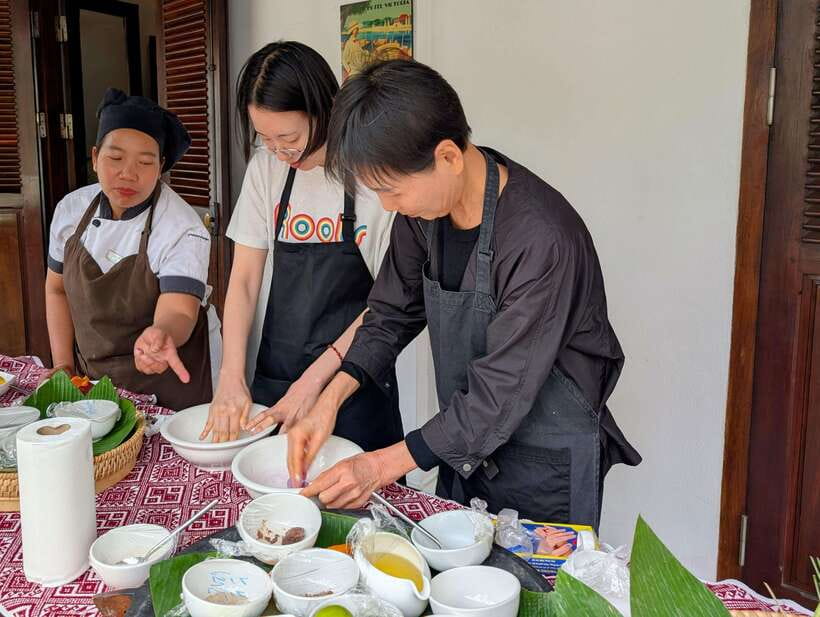
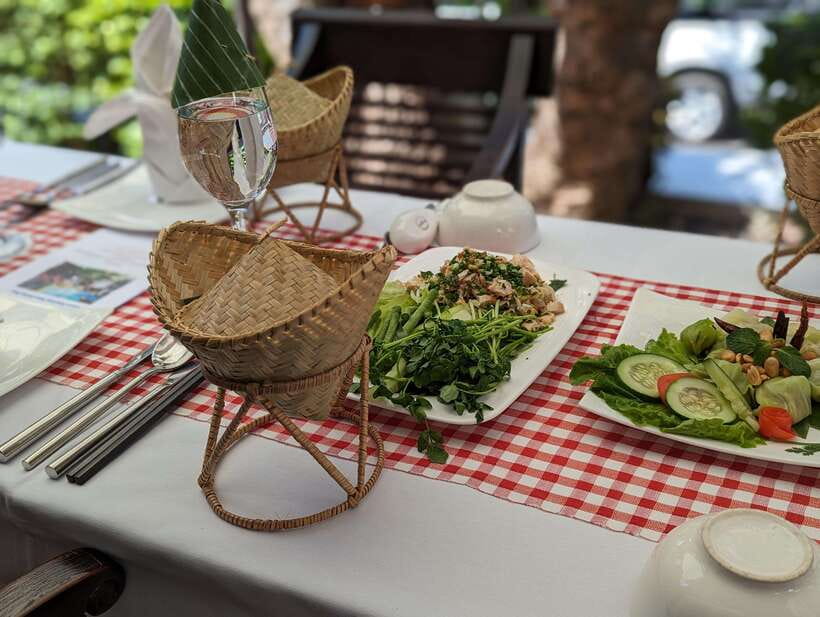
The menu can vary, but the dishes described include a sour soup with pork, mushrooms, and herbs; chicken laab; fresh appetizers; sticky rice; and rice balls in coconut milk. Another menu included soup, laab salad, and a coconut dessert.
Laab is a particularly useful dish to learn because it gives you a strong introduction to Lao flavor. It combines meat or another main ingredient with herbs and fresh elements, creating a dish that feels light but full of flavor. The class also shows how vegetables and herbs support the main ingredients rather than sitting on the side as decoration.
Sticky rice is another worthwhile lesson. It is central to meals in Laos, and seeing how it is prepared gives you cultural context as well as a practical kitchen skill. The dessert, often based on rice and coconut milk, provides a gentle finish after the sharper flavors of soup and laab.
You should not assume the exact four dishes listed by one participant will be served every day. The menu depends on the class plan and available ingredients. What is consistent is the focus on traditional Lao food, fresh market produce, and cooking techniques you can repeat at home.
The class is suitable for beginners. Instructions are given in English, and several participants found the steps easy to follow. Still, this is a practical lesson, not a professional chef course. You will learn useful methods and flavor combinations, but you may share tasks with other people and receive less individual attention in a larger group.
Same place, a different set of state rooms:
- Venice: Doge’s Palace Reserved Entry Ticket
★ 4.6 · 42,716 reviews - Paris: Versailles Palace and Gardens Full Access Ticket
★ 4.6 · 41,579 reviews - Granada: Alhambra & Nasrid Palaces Tour with Tickets
★ 4.7 · 19,801 reviews - Sintra: Pena Palace and Park Entrance Ticket
★ 4.2 · 17,410 reviews
Lunch is part of the lesson
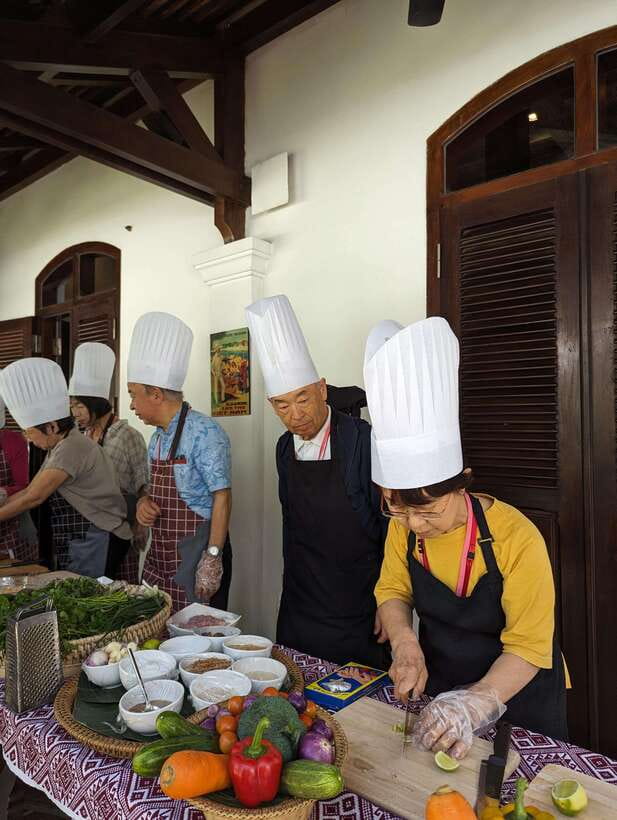
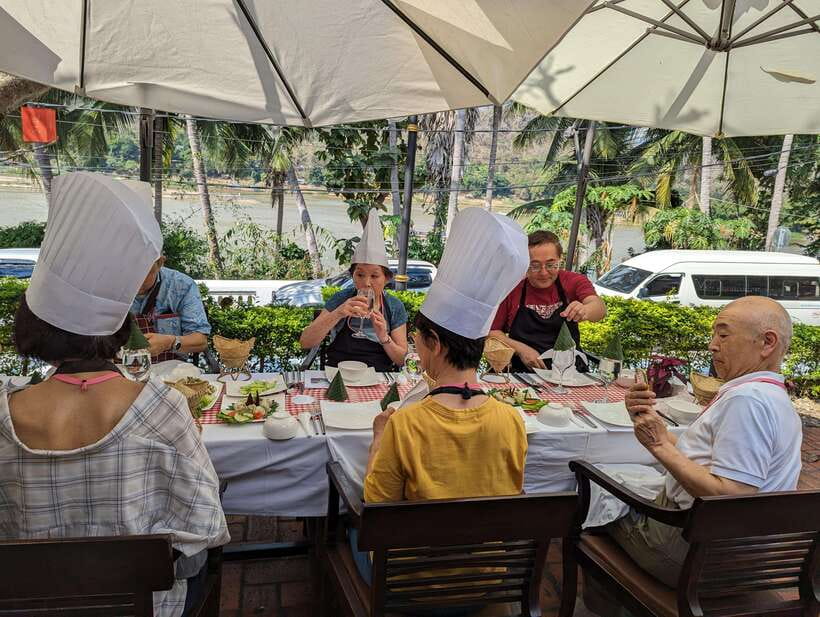
After cooking, you sit down to eat what the group has prepared. This is more satisfying than being served a preset meal because you can connect the taste with the work behind it.
The setting adds to the lunch. You eat at the restaurant, often on the terrace with a view of the Mekong. The river, temple area, and open-air setting make the meal feel like part of your Luang Prabang visit rather than an isolated cooking school appointment.
Portions are not specifically stated, but the food described includes several dishes and a dessert. Come ready to eat, especially if you enjoy trying a range of flavors. Drinks are not included, so budget separately if you want something beyond the food and included meal.
The shared meal also works well for couples and small groups of friends. Cooking together gives you an easy topic of conversation, and the final lunch rewards the group for working through the preparation. If you are dining alone, the small-group format can also make the morning more social without requiring a large organized tour.
Is $45 a fair price?
At $45 per person, this is not the cheapest cooking class in Southeast Asia. The price includes the morning market visit, transport to the market by bicycle or tuk tuk, the cooking class, and lunch. You also get a former royal palace setting, a riverside restaurant, English instruction, and recipes to use later.
The value depends on what you want from the morning. If you only want a cheap meal and a recipe sheet, you can find less expensive options. If you want market interpretation, guided food tasting, transport, hands-on cooking, and a full lunch in one booking, the price is easier to justify.
I think the setting and the market visit do most of the work here. A basic kitchen class may teach you how to make laab, but it will not necessarily show you the ingredients being sold locally or place the meal beside the Mekong. The small group also helps keep the price reasonable, particularly when the chef gives clear instructions and handles the preparation smoothly.
The long pause is the factor that weakens the value for some people. If you measure a class by how many minutes your knife is on the cutting board, you may feel you are paying for unused time. If you are happy to use the break for temples, coffee, and river views, the morning feels fuller.
Who will enjoy this experience most?
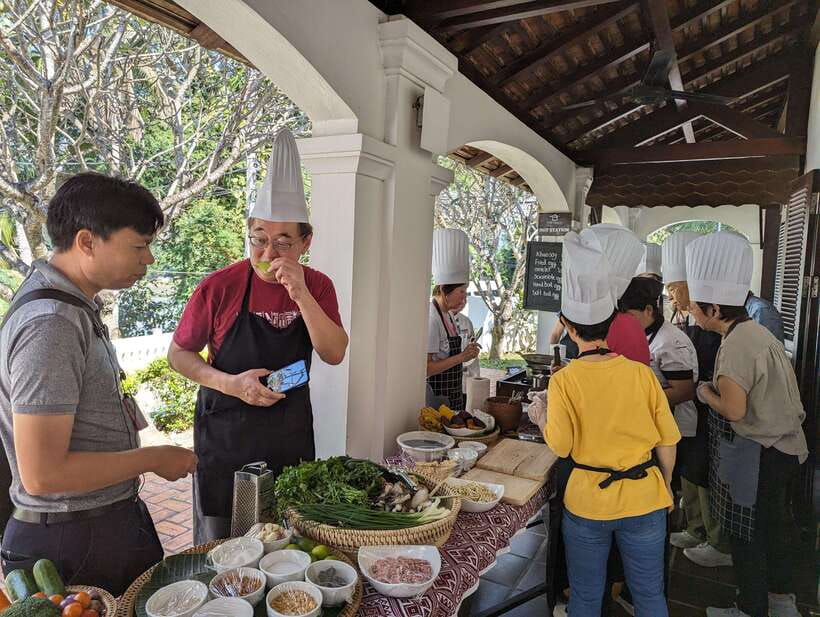
I would choose this class if you enjoy food, local markets, and a slower cultural activity. It suits first-time cooks because the chefs guide each step. It also works for experienced home cooks who want to understand Lao ingredients and flavor combinations.
Vegetarians can join, but you must request the option in advance. The experience may also suit families with older children who can stand, follow instructions, and participate safely. It is not suitable for babies under one year, wheelchair users, or people over 95. Baby carriages are not allowed.
You should be comfortable standing for extended periods. The market and kitchen both require time on your feet, and the outdoor setting means a hat is useful. Weapons, sharp objects, alcohol, drugs, and drinks in the vehicle are not allowed.
The class is in English. That is important if you want detailed instruction rather than simply watching a demonstration. It also means you can ask questions about ingredients, preparation, and substitutions as you work.
Practical timing and booking advice
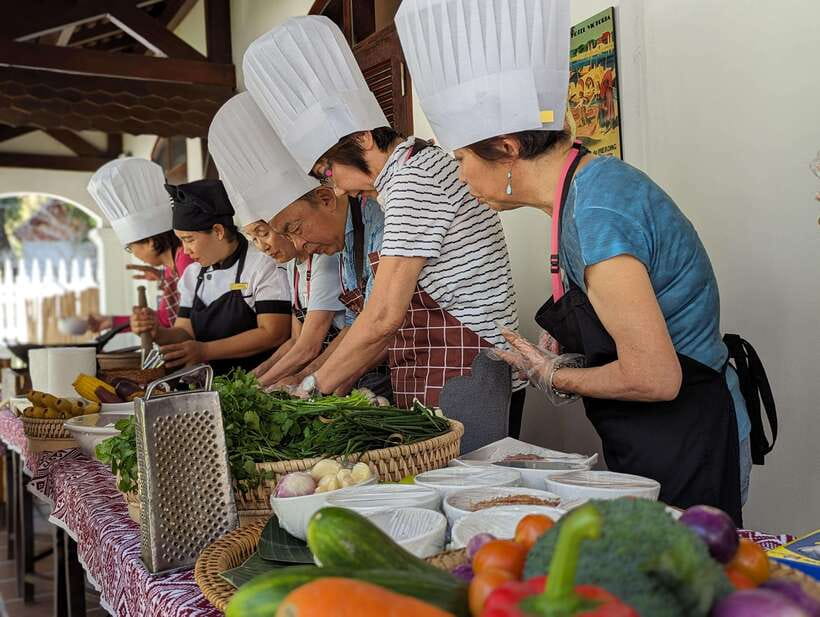
Set aside up to four hours, even though some descriptions break the day into a one-hour market visit, a two-hour cooking class, and a one-hour lunch. The market starts the experience, and the lunch finishes it, but preparation time can create a longer gap between those parts.
Meet at Victoria Xiengthong Palace, Kounxoau Road, Ban Phonehueng, near Wat Xiengthong Temple. Confirm the starting time when booking because availability changes by day.
The experience allows cancellation up to 24 hours before the start for a full refund. You can also reserve and pay later, which helps if your Luang Prabang schedule is still shifting.
I would avoid booking it immediately before a flight, train, or fixed afternoon appointment. The class is meant to be enjoyed at an easy pace, and rushing away from the lunch would spoil part of the appeal.
Should you book this Luang Prabang cooking class?
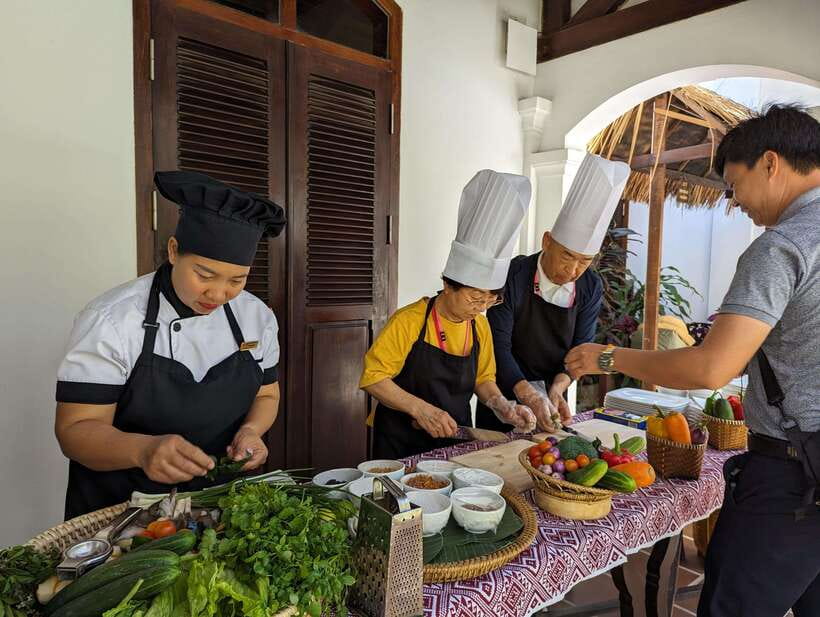
Book it if you want a food experience with several layers: a market walk, local instruction, hands-on preparation, and a riverside lunch. The chefs appear to be the heart of the experience, with Noi, Noy, and Vannasone offering patient guidance and a friendly pace.
Think twice if you want every minute filled with cooking or if you need wheelchair access. The two-hour preparation break may also frustrate anyone expecting to prepare each dish alone.
For most food-loving visitors, I think the combination is worth the $45. You leave with a better sense of Lao ingredients, a satisfying meal, and recipes that can bring a little Luang Prabang back into your kitchen.
FAQ
Where does the cooking class meet?
The meeting point is Victoria Xiengthong Palace on Kounxoau Road in Ban Phonehueng, near Wat Xiengthong Temple in Luang Prabang.
How long does the experience last?
The activity is listed as lasting four hours. The schedule includes about one hour at the market, about two hours of cooking, and about one hour for lunch, though preparation time can create a pause between the market and class.
What is included in the price?
The price includes the morning market tour by bicycle or tuk tuk, the cooking class, and lunch.
Are drinks included?
No. Drinks are not included, and tips are also separate.
Can I request vegetarian dishes?
Yes. Vegetarian options are available, but you should notify the operator in advance.
What language is the class taught in?
The instructor language is English.
Is the class suitable for wheelchair users or babies?
The experience is not suitable for wheelchair users or babies under one year. Participants should also be comfortable standing for extended periods.
More Hands-On Sessions in the world
- Javanese Dance Workshop with Kraton Palace Dancer
★ 5.0 · 2 reviews - Château du Bois-Huaut: Cellar Tour and Wine Tasting Class
★ 4.8 · 53 reviews
Just added around the world
- Pena Palace, Moorish Castle,Quinta ad Regaleira:Walking tour★ 5.0 · 3 reviews
- Porto Bishop’s Palace Guided Tour★ 4.5 · 8 reviews
- Paris: Versailles Palace and Queen Hamlet E-Bike Tour★ 5.0 · 126 reviews
- Phnom Penh: Full-Day City Tour with Royal Palace & Killing …★ 4.7 · 2 reviews
- Petchaburi Temples & Royal Palace – small Join Group Tour★ 4.6 · 46 reviews
- Paris: Versailles Golf Cart & Bike Tour with Palace Entry★ 4.8 · 58 reviews
- Petit Palais Paris Museum of Fine Arts Tour with Tickets★ 4.2 · 3 reviews
- Paris: Palace of Versailles Private Tour with Transportation★ 5.0 · 2 reviews
Royal Palace Tours, compared.

Royal Palace Expert Guided Tour with Skip-the-Line
Read our review →
Dubai To Abu Dhabi: Grand Mosque, Royal Palace & Etihad Towers
Read our review →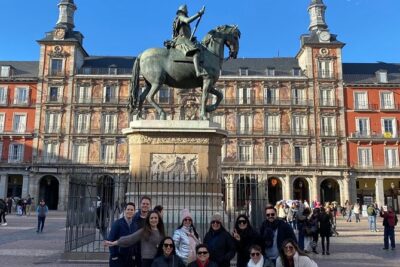
Madrid Essential: Historic Center, Plaza Mayor & Royal Palace
Read our review →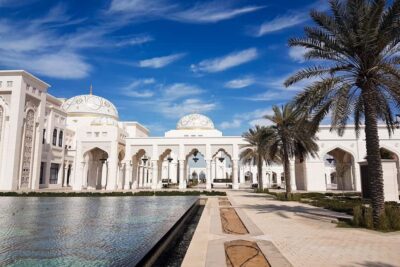
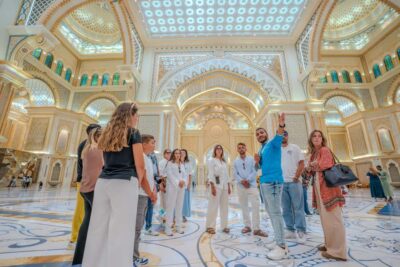
Abu Dhabi Day-Trip Grand Mosque, Royal Palace & Lunch
Read our review →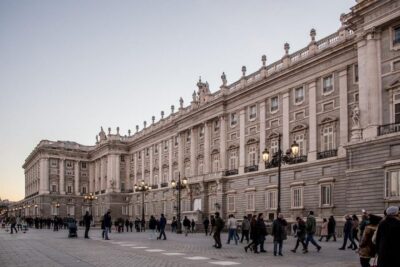
Browse the lists this tour appears in